

Business
Govt Plans to End Personal Baggage Scheme for Used Car Imports – SUCH TV


The federal government is reportedly considering the abolition of one of the schemes for importing used cars while proposing stricter regulations for the two remaining schemes.
The Ministry of Commerce has submitted a summary to the Economic Coordination Committee (ECC) of the cabinet, recommending the discontinuation of the Personal Baggage Scheme.
The other two schemes — Transfer of Residence and Gift Scheme — are being proposed for tighter regulation, with measures suggested to curb misuse.
“Different proposals are under consideration to tighten the Gift and Transfer of Residence schemes, while the Baggage Scheme is expected to be abolished. The ECC will take the final decision on this matter,” confirmed senior government sources.
The auto industry has strongly opposed large-scale imports of used vehicles, citing concerns over the potential impact on local manufacturing.
The sector presented data covering December 2024 to October 2025, showing a sharp resurgence in used-car imports during this period.
In contrast, regional peers maintain very limited used-car inflows: India reports virtually zero imports, Vietnam stands at 0.3%, and Thailand at 1.2%.
The industry argues that such restrictions are intended to protect domestic automotive value chains.
Pakistan has taken a different approach. After Notification 1895 issued by the Ministry of Commerce on September 30, 2025, imports of vehicles up to five years old were permitted.
Reports indicate that after June 2026, this age limit may be removed entirely, potentially opening the market to large-scale inflows of aged vehicles.
The local auto industry is a key contributor to the economy, comprising roughly 1,200 factories, providing 2.5 million jobs, generating Rs500 billion annually in government revenue, and attracting approximately $5 billion in foreign investment.
“Import-friendly policies risk diluting these gains at a time when industrial revival and localisation are declared priorities,” said Shehryar Qadir, Senior Vice Chairman of the Pakistan Association of Automotive Parts & Accessories Manufacturers (PAAPAM).
Of the 45,758 vehicles imported into Pakistan between December 2024 and October 2025, nearly 99% came from Japan, which aligns with local right-hand-drive standards.
Other countries contributed minimal numbers: Thailand (130 units), the US (55), Jamaica (49), Germany (47), Australia (22), China (20), and the UAE (5).
The industry estimates that local vendors faced losses of roughly Rs50 billion during this period.
The impact on foreign exchange is also significant: while documented banking-channel imports for local manufacturers cost around $10,138 per vehicle, used-car importers reportedly spend about $14,010 per unit, much of it through informal channels.
While the government is drafting a new Auto Policy to strengthen domestic manufacturing, stakeholders remain split on whether localisation efforts can succeed alongside a liberal used-car import regime.
The data suggests that Pakistan is an outlier among manufacturing economies — both in policy direction and market outcome.







Business
PMI watch: India’s services growth eases in February as demand softens, costs rise – The Times of India

India’s services sector growth eased marginally in February as new business expansion slowed to a 13-month low, reflecting softer demand conditions and a rise in inflation, according to a monthly survey released on Wednesday. The seasonally adjusted HSBC India Services PMI Business Activity Index edged down to 58.1 in February from 58.5 in January. In PMI terminology, readings above 50 denote expansion, while those below 50 indicate contraction. “India’s Services PMI registered 58.1 in February, largely unchanged from January’s 58.5, signalling another month of robust expansion in the sector.” “While new order growth slowed to a 13-month low amid rising competition, service providers saw a notable pick-up in international sales and responded with increased hiring to meet operational needs,” said Pranjul Bhandari, Chief India Economist at HSBC. According to respondents, some firms benefited from stronger client enquiries and targeted marketing efforts, which supported sales. However, others reported that an increasingly competitive landscape limited the pace of growth. External demand stood out during the month. Services companies recorded improved business from several overseas markets, including Canada, Germany, mainland China, Singapore, the UAE, the UK and the US. Overall, international sales rose at the quickest pace since last August. Cost pressures intensified for service providers in February. Operating expenses increased at the sharpest rate in two-and-a-half years, prompting firms to raise their selling prices at the fastest pace in six months. “Input and output price inflation accelerated, with firms passing higher expenses — particularly for food and labour — on to customers, yet business confidence climbed to its highest level in a year as companies looked to broaden their market presence,” Bhandari said. At the combined level, private sector activity strengthened further. Total business output across manufacturing and services expanded at the fastest rate in three months, supported by improved demand and higher new business inflows. The HSBC India Composite PMI Output Index climbed to 58.9 in February from 58.4 in January. “Overall, the composite PMI rose to 58.9, reflecting the fastest pace of private sector activity growth in three months, buoyed by strong momentum in manufacturing,” Bhandari said. Composite PMI figures represent weighted averages of manufacturing and services indicators, with the weights reflecting their respective shares in official GDP data. While the pace of new order growth at the composite level was broadly similar to that seen around the start of the year, hiring activity strengthened to its highest level since last October. Inflationary trends were also evident in the broader private sector, with both input costs and output charges rising at quicker rates. These increases reached nine-month and six-month highs, respectively.

Last Updated:
India’s Sensex and Nifty correct 6-7%, with 80% of stocks in bear territory. Monarch AIF reports 64% of stocks over Rs 1,000 crore market cap has fallen 30%.




Hundreds of midcap and smallcap companies have quietly lost significant value.
India’s benchmark indices may not show it, but a large part of the market is already in deep correction. According to a report by Monarch AIF, while the Sensex and Nifty have corrected only about 6-7 per cent from their record highs, nearly 80 per cent of listed stocks are already in bear market territory.
The data highlights a sharp divergence between headline indices and the broader market.
Majority of Stocks Deep In Correction
The report analysed companies with a market capitalisation above Rs 1,000 crore.
It found that over 64 per cent of these stocks have fallen more than 30 per cent from their all-time highs. Nearly 78 per cent have declined over 20 per cent.
In simple terms, most stocks in the market have already seen a brutal correction even though benchmark indices remain relatively elevated.
This unusual divergence has been playing out for the past 18 months.
Why Indices Are Still Holding Up
According to the report, Indian markets are witnessing a rare phase of simultaneous time and value correction.
A narrow set of large-cap stocks has kept the benchmark indices elevated. Meanwhile, hundreds of midcap and smallcap companies have quietly lost significant value.
This has created a misleading picture where the indices appear stable but the broader market has been under sustained pressure.
Now A New Shock: Middle East War
The situation has become more complicated after the recent escalation in West Asia.
Following US-Israel strikes on Iran, global markets have turned volatile and crude oil prices have surged.
Amid these developments, the Sensex recently fell over 1,000 points, while the Nifty slipped below the 24,900 level.
For investors, the challenge is that a market already weakened by months of selling is now facing geopolitical risks and a potential oil shock.
Should Investors Buy Or Wait?
Aakash Shah, Technical Research Analyst at Choice Equity Broking, advised caution. “Amid persistent global uncertainties and elevated volatility, market participants are advised to maintain discipline and adopt a selective approach, focusing on fundamentally strong stocks during corrective phases. Fresh long positions should ideally be considered only after a decisive and sustained breakout above the 25,000 mark on the Nifty, which would signal improving sentiment and confirm the development of a stronger bullish structure,” he said.
Key Risk For India: Rising Oil
V K Vijayakumar, chief investment strategist at Geojit Investments, said the biggest concern for India is rising crude prices.
“With the war escalating and crude rising, markets are going into a period of heightened uncertainty. Nobody knows how long this conflict will go on and what will be the extent of the havoc it could wreck. From the perspective of India, which relies on imports for around 85% of her oil requirements, the real concern is the potential inflation and its consequences on economic growth. From the market perspective, the impact of potentially widening trade deficit, depreciating currency, higher inflation and perhaps lower growth is the real issue. If this fear materialises, corporate earnings will be impacted,” he said.
However, he added that the impact may be temporary if the conflict ends quickly.
“If it ends in, say 3 to 4 weeks, things will be back to normal,” he said.
Don’t Panic, Use Corrections
Despite the volatility, Vijayakumar advised investors not to panic. “Experience tells us that panicking and getting out of the market during uncertain times like these is not the right thing to do. Markets have an uncanny ability to surprise and climb all walls of worries,” he said.
According to him, investors with a long investment horizon and higher risk appetite can gradually accumulate quality stocks during corrections.
He added that sectors such as banking, pharmaceuticals, automobiles and defence may offer attractive long-term opportunities.
 Click here to add News18 as your preferred news source on Google.
Follow News18 on Google. Join the fun, play games on News18. Stay updated with all the latest business news, including market trends, stock updates, tax, IPO, banking finance, real estate, savings and investments. To Get in-depth analysis, expert opinions, and real-time updates. Also Download the News18 App to stay updated.
March 04, 2026, 13:39 IST
Read More
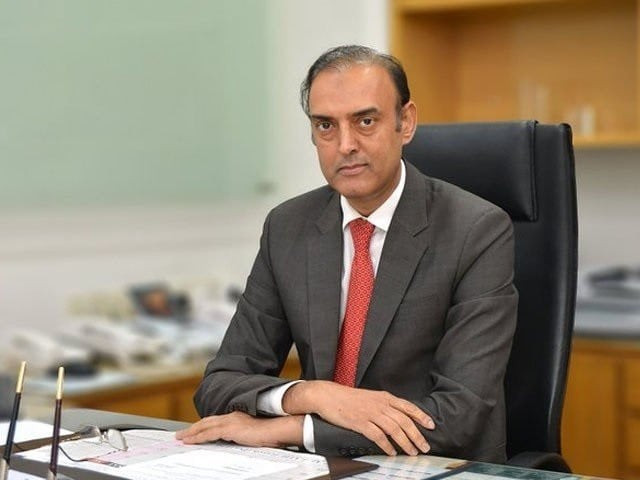
Central bank governor says country has shifted from annual loan rollovers to monthly rollovers
State Bank of Pakistan Governor Jameel Ahmad. PHOTO: TWITTER
ISLAMABAD:
State Bank of Pakistan Governor Jameel Ahmad said on Wednesday that the United Arab Emirates (UAE) was not demanding repayment of a $2 billion loan, but had instead shifted it to a monthly rollover.
The SBP governor provided the National Assemly’s Standing Committee on Finance insights into the country’s economic challenges, including the UAE’s loan rollover, inflation rates and export performance.
“The UAE is not asking back for a loan of $2b. The only difference is that earlier the UAE’s loan was rolled over on an annual basis, now it is being rolled over on a monthly basis,” he said.
“Initially, the debt servicing had reached $4b, but this has now been reduced,” he stated, acknowledging the strain on Pakistan’s exports.
Read More: OGRA orders daily LPG stock reporting amid supply concerns
Highly placed sources in the federal government and the central bank told The Express Tribune last month that the UAE had rolled over two loans of $1b each, which matured on January 16 and 22. They said the debt was rolled over for one month to allow time for further discussions on the tenor and interest rate.
Under the $7b International Monetary Fund (IMF) programme, the UAE, Saudi Arabia and China have committed to maintaining their combined $12.5b in cash deposits with the SBP at least until the programme expires in September next year. However, last month was the first time the UAE extended the debt repayment period by only one month, unlike the previous practice of granting one-year extensions.
In December, Govenor Ahmad had requested the UAE government to roll over $2.5b in debt for two years and cut the interest rate by almost half. Subsequently, Prime Minister Shehbaz Sharif also requested the UAE president to extend the repayment period. The prime minister said the UAE had agreed to roll over the debt, but did not provide further details.
The UAE provided $2b to Pakistan in 2018 for one year, but Pakistan was unable to repay the amount and has sought rollovers annually since then. Later, the UAE extended another loan of $1b in 2023 to help Pakistan meet external financing requirements for an IMF bailout.
The $2b debt forms part of Pakistan’s foreign exchange reserves of $16b. Pakistan is paying about $130 million annually in interest on the UAE debt at current rates. In 2018, the UAE charged an interest rate of 3% on the debt, but last year increased it to 6.5%. Pakistan has requested the UAE to reduce the rate to around 3%, citing improvements in its credit rating and lower global interest rates.
Pressure on exports
The governor further highlighted that, despite the ongoing pressure on exports, the situation was being managed. This, he noted, was partially due to declining food prices globally, including a reduction in rice exports, which alone accounted for a $1b drop.
Regarding inflation, the SBP governor projected that it was expected to stay between 5% and 7% this year.
“In 2022, the current account deficit was $17.5 billion, but through strategic measures, we managed to reduce it to just 1% of GDP in 2023, with a surplus of $2b,” he explained. Ahmad pointed out that this marked the first current account surplus in 14 years.
He further stated that foreign exchange reserves had increased significantly, from $2.8b, just enough for two weeks of imports, to over $16b. His target, the governor said, was is to raise the reserves to $18b by the end of June 2026 and to $20b by December 2026.
Read More: Govt refuses IMF help on 142 reforms
The governor also discussed Pakistan’s rising external debt, which has grown from $55b in 2016 to $103b. He assured that the debt level had remained stable since last year, and Pakistan’s total debt stood at $148b, with the government’s share at approximately $103b.
In response to concerns raised by the committee, Chairman Saleem Mandviwala remarked that the country’s export schemes were being phased out, which he believed contributed to the pressure on exports.
However, the SBP govenor countered that export financing schemes had not been abolished and attributed the export decline to multiple factors, including the global food price drop and weaker demand.
Furthermore, the governor acknowledged the economic strain of being under an IMF programme, which limited the country’s ability to offer subsidies and rebates. He noted that, despite challenges, the central bank continued to pursue strategies to ensure economic stability.


Miami (Ohio) improves to 30-0 as Cinderella run gets more magical

From ‘Freaky Friday’ to ‘Cruella’: Andrew Gunn’s blockbuster legacy

Dubai warns of jail, hefty fine for spreading rumours

India Us Trade Deal: Fresh look at India-US trade deal? May be ‘rebalanced’ if circumstances change, says Piyush Goyal – The Times of India

Households set for lower energy bills amid price cap shake-up

What are Iran’s ballistic missile capabilities?

-
Business5 days ago
India Us Trade Deal: Fresh look at India-US trade deal? May be ‘rebalanced’ if circumstances change, says Piyush Goyal – The Times of India
-
Business1 week ago
Households set for lower energy bills amid price cap shake-up
-

 Politics6 days ago
US arrests ex-Air Force pilot for ‘training’ Chinese military
-
 Politics6 days ago
What are Iran’s ballistic missile capabilities?
-
 Business6 days ago
Attock Cement’s acquisition approved | The Express Tribune
-

 Fashion6 days ago
Policy easing drives Argentina’s garment import surge in 2025
-

 Sports1 week ago
Top 50 USMNT players of 2026, ranked by club form: USMNT Player Performance Index returns
-

 Sports6 days ago
Sri Lanka’s Shanaka says constant criticism has affected players’ mental health