

Business
Govt to borrow $1b for reforms | The Express Tribune

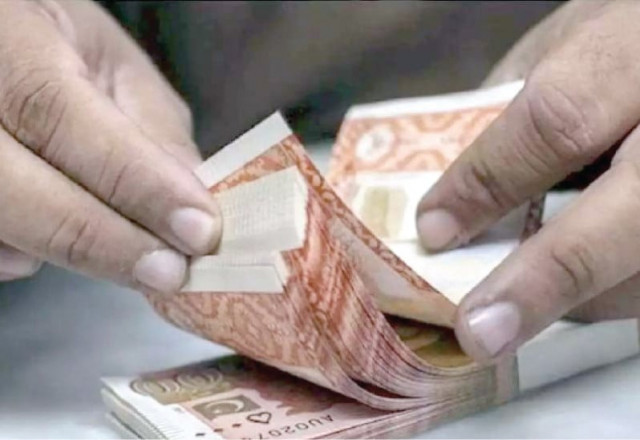
Some of the banks have not publicly disclosed any climate policies aligned with the Paris Agreement in lending and investment activities. photo: file
ISLAMABAD:
Pakistan has decided to obtain two foreign loans worth $1 billion for enhancing efficiency of the tax machinery, accountability of expenses and ensuring compliance with state-owned enterprises law — objectives that require will to improve rather than fresh loans.
The country has decided to seek a $600 million loan from the World Bank for the “Pakistan Public Resources for Inclusive Development” programme and $400 million from the Asian Development Bank (ADB) for the “Accelerating State-Owned Enterprise Transformation Programme”, official documents showed.
The $1 billion translates into a staggering Rs281 billion at the current exchange rate, sufficient to build an airport or hundreds of schools.
The loans will be obtained as budget support to cushion foreign exchange reserves. No asset will be created using the fresh foreign lending, details of these under-negotiation loans showed.
The development collides with a proposal by Syed Naveed Qamar, Chairman of the National Assembly Standing Committee on Finance. Qamar this week sought ratification of foreign debt deals by Parliament to ensure transparency and better utilisation of lending facilities.
Sources said the Ministry of Finance has proposed obtaining these loans as budget support to cushion foreign exchange reserves. Unlike the past, the International Monetary Fund (IMF) has so far not unlocked major foreign lending. This compelled the central bank to buy $8.4 billion from the local market last fiscal year.
Budget support loans are not disbursed against asset creation. Money is released upon completion of agreed prior actions, mainly policy and law changes.
Sources said the $600 million World Bank loan will fund “reforms” in the Finance Division, Federal Board of Revenue (FBR), Pakistan Bureau of Statistics (PBS), Ministry of Commerce, Power Division, Ministry of Information Technology, Pakistan Procurement Regulatory Authority (PPRA) and Office of the Accountant General Pakistan Revenue (AGPR).
Of the $600 million, $560 million will be disbursed against achieving certain targets. These include increasing income tax share in total taxes to 55% over five years. The current ratio is less than 50%. Usually, such targets are kept soft to ensure smooth tranche disbursement.
The government’s rationale in official documents is that Pakistan’s human capital outcomes like high stunting, learning poverty and infant mortality reflect chronic underinvestment and inefficient public spending shaped by a rigid, deficit-prone fiscal framework.
The official stance is that the $600 million programme will directly address these structural constraints, enabling Pakistan to sustainably finance inclusive development and meet national goals.
Officials said the Finance Division and the World Bank were in the process of finalising loan package details.
The programme aims to strengthen the fiscal system to support macroeconomic stability and service delivery. This will be achieved through “more efficient and effective revenue collection, strengthened allocation, efficiency and accountability in expenditures, and improved statistical data landscape for policymaking.”
The Express Tribune reported last month that there was a staggering $30 billion discrepancy in import figures reported by various government entities over a period of five years.
\Under the proposed programme, PBS will gain from technical assistance, upgraded systems and capacity building to provide timely, accurate data for policy decisions, according to the documents.
The loan money is also being taken in the name of strengthening the Tax Policy Unit, Debt Management Office, government rightsizing and open budgeting.
However, the World Bank and ADB have previously funded these offices. Much more remains to be achieved, indicating that improving governance of these institutions is needed more than money.
Sources said the FBR had previously expressed desire to utilise World Bank funds for buying weapons for civil armed forces, mainly Customs Enforcement. However, the World Bank did not agree. The FBR may again propose including “equipment, weapons required by civil armed forces” in the new lending envelope.
However, sources said the Planning Commission has raised objections to the new $600 million plan. It noted that foreign loans had previously been taken for FBR and AGPR. Existing lending programmes — Pakistan Raise Revenue Programme for FBR worth $450 million and Implementation of Online Billing solution (SEHAL) for AGPR — overlap with the new proposed plan.
ADB loan
Sources said the government is also seeking a $400 million loan from ADB for the Accelerating State-Owned Enterprise Transformation Programme.
The ADB package aims to address critical corporate governance and commercial performance challenges within 40 of Pakistan’s commercial state-owned enterprises.
ADB has already funded hundreds of millions of dollars in packages for improving governance and development of the SOEs framework in Pakistan.
In a seminar organised by the Sustainable Development Policy Institute (SDPI) this week, country heads of the United Nations Development Programme and IMF emphasised improving poor governance for better service delivery.
IMF has also conditioned approval of the third $1 billion loan tranche under the Extended Fund Facility on publication of the Governance and Corruption Diagnostic Assessment report.
Sources said the new loan addresses governance challenges by enhancing efficiency, financial sustainability and performance of 40 SOEs, particularly the financial sustainability of National Highway Authority (NHA).
Stated objectives of the new facility include strengthening governance and compliance with SOE Act and policy, enhancing institutional capacity for oversight and monitoring, and improving financial and operational performance of NHA. Systematic monitoring and accountability have been weak due to limited institutional capacity within the Central Monitoring Unit and line ministries.






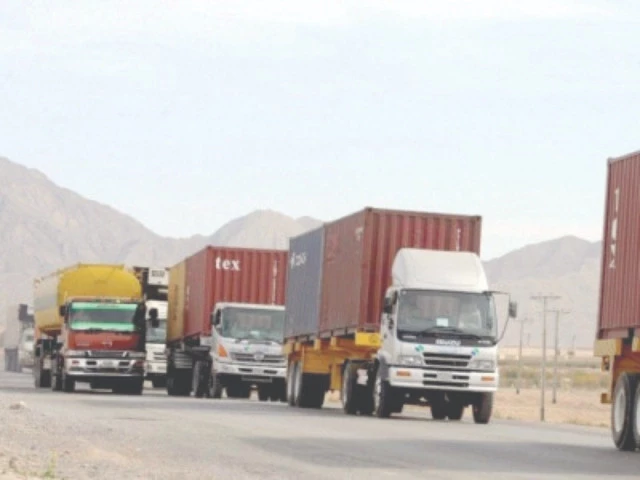



The Felix Project is among the organisations feeling the effects of increased costs due to the conflict in Iran.
Source link

Bosses say a good start to the year has been put at risk, but opportunities have also emerged.
Source link
Business
Crude oil soars as Middle east conflict chokes supply routes, Hormuz concerns stokes panic – SUCH TV
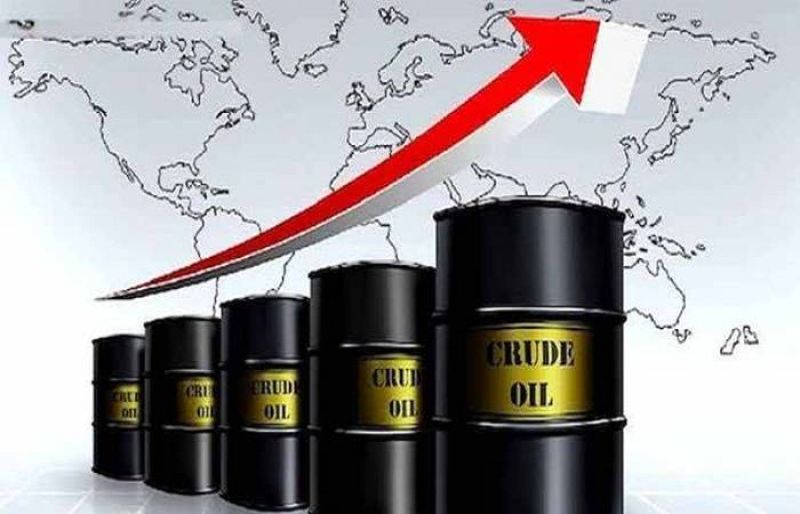
Crude oil prices climbed on Monday on continuing fears of supply losses because of shipping disruptions in the key Middle East producing region from the US-Israeli war with Iran.
Brent crude futures rose $1.71, or 1.6%, to $110.74 a barrel by 0057 GMT. US West Texas Intermediate crude futures gained $0.71, or 0.6%, to trade at $112.25 per barrel.
On Thursday, the last trading day before the Good Friday holiday break, WTI settled up more than 11%, and Brent soared nearly 8% in volatile trading, recording their biggest absolute price increase since 2020, as US President Donald Trump promised to continue attacks on Iran.
The Strait of Hormuz, which carries oil and petroleum products from Iraq, Saudi Arabia, Qatar, Kuwait and the United Arab Emirates, remains largely closed by Iranian attacks on shipping after the war began on February 28.
Because of the Middle East supply disruptions, refiners are seeking alternative sources for crude, particularly for physical cargoes in the US and the UK North Sea.
“Global buyers are bidding aggressively for (US) Gulf Coast barrels, and Brent is rallying even faster,” the Schork Group said in a client note on Monday.
On Sunday, Trump ratcheted up pressure on Tehran, threatening in an expletive-laden Easter Sunday social media post to target Iran’s power plants and bridges on Tuesday if the strategic Strait of Hormuz is not reopened.
Still, some vessels, including an Omani-operated tanker, a French-owned container ship and a Japanese-owned gas carrier, crossed the Strait of Hormuz since Thursday, shipping data showed, reflecting Iran’s policy to allow passage for vessels from countries it deems friendly.
The war threatens to linger on as Iran has officially told mediators it is not prepared to meet with US officials in the Pakistani capital, Islamabad, in the coming days, and efforts to produce a ceasefire have reached a dead end, the Wall Street Journal reported on Friday.
On Sunday, OPEC+, consisting of some members of the Organisation of the Petroleum Exporting Countries and allies such as Russia, agreed to a modest rise of 206,000 barrels per day for May.
However, that decision will largely exist on paper as several of the group’s key producers are unable to raise output due to the war.
Russian supply has been disrupted recently by Ukrainian drone attacks on its Baltic Sea export terminal. Media reports on Sunday said its Ust-Luga terminal resumed loadings on Saturday after days of disruptions.


King Charles, Prince William ‘row’ over Beatrice, Eugenie unfolds

Japan’s GDP growth to moderate to 0.8% in 2026: IMF

Hailey Bieber leans into motherhood with style

-

 Sports1 week ago
USMNT handed reality check by Doku, Belgium ahead of World Cup
-

 Sports1 week ago
2026 NCAA men’s hockey tournament: Schedule, results
-
Uncategorized4 days ago
[CinePlex360] Please moderate: “Trump signals p
-

 Entertainment3 days ago
Joe Jonas shares candid glimpse into parenthood with Sophie Turner
-

 Tech3 days ago
Our Favorite iPad Is $50 Off
-
Uncategorized7 days ago
[CinePlex360] Please moderate: “Further tariff
-

 Entertainment1 week ago
The Avett Brothers’ bassist explains why he wrote a book about John Quincy Adams
-

 Sports1 week ago
Man City show why they are worthy WSL title winners as tired United wilt