

Entertainment
Grammy Awards announce 2026 nominations with Kendrick Lamar leading. See the list of the nominees.

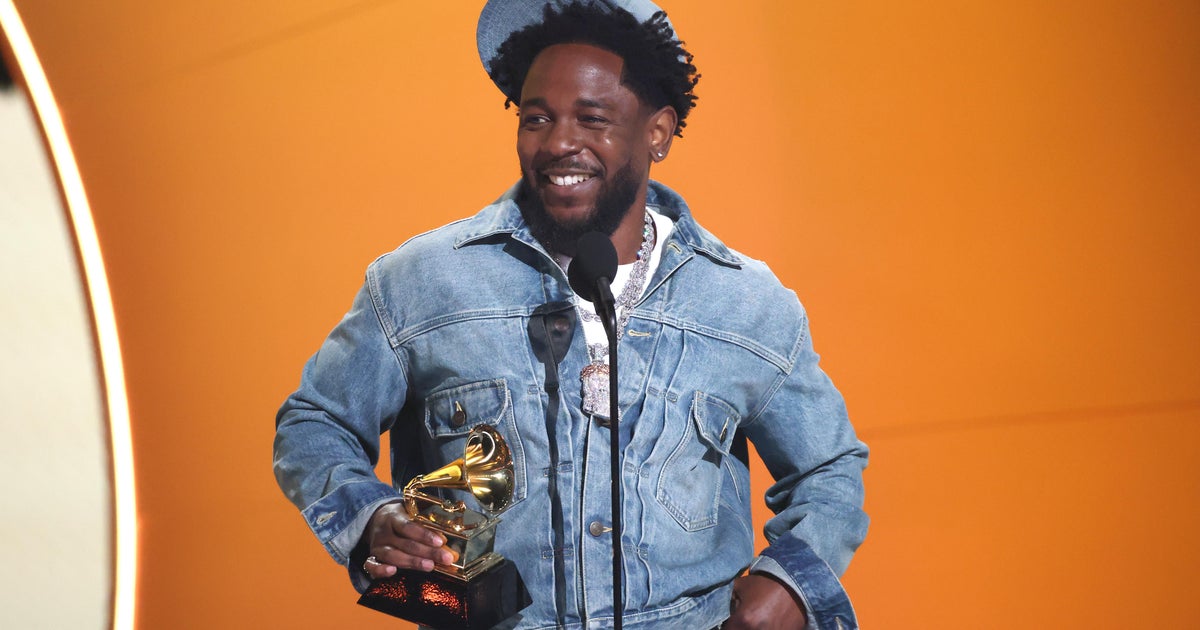
The 68th Grammy Awards nominations are out with Kendrick Lamar leading with nine nods.
Following Lamar, Lady Gaga, Jack Antonoff and Canadian record producer and songwriter Cirkut received seven nominations. Bad Bunny, Sabrina Carpenter, Leon Thomas and Serban Ghenea were all nominated in six categories.
Music released between Aug. 31, 2024, and Aug. 30, 2025, is eligible for Grammy nominations — meaning some notable recent winners, including Beyoncé and Taylor Swift, were not eligible for nominations.
This year’s awards include two new categories: best traditional country album and best album cover. The existing best country album category was renamed to best contemporary country album.
The award show will take place on Sunday, Feb. 1, in Los Angeles. It will air on CBS and Paramount+.
Here’s a look at the 2026 Grammy Awards nominees:
Album of the Year
- “DeBÍ TiRAR MáS FOToS” — Bad Bunny
- “SWAG” — Justin Bieber
- “Man’s Best Friend” — Sabrina Carpenter
- “Let God Sort Em Out” — Clipse, Pusha T & Malice
- “MAYHEM” — Lady Gaga
- “GNX” — Kendrick Lamar
- “MUTT” — Leon Thomas
- “CHROMAKOPIA” — Tyler, The Creator
Song of the Year
- “Abracadabra” – Lady Gaga, Henry Walter & Andrew Watt, songwriters (Lady Gaga)
- “Anxiety” – Jaylah Hickmon, songwriter (Doechii)
- “APT.” – Amy Allen, Christopher Brody Brown, Rogét Chahayed, Omer Fedi, Philip Lawrence, Bruno Mars, Chae Young Park, Theron Thomas & Henry Walter, songwriters (ROSÉ, Bruno Mars)
- “DtMF” – Marco Daniel Borrero, Scott Dittrich, Benjamin Falik, Benito Antonio Martínez Ocasio, Hugo René Sención Sanabria, Tyler Thomas Spry & Roberto José Rosado Torres, songwriters (Bad Bunny)
- “Golden” [From “KPop Demon Hunters”] – EJAE & Mark Sonnenblick, songwriters (HUNTR/X:EJAE, Audrey Nuna, REI AMI)
- “luther” – Jack Antonoff, Roshwita Larisha Bacha, Matthew Bernard, Scott Bridgeway, Sam Dew, Ink, Kendrick Lamar, Solána Rowe, Mark Anthony Spears & Kamasi Washington, songwriters (Kendrick Lamar With SZA)
- “Manchild” – Amy Allen, Jack Antonoff & Sabrina Carpenter, songwriters (Sabrina Carpenter)
- “WILDFLOWER” – Billie Eilish O’Connell & Finneas O’Connell, songwriters (Billie Eilish)
Record of the Year
- “DtMF” — Bad Bunny
- “Manchild” — Sabrina Carpenter
- “Anxiety” — Doechii
- “WILDFLOWER” — Billie Eilish
- “Abracadabra” — Lady Gaga
- “luther” — Kendrick Lamar With SZA
- “The Subway” — Chappell Roan
- “APT.” — ROSÉ, Bruno Mars
Best New Artist
- Olivia Dean
- KATSEYE
- The Marias
- Addison Rae
- sombr
- Leon Thomas
- Alex Warren
- Lola Young
Producer of the year, non-classical
- Dan Auerbach
- Cirkut
- Dijon
- Blake Mills
- Sounwave
Songwriter of the year, non-classical
- Amy Allen
- Edgar Barrera
- Jessie Jo Dillon
- Tobias Jesso Jr.
- Laura Veltz
Best album cover
- “CHROMAKOPIA” — Shaun Llewellyn & Luis “Panch” Perez, art directors (Tyler, The Creator)
- “The Crux” — William Wesley II, art director (Djo)
- “Debí Tirar Más Fotos” — Benito Antonio Martinez Ocasio, art director (Bad Bunny)
- “Glory” — Cody Critcheloe & Andrew J.S., art directors (Perfume Genius)
- “moisturizer” — Hester Chambers, Ellis Durand, Henry Holmes, Matt de Jong, Jamie-James Medina, Joshua Mobaraki & Rhian Teasdale, art directors (Wet Leg)
Best pop solo performance
- “DAISIES” — Justin Bieber
- “Manchild” — Sabrina Carpenter
- “Disease” — Lady Gaga
- “The Subway” — Chappell Roan
- “Messy” — Lola Young
Best pop duo/group performance
- “Defying Gravity” — Cynthia Erivo & Ariana Grande
- “Golden” [From “KPop Demon Hunters”] — HUNTR/X: EJAE, Audrey Nuna, REI AMI
- “Gabriela” — KATSEYE
- “APT.” — ROSÉ, Bruno Mars
- “30 For 30” — SZA Featuring Kendrick Lamar
Best pop vocal album
- “SWAG” — Justin Bieber
- “Man’s Best Friend” — Sabrina Carpenter
- “Something Beautiful” — Miley Cyrus
- “MAYHEM” — Lady Gaga
- “I’ve Tried Everything But Therapy (Part 2)” — Teddy Swims
Best rock performance
- “U Should Not Be Doing That” — Amyl and The Sniffers
- “The Emptiness Machine” — Linkin Park
- “NEVER ENOUGH” — Turnstile
- “Mirtazapine” — Hayley Williams
- “Changes (Live From Villa Park) Back To The Beginning” — YUNGBLUD Featuring Nuno Bettencourt, Frank Bello, Adam Wakeman, II
Best metal performance
- “Night Terror” — Dream Theater
- “Lachryma” — Ghost
- “Emergence” — Sleep Token
- “Soft Spine” — Spiritbox
- “BIRDS” — Turnstile
Best rock song
- “As Alive As You Need Me To Be” — Trent Reznor & Atticus Ross, songwriters (Nine Inch Nails)
- “Caramel” — Vessel1 & Vessel2, songwriters (Sleep Token)
- “Glum” — Daniel James & Hayley Williams, songwriters (Hayley Williams)
- “NEVER ENOUGH” — Daniel Fang, Franz Lyons, Pat McCrory, Meg Mills & Brendan Yates, songwriters (Turnstile)
- “Zombie” — Dominic Harrison & Matt Schwartz, songwriters (YUNGBLUD)
Best rock album
- “private music” — Deftones
- “I quit” — HAIM
- “From Zero” — Linkin Park
- “NEVER ENOUGH” — Turnstile
- “Idols” — YUNGBLUD
Best R&B performance
- “YUKON” — Justin Bieber
- “It Depends” — Chris Brown Featuring Bryson Tiller
- “Folded” — Kehlani
- “MUTT (Live From NPR’s Tiny Desk)” — Leon Thomas
- “Heart Of A Woman” — Summer Walker
Best R&B song
- “Folded” — Darius Dixson, Andre Harris, Donovan Knight, Don Mills, Kehlani Parrish, Khris Riddick-Tynes & Dawit Kamal Wilson, songwriters (Kehlani)
- “Heart Of A Woman” — David Bishop & Summer Walker, songwriters (Summer Walker)
- “It Depends” — Nico Baran, Chris Brown, Ant Clemons, Ephrem Lopez Jr., Ryan Press, Bryson Tiller, Elliott Trent & Dewain Whitmore Jr., songwriters (Chris Brown Featuring Bryson Tiller)
- “Overqualified” — James John Abrahart Jr & Durand Bernarr, songwriters (Durand Bernarr)
- “YES IT IS” — Jariuce Banks, Lazaro Andres Camejo, Mike Hector, Peter Lee Johnson, Rodney Jones Jr., Ali Prawl & Leon Thomas, songwriters (Leon Thomas)
Best R&B album
- “BELOVED” — GIVĒON
- “Why Not More?” — Coco Jones
- “The Crown” — Ledisi
- “Escape Room” — Teyana Taylor
- “MUTT” — Leon Thomas
Best rap performance
- “Outside” — Cardi B
- “Chains & Whips” — Clipse, Pusha T & Malice Featuring Kendrick Lamar & Pharrell Williams
- “Anxiety” — Doechii
- “tv off” — Kendrick Lamar Featuring Lefty Gunplay
- “Darling, I” — Tyler, The Creator Featuring Teezo Touchdown
Best rap song
- “Anxiety” — Jaylah Hickmon, songwriter (Doechii)
- “The Birds Don’t Sing” — Gene Elliott Thornton Jr., Terrence Thornton, Pharrell Williams & Stevie Wonder, songwriters (Clipse, Pusha T & Malice Featuring John Legend & Voices Of Fire)
- “Sticky” — Aaron Bolton, Dwayne Carter, Jr., Dudley Alexander Duverne, Tyler Okonma, Janae Wherry, Gloria Woods & Rex Zamor, songwriters (Tyler, The Creator Featuring GloRilla, Sexyy Red & Lil Wayne)
- “TGIF” — Lucas Alegria, Dillon Brophy, Yakki Davis, Jess Jackson, Ronnie Jackson, Mario Mims, Jorge M. Taveras & Gloria Woods, songwriters (GloRilla)
- “tv off” — Jack Antonoff, Larry Jayy, Kendrick Lamar, Dijon McFarlane, Sean Momberger, Mark Anthony Spears & Kamasi Washington, songwriters (Kendrick Lamar Featuring Lefty Gunplay)
Best rap album
- “Let God Sort Em Out” — Clipse, Pusha T & Malice
- “GLORIOUS” — GloRilla
- “God Does Like Ugly” — JID
- “GNX” — Kendrick Lamar
- “CHROMAKOPIA” — Tyler, The Creator
Best country solo performance
- “Nose On The Grindstone” — Tyler Childers
- “Good News” — Shaboozey
- “Bad As I Used To Be” [From “F1® The Movie”] — Chris Stapleton
- “I Never Lie” — Zach Top
- “Somewhere Over Laredo” — Lainey Wilson
Best country duo/group performance
- “A Song To Sing” — Miranda Lambert And Chris Stapleton
- “Trailblazer” — Reba McEntire, Miranda Lambert, Lainey Wilson
- “Love Me Like You Used To Do” — Margo Price & Tyler Childers
- “Amen” — Shaboozey & Jelly Roll
- “Honky Tonk Hall Of Fame” — George Strait, Chris Stapleton
Best country song
- “Bitin’ List” — Tyler Childers, songwriter (Tyler Childers)
- “Good News” — Michael Ross Pollack, Sam Elliot Roman & Jacob Torrey, songwriters (Shaboozey)
- “I Never Lie” — Carson Chamberlain, Tim Nichols & Zach Top, songwriters (Zach Top)
- “Somewhere Over Laredo” — Andy Albert, Trannie Anderson, Dallas Wilson & Lainey Wilson, songwriters (Lainey Wilson)
- “A Song To Sing” — Jenee Fleenor, Jesse Frasure, Miranda Lambert & Chris Stapleton, songwriters (Miranda Lambert And Chris Stapleton)
Best traditional country album
- “Dollar A Day” — Charley Crockett
- “American Romance” — Lukas Nelson
- “Oh What A Beautiful World” — Willie Nelson
- “Hard Headed Woman” — Margo Price
- “Ain’t In It For My Health” — Zach Top
Best contemporary country album
- “Patterns” — Kelsea Ballerini
- “Snipe Hunter” — Tyler Childers
- “Evangeline Vs. The Machine” — Eric Church
- “Beautifully Broken” — Jelly Roll
- “Postcards From Texas” — Miranda Lambert
For a complete list of all 95 categories, visit GRAMMY.com.






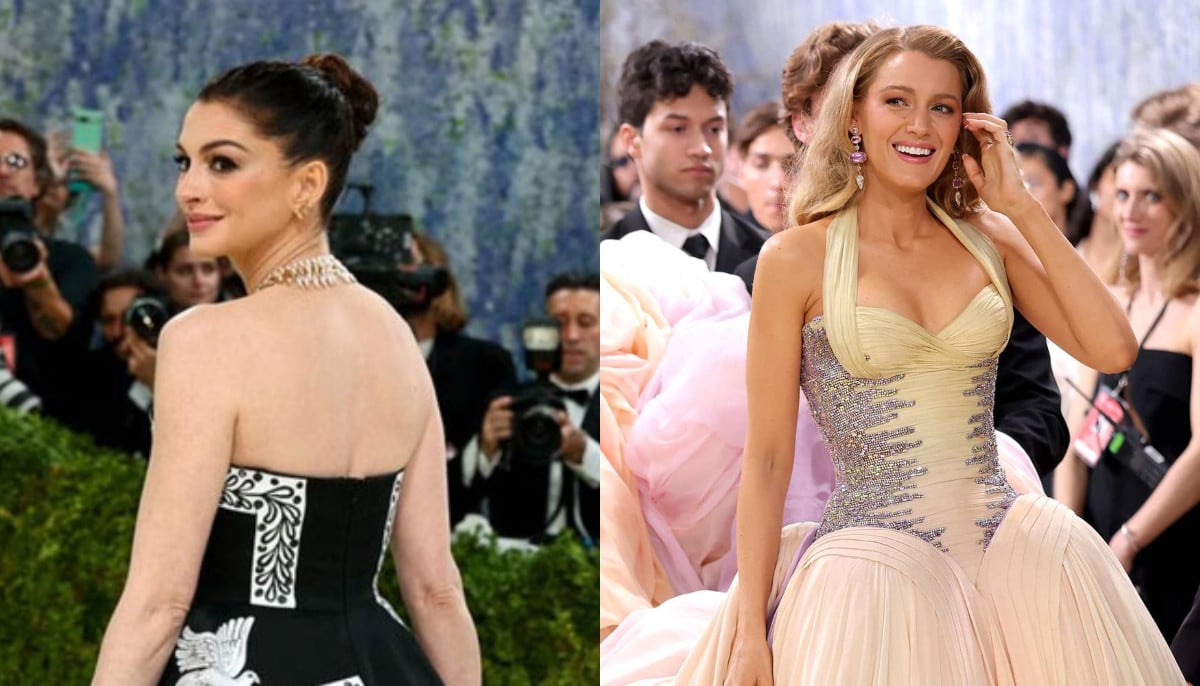
Anne Hathaway is facing a wave of online backlash after being pictured cosying up to Blake Lively at the 2026 Met Gala.
The controversy erupted after a photo, posted by Variety on Tuesday morning, showed Lively with her arm around a smiling Hathaway inside the Metropolitan Museum of Art.
Fans were quick to scold the Devil Wears Prada star for the association, particularly as Lively’s bombshell appearance came just hours after she settled a highly divisive and explosive legal battle with her It Ends With Us co-star and director, Justin Baldoni.
The reaction on social media has been swift and brutal, with many fans expressing deep disappointment in Hathaway.
One X user urged the actress to get away from Lively before she was sued, while others questioned why Hathaway would risk her hard-won public popularity by posing with someone many have labelled a “bully”.
The anger has even spilled over into calls for a boycott of Hathaway’s latest film, The Devil Wears Prada 2, with some disgruntled viewers claiming she has ruined the movie’s release by associating with Lively.
Lively’s presence at the star-studded event was a major surprise to those following the Vogue livestream, as it marked her first public outing since the conclusion of her lawsuit.
The legal drama, which began in December 2024, saw Lively accuse Baldoni and his production company of sexual harassment and retaliation.
However, a judge recently dismissed the majority of her claims, including all of the sexual harassment allegations, leaving the two parties to settle the remaining counts of breach of contract and retaliation out of court on Monday.
Despite the heavy atmosphere surrounding her legal woes, Lively appeared completely unbothered on the night, wearing a colourful archival Atelier Versace gown from 2006.
The settlement between Lively and Baldoni was framed by their legal teams as a way to find closure and move forward in peace, yet the public’s reaction to the Met Gala snap suggests that a “respectful environment online” remains a long way off.
While the film It Ends With Us was a box office hit in 2024, the off-screen friction clearly continues to shadow those involved.
For Hathaway, what was likely intended as a simple social moment has turned into a significant PR headache, as fans continue to slam the actress for her choice of company on fashion’s biggest night.
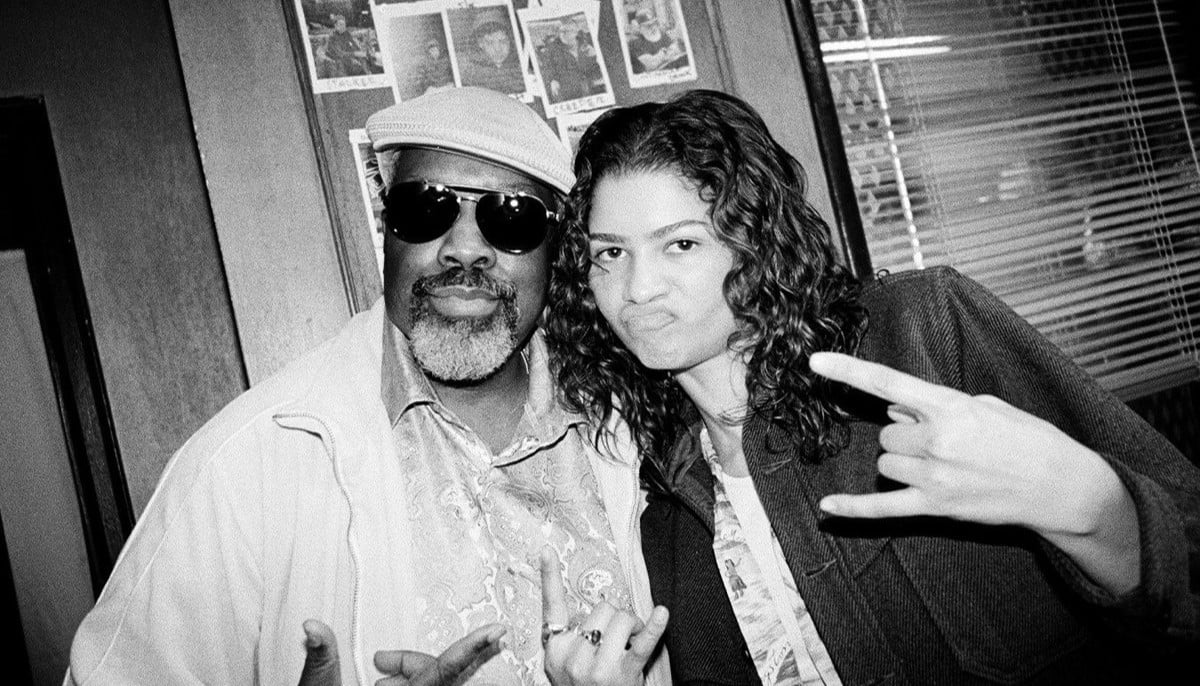
Kadeem Hardison has described his former Disney Channel daughter and current Euphoria co-star Zendaya as “a boss”, following their surprise on-screen reunion.
The pair, who starred together as father and daughter on the hit show K.C. Undercover a decade ago, have reunited for the latest season of the gritty HBO drama.
Hardison joined the cast as Big Eddy, a character working alongside Zendaya’s Rue in a strip club managed by drug lord Alamo.
The reunion has been a long time coming for the duo, who stayed in touch after their Disney days.
Hardison revealed to The Hollywood Reporter that it was Zendaya herself who introduced him to Euphoria creator Sam Levinson during a holiday dinner.
He admitted that when he first watched the show at its premiere, he was “wildly uncomfortable” seeing the intense world it depicted, which was a far cry from their family-friendly beginnings.
However, after meeting Levinson and visiting the set, he eventually landed the role of Big Eddy.
Reflecting on how much Zendaya has changed since she was a teenager, Hardison noted that while she has matured, her leadership qualities were visible even when she was 16.
He recalled being impressed that she was an executive producer on their Disney show, and he is even more struck by how she has expanded that role into her film career.
“She’s always been that person and she’s always been a boss,” he said, jokingly referring to the multi-award-winning actress as his “little big sister” because she is often the more mature one of the two.
The latest episode provided plenty of dramatic meat for both actors, with Hardison’s character caught in a violent drug war.
He confessed that watching Zendaya’s performance now is a shock compared to their early work, admitting he didn’t know she had such “depth” and felt he had to work hard to keep up with her.
For Hardison, whose career stretches back over three decades to A Different World, the experience was a full-circle moment that proved his own advice to fellow actors: as long as you stay in the game, the next big hit is always just around the corner.
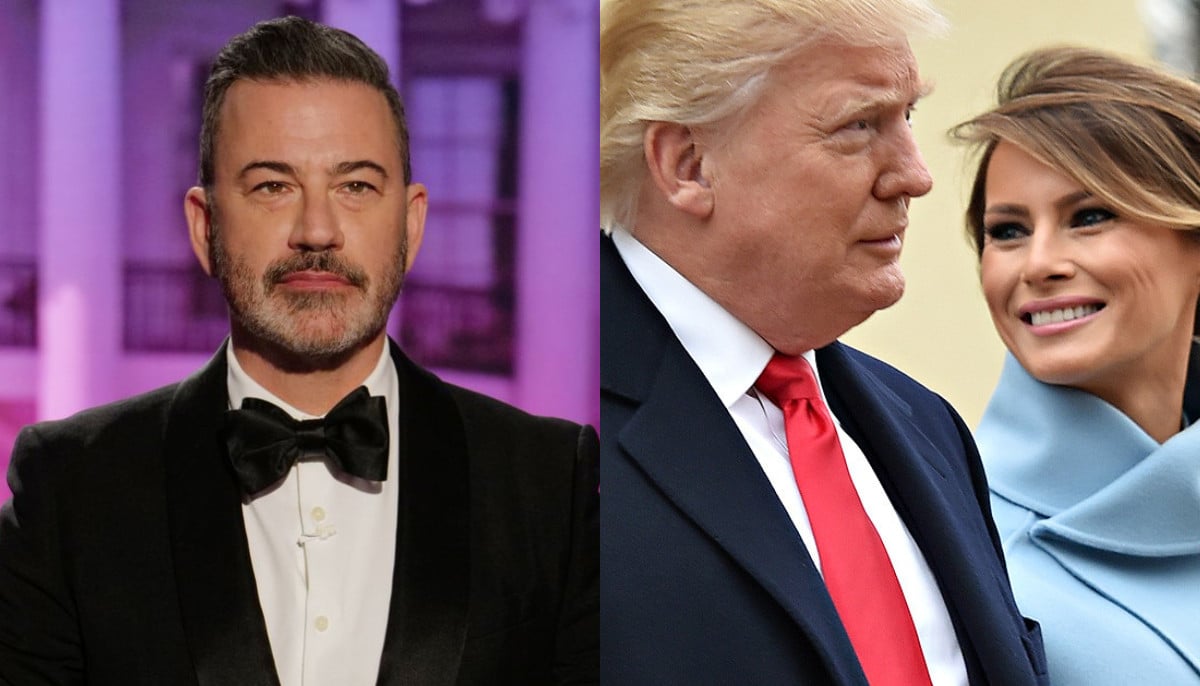
Jimmy Kimmel is pressing ahead with jokes about President Donald Trump and first lady Melania Trump, brushing off White House pressure and calls for him to be taken off air.
On his Monday, 4 May, show, Kimmel took aim at the president’s late-night posting activity on Truth Social, singling out a photo Trump shared of his wife.
“At 11:04, he posted this even more unbelievable picture of Melania smiling,” Kimmel said to laughter from the studio audience.
“I don’t know the last time we saw that.”
He also picked up on Trump’s weekend remarks at a Florida retirement community, where the president claimed Melania “hates” when he dances on stage to Y.M.C.A. by the Village People, which Trump called “the gay national anthem.”
“Melania hates when you do things? No way!” Kimmel quipped. “What a buzzkill.”
The jokes come as Kimmel finds himself in the middle of a serious escalation with the White House.
The dispute flared after a 23 April episode in which he described Melania as having “a glow like an expectant widow.”
Two days later, a gunman rushed security at the White House Correspondents’ Association Dinner.
The suspected shooter, 31-year-old Cole Tomas Allen, was subsequently charged with attempting to assassinate the president.
Melania, who had attended the dinner, made a rare public statement ahead of the court appearance, directly criticising Kimmel.
“People like Kimmel shouldn’t have the opportunity to enter our homes each evening to spread hate,” she wrote on X.
“Enough is enough. It is time for ABC to take a stand.”
White House communications director Steven Cheung called Kimmel a “s— human being” and said he should be fired “immediately.”
Kimmel defended the original remark, describing it as an “obvious” joke about the age gap between the president, 79, and the first lady, 56.
He also addressed Melania directly, expressing genuine sympathy about the scare at the dinner.
“I am sorry that you and the president and everyone in that room on Saturday went through that. I really am. Just ’cause no one got killed doesn’t mean it wasn’t traumatic and scary.”
Trump himself weighed in during a Newsmax appearance, calling Kimmel “a lowlife, whether he apologized or not” and saying he “shouldn’t be on television.”
The president had previously threatened to “test” ABC after the network briefly suspended Kimmel in September over remarks about the killing of conservative activist Charlie Kirk.
ABC and its parent company Disney are facing mounting pressure from the administration.
The Federal Communications Commission last week ordered a review of ABC’s station licences, citing a probe into possible violations of federal law and FCC rules at local ABC stations.


Cotton price surge lifts yarn rates sharply in South India
Oil prices fall as Trump pauses Project Freedom to seek final peace deal with Iran

US’ Crocs’ Q1 strong on DTC growth; margins, EPS decline

A Brain Implant for Depression Is About to Be Tested in Humans

Pro wrestling star Steph De Lander reveals how colleague’s advice helped lead her to title triumph at ACW

‘I had £20,000 stolen and had to fight a 13-month fraud reporting rule to get it back’

-
 Tech1 week ago
A Brain Implant for Depression Is About to Be Tested in Humans
-
 Sports1 week ago
Pro wrestling star Steph De Lander reveals how colleague’s advice helped lead her to title triumph at ACW
-
Business1 week ago
‘I had £20,000 stolen and had to fight a 13-month fraud reporting rule to get it back’
-

 Entertainment1 week ago
Norway joins Type 26 Frigate Programme to boost NATO naval power
-

 Tech1 week ago
Are tech leaders risking a cyber resourcing crisis? | Computer Weekly
-

 Entertainment1 week ago
Melania Trump says ABC should ‘take a stand’ on late-night host Kimmel
-
 Business6 days ago
PSX plunges over 4,800 points | The Express Tribune
-
 Business1 week ago
Starmer says ‘tide could be turning’ on shoplifting epidemic