

Fashion
Gran Canaria Swim Week closes most international edition to date, showcasing 44 brands and designers

Published
October 28, 2025
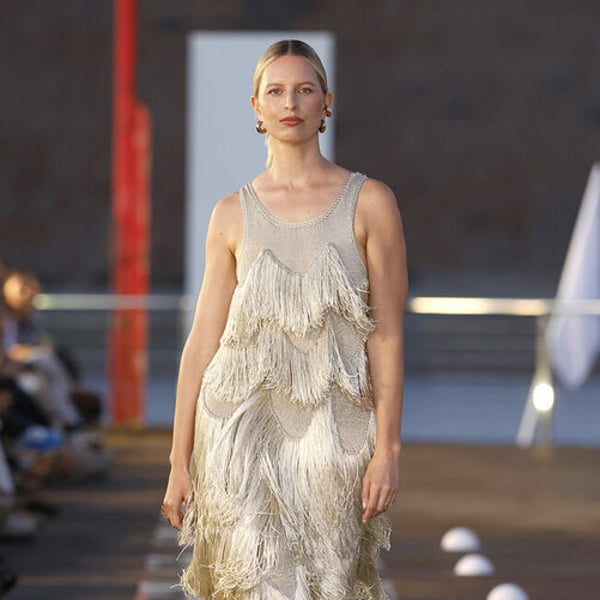
Swimwear once again takes centre stage in the Canary Islands. Gran Canaria Swim Week 2025, held from 22 to 25 October, brought together nearly fifty national and international brands and designers at the Expomeloneras exhibition centre, opening with an open-air first day.
According to the latest industry data, the event generates an economic impact of €6.25 million, boosting sectors such as restaurants, hospitality and transport, while the island’s fashion companies increased their turnover in 2024 by 24.58% on the previous year, when they recorded a total turnover of €1.1 million, consolidating Gran Canaria as the European epicentre of the sector.
A total of 44 brands from the local, national and international scene participated in this edition. Specifically, the event brought together 27 Canarian firms from Gran Canaria, La Palma, Tenerife and Lanzarote, as well as nine from mainland Spain and eight international. A line-up that demonstrates the consolidation and evolution of the event in recent years.
“You can see the evolution, and the project is taking clearer shape,” said Carlos San Juan, a long-standing figure on the catwalk, who highlighted the professional growth and international reach that Gran Canaria Swim Week has achieved.
Karolína Kurková, the star of the opening day
The opening day, held in Pasito Blanco, a marina in the south of the island, offered a different format with open-air catwalk shows by the sea. Czech supermodel Karolína Kurková, the face of the event, took part in several shows and provided one of the day’s highlights, arriving by boat to open the Victoria Cimadevilla show. The Oviedo-born, Madrid-based designer presented a collection inspired by Truman Capote’s Swans, “something glamorous, pure and that embodied the society of the time,” as she explained to FashionNetwork.com, crafted primarily in neoprene, in a black-and-white palette.
Local talent was once again a cornerstone of the event, with names such as Palmas, Diazar, Mare Far Niente, Pomeline and Elena Morales, underscoring the islands’ creative richness. Morales, one of Gran Canaria’s best-known designers, offered a more intimate, emotionally driven collection this time.
“Since my first show in 2018, the brand has evolved in all aspects. It is more developed and consolidated. I also enjoy the chaos of the catwalk more now,” she explained.
Her new collection, romantic and fluid in lightweight fabrics such as chiffon and kaftans, was presented in a show that departed from the energetic tone of her previous presentations, where techno music often took pride of place, in favour of something subtler, accompanied by Afro-Cuban notes, in tribute to the designer’s late grandfather.

Among the national brands, highlights included Ágatha Ruiz de la Prada, faithful to her playful and colourful universe; Bohodot, with its “Raíces del Sol”collection inspired by the Mediterranean; Fiona Ferrer, who combined local craftsmanship and international references, featuring Snoopy details that nodded to her FFL x Peanuts line; and the veteran Dolores Cortés, with decades on the catwalk.
“We are delighted to come, as always,” said Óscar Colomer, CEO of the family firm from Castellón and grandson of its founder, noting that, having taken part in practically every edition, “we have noticed a spectacular evolution of the event.”
The brand presented an exclusive selection from its “Earth” line, focused on neutral tones, natural fabrics and handcrafted techniques, reaffirming its commitment to meticulous production and sustainable design.
The international dimension of this edition came courtesy of names such as British designer Melissa Odabash, who celebrated 25 years in swimwear with the “Cruise 2026” collection, inspired by 1970s resort glamour; Colombian label Macaed, with a menswear offering imbued with Caribbean spirit and artisanal construction; Banana Moon, founded in Monaco, which fused Western style with a beach sensibility through fringing and synthetic suede; and Italian brand Miss Bikini, which presented “Boho Dream”, a collection blending craftsmanship and luxury with paisley prints, crochet and eco raffia accessories. “Beyond bikinis, our dress offering also accounts for a significant share of our sales,” noted Andrea Teofilatto, the brand’s founder and CEO, of a range made entirely in Italy with fabrics from Como.
The GCSW 2025 Awards recognised the work of three brands
The Gran Canaria Swim Week 2025 awards ceremony brought the final day to a close, with three brands receiving €3,000 each. Italian designer Dan Ward was recognised with the Best Collection Award, thanks to a collection that fused elegance and functionality with a resort sensibility, while the award for Best Sustainable Collection went to Canarian designer Elena Morales, for her artisanal work and commitment to the environment. Meanwhile, the Gran Canarian brand Mare Far Niente won the Best Emerging Collection award with “Viaje a la calma”, inspired by the Mediterranean and everyday life, underpinned by a commitment to the local.

The winning brands were selected by a jury comprising names such as Pepa Bueno, executive director of the Association of Spanish Fashion Creators (ACME); Simona Severini, director of White Milano; Scott Lipinski, CEO of the International Fashion Committee; Melanie Bauer, buyers’ representative; Araceli Díaz, representative of the Cabildo de Gran Canaria; Grisel Fernández, international adviser to the Chamber of Commerce; and Esther García Capdevila, director of Esma Events and creative director of Gran Canaria Swim Week.
With the backing of the Cabildo de Gran Canaria, through the Gran Canaria Moda Cálida programme, created in 1996 by the Cabildo’s Department of Industry, Commerce and Crafts, and supported since 2017 by ACME, the event reaffirmed with this new edition its role as an economic driver and platform for talent. \
“Gran Canaria has established itself as the island specialising in swimwear and as the leading European platform in this field,” stressed Minerva Alonso, councillor for economic development of the Cabildo, noting that, looking ahead, “the goal is to continue growing and consolidating our position not only as the benchmark swimwear catwalk in Europe, but also as a global reference point.”
This article is an automatic translation.
Click here to read the original article.
Copyright © 2025 FashionNetwork.com All rights reserved.



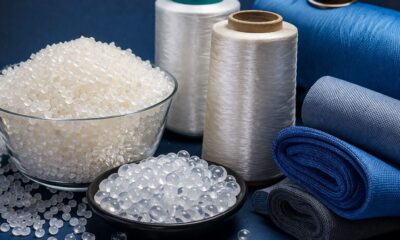






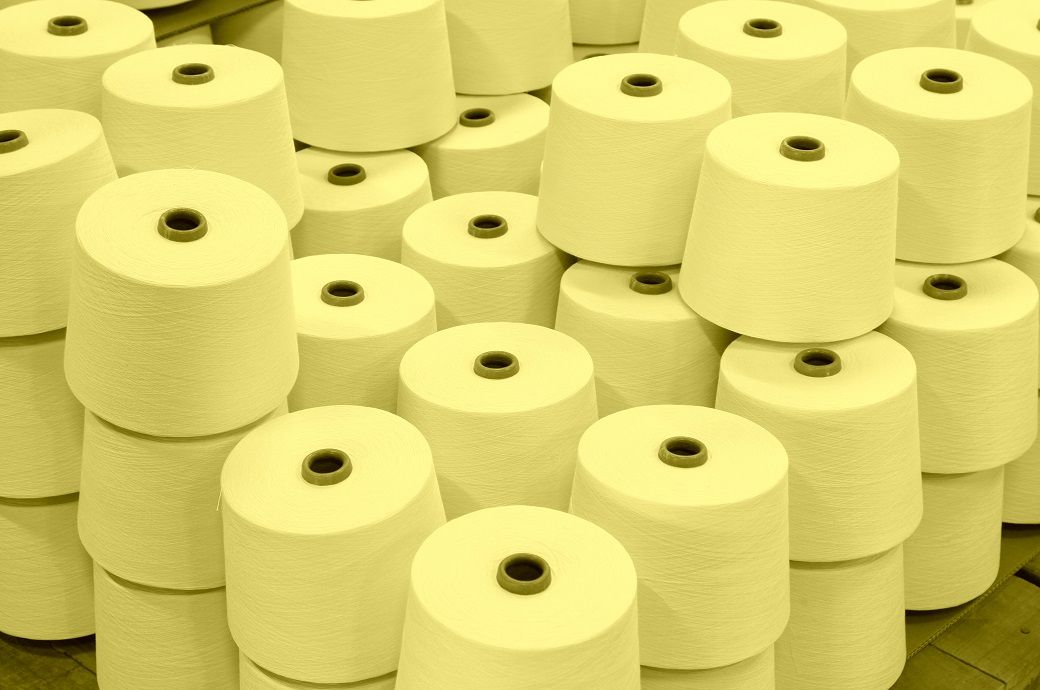
In the Tiruppur market, cotton yarn trade soared by ****;*–** per kg since last Friday. Spinning mills are increasing yarn prices to cover additional cost of production due to costly cotton. Cotton prices jumped by ****;*,***–*,*** per candy in the last couple of days. A trader from Tiruppur market told Fibre*Fashion, “It was inevitable to increase yarn prices as mills cannot absorb such steep rise in cotton prices. Even after increase in yarn prices, supplies are still limited as mills are exporting yarn at attractive prices. Indian spinning mills’ cotton yarn export ratio increased up to ** per cent of its total production from nearly ** per cent, few months ago.”
In Tiruppur, knitting cotton yarn prices were noted as: ** count combed cotton yarn at ****;***–*** (~$*.**–*.**) per kg (excluding GST), ** count combed cotton yarn at ****;***–*** (~$*.**–*.**) per kg, ** count combed cotton yarn at ****;***–*** (~$*.**–*.**) per kg, ** count carded cotton yarn at ****;***–*** (~$*.**–*.**) per kg, ** count carded cotton yarn at ****;***–*** (~$*.**–*.**) per kg, and ** count carded cotton yarn at ****;***–*** (~$*.**–*.**) per kg.
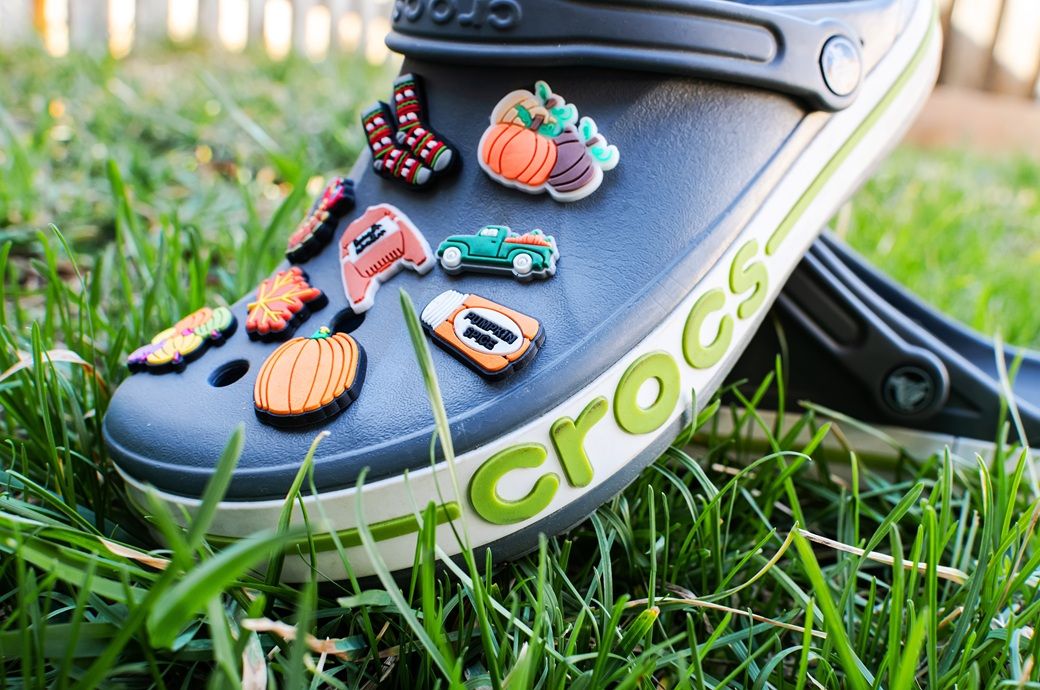
The company’s consolidated revenues stood at $921 million for the quarter ended March 31, 2026, down 1.7 per cent year on year (YoY), or 4 per cent on a constant currency basis. DTC revenues rose 12.1 per cent, while wholesale revenues declined 9.9 per cent. Gross margin fell to 56.8 per cent from 57.8 per cent, while operating income declined 9.9 per cent to $201 million. Diluted earnings per share (EPS) slipped to $2.71 from $2.83.
Crocs has reported better-than-expected Q1 2026 results, with revenue at $921 million, down 1.7 per cent, driven by 12.1 per cent DTC growth. Gross margin fell to 56.8 per cent, while EPS dipped to $2.71.
The Crocs brand grew modestly, but HEYDUDE declined.
CEO Andrew Rees highlighted strong consumer demand and raised FY26 guidance, projecting EPS of $13.20-13.75.
“We are pleased to have started the year with better-than-expected results, fuelled by broad consumer relevance for both of our brands and disciplined execution,” said Andrew Rees, chief executive officer (CEO) at Crocs. “We delivered enterprise revenue of over $900 million, supported by strong consumer response to product newness and consistent brand storytelling.”
The Crocs brand posted modest growth, with revenues up 0.8 per cent to $767 million, supported by a 12.9 per cent rise in DTC sales. International markets remained resilient, growing 7.2 per cent. However, North America revenues declined 6.1 per cent, Crocs said in a press release.
HEYDUDE revenues fell 12.3 per cent to $154 million, weighed down by a sharp 24.7 per cent drop in wholesale sales, although DTC revenues rose 8.6 per cent.
The company ended the quarter with $131 million in cash and reduced total borrowings to $1.34 billion.
Crocs lifts FY26 outlook; sees modest margin expansion
For full-year 2026, Crocs now expects revenues to range from down 1 per cent to up 1 per cent, with adjusted diluted earnings per share projected between $13.2 and $13.75. The company also anticipates modest expansion in adjusted operating margin.
For the second quarter, revenues are expected to decline slightly, with Crocs brand growth of 1–3 per cent and HEYDUDE projected to fall 12-14 per cent. Adjusted operating margin is forecast at around 24.7 per cent.
“Based on our first quarter performance, we are raising our full-year outlook on both the top- and bottom-line,” added Rees. “We remain confident in the long-term health of the business as we drive diversified growth across brands, channels and markets.”
Fibre2Fashion News Desk (SG)

The rise was largely driven by a rebound in energy costs. Prices of non-regulated energy products surged from a 2 per cent decline to a 9.9 per cent increase, while regulated energy prices rose 5.7 per cent after previously contracting, Istat said in a press release.
Italy’s inflation rose to 2.8 per cent YoY in April 2026 from 1.7 per cent in March, driven by a sharp rebound in energy prices, Istat said.
Monthly inflation stood at 1.2 per cent.
Goods inflation strengthened, while services inflation eased.
Transport costs increased notably.
The harmonised index (HICP) rose 2.9 per cent YoY, reflecting higher prices and seasonal factors.
In contrast, services inflation showed signs of moderation. Prices for recreation-related services eased to 2.6 per cent YoY, while transport services slowed sharply to 0.5 per cent. Overall services inflation decelerated to 2.4 per cent from 2.8 per cent in March.
Goods inflation, however, strengthened significantly, rising 3.2 per cent YoY compared with 0.8 per cent in the previous month. This narrowed the inflation gap between goods and services to -0.8 percentage points, down from +2 percentage points in March.
The monthly increase in the index was primarily led by higher prices for non-regulated energy (+5.7 per cent), transport services (+1.6 per cent), and recreation-related services (+1.4 per cent).
Among major consumption categories, water, electricity and fuels recorded a sharp 5.3 per cent annual increase, while transport prices rose 3.8 per cent.
Italy’s harmonised index of consumer prices (HICP), which allows comparison across the euro area, rose 2.9 per cent YoY in April, up from 1.6 per cent in March. On a monthly basis, HICP increased 1.7 per cent, partly reflecting the end of seasonal discounts in clothing and footwear.
Fibre2Fashion News Desk (SG)


Cotton price surge lifts yarn rates sharply in South India
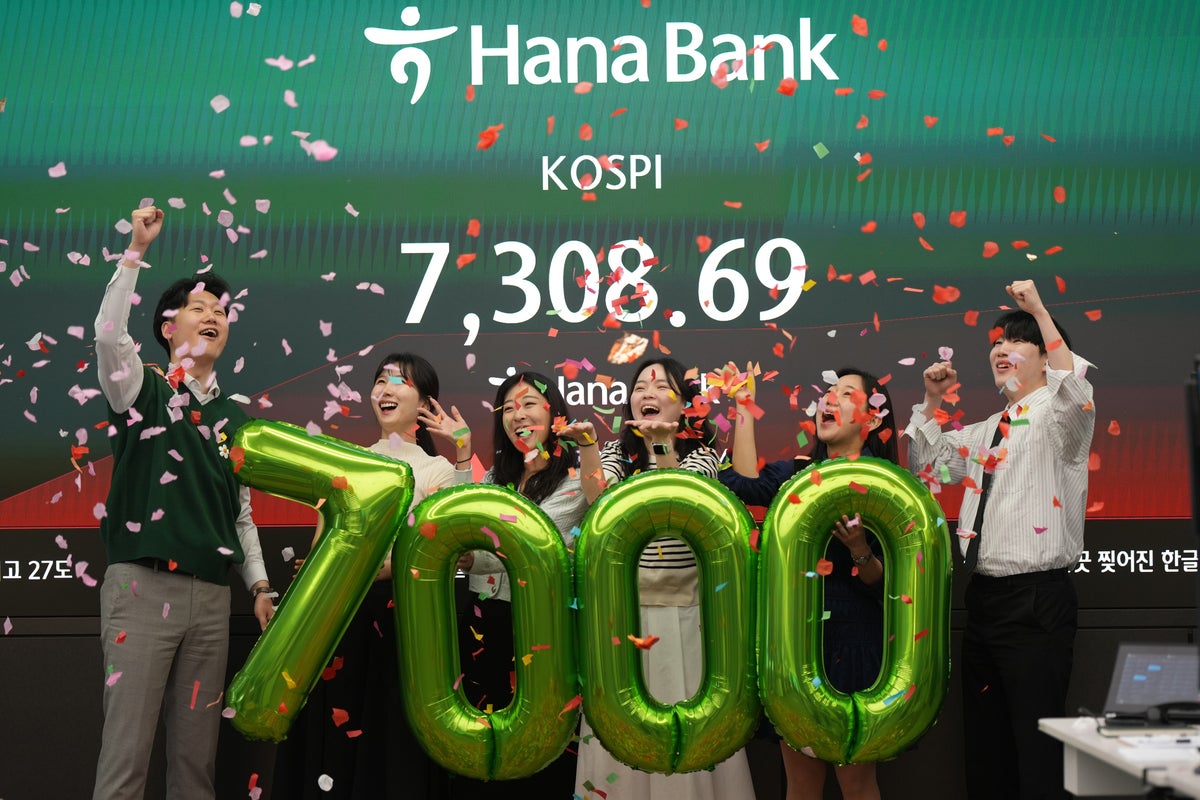
Oil prices fall as Trump pauses Project Freedom to seek final peace deal with Iran

US’ Crocs’ Q1 strong on DTC growth; margins, EPS decline

-

 Tech1 week ago
A Brain Implant for Depression Is About to Be Tested in Humans
-

 Tech1 week ago
Almost 90% of women leave tech industry within 10 years | Computer Weekly
-

 Sports1 week ago
Pro wrestling star Steph De Lander reveals how colleague’s advice helped lead her to title triumph at ACW
-
 Business1 week ago
‘I had £20,000 stolen and had to fight a 13-month fraud reporting rule to get it back’
-

 Entertainment1 week ago
Norway joins Type 26 Frigate Programme to boost NATO naval power
-

 Tech1 week ago
Are tech leaders risking a cyber resourcing crisis? | Computer Weekly
-

 Entertainment1 week ago
Melania Trump says ABC should ‘take a stand’ on late-night host Kimmel
-
 Business6 days ago
PSX plunges over 4,800 points | The Express Tribune