

Business
Greggs to reveal trading amid pressure from cost of living and weight loss drugs

Greggs is to shed light on demand from customers as the high street bakery chain contends with the rise of weight loss treatments and cost of living pressures on shoppers.
The high street chain is also wrestling with other factors including increases to labour costs and tax changes.
As a result, on Tuesday March 3, Greggs is expected to reveal pre-tax profits of around £173 million for the year to December 27, representing a 9% drop.
In its previous update shortly after Christmas, Greggs pointed to a strong finish to 2025 as sales growth accelerated in the final quarter of the year.
Like-for-like sales growth rose from 1.5% in the third quarter to 2.9% in the final months of 2025.
Totals sales were up 7.4% in the final quarter amid a boost from the group’s continued store opening programme.
The company opened 121 stores last year.
However, analysts at Deutsche Bank said expectations “have already been set low” for 2026 and are “unlikely to change”.
In January, Greggs said it was “cautious but hopeful” about its outlook for 2026, highlighting “subdued” consumer confidence.
Roisin Currie, chief executive of Greggs, also warned alongside its previous update that there was “no doubt” appetite-suppressing medication is having an impact on the bakery chain’s business.
It may provide more detail on how this continues to change customer eating habits.
Meanwhile, the group also announced that inflation was likely to be shallower than last year.
The group increased the price on a number of products and deals last year, so shareholders will also be keen to see how these changes have continued to impact trading.
Aarin Chiekrie, equity analyst at Hargreaves Lansdown, said: “Investors are keen to hear how 2026 is shaping up in the early months.
“While the picture on the cost front is beginning to look more favourable, Greggs has plenty of other challenges still to wrestle with.
“Unhelpful changes to tax rules and minimum wages, slowing UK economic growth, and cost-conscious consumers are all weighing on the outlook.”
Business
India, EU Commit To Provide Most-Favoured Nation Treatment For 5 Yrs, Shows Provisional FTA Text
Last Updated:
The Department of Commerce had announced that India will receive MFN treatment in committed services sectors for a period of five years from the Agreement’s entry into force




India announced a landmark FTA with the European Union in January.
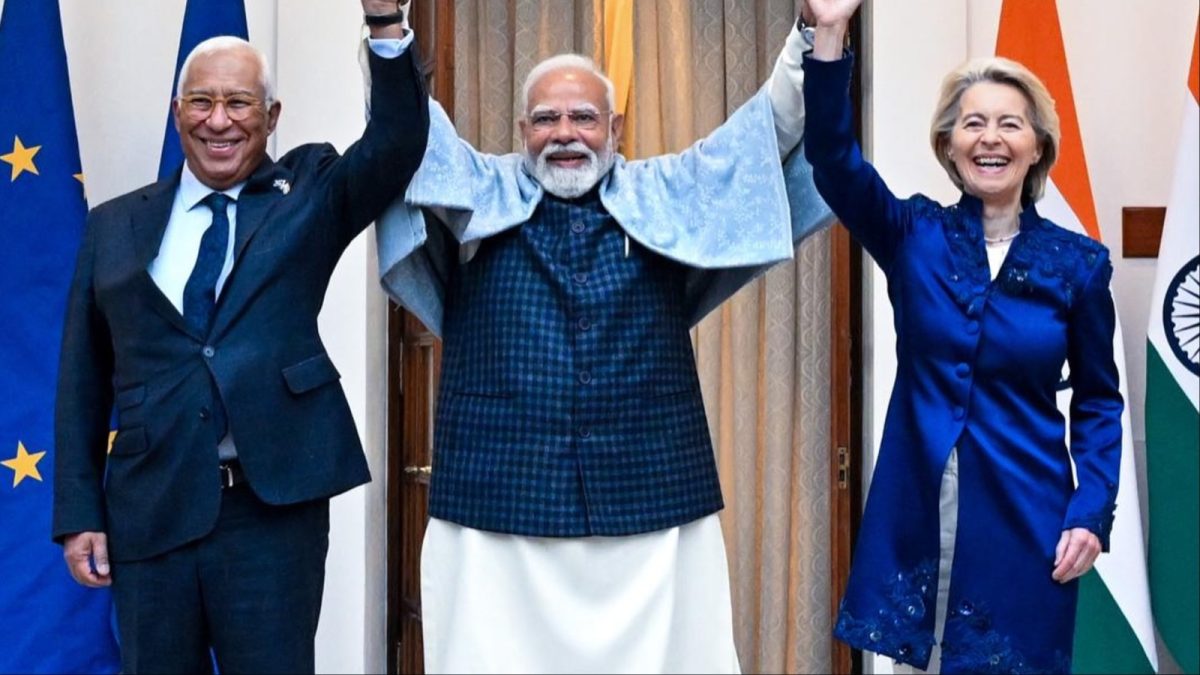
Weeks after India and the European Union (EU) clinched a historic free trade agreement (FTA) after nearly two decades of negotiations, the Department of Commerce on Friday released the provisional text of the agreement on its social media handles, which underscored that both countries will accord each other the Most Favoured Nation (MFN) treatment for a period of five years.
“After the historic conclusion of the India-EU Free Trade Agreement a few weeks ago, the provisional text of the agreement is now being made available. It provides a first comprehensive look at the scope and ambition of the agreement. Tariff schedules will follow at a later stage,” said the Commerce Department.
After the historic conclusion of the 🇮🇳–🇪🇺 Free Trade Agreement a few weeks ago, the provisional text of the agreement is now being made available.It provides a first comprehensive look at the scope and ambition of the agreement. Tariff schedules will follow at a later stage.… pic.twitter.com/imeTldZ1Wy
— Dept of Commerce, GoI (@DoC_GoI) February 27, 2026
As per the text, each party shall accord the Most Favoured Nation treatment for a period of 5 years from the date of entry into force of this agreement. That treatment shall apply after five years only if both parties mutually agree in the review to be carried out.
Earlier, the Department of Commerce had announced that India will receive MFN treatment in committed services sectors for a period of five years from the Agreement’s entry into force, ensuring non-discriminatory market access.
The continuation of MFN benefits beyond five years will be subject to a review mechanism, including developments related to the entry, stay, and work rights of Indian students, as well as progress on social security arrangements with EU member states.
The provisional text of the India-EU FTA comprises 20 chapters, including trade in goods, customs and trade facilitation, trade remedies, professional services, financial services, digital trade, intellectual property, good regulatory practices, dispute settlement, code of conduct and more.
India-EU FTA
The EU-India Free Trade Agreement (FTA), concluded in January, was hailed by both sides as the “mother of all deals” as it opens up the vast market of 27 nations for India. It provides immediate duty-free access for over 70.4% of Indian tariff lines, covering more than 90.7% of its export value.
The European Union is India’s largest trading partner, with bilateral goods trade reaching $135 billion in FY 2023–24. Upon full implementation of the trade agreement, a staggering 99% of Indian exports will enter the EU without any duties offering a massive competitive edge to labour-intensive sectors such as textiles and leather.
A central element of the talks has been tariff reduction. India is expected to significantly lower import duties on European cars and wine, while the EU will ease access for Indian products such as textiles, garments, jewellery, chemicals, pharmaceuticals and electronics.
Talks on the India-EU FTA first began in 2007 but were suspended in 2013 over disagreements on tariffs, market access and regulatory standards. Negotiations were revived in 2022 and accelerated last year as global trade tensions intensified and both sides sought to diversify economic partnerships.
 Click here to add News18 as your preferred news source on Google.
Follow News18 on Google. Join the fun, play games on News18. Stay updated with all the latest business news, including market trends, stock updates, tax, IPO, banking finance, real estate, savings and investments. To Get in-depth analysis, expert opinions, and real-time updates. Also Download the News18 App to stay updated.
February 27, 2026, 23:34 IST
Read More
Business
India’s GDP grows at 7.8% in Q3 FY 2025-26: Top highlights from first data under new series – The Times of India
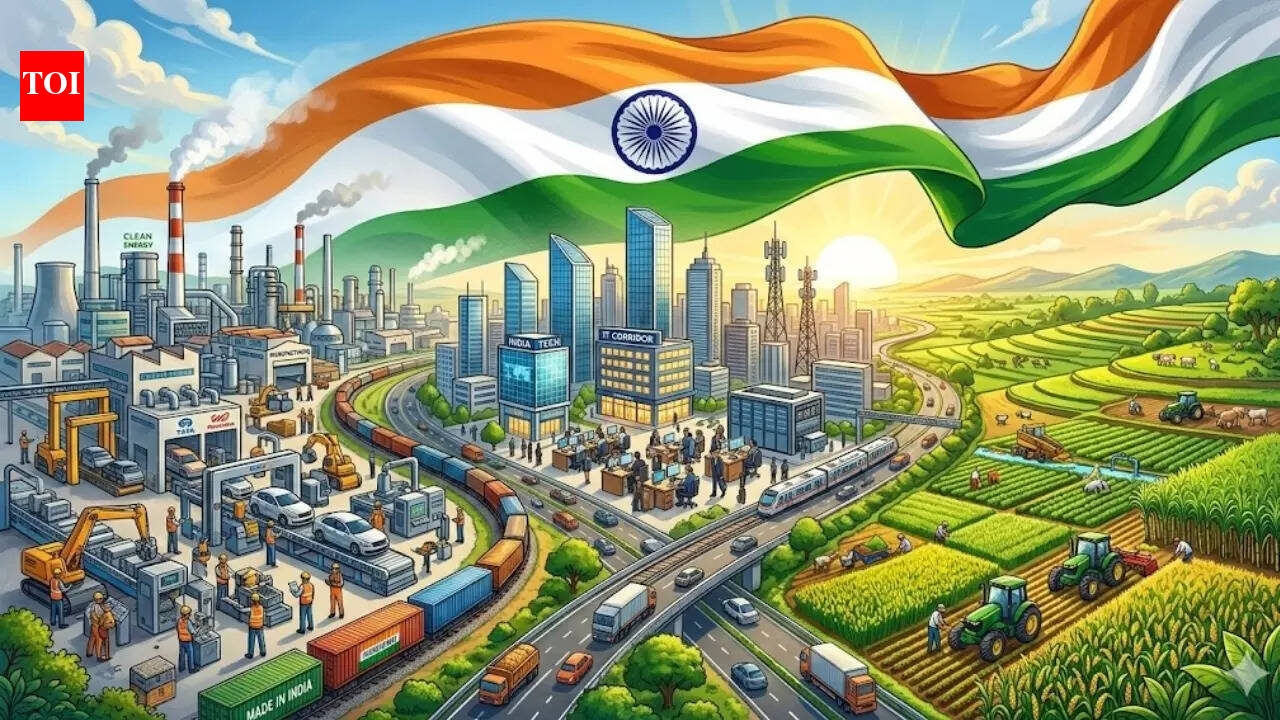
India’s real GDP grew at a robust 7.8% in the third quarter of FY 2025-26 according to data released by the Ministry of Statistics and Programme Implementation (MoSPI). This is the first GDP data that has been released by MoSPI under the new series which revises the base year for calculation purposes.India’s economy grew at 7.8% in the October–December quarter of 2025-26, compared with 7.4% in the corresponding period a year earlier, according to the revised national accounts series.MoSPI on Friday released the updated annual and quarterly national accounts estimates based on the 2022-23 base year, replacing the earlier series that used 2011-12 as the reference year.
India’s Q3 FY 2025-26 GDP data: Key Highlights
1. Under the revised series, GDP growth for the current financial year is projected at 7.6 per cent, slightly higher than the 7.4 per cent estimate provided in the ministry’s advance projections issued in January. Nominal GDP is projected to increase by 8.6 per cent in FY 2025-26. 2. The growth estimate for the July–September quarter of 2025-26 has been revised upward to 8.4 per cent from the earlier 8.2 per cent. 3. In contrast, the estimate for the April–June quarter has been lowered to 6.7 per cent from the previously reported 7.8 per cent.4. The overall economic performance in FY 2025-26 has been supported mainly by strong real growth recorded in the second quarter at 8.4 per cent and in the third quarter at 7.8 per cent.5. The economy has maintained steady growth momentum, with real GDP rising by 7.2 per cent in FY 2023-24 and 7.1 per cent in FY 2024-25.6. Nominal GDP growth stood at 11.0 per cent in FY 2023-24 and 9.7 per cent in FY 2024-25.7. Following the base year revision, the manufacturing sector has emerged as a key contributor to the economy’s resilience over the past three financial years, seeing double-digit growth in FY 2023-24 and again in FY 2025-26.8. Growth in both the secondary and tertiary sectors has also strengthened economic performance, with each recording growth of more than 9 per cent in FY 2025-26.9. Within the services segment, the “Trade, Repair, Hotels, Transport, Communication and Services related to Broadcasting and Storage” category registered growth of 10.1 per cent at constant prices in FY 2025-26.10. On the expenditure side, Private Final Consumption Expenditure and Gross Fixed Capital Formation each recorded growth exceeding 7 per cent during FY 2025-26.

new video loaded: The Web of Companies Owned by Elon Musk

By Kirsten Grind, Melanie Bencosme, James Surdam and Sean Havey
February 27, 2026

India, EU Commit To Provide Most-Favoured Nation Treatment For 5 Yrs, Shows Provisional FTA Text

Pakistan’s semi-final qualification scenario after England defeat New Zealand
Greggs to reveal trading amid pressure from cost of living and weight loss drugs

A $10K Bounty Awaits Anyone Who Can Hack Ring Cameras to Stop Sharing Data With Amazon
US Top Court Blocks Trump’s Tariff Orders: Does It Mean Zero Duties For Indian Goods?

Donald Trump Jr.’s Private DC Club Has Mysterious Ties to an Ex-Cop With a Controversial Past

-
 Tech1 week ago
A $10K Bounty Awaits Anyone Who Can Hack Ring Cameras to Stop Sharing Data With Amazon
-
Business1 week ago
US Top Court Blocks Trump’s Tariff Orders: Does It Mean Zero Duties For Indian Goods?
-
 Tech1 week ago
Donald Trump Jr.’s Private DC Club Has Mysterious Ties to an Ex-Cop With a Controversial Past
-

 Fashion1 week ago
ICE cotton ticks higher on crude oil rally
-

 Entertainment1 week ago
The White Lotus” creator Mike White reflects on his time on “Survivor
-
 Politics1 week ago
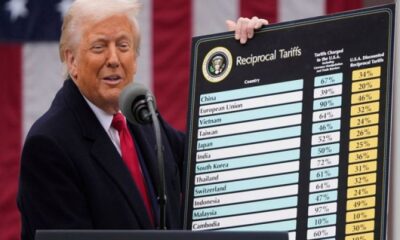
US Supreme Court strikes down Trump’s trade tariff measures
-
 Business6 days ago
Eye-popping rise in one year: Betting on just gold and silver for long-term wealth creation? Think again! – The Times of India
-

 Fashion1 week ago
India’s $28 bn reset: How 5 trade deals will reprice its T&A exports