

Tech
Grok Is Pushing AI ‘Undressing’ Mainstream


Elon Musk hasn’t stopped Grok, the chatbot developed by his artificial intelligence company xAI, from generating sexualized images of women. After reports emerged last week that the image generation tool on X was being used to create sexualized images of children, Grok has created potentially thousands of nonconsensual images of women in “undressed” and “bikini” photos.
Every few seconds, Grok is continuing to create images of women in bikinis or underwear in response to user prompts on X, according to a WIRED review of the chatbots’ publicly posted live output. On Tuesday, at least 90 images involving women in swimsuits and in various levels of undress were published by Grok in under five minutes, analysis of posts show.
The images do not contain nudity but involve the Musk-owned chatbot “stripping” clothes from photos that have been posted to X by other users. Often, in an attempt to evade Grok’s safety guardrails, users are, not necessarily successfully, requesting photos to be edited to make women wear a “string bikini” or a “transparent bikini.”
While harmful AI image generation technology has been used to digitally harass and abuse women for years—these outputs are often called deepfakes and are created by “nudify” software—the ongoing use of Grok to create vast numbers of nonconsensual images marks seemingly the most mainstream and widespread abuse instance to date. Unlike specific harmful nudify or “undress” software, Grok doesn’t charge the user money to generate images, produces results in seconds, and is available to millions of people on X—all of which may help to normalize the creation of nonconsensual intimate imagery.
“When a company offers generative AI tools on their platform, it is their responsibility to minimize the risk of image-based abuse,” says Sloan Thompson, the director of training and education at EndTAB, an organization that works to tackle tech-facilitated abuse. “What’s alarming here is that X has done the opposite. They’ve embedded AI-enabled image abuse directly into a mainstream platform, making sexual violence easier and more scalable.”
Grok’s creation of sexualized imagery started to go viral on X at the end of last year, although the system’s ability to create such images has been known for months. In recent days, photos of social media influencers, celebrities, and politicians have been targeted by users on X, who can reply to a post from another account and ask Grok to change an image that has been shared.
Women who have posted photos of themselves have had accounts reply to them and successfully ask Grok to turn the photo into a “bikini” image. In one instance, multiple X users requested Grok alter an image of the deputy prime minister of Sweden to show her wearing a bikini. Two government ministers in the UK have also been “stripped” to bikinis, reports say.
Images on X show fully clothed photographs of women, such as one person in a lift and another in the gym, being transformed into images with little clothing. “@grok put her in a transparent bikini,” a typical message reads. In a different series of posts, a user asked Grok to “inflate her chest by 90%,” then “Inflate her thighs by 50%,” and, finally, to “Change her clothes to a tiny bikini.”
One analyst who has tracked explicit deepfakes for years, and asked not to be named for privacy reasons, says that Grok has likely become one of the largest platforms hosting harmful deepfake images. “It’s wholly mainstream,” the researcher says. “It’s not a shadowy group [creating images], it’s literally everyone, of all backgrounds. People posting on their mains. Zero concern.”










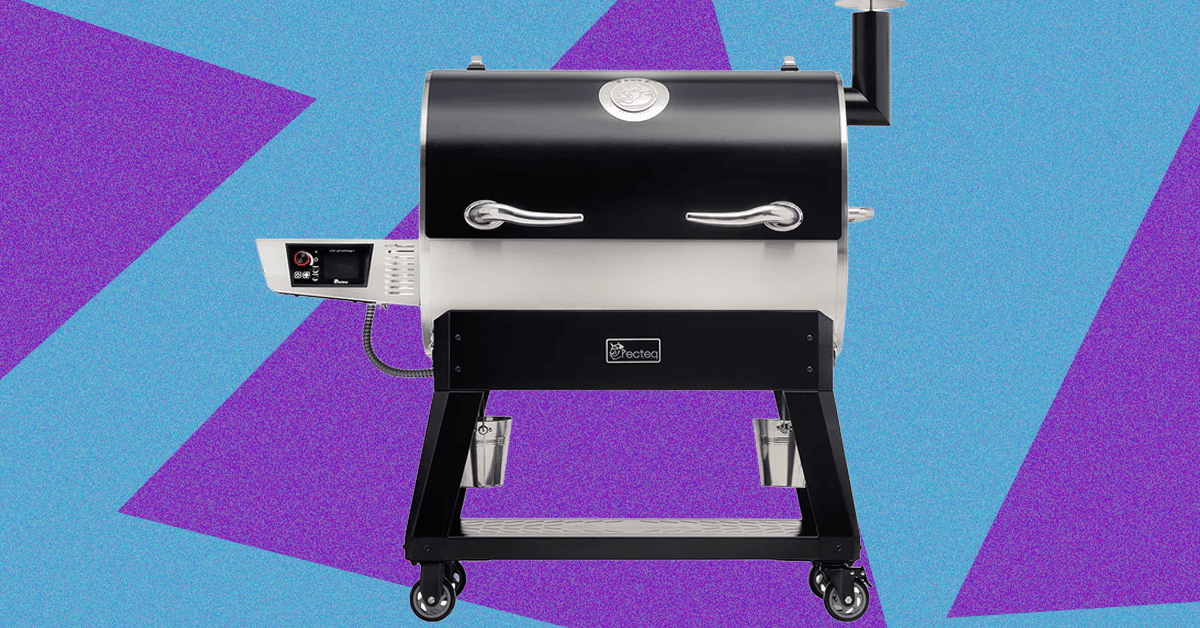
While my love of smoked meats is well-documented, my own journey into actually tending the fire started just last spring when I jumped at the opportunity to review the Traeger Woodridge Pro. When Recteq came calling with a similar offer to check out the Flagship 1600, I figured it would be a good way to stay warm all winter.
While the two smokers have a lot in common, the Recteq definitely feels like an upgrade from the Traeger I’ve been using. Not only does it have nearly twice the cooking space, but the huge pellet hopper, rounded barrel, and proper smokestack help me feel like a real pitmaster.
The trade-off is losing some of the usability features that make the Woodridge Pro a great first smoker. The setup isn’t as quite as simple, and the larger footprint and less ergonomic conditions require a little more experience or patience. With both options, excellent smoked meat is just a few button presses away, but speaking as someone with both in their backyard, I’ve been firing up the Recteq more often.
Getting Settled
Photograph: Brad Bourque
Setting up the Recteq wasn’t as time-consuming as the Woodridge, but it was more difficult to manage on my own. Some of the steps, like attaching the bull horns to the lid, or flipping the barrel onto its stand, would really benefit from a patient friend or loved one. Like most smokers, you’ll need to run a burn-in cycle at 400 degrees Fahrenheit to make sure there’s nothing left over from manufacturing or shipping. Given the amount of setup time and need to cool down the smoker after, I would recommend setting this up Friday afternoon if you want to smoke on a Saturday.

The main job of Google Chrome is to give you a window to the web. With so much engaging content out there on the internet, you may not have given much thought to the browser framework that serves as the container for the sites you visit.
You’d be forgiven for still using the default toolbar configuration that was in place when you first installed Chrome. But if you take a few minutes to customize it, it can make a significant difference to your browsing. You can get quicker access to the key features you need, and you may even discover features you didn’t know about.
If you’re reading this in Chrome on the desktop, you can experiment with a few customizations right now—all it takes is a few clicks. Here’s how the toolbar in Chrome is put together, and all the different changes you can make.
The Default Layout
Take a look up at the top right corner of your Chrome browser tab and you’ll see two key buttons: One reveals your browser extensions (the jigsaw piece), and the other opens up your bookmarks (the double-star icon). There should also be a button showing a downward arrow, which gives you access to recently downloaded files.
Right away, you can start customizing. If you click the jigsaw piece icon to show your browser extensions, you can also click the pin button next to any one of these extensions to make it permanently visible on the toolbar. While you don’t want your toolbar to become too cluttered, it means you can put your most-used add-ons within easy reach.
For the extension icons you choose to have on the toolbar, you can choose the way they’re arranged, too: Click and drag on any of the icons to change its position (though the extensions panel itself has to stay in the same place). To remove an extension icon (without uninstalling the extension), right-click on it and choose Unpin.
Making Changes

Click the three dots up in the top right corner of any browser window and then Settings > Appearance > Customize your toolbar to get to the main toolbar customization panel, which has recently been revamped. Straight away you’ll see toggle switches that let you show or hide certain buttons on the toolbar.

“The trade-off isn’t only ethical or economic,” Andreaux adds. “It’s also about reliability, privacy and personal security.”
Abed Kataya, digital content manager at SMEX, a Beirut-based digital rights organization focused on internet policy in the Middle East and North Africa, says piracy in the region is shaped less by culture than by structural barriers.
“I see that piracy in MENA is not a cultural choice; rather, it has multiple layers,” Kataya tells WIRED Middle East.
“First, when the internet spread across the region, as in many other regions, people thought everything on it was free,” Kataya says. “This perception was based on the nature of Web 1.0 and 2.0, and how the internet was presented to people.”
Today, he says, structural barriers still lead many users towards illegal platforms. “Users began to watch online on unofficial streaming platforms for many reasons: lack of local platforms, inability to pay, bypassing censorship and, of course, to watch for free or at lower prices.”
Payment access also remains a major factor. “Not to mention that many are unbanked, do not have bank accounts, lack access to online payments, or do not trust paying with their cards and have a general distrust of online payments,” Kataya adds.
Algerian students also share external hard drives loaded with television series, while in Lebanon streaming passwords are frequently shared across households. In Egypt, large Telegram channels distribute content across different genres, including Korean dramas, classic Arab films and underground music.
“We grew up solving problems online,” says Mira. “When something is blocked, you find a way around it. It’s … a fundamental human instinct.”
Streaming Platforms Adapting
Andreaux says StarzPlay has tried to address some of the payment barriers that limit streaming adoption in the region. “StarzPlay recognized early that payment friction was a regional barrier to adoption,” he says. “That’s why we invested in flexible subscription models and alternative payment methods, including telecom-led billing options that make access easier across different markets.”
At the same time, international media companies are working together to combat piracy through the Alliance for Creativity and Entertainment (ACE), a coalition of film studios, television networks and streaming platforms that targets illegal distribution of films, television and sports content. Its members include global companies such as Netflix as well as regional players like OSN Group, which operates the streaming service OSN+ across the Middle East and North Africa.
Kataya notes that legitimate streaming platforms are still expanding across the region. “The user base of official streaming platforms has been growing in the region,” he says. “For example, Shahid, the Saudi platform, is expanding and Netflix has dedicated packages for the region.”
“Other players, like StarzPlay and local platforms in Egypt, are also finding their place,” Kataya adds. “Social media also plays a huge role, especially when a film is widely discussed or controversial.”
Piracy carries legal and security risks, Andreaux says. “Rather than just ‘free streaming’, piracy exposes consumers to malware and insecure payment channels,” he says. “It also weakens investment in local content by depriving creators of revenue and reducing jobs.”
But the structural barriers described by users across the region remain. For many viewers in North Africa and the Levant, the challenge is not choosing between piracy and legality—it is whether legitimate access exists at all.


Two ships hit near Strait of Hormuz as fears grow of oil price rises

IRGC Claims Missile Strikes on US Aircraft Carrier Amid Escalation

Maggie Gyllenhaal details emotional reunion with brother Jake Gyllenhaal

ICE cotton ticks higher on crude oil rally

Pakistan carries out precision strikes on seven militant hideouts in Afghanistan

Eye-popping rise in one year: Betting on just gold and silver for long-term wealth creation? Think again! – The Times of India

-
 Fashion1 week ago
ICE cotton ticks higher on crude oil rally
-
 Politics1 week ago
Pakistan carries out precision strikes on seven militant hideouts in Afghanistan
-
Business1 week ago
Eye-popping rise in one year: Betting on just gold and silver for long-term wealth creation? Think again! – The Times of India
-

 Sports1 week ago
Kansas’ Darryn Peterson misses most of 2nd half with cramping
-

 Entertainment1 week ago
Saturday Sessions: Say She She performs "Under the Sun"
-

 Entertainment1 week ago
Viral monkey Punch makes IKEA toy global sensation: Here’s what it costs
-

 Sports1 week ago
Floyd Mayweather to come out of retirement again
-
 Business1 week ago
Equinox chairman says ‘health is the new luxury’ as wellness spending soars