

Politics
Group leading Morocco protests demands govt dismissal



The group leading Morocco’s mass protests called on Friday for the government’s dismissal, following days of unrest that have seen the deaths of three people.
The demand came after fresh demonstrations demanding reforms to the health and education sectors took place across the kingdom on Thursday, a sixth consecutive day of largely peaceful protests pockmarked with spates of violence.
“We demand the dismissal of the current government for its failure to protect the constitutional rights of Moroccans and respond to their social demands,” protest group GenZ 212 said.
The group, whose organisers remain unknown, also demanded the “release of all those detained in connection with the peaceful protests”.
The rallies across the usually stable country have been fuelled by anger over social inequality, particularly following reports last month of the deaths of eight pregnant women at a public hospital in the city of Agadir.
Many Moroccans feel that the public health and education sectors should be improved as the kingdom pushes forward with major infrastructure projects to host the Africa Cup of Nations in December and part of the 2030 World Cup.
GenZ 212 said it was basing its demand for the firing of the government on an article in the constitution that “grants His Majesty the King the power to appoint and dismiss the Prime Minister and members of the government”.
The group has largely used the Discord online messaging platform to spread its calls for protest, and has repeatedly distanced itself from the violence and vandalism seen in some cities.
In the capital Rabat on Thursday, demonstrators carrying Moroccan flags demanded “health and not just stadiums”, according to an AFP journalist, who said there were no violent incidents.
Other rallies were reported in Casablanca, Marrakech and Agadir, also with no sign of unrest.
‘Dialogue’
Earlier on Thursday, Prime Minister Aziz Akhannouch said in his first public address since the unrest started that his government was willing to “engage in dialogue” and “respond to the (protesters’) demands”.
The premier also said three people had been killed during protests the night before, describing the events as “regrettable”.
An interior ministry spokesman said that all three demonstrators were killed after attempting to storm a local law enforcement station on Wednesday night.
The authorities had initially said two protesters were killed when officers opened fire on a group of demonstrators that they accused of wielding “bladed weapons” and said had attempted to “storm” the station near Agadir.
Health minister Amine Tehraoui said in a speech to parliament on Wednesday that several reforms were underway but acknowledged that they were “still insufficient to close the sector´s gaps”.
Since the demonstrations started, hundreds of mostly young people have been arrested.
GenZ 212 has urged demonstrators against violence and had called for Thursday’s protests to be peaceful “as part of a civilised and responsible expression of our demands”.
As of Wednesday night, more than 400 people had been arrested during the rallies, with nearly 300 people — mainly from the security forces — injured, according to the interior ministry.
The ministry also said 80 public and private establishments have been vandalised, adding that demonstrators had also damaged hundreds of cars.
Some 134 people, six of whom are in detention, are set to be tried in Rabat soon, according to lawyers.
‘Dignity, social justice’
Demonstrators have called for “the fall of corruption” as well as “freedom, dignity and social justice”.
Despite its calls for protests, GenZ 212 has also asserted its “love for the homeland and king”, referring to Morocco’s monarch Mohammed VI.
However, it says it stands against some political parties.
Clashes have erupted in some cities, including in Sidi Bibi, near Agadir, where demonstrators set offices of the local commune headquarters on fire, according to media reports and videos on social media.
In the city of Sale, north of the capital Rabat, an AFP journalist saw hooded demonstrators set fire to two police cars and a bank branch.
“The young people I saw vandalising and breaking things in Sale have nothing to do with GenZ 212,” said resident Hicham Madani.
“They are young thugs who came with the intention of vandalising.”


DUBAI: Dubai has announced a major new metro project, with authorities saying the “Golden Line” will cost 34 billion dirhams ($9.25 billion) and is expected to be completed by September 9, 2032.
The planned “Golden Line” will run about 40 metres underground and connect 15 key areas across the emirate, according to details shared by the emirate’s ruler Sheikh Mohammed bin Rashid Al Maktoum on social media.
The project is expected to serve around 1.5 million people and support 55 major real estate developments currently under construction.
Dubai said the new line would expand the total length of its metro network by 35%, as part of broader efforts to improve transport infrastructure and accommodate population and urban growth.
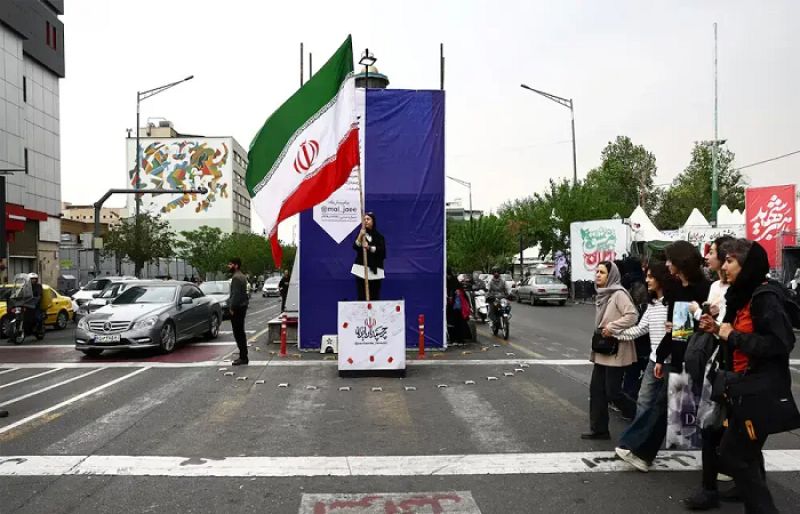
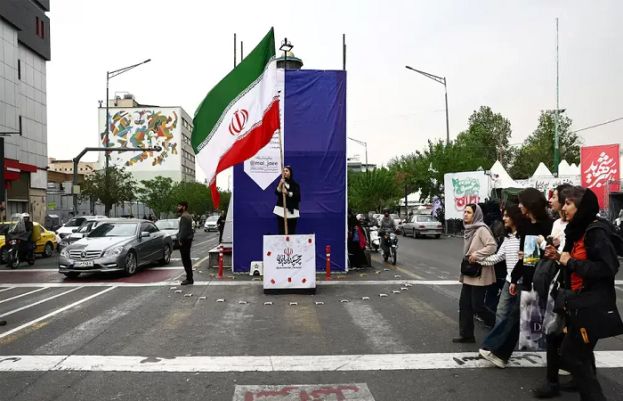
Iran’s agriculture minister said a US naval blockade has had little impact on the country’s ability to supply basic goods and food, citing strong domestic production and alternative import routes.
“Despite the US naval blockade, we have no problem in supplying basic goods and food because, due to the size of the country, it is possible to import from different borders,” Agriculture Minister Gholamreza Nouri said on Tuesday.
“About 85 percent of agricultural products and basic goods are produced domestically, so the country’s food security is established,” he added, according to the official IRNA news agency.
The United States imposed a naval blockade on Iran’s ports and coasts on April 13, days after a ceasefire was announced that paused its war with Iran.
Iran has strongly criticised the blockade, describing it as a violation of the ceasefire.

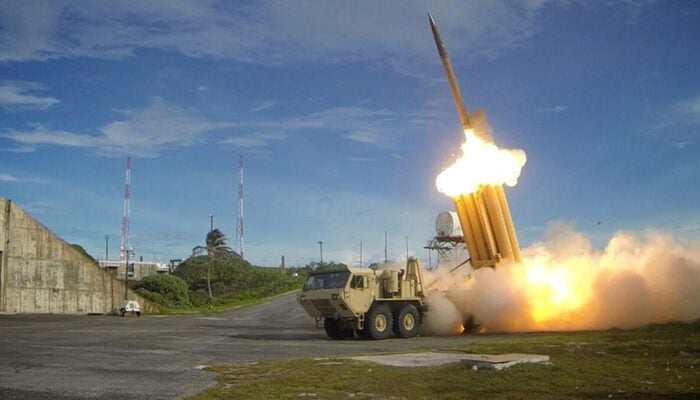
The United States military used up nearly half of its Patriot interceptor missile stockpile during its seven-week campaign against Iran, according to an analysis by the Center for Strategic and International Studies (CSIS).
A report by Washington-based outlet The Hill highlighted significant depletion across several key munitions, citing the CSIS analysis, and raised concerns about Washington’s preparedness for a potential conflict with China.
According to the CSIS study released on Tuesday, US forces fired almost 50% of their Patriot missiles during the operation. More than half of Terminal High Altitude Area Defence (THAAD) interceptors were also used, alongside over 45% of Precision Strike Missiles (PrSMs), during the air and missile campaign in Iran.
The analysis further found that more than 20% of Joint Air-to-Surface Standoff Missiles (JASSMs), over 30% of SM-3 interceptors and at least 10% of SM-6 missiles were expended as part of Operation Epic Fury.
CSIS warned that rebuilding stockpiles — including Tomahawk cruise missiles and JASSMs — to pre-operation levels could take between one and four years. These weapons, it noted, would be vital in any future conflict in the Western Pacific.
“Even before the Iran war, stockpiles were deemed insufficient for a peer competitor fight. That shortfall is now even more acute and building stockpiles to levels adequate for a war with China will take additional time,” the report’s authors wrote.
While the US is still likely to retain enough munitions to continue operations against Iran, the remaining inventory would fall short in a confrontation with a major adversary such as China, the report added.
Amid these concerns, the United States Central Command (Centcom), which led the Iran campaign, said its forces are actively rebuilding capacity during the ceasefire. In a social media message, CENTCOM said its “forces remain ready”.
Speaking alongside US Defence Secretary Pete Hegseth, Centcom commander Admiral Brad Cooper said: “We are rearming. We’re retooling, and we’re adjusting our tactics, techniques and procedures.”
“There is no military in the world that adjusts like we do, and that’s exactly what we’re doing right now during the ceasefire,” he added.
The findings come as President Donald Trump earlier held talks with leading defence contractors in March, after which he said production of “exquisite class” weapons would be increased fourfold.
Responding to the report, Pentagon chief spokesperson Sean Parnell defended the military’s capabilities, telling The Hill that the US remains fully equipped.
“The US military is the most powerful in the world and has everything it needs to execute missions at the time and place of the President’s choosing,” he said.
“As Secretary [Pete] Hegseth has highlighted numerous times, it took less than 10% of American naval power to control traffic in and out of the Strait of Hormuz. Since President Trump took office, we have executed multiple successful operations across combatant commands while ensuring the US military possesses a deep arsenal of capabilities to protect our people and our interests,” Parnell said in a statement. “Attempts to alarm Americans over the Department’s munitions stockpiles are both ill-informed and dishonourable.”
Meanwhile, Pentagon comptroller Jules ‘Jay’ Hurst said officials are planning to expand multi-year munitions contracts to as long as seven years, aimed at strengthening supply chains and encouraging sustained investment. The move forms part of the administration’s proposed $1.5 trillion defence budget.
“Once Operation Epic Fury ends, the naval assets sent to the Middle East will return to the Pacific. Munitions inventories will start to recover, but restoring depleted stockpiles and then achieving the desired inventory levels will take many years,” the report’s authors, Mark F. Cancian and Chris H. Park, wrote.


US’ Gap & FIT launch programme to mentor fashion students

Nasa unveils new space telescope to probe mysteries of ‘dark energy’

Dubai to build $9.25bn ‘Golden Line’ metro, completion set for 2032

-

 Fashion6 days ago
France’s LVMH Q1 revenue falls 6%, shows resilience amid Iran war
-

 Entertainment7 days ago
Is Claude down? Here’s why users are seeing errors
-

 Fashion1 week ago
Asia claims largest share of markets on Kearney FDI Confidence Index
-

 Tech1 week ago
The Deepfake Nudes Crisis in Schools Is Much Worse Than You Thought
-

 Sports1 week ago
PSL 11: Peshawar Zalmi win toss, opt to field first against Quetta Gladiators
-

 Tech1 week ago
Bremont Is Sending a Watch to the Moon’s Surface
-

 Tech1 week ago
Human-machine teaming dives underwater
-
 Business1 week ago
BP sees ‘exceptional’ oil trading result as Iran war sends crude costs soaring