

Business
Hacking has an evil twin! What is vibe hacking? Here’s how cyber frauds are misusing AI – The Times of India


As if cyber frauds were not enough, you will now have to deal with another evil of the AI era, vibe hacking!Cybersecurity experts are warning that AI is increasingly being misused by criminals to launch sophisticated cyberattacks. What started as “vibe coding,” a way to harness AI for productive tasks, now has a darker side: “vibe hacking.”AI developer Anthropic reported that its coding model, Claude Code, was recently exploited to steal personal data from 17 organisations, with hackers demanding nearly $500,000 from each victim, according to an ET report.Dark web forums now offer ready-made AI tools, called “Evil LLMs,” for as little as $100. Examples include FraudGPT and WormGPT, designed specifically for cybercrime. These tools can bypass safety measures and trick AI into leaking sensitive information or producing harmful content.A new AI agent called PromptLock can generate code on demand and decide which files to copy, encrypt, or access, raising the stakes even further.“Generative AI has lowered the barrier of entry for cybercriminals,” Huzefa Motiwala, senior director at Palo Alto Networks told ET. “We’ve seen how easily attackers can use mainstream AI services to generate convincing phishing emails, write malicious code, or obfuscate malware.”In simulations, Palo Alto Networks’ Unit 42 team demonstrated that AI could carry out a full ransomware attack in just 25 minutes, which is a whopping 100 times faster than traditional methods. Prompt injection, where carefully crafted inputs hijack a model’s goals, allows attackers to override security rules or expose sensitive data.Motiwala explained, “Attacks don’t only come from direct user prompts, but also from poisoned data in retrieval systems or even embedded instructions inside documents and images that models later process.”Research by Unit 42 found that certain prompt attacks succeed against commercial models 88% of the time.“AI has become a cybercrime enabler, and the Claude Code incident marks a turning point,” said Sundareshwar Krishnamurthy, partner at PwC India. “Cybercriminals are actively misusing off-the-shelf AI tools, essentially chatbots modelled on generative AI systems but stripped of safety guardrails and sold on dark web forums,” ET further quoted Krishnamurthy.Authorities in Gujarat have also cautioned that AI kits are being sold via encrypted messaging apps.“These tools automate everything from crafting highly convincing phishing emails to writing polymorphic malware and orchestrating social-engineering campaigns at scale,” said Tarun Wig, CEO of Innefu Labs. “Attackers can generate deepfake audio or video, customise ransomware, and even fine-tune exploits against specific targets.”Autonomous AI agents make the threat worse by remembering tasks, reasoning independently, and acting without direct human input.Vrajesh Bhavsar, CEO of Operant AI, pointed to risks from open-source Model Context Protocol (MCP) servers. “We’re seeing vectors like tool poisoning and context poisoning, where malicious code embedded in open repositories can compromise sensitive API keys or data,” he said. “Even zero-click attacks are rising, where malicious prompts are baked into shared files.”Experts say AI developers, including OpenAI, Anthropic, Meta, and Google, must do more to prevent misuse.“They must implement stronger safeguards, continuous monitoring, and rigorous red teaming,” said Wig. “Much like pharmaceuticals undergo safety trials, AI models need structured safety assessments before wide release.”


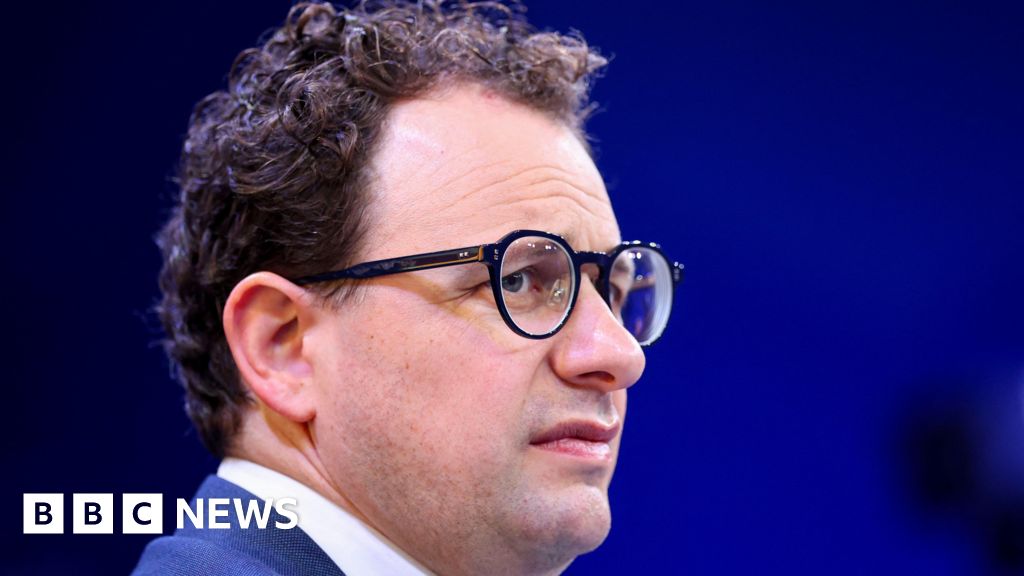
Defense Secretary Pete Hegseth previously threatened to remove the firm from the department’s supply chain.
Source link
Business
Stocks To Watch: Vishal Mega Mart, Axis Bank, Jio Financial Services, Hindalco, Vedanta, And Others

Last Updated:
Stocks to watch: Shares of firms like Vishal Mega Mart, Axis Bank, Jio Financial Services, Hindalco, Vedanta, and others will be in focus on Friday’s trade




Stocks To Watch on February 27
Stocks to Watch Today, February 27, 2026: Indian equities are likely to open on a cautious note amid mixed global cues. As of 7:41 AM, GIFT Nifty futures were trading 87 points lower at 25,549.
Vishal Mega Mart: Promoter Samayat Services is reportedly looking to offload up to a 6.5 per cent stake via a block deal. The transaction is valued at around Rs 3,507.5 crore, with a floor price of Rs 115 per share.
Axis Bank: The private sector lender has approached the Reserve Bank of India (RBI) seeking approval to retain a higher stake in its subsidiary, Axis Finance, with only limited dilution proposed.
Netweb Technologies: The company has partnered with Vertiv to develop advanced liquid-cooled rack solutions for AI-focused data centres in India.
Jio Financial Services: The company has infused Rs 2,000 crore into its subsidiary, Jio Credit Ltd, to fund business expansion and growth plans.
Hindalco: The acquisition of AluChem Companies, Inc. through Aditya Holdings LLC has been temporarily delayed after the CFIUS review in the US was paused due to a partial federal government shutdown.
Info Edge: The board has approved a commitment of Rs 250 crore to the newly launched B8 Fund I, a growth-stage fund aimed at strengthening its presence in India’s startup ecosystem.
Reliance Communications: The CBI has reportedly registered a fresh case against Anil Ambani and the company for allegedly defrauding Bank of Baroda of over Rs 2,220 crore between 2013 and 2017.
Ircon International: The Patna High Court has dismissed the company’s writ petition related to VAT assessments for the Ganga Bridge Project (FY11–FY17), upholding a demand of Rs 108.75 crore. Of this, Rs 27.39 crore has been paid, leaving an outstanding Rs 81.36 crore plus interest.
NBCC: The state-run firm has secured project management consultancy orders worth about Rs 775.27 crore (excluding GST) from the Delhi Development Authority (DDA) for redevelopment projects in New Delhi.
MSTC: The company has emerged as the lowest bidder for a Coal India tender to act as an external service provider for non-regulated sector (NRS) linkage auctions for three years.
Onesource Specialty Pharma: The NSE and BSE have issued no-objection letters for the proposed merger and arrangement involving Steriscience Specialties, Brooks Steriscience and Strides Pharma Services.
Vedanta: ICRA has assigned an ‘ICRA AA’ rating to the company’s NCDs with a ‘Watch Developing’ outlook. It also reaffirmed the long-term rating at ‘ICRA AA’ (Watch Developing) and the short-term rating at ‘ICRA A1+’.
BPCL: The oil marketing company has incorporated a wholly owned subsidiary in Singapore — Bharat Petroleum Global Energy Services — to set up a trading desk for crude oil, natural gas and petrochemical products.
Brigade Enterprises: The company has partnered with Primus Senior Living to develop three senior living communities in South India, with an estimated gross development value of Rs 750 crore.
Apeejay Surrendra Park Hotels: The firm has signed a management agreement with Luxmi Tea Co. to operate a 100-room premium hotel under “The Park” brand in Siliguri, West Bengal.
GMDC: The company has signed an MoU with NTPC to jointly explore opportunities in coal and lignite gasification, along with related downstream projects.
 Click here to add News18 as your preferred news source on Google.
Follow News18 on Google. Join the fun, play games on News18. Stay updated with all the latest business news, including market trends, stock updates, tax, IPO, banking finance, real estate, savings and investments. To Get in-depth analysis, expert opinions, and real-time updates. Also Download the News18 App to stay updated.
February 27, 2026, 08:21 IST
Read More

Netflix is walking away from a deal to buy Warner Bros. Discovery’s studio and streaming assets after the WBD board on Thursday deemed a revised bid by Paramount Skydance to be a superior offer.
Earlier this week, Paramount raised its bid to buy the entirety of WBD to $31 per share, up from $30 per share, all cash. It was the latest amendment to Paramount’s multiple offers in recent months — and since moving forward with a hostile bid to buy the company — and it’s now unseated a deal between WBD and Netflix to sell the legacy media company’s studio and streaming businesses for $27.75 per share.
Last week, Netflix granted WBD a seven-day waiver to reengage with Paramount, resulting in the higher bid. Paramount’s offer is for the entirety of WBD, including its pay-TV networks, such as CNN, TBS and TNT.
Netflix had four business days to make changes to its own proposal in light of Paramount’s superior bid, the WBD board said in a statement Thursday.
Instead, the decision by the streaming giant to walk away puts a pin in a drawn-out saga that saw amended offers from both bidders.
Netflix stock spiked 10% in extended trading Thursday, while Paramount stock gained 5%. Shares of Warner Bros. Discovery fell 2%.
“The transaction we negotiated would have created shareholder value with a clear path to regulatory approval,” Netflix co-CEOs Ted Sarandos and Greg Peters said in a statement. “However, we’ve always been disciplined, and at the price required to match Paramount Skydance’s latest offer, the deal is no longer financially attractive, so we are declining to match the Paramount Skydance bid.”
The latest Paramount bid included a $7 billion breakup fee in the event the proposed merger doesn’t win regulatory approval. The company also agreed to pay the $2.8 billion breakup fee that WBD would owe Netflix if that deal didn’t go through.
Sarandos told CNBC’s Julia Boorstin in an interview last week that Netflix granted WBD the waiver to reopen Paramount talks in order to give shareholders clarity.
“Paramount had been making a ton of noise, flooding the zone with confusion for shareholders … including floating all these hypothetical offers and talking directly to the shareholders and bypassing the Warner Bros. Discovery board,” Sarandos said at the time. “So we’ve given the opportunity to get those shareholders exactly what they deserve, which is complete clarity and certainty.”
However, Sarandos had fallen short of commenting on whether Netflix would up its own offer to match a revised Paramount bid.
And Thursday, Sarandos attended meetings at the White House to discuss the potential tie-up.
“Warner Bros. is a world-class organization, and we want to thank David Zaslav, Gunnar Wiedenfels, Bruce Campbell, Brad Singer and the WBD Board for running a fair and rigorous process,” the Netflix co-CEOs said in their statement.
“We believe we would have been strong stewards of Warner Bros.’ iconic brands, and that our deal would have strengthened the entertainment industry and preserved and created more production jobs in the U.S.,” they said. “But this transaction was always a ‘nice to have’ at the right price, not a ‘must have’ at any price.”


Texwin Spinning showcasing premium cotton yarn range at VIATT 2026

Burden of proximity
Anthropic boss rejects Pentagon demand to drop AI safeguards

-

 Tech1 week ago
A $10K Bounty Awaits Anyone Who Can Hack Ring Cameras to Stop Sharing Data With Amazon
-

 Fashion6 days ago
ICE cotton ticks higher on crude oil rally
-
 Business7 days ago
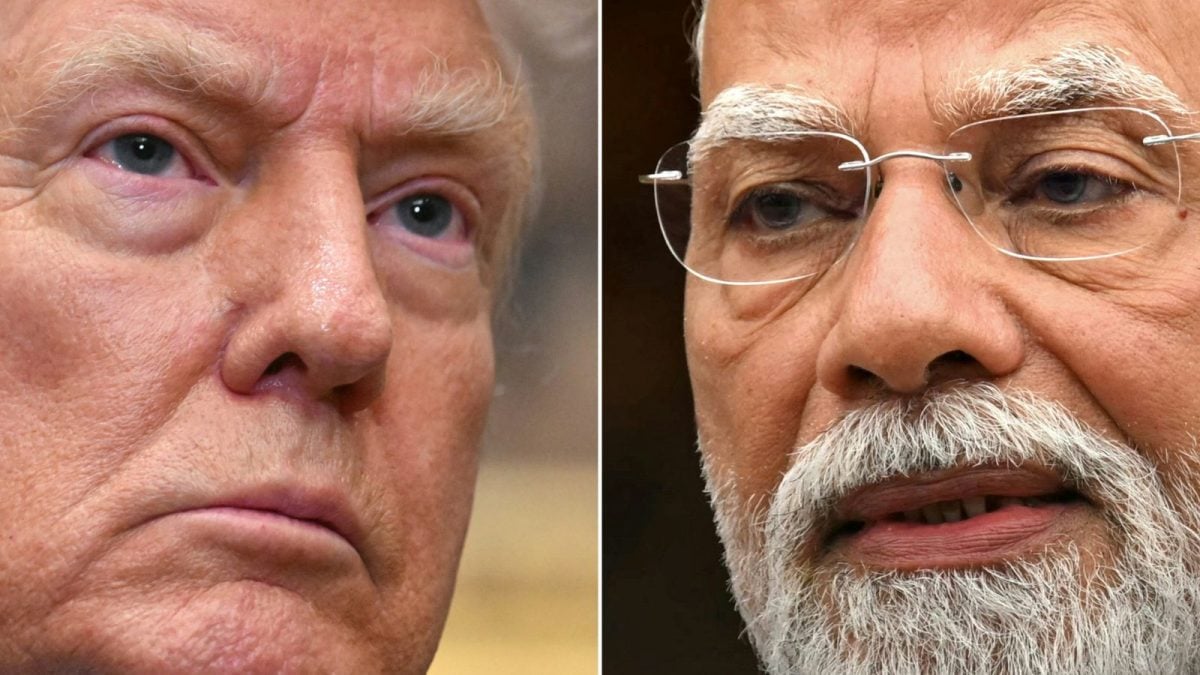
US Top Court Blocks Trump’s Tariff Orders: Does It Mean Zero Duties For Indian Goods?
-

 Tech1 week ago
Donald Trump Jr.’s Private DC Club Has Mysterious Ties to an Ex-Cop With a Controversial Past
-
 Business6 days ago
Eye-popping rise in one year: Betting on just gold and silver for long-term wealth creation? Think again! – The Times of India
-

 Entertainment5 days ago
Viral monkey Punch makes IKEA toy global sensation: Here’s what it costs
-

 Sports7 days ago
Brett Favre blasts NFL for no longer appealing to ‘true’ fans: ‘There’s been a slight shift’
-

 Entertainment7 days ago
The White Lotus” creator Mike White reflects on his time on “Survivor