

Entertainment
‘Harry Potter’ alum Jason Isaacs opens up on hidden struggle behind his career


Jason Isaacs has a humble approach to seeing his success in the industry.
The 62-year-old actor, who is nominated for Outstanding Supporting Actor for his role in White Lotus season 3, confessed to People in a recent interview at the Televerse Festival in Los Angeles that he still feels like an “imposter,” despite his career success.
“I get completely starstruck by everybody whose work I admire, and not just the other people in my category, in every category, and all the people who aren’t nominated,” the Harry Potter actor admitted. “There’s a lot of extraordinary talent around. I always feel like an imposter.”
“I will feel like an imposter on Emmy night too, and I kind of look forward to it and I’m kind of scared of it,” he noted adding that he is still “excited” to attend the show.
“I try not to think about it honestly. I don’t mean that it’s not incredibly flattering and lovely. I just know that I’ve been doing this job for a very, very long time, and very rarely do you get this kind of attention,” Isaacs explained.
“And it’s not a coincidence. I didn’t do anything better or different than I normally do. I just had a fantastic part,” he added. “Mike White creates these three-dimensional surprising human beings that behave in the kind of jagged or particular ways they do, and asks of all the actors in it to go to places they don’t normally go. And so it’s such a privilege.”

- Possible strikes may focus on key Iranian infrastructure sites.
- Another plan involves securing Strait of Hormuz shipping route.
- Operation could include ground forces to reopen key oil passage.
President Donald Trump will receive a briefing on Thursday from the leader of the US Central Command, Brad Cooper, on new plans for potential military action against Iran, Axios reported on Wednesday.
The report cited unidentified sources. The White House and the US Central Command did not immediately respond to a request for comment.
Centcom has prepared a plan for a “short and powerful” wave of strikes on Iran, likely including infrastructure targets, Axios reported, citing sources.
A fragile ceasefire in the Iran war began three weeks ago.
The war began when the US and Israel attacked Iran on February 28. Iran responded with its own strikes on Israel and the Gulf states with US bases. US-Israeli strikes on Iran and Israeli attacks in Lebanon have killed thousands and displaced millions.
Trump has previously threatened to destroy Iran’s civilian infrastructure. International law experts say such strikes may amount to war crimes. The 1949 Geneva Conventions on humanitarian conduct in war prohibit attacks on sites considered essential for civilians.
Another plan expected to be shared with Trump is focused on taking over part of the Strait of Hormuz to reopen it to commercial shipping, the report added, saying such an operation may involve ground forces.
The Iran war, which remains unpopular in the US, has shaken markets and raised oil prices. The war has brought traffic through the strait, a chokepoint for about 20% of global oil and liquefied natural gas shipments, close to a standstill.
Washington hopes to make Iran more flexible at the negotiating table on nuclear issues, Axios reported.
Another option that might come up in the briefing is a special forces operation to secure Iran’s stockpile of highly enriched uranium, Axios said.
Trump has cited Iran’s nuclear programme as an imminent threat. Tehran denies seeking nuclear weapons but says it has the right to develop nuclear technology for peaceful purposes, including enrichment, as a party to the Nuclear Non-Proliferation Treaty.
The Chairman of the Joint Chiefs of Staff General Dan Caine is also expected to attend Thursday’s briefing, Axios reported.
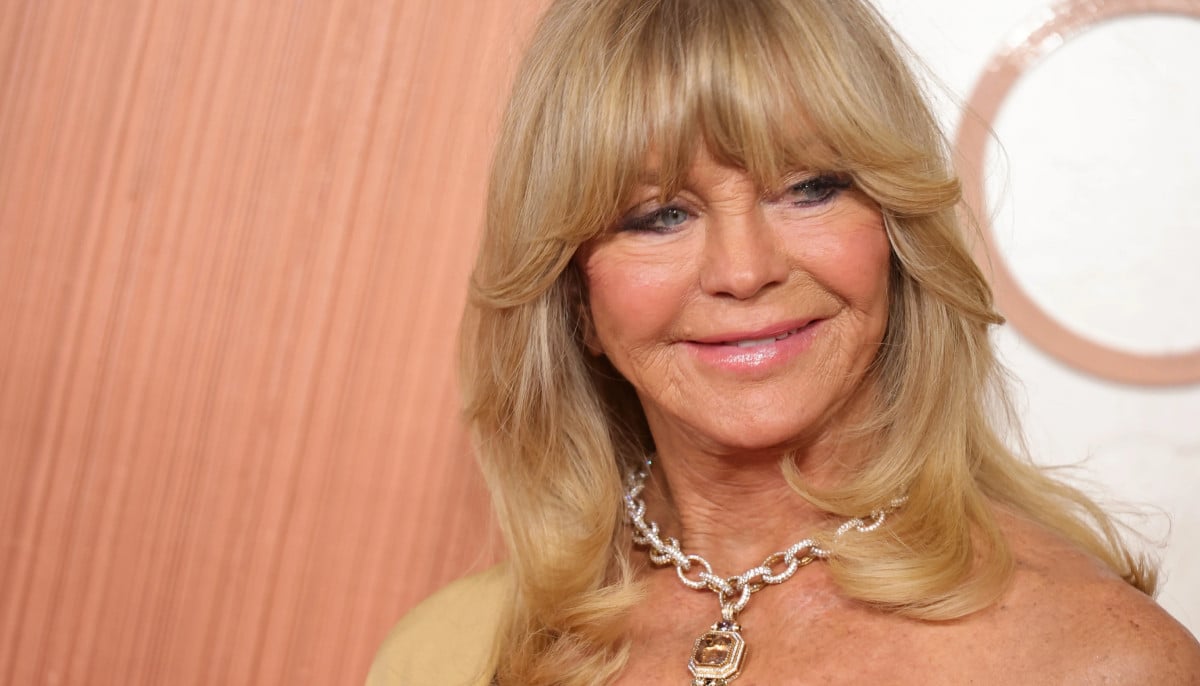
Goldie Hawn has no plans to rush back in front of the camera, and she has been remarkably clear-eyed about why.
The 80-year-old spoke to PEOPLE in an interview published on 29 April, explaining that after a career full of beloved performances, she simply hasn’t found anything worthy of bringing her back.
“It’s about the content,” she said.
“Acting for acting’s sake, taking things… I’ve read a lot of shows, a lot of scripts that I didn’t like or I didn’t think I’d fit. The one thing about acting is that I’ve done it, and I had a great career, and I honor that.”
Hawn last appeared on screen in The Christmas Chronicles 2 in 2020, alongside her longtime partner Kurt Russell.
The decision to step back began long before that, however, she traced it to her mid-fifties.
“I think ultimately every life has to have its sections. Doing the same thing over and over again for your whole life is not as interesting to me. And I decided at probably 55 or something, ‘What are you going to do for this next part of your life?’ And I knew that there was more out there to learn and to do.”
The right script could change everything.
“I would love to get a material that could actually be like, ‘Oh my God, I want this so bad. This is so funny. She’s so crazy. She’s so interesting.’ But I haven’t come across it.”
She also floated the idea of a project with her famously talented family, children Kate Hudson, Oliver Hudson and Wyatt Russell, with characteristic openness.
“It’s such a great idea because we have so much talent. Never say never, because that could happen at any time.”
Hawn and Russell have also stepped back from Hollywood geographically, spending much of their time at their home in Colorado.
Russell has described waking up each morning looking at the mountain, riding horses and sitting by the living-room fireplace as the rhythm of their life there, a far cry from the pace of the film industry they both helped define.
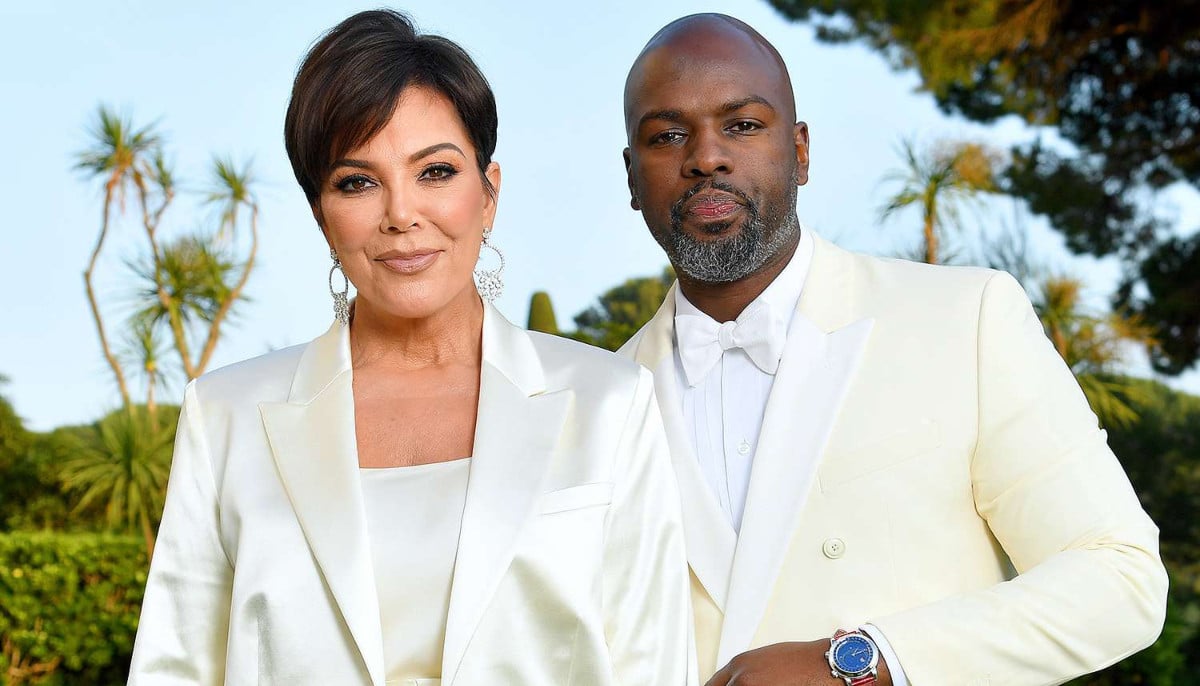
Kris Jenner has left the door open on marriage to her longtime boyfriend Corey Gamble, and even floated the idea of Khloé Kardashian serving as flower girl.
The Kardashian-Jenner matriarch, 70, appeared on the Wednesday, 29 April, episode of Khloé’s podcast Khloé in Wonder Land, where her daughter asked whether there were any “wedding bells” on the horizon.
Jenner’s initial response was swift.
“No,” she said, before quickly softening it. “You never know.”
When Khloé told her mother she didn’t need to get married again, Kris wasn’t entirely ready to close the subject.
“I’m full of surprises,” she quipped, adding that if she and Gamble did decide to marry, Khloé could “be a flower girl.”
Jenner and Gamble, 45, have been together for over a decade, meeting in Ibiza in August 2014 and going public the following spring.
The relationship has weathered a steady stream of split rumours, most recently in September 2025 when reports claimed things had been “hanging by a thread.”
Us Weekly confirmed at the time that the couple were still very much together.
On the podcast, Kris said the rumours no longer get to her the way they once might have.
“Not anymore. I mean, did it bother me at the time? I think it bothered, maybe him more than it bothered me. I don’t know. You’d have to ask Corey.”
It is not the first time marriage has come up in conversation.
In a 2024 episode of The Kardashians, Kris told her friend Kathy Hilton: “You guys can totally be bridesmaids when I get married. So, maybe when I’m 70!” She has now reached that milestone birthday, which may or may not be relevant.
Jenner was previously married to the late Robert Kardashian, with whom she shares Kourtney, Kim, Khloé and Rob, and to Caitlyn Jenner, with whom she shares Kendall and Kylie.


Oil jumps to highest price since 2022 after report Trump to be briefed on new Iran options

Trützschler to showcase advanced textile tech at ITM 2026 in Istanbul

Gold, silver price prediction: Will gold head down to Rs 1.40 lakh/10 grams & silver hit Rs 2.20 lakh/kg? – The Times of India

-
 Business1 week ago
Us-India Trade Talks: US–India trade deal: Where do talks stand & what to expect – explained – The Times of India
-

 Fashion1 week ago
Global energy growth slows to 1.3% in 2025: Report
-
 Business1 week ago
UK inflation accelerates after Iran war drives sharp rise in fuel prices
-

 Tech1 week ago
Nation states responsible for ‘nationally significant’ cyber attacks against UK, says NCSC chief | Computer Weekly
-

 Tech1 week ago
Microsoft faces court battle in £2bn Windows Server class action | Computer Weekly
-

 Sports1 week ago
PSL 11: Hyderabad Kingsmen opt to field after winning toss against Multan Sultans
-
 Business1 week ago
Trump administration in advanced talks for a rescue package for Spirit Airlines, source says
-

 Tech1 week ago
Blackbox replaces two racks of HPE storage with 8U of Everpure | Computer Weekly