

Sports
‘Head coach’ vs ‘manager’: Why job title matters for Chelsea, Man United

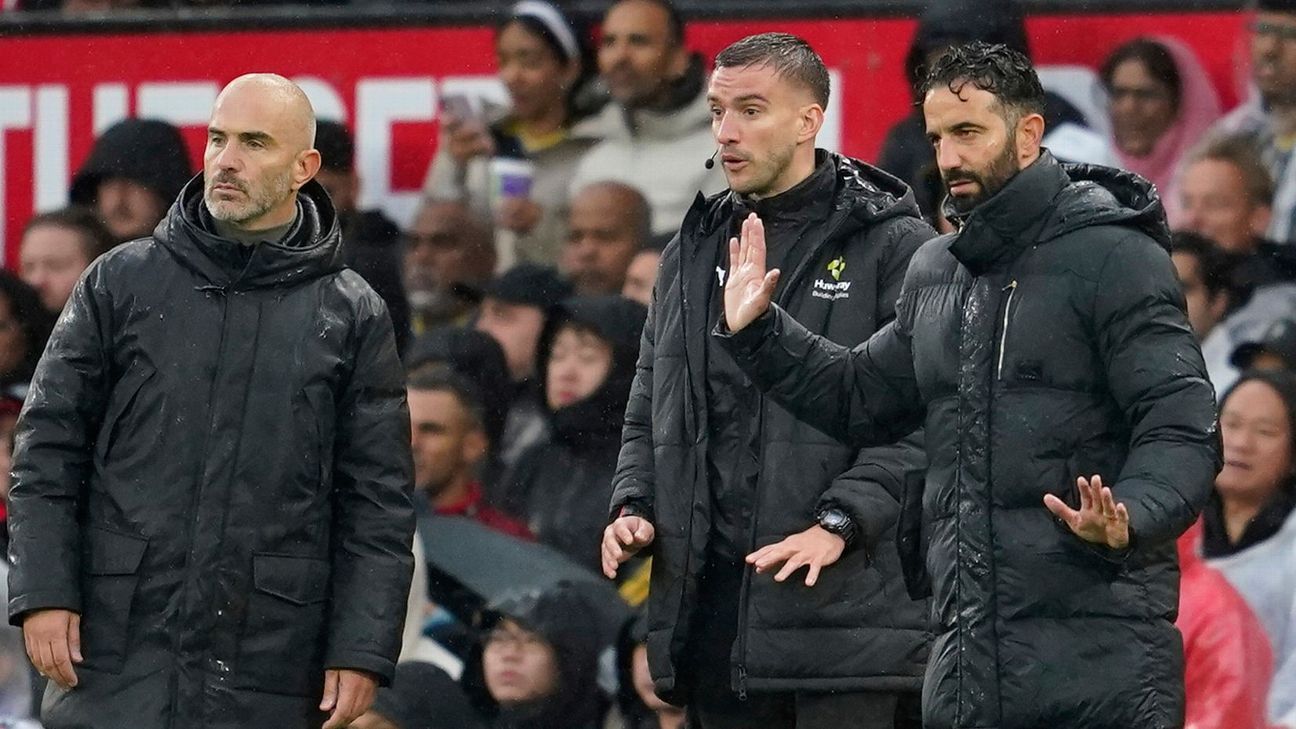
Who would be a football manager? Well, as it turns out, in the Premier League the answer is an increasing number of head coaches.
The difference between the job titles of “manager” and “head coach” may seem mere semantics at first glance, but events at Manchester United and Chelsea this month point to deeper structural problems that many clubs are now grappling with.
Both Ruben Amorim and Enzo Maresca chose to go public with frustrations they deemed as unnecessary interference from the infrastructure around them.
Maresca went first. In mid-December, after a routine 2-0 home win over Everton, which should have calmed the mood around Stamford Bridge, Maresca opted instead to ignite a fire by declaring the buildup “the worst 48 hours” of his tenure due to “a lack of support.”
– Why did Man United, Chelsea, Madrid all sack managers? It’s about culture
– How Man United chose Carrick as head coach: A no-fuss, loyal, safe option
– Real Madrid fired Xabi Alonso after 233 days. Where did it all go wrong?
His working relationship with senior figures at the club quickly eroded, and Chelsea parted company with Maresca just 19 days later. We will never know for certain, but perhaps Amorim, increasingly disgruntled at United, was inspired by those events in west London.
The following day, Amorim hinted at internal issues at a prematch news conference before facing Leeds United and, after that game, launched a full-scale assault on his bosses, insisting he joined United to “be the manager, not the head coach.” Amorim was sacked the following morning.
Chelsea have since doubled down on their existing head coach model by appointing Liam Rosenior as Maresca’s successor, not least because of his experience working for the club’s owners, BlueCo, at their sister team, Strasbourg of France’s Ligue 1.
United’s next move seems less certain after they installed Michael Carrick as an interim boss before making a permanent appointment in the summer.
The club still appears stuck at a crossroads created by legendary manager Sir Alex Ferguson’s departure in 2013, just as Arsenal were when Arsène Wenger left in 2018. They were the two most prominent exponents of the old model, which dictated that control comes at all costs for a manager. But what balance works best in 2026?
What’s the difference between ‘head coach’ and ‘manager’?
2:02
Rosenior: I’m accountable for my players mistakes
Chelsea boss Liam Rosenior refused to criticise Robert Sánchez after errors in the 3-2 Carabao Cup semifinal defeat to Arsenal.
This isn’t a new problem. Ferguson and Wenger once sat on stage together at a League Managers’ Association meeting, opining on how the preeminence they enjoyed was founded on controlling all aspects of their respective clubs. They were becoming increasingly isolated cases.
“The manager is the most important man at the club,” Wenger said. “If not, why do you sack the manager if it doesn’t go well?”
“Very good,” said Ferguson, sitting alongside him, smiling.
Ferguson later praised then-Premier League bosses Alan Curbishley and Kevin Keegan for leaving their posts on “a point of principle,” specifically that West Ham and Newcastle United, respectively, were letting players leave against the wishes of their managers. That was in 2008.
The intervening 18 years have seen the power balance shift steadily away from autonomous managerial figures toward head coaches, who are expected to work within a structure which divides responsibilities, including scouting, recruitment, medical determinations and data analysis among several others. A manager is a visionary to whom everyone must answer. A head coach is more of a prominent cog within a larger machine.
In one clear example of the transformation in thinking, Arsenal appointed nine new department heads around the time of Wenger’s departure in 2018 and trebled the number of operations staff in three years.
Top Premier League clubs routinely arrive at away games with two team buses — the expanded support staff no longer fit onto one bus with the playing squad. Club doctors Stephen Lewis (Chelsea) and Zaf Iqbal (Arsenal) were even listed on the official teamsheet for Wednesday’s Carabao Cup semifinal first-leg clash at Stamford Bridge.
Where the boundaries are drawn for each member of this infrastructure is where the tension usually lies for a head coach.
Today, there are only five Premier League clubs employing someone whose official job title is ‘manager’: Arsenal, Everton, Manchester City, Crystal Palace and Leeds.
One of those is Mikel Arteta, but he is a unique case. He was appointed as Arsenal head coach in December 2019 — following Unai Emery’s unsuccessful attempt to operate within the club’s post-Wenger model — but then “promoted” to manager in September 2020 after winning the FA Cup a month earlier in a Covid-delayed season.
Arteta revealed last week that the plan to promote him was actually hatched before his Wembley triumph.
“It was in my house,” he said. “They came to me and started to propose the idea of what they thought and the way they wanted to structure the club. That was after probably five, six months in the job.
“They believed that and [I said] ‘this is where I think I can help, this is my vision, this is what I would do, this is how I see this project.’ I presented it, and from there we started all together to start to add value to those ideas.
“I didn’t demand it. I didn’t ask for it, and they believed it was the right thing to do. When you have a leader, which is ownership in this case — Stan [Kroenke] and Josh [Kroenke, representing owners Kroenke Sports Enterprises] — and Josh that is very close to us with clear alignment to all of us what he wants to do, how he wants to create that space for everybody, I think it is very easy to work like this.
“At the end, it is about the relationships and the people that we have from great teams with very different qualities. Sometimes, I have been more on certain things; when there is somebody who is much better than me on that, I let them do it. For me, the title doesn’t really reflect the way we operate daily.”
Although KSE is an American company, well-placed sources within football point to the increase in U.S. ownership — now 22 of the top 44 clubs comprising England’s top two leagues — as a contributing factor. They want their clubs to retain a stable, long-term identity of their own, impervious to the idiosyncrasies of the man in the dugout.
The modern-day trend certainly appears to be clubs seeking to establish an identity based on principles set by their own sporting infrastructure, rather than the shorter-term whims of a manager or head coach who is just passing through. The League Managers’ Association published data last year suggesting the average tenure of a sacked manager is 1.42 years.
But there are signs head coaches are pushing back against this transient existence. Amorim and Maresca took internal tensions public while Tottenham Hotspur captain Cristian Romero broke ranks with an Instagram post that suggested the Spurs hierarchy “only show up when things are going well, to tell a few lies.”
It doesn’t help advocates of the head coach model that Arsenal under Arteta lead the Premier League from Pep Guardiola’s Manchester City and Aston Villa, who named Emery as head coach but whose influence is widely acknowledged to extend far beyond the limitations that title would suggest.
Finding the right fit
1:25
Was the Man United job ‘too big’ for Ruben Amorim?
Julien Laurens explains what went wrong for Ruben Amorim at Manchester United after being sacked following 14 months at the club.
Supporters have protested against Chelsea’s BlueCo owners, who completed their takeover in 2022 and whose methods have frustrated head coaches of high pedigree before Maresca, including Thomas Tuchel and Mauricio Pochettino.
The appointment of Rosenior has emboldened critics, suggesting the owners want a “yes man” as head coach, willing to acquiesce to the specialists who operate separately to his immediate coaching staff.
Predictably, Rosenior pushed back on any such notion when speaking at his first Chelsea news conference.
“Being a head coach, you talk about football systems and tactics,” he said. “[But] that’s 10% of the job. The job is to create spirit, energy, a culture. It doesn’t matter if you’re called a head coach, manager or anything else. The job is the same. My job is to have a team that runs, fights for each other, that plays with spirit and quality. That’s what I’m going to focus on.”
Whatever the rights and wrongs of Chelsea’s strategy — which includes employing five sporting directors, an independent medical team whose advice on player load must be followed and regular technical feedback sessions for the head coach after every game — they know exactly what they want.
Multiple sources told ESPN that BlueCo had quickly identified Rosenior as a leading candidate among a small pool of options, ruling out higher-profile names almost immediately. The belief in their model is resolute and clear.
If anything, control has been tightened. Maresca brought six staff with him from Leicester City. Rosenior has three from Strasbourg — assistant Justin Walker, first-team coach Kalifa Cissé and analyst Ben Warner — while Calum McFarlane was promoted from Chelsea’s under-21s and goalkeeper coach Ben Roberts remains in post. Set-piece coach Bernardo Cueva was appointed independently from Maresca and stayed on. All six of Maresca’s staff left.
There seems to be less clarity at United. Even caretaker boss Darren Fletcher admitting that he called Ferguson for “his blessing” before accepting the temporary position smacked of a club still struggling to emerge from the shadow of its past. They didn’t appoint a director of football and technical director until 2021, and Amorim was the first man in the club’s history to be appointed “head coach” rather than “manager.”
However, club sources have told ESPN that director of football Jason Wilcox sees recruitment falling within his sphere of influence and has said publicly that he can’t help but “interfere” in what the head coach is doing. It is, at least from the outside, a confused picture.
Carrick has brought in two staff members for his five-month stint: ex-England No. 2 Steve Holland and Jonathan Woodgate, who worked under Carrick at Middlesbrough.
‘Manager’ is a title that’s earned
Recruitment is invariably a point of friction. Club sources told ESPN that Maresca wanted a center back last summer after Levi Colwill got injured but was told to find internal solutions.
Conversely, ESPN sources say Arteta fought hard and won a battle to sign Mikel Merino from Real Sociedad in 2024 despite others involved in recruitment casting doubt over his ability and transfer fee.
Tottenham are grappling with their own approach, appointing Fabio Paratici as co-sporting director alongside Johan Lange in October, only for Spurs to confirm on Wednesday that the former will leave next month to join Fiorentina.
Gone are the days when the chief scout — and wider scouting staff that followed — operated as close allies of the manager. Some head coaches now insist on bringing their own trusted recruitment staff, often as part of their initial appointment, because they want specialists who share their way of seeing the game. This guarantees the coach a voice early in the scouting process and keeps them closely involved in the club’s strategic thinking and player selection.
Sources working in recruitment say that even though power has gradually shifted away from the manager or head coach, cases where players are signed without that individual’s involvement remain extremely rare, to the point of being almost unheard of in a top-five league environment.
However, the level of power can change over time. If a sporting director signs off on a run of mediocre transfers, a head coach may use that to push for greater influence over recruitment. Equally, when a head coach is flavour of the month with successful results, some will take the opportunity to gain a greater say in squad building.
What matters initially are the job description and the powers laid out in the contract. Perhaps the conclusion is that head coaches who want to become managers have to go to great lengths to earn it.
Arsenal recognised they needed a cultural overhaul and believed in Arteta to deliver it. Guardiola earned it before he arrived as City’s whole football structure was tailored to lure him to the club. Emery has improved Villa to such a dramatic extent that the case for greater influence was almost impossible to ignore.
Maresca and Amorim chanced their arm and failed. They almost certainly won’t be the last.
Information from ESPN’s Rob Dawson and Tor-Kristian Karlsen contributed to this report.

Roster overhauls are not uncommon in today’s era of men’s college basketball.
This offseason is no different, with around a dozen power-conference schools returning zero or just one player from this past season. It has been a growing trend as the sport has become more reliant on the transfer portal, with salary caps dictating roster construction and teams adding seven to eight players in the spring becoming the new norm.
Last week, we looked at how the Final Four teams — and Duke — have been approaching the offseason. This week, we’re putting the same focus on the three winningest programs in college basketball history: Kansas, Kentucky and North Carolina. None made it out of the first weekend of the NCAA tournament, and each face massive rebuilds heading into next season.
All information as of 9 a.m. ET on April 20

Players leaving: Bill Self faces arguably the biggest rebuild of the three programs featured here.
Potential No. 1 pick Darryn Peterson was gone regardless, but All-Big 12 big man Flory Bidunga‘s decision to enter the portal and head to Louisville was a difficult loss. Starting wings Melvin Council Jr. and Tre White were seniors, and six more players joined Bidunga in the portal. The biggest loss among that group was Bryson Tiller, who started 31 games and looks poised for a breakout season in 2026-27. Making matters worse, Tiller committed to rival Missouri.
Players staying or incoming: The retention list is short. Kohl Rosario, who started the first six games of this past season before seeing his role diminish as the year progressed, is back and still has a high ceiling.
Self has the fifth-best class of incoming freshmen, led by five-star point guard Taylen Kinney. Two more SC Next 100 recruits, Davion Adkins and Trent Perry, and four-star guard Luke Barnett round out the group.
Kansas has also landed two players out of the portal thus far: Utah transfer Keanu Dawes and Toledo transfer Leroy Blyden Jr. Dawes was one of the Big 12’s best rebounders last season, ranking in the top 50 nationally at 8.8 per game. Blyden, a 6-foot-1 point guard, was the MAC Freshman of the Year.
Players in limbo: Freshman big man Paul Mbiya has been an interesting follow. He suddenly played a key role in the NCAA tournament, reports emerged that he planned to enter the portal … and yet, he’s still on the Jayhawks and hasn’t portaled yet.
Work to do: Kansas has a massive amount of work to build a roster that can compete next season. The Jayhawks’ top target is No. 1 recruit Tyran Stokes, who they appeared on track to land until a recent trip to Kentucky cast doubt on their status as the front-runners.
Kansas has hosted a long list of players from the portal, although Terrence Hill Jr. (Tennessee) and DeSean Goode (Miami) have committed elsewhere. Charlotte big man Anton Bonke was on campus last week, as was Utah transfer Terrence Brown, though UNC appears to be the favorite for Brown.
With Blyden committed, Self needs a scorer with size on the wing. Vyctorius Miller (Oklahoma State) is among the players on the Jayhawks’ list for that role. In the frontcourt, Cincinnati transfer Moustapha Thiam — one of the best bigs left in the portal — is among their targets, though he is visiting Michigan this week.

Players leaving: A roller-coaster season that started with the nation’s largest payroll and ended with a second-round loss to Iowa State in the NCAA tournament portended a roster overhaul.
The starting backcourt of Otega Oweh and Denzel Aberdeen is out of eligibility (although Florida is attempting to secure an extra year for Aberdeen), while Jayden Quaintance was expected to declare for the NBA draft. Six more players also entered the transfer portal, including starting guard Collin Chandler and frontcourt mainstays Andrija Jelavic, Mouhamed Dioubate and Brandon Garrison.
Players staying or incoming: Two key contributors are back from last season: starting center Malachi Moreno and rotation wing Kam Williams, who missed most of the second half of the campaign with a broken foot. Moreno has a chance to be one of the best centers in the country next season.
Role player Trent Noah and redshirts Braydon Hawthorne and Reece Potter are also back. And Kentucky’s lone high school commit is four-star guard Mason Williams, son of new assistant coach Mo Williams.
After missing on a few early portal targets such as BYU’s Robert Wright III and Georgia’s Jeremiah Wilkinson, Mark Pope finally landed his 2026-27 backcourt last week with Washington transfer Zoom Diallo and Furman transfer Alex Wilkins. Diallo averaged 15.7 points and 4.5 assists last season for the Huskies, while Wilkins was one of the most electric first-year point guards in the country and boosted his stock with 21 points against UConn in the NCAA tournament.
Players in limbo: Barring a surprise return from Quaintance, Pope isn’t waiting on any stay-or-go decisions.
Work to do: Kentucky still has plenty of targets left on the board, with overall No. 1 recruit Stokes at the top of the list.
Stokes is down to the Wildcats and Jayhawks, with a decision expected to come at any point. Pope could use a statement signing to help the overall vibe in Lexington, and they don’t get much bigger than Stokes. Kansas had the lead entering Stokes’ recent visit to Kentucky; did Pope flip momentum on the trip?
Kentucky needs shooting, and NC State transfer Paul McNeil Jr. is on the short list. Utah transfer Terrence Brown was also a target but visited North Carolina and Kansas and hasn’t rescheduled a visit to Kentucky. Up front, the Wildcats are prioritizing Syracuse transfer Donnie Freeman, one of the best players available. Former USC center Gabe Dynes is expected to visit this week; the 7-foot-5 Dynes would provide interior depth.

Players leaving: With Hubert Davis out and Michael Malone in, extensive roster turnover was inevitable.
Projected top-five pick Caleb Wilson was headed to the NBA regardless, while Seth Trimble is out of eligibility. Still, nine players entered the portal following the coaching change, with Derek Dixon and Luka Bogavac the most notable, although two have since opted to withdraw and return to Chapel Hill to play for Malone.
It’s also worth noting that Carolina had a commitment from top-10 incoming freshman Dylan Mingo until he reopened his recruitment last week.
Players staying or incoming: The lone starter guaranteed to return from last season is Jarin Stevenson, who helped fill Wilson’s shoes after his injury and played well, averaging 10.7 points and 6.4 rebounds over the Tar Heels’ final 10 games. Jaydon Young and Isaiah Denis are returning after initially exploring the portal. And while Mingo opted to decommit, top-25 recruit Maximo Adams kept his commitment to the Tar Heels after the coaching change.
Since the portal opened, Malone added Virginia Tech transfer Neoklis Avdalas. The 6-foot-9 guard was inconsistent for most of his freshman season but generated first-round NBA draft buzz early in the campaign and has an intriguing combination of size and playmaking ability.
Players in limbo: All-ACC big man Henri Veesaar has yet to announce his intentions.
The proven big man could return to Carolina, enter the NBA draft or head into the transfer portal. Veesaar is essentially the linchpin to Malone’s first season who would be in the preseason All-American conversation should he return to college after averaging 17.0 points and 8.7 rebounds last season.
Work to do: There are two priorities for Malone right now.
One, as we just mentioned, is keeping Veesaar. He provides an anchor on the interior and would give the new head coach a player to build around. But given the timing of Veesaar’s pending decision, the lack of legitimate replacements at his position is glaring.
The second focus is a couple of perimeter scorers and playmakers, and the Tar Heels have a few players on their shortlist. Utah transfer Terrence Brown is atop the board; he has visited UNC and Kansas. Wake Forest transfer Juke Harris met with the Carolina staff a couple weekends ago, although he’s also going through the NBA draft process. NC State’s Matt Able and Paul McNeil Jr. have also been linked to the Tar Heels.

Kentucky Gov. Andy Beshear has publicly questioned the decision-making at the University of Kentucky, including the seven-figure gig retiring athletic director Mitch Barnhart was recently given.
Beshear’s chastisement, rare for a sitting governor, comes at a turbulent juncture for Kentucky athletics, which is falling behind its peers on the gridiron and the hardwood.
Barnhart, who will step down on June 30, was recently named executive in residence for the UK Sport and Workforce Initiative by Kentucky president Eli Capilouto. The contract for the gig, which will pay Barnhart $1 million per year beginning July 1, does not provide a concrete job description. That has prompted prominent supporters to ask the school to reverse the offer.
“I am losing confidence and growing increasingly concerned with the management and decision-making at the University of Kentucky,” Beshear said in a statement Tuesday. “My concerns include the creation of a new $1 million job that has no defined duties and the announcement that the new dean of law was the only candidate not recommended by law school faculty.
“I’ve been told that despite previously saying the dean must be approved by UK’s Board of Trustees, the university has shifted and now states approval is not needed. I worry that these actions are related to certain donors pushing partisan and undue outside influence onto the university. I hope students, faculty, trustees and the community attend this week’s board meetings and ask the tough questions that should be answered.”
Beshear’s criticism also follows the recent firing of football coach Mark Stoops in December after four consecutive sub-.500 seasons. He was replaced by Will Stein, who was the offensive coordinator at Oregon.
It’s also a difficult time for Mark Pope and the men’s basketball program, which is the winningest Division I team in NCAA history but hasn’t reached the Final Four since 2015. Last year, Pope made a run to the Sweet 16 in his first season. But that success didn’t last as his second season was filled with injuries and inconsistent efforts, ending with a 19-point loss to Iowa State in the second round of the NCAA tournament in March — only 48 hours after the team needed Otega Oweh‘s half-court heave at the end of regulation to force overtime in a win over Santa Clara.
Pope will enter his third season under a powerful spotlight after missing on major targets in the portal, including BYU guard Robert Wright III and Syracuse transfer Donnie Freeman, who picked St. John’s and Rick Pitino, Pope’s mentor. While Tyran Stokes, the No. 1 recruit in the 2026 class, is still considering Kentucky, the Wildcats have not landed a top-100 prospect in the current recruiting class, according to ESPN.
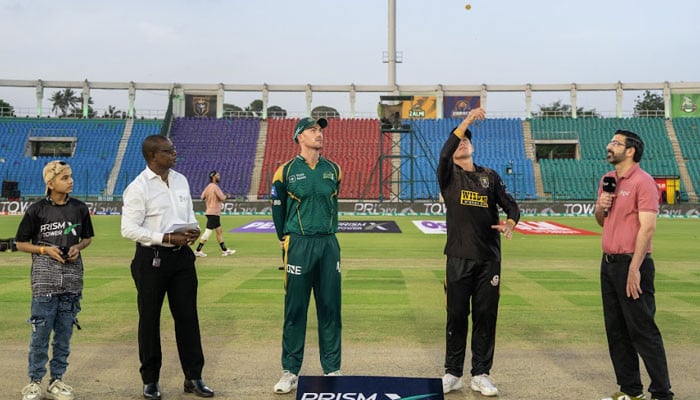
Hyderabad Kingsmen won the toss and elected to bowl first against Multan Sultans in the 33rd match of the Pakistan Super League (PSL) 11 at Karachi’s National Bank Stadium on Wednesday.
Playing XI
Hyderabad Kingsmen: Maaz Sadaqat, Marnus Labuschagne (c), Usman Khan (wk), Saim Ayub, Kusal Perera, Gleen Maxwell, Irfan Niazi, Hassan Khan, Hunain Shah, Mohammad Ali, and Akif Javed.
Multan Sultans: Sahibzada Farhan, Steve Smith, Ashton Turner (c), Shan Masood, Josh Philippe (wk), Muhammad Nawaz, Arafat Nawaz, Muhammad Imran, Peter Siddle, Muhammad Waseem Jnr, and Muhammad Ismail.
Head-to-head
The upcoming fixture marks only the second meeting between Sultans and Kingsmen, while their maiden face-off saw the 2021 champions emerge victorious by six wickets.
- Matches: 1
- Multan Sultans: 1
- Hyderabad Kingsmen: 0
Form Guide
Multan Sultans and Hyderabad Kingsmen enter the fixture with similar momentum in their favour as the 2021 champions have four victories in their last five completed matches, while the debutants have three triumphs in as many games.
Overall, Sultans have six victories in the ongoing PSL 11 and thus sit second on the points table with 12 points after eight matches, and a victory over Kingsmen would seal their qualification for the playoffs with a match to spare.
Kingsmen, on the other hand, have three triumphs in seven matches, which came consecutively after four successive defeats.
Multan Sultans: W, W, L, W, W (most recent first)
Hyderabad Kingsmen: W, W, W, L, L


Google debuts ‘workspace intelligence’ to power AI agents across gmail, docs, chat
Trump family crypto firm sued over alleged ‘extortion’

5 AI Models Tried to Scam Me. Some of Them Were Scary Good

-

 Fashion6 days ago
France’s LVMH Q1 revenue falls 6%, shows resilience amid Iran war
-

 Entertainment1 week ago
Is Claude down? Here’s why users are seeing errors
-

 Tech1 week ago
The Deepfake Nudes Crisis in Schools Is Much Worse Than You Thought
-

 Sports1 week ago
PSL 11: Peshawar Zalmi win toss, opt to field first against Quetta Gladiators
-

 Tech1 week ago
Bremont Is Sending a Watch to the Moon’s Surface
-

 Tech1 week ago
Human-machine teaming dives underwater
-
 Business1 week ago
BP sees ‘exceptional’ oil trading result as Iran war sends crude costs soaring
-

 Fashion1 week ago
What no one is saying about the 2026 apparel slowdown