Business
Heineken cuts strength of Foster’s lager as duty rises and sales slump
Heineken UK is cutting the strength of its Foster’s lager to take advantage of duty savings on weaker beers.
The brewer said dropping the lager’s strength from 3.7% to 3.4% would allow customers to “benefit from more competitive pricing as inflationary pressures continue to affect the wider market”.
It added: “This follows the introduction of differential duty rates by the UK government, which encourage brewers to innovate at lower ABV (alcohol by volume) rates in support of customers wanting to moderate their alcohol consumption.”
The change, which takes effect from February, would also support pubs and retailers with a “competitively priced classic lager”, it said.
Foster’s ABV was previously lowered from 4% to 3.7% in January 2023.
Heineken UK said: “The decision to adjust the ABV of Foster’s reflects our commitment to helping consumers make responsible choices, while supporting pubs and retailers with a competitively priced classic lager alongside a portfolio of brands across the price and ABV spectrum.
“Our master brewers have spent many months refining the recipe to ensure the taste remains unmistakably Foster’s – crisp, balanced, and refreshing.”
Off-trade sales of Foster’s fell by 13.7% to £252.8 million in the year to April, according to NIQ data.
A number of products have been reformulated since the introduction of new duty savings on beers with an ABV of 3.4% or below in August 2023, including Carlsberg Pilsner, Coors Light and Grolsch.
Business
Petrol and diesel prices likely to rise – SUCH TV
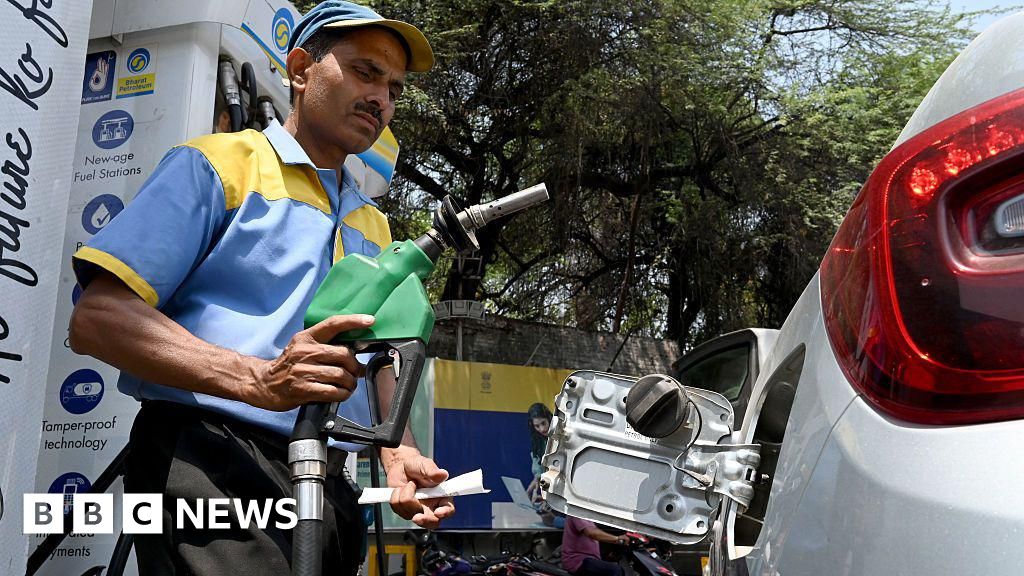
Oil and Gas Regulatory Authority (OGRA) forwarded a summary to the federal government suggesting an increase of Rs4.39 per liter in petrol price for the next fortnight.
After approval from the federal government, one liter of petrol will be sold at Rs257.56 instead of Rs253.17 per liter.
The price of high-speed diesel (HSD) will be increased by Rs5.40 per liter.
After approval, the price of one liter of high-speed diesel will increase by Rs268.38 to Rs273.78.
The proposal to increase the price of kerosene by Rs4 per liter is also on the cards.
The OGRA also recommended increasing the price of one liter of light diesel by Rs6.55.
The new prices of petroleum products will be effective from February 16, 2026.
Due to tension between the USA and Iran, petroleum prices are likely to increase further.
Business
RBI Proposes 4 Major Changes In Kisan Credit Card Scheme: What Beneficiaries Must Know
Last Updated:
RBI releases draft to revise Kisan Credit Card Scheme, standardizing crop cycles, extending loan tenure to six years, and aligning credit limits with cultivation costs.

From Crop Cycles To Loan Tenure: 4 Key Changes In RBI’s KCC Proposal
Kisan Credit Card Scheme: The Reserve Bank of India (RBI) has released draft directions to revise the Kisan Credit Card (KCC) Scheme, aiming to expand coverage, streamline operations, and align credit norms with evolving agricultural needs.
Standardized Crop Cycles And Extended Loan Tenure
As outlined in the draft, crop seasons have been standardized to introduce uniformity in loan sanctioning and repayment schedules. Short-duration crops will now be treated under a 12-month cycle, while long-duration crops will follow an 18-month cycle.
Example:
A farmer growing paddy or wheat (harvested in a few months) will follow a 12-month loan cycle.
A farmer growing sugarcane (which takes 12–18 months) will get an 18-month cycle.
To better align loan tenure with these crop cycles, especially for longer-duration crops, the overall tenure of the KCC facility has been extended to six years. The move is expected to provide farmers with greater flexibility in repayment and reduce rollover pressures.
Example:
If a farmer growing sugarcane faces a bad monsoon in Year 2, he doesn’t have to rush repayment immediately. The 6-year window gives more breathing space and reduces pressure to take fresh loans to repay old ones.
The draft directions apply to Commercial Banks, Small Finance Banks, Regional Rural Banks, and Rural Co-operative Banks, indicating a system-wide implementation once finalized.
Drawing Limits Linked To Cost Of Cultivation
The RBI has proposed aligning drawing limits under the KCC scheme with the scale of finance for each crop season . This adjustment aims to ensure that farmers receive credit in line with the actual cost of cultivation, addressing concerns around under-financing.
Example:
If growing cotton in a district costs Rs 60,000 per acre (as per agriculture department data), banks will align KCC limits accordingly — instead of giving a lower, outdated amount like Rs 40,000.
In addition, the draft expands eligible components under the KCC framework. Expenses related to technological interventions—such as soil testing, real-time weather forecasts, and certification for organic or good agricultural practices—have been included within the existing 20% additional component earmarked for repairs and maintenance of farm assets .
Example:
If a farmer wants to:
- Test soil before sowing
- Subscribe to real-time weather alerts
- Get organic farming certification
These costs can now be covered under KCC instead of paying from pocket.
What Is Kisan Credit Card Scheme?
The Kisan Credit Card scheme aims at providing adequate and timely credit support from the banking system under a single window with flexible and simplified procedures to the farmers for their cultivation and other needs.
The KCC scheme was introduced in 1998 for the issue of Kisan Credit Cards to farmers on the basis of their holdings for uniform adoption by the banks so that farmers may use them to readily purchase agriculture inputs such as seeds, fertilizers, pesticides etc. and draw cash for their production needs.
KCC covers post-harvest expenses, produce marketing loan, consumption requirements of farmer households, working capital for maintenance of farm assets and activities allied to agriculture, investment credit requirement for agriculture and allied activities.
February 14, 2026, 12:49 IST
Read More
Business
Four ports under construction in Andhra Pradesh, Centre tells Lok Sabha – The Times of India
The Centre is pushing port-led infrastructure expansion in Andhra Pradesh, with four ports currently under construction, even as it steps up nationwide port modernisation and efficiency measures.As per information shared on Friday in Parliament, the ports under construction in Andhra Pradesh are Mulapeta Port (formerly Bhavanapadu Port) in Srikakulam district, Machilipatnam Port in Krishna district, Ramayapatnam Port in SPSR Nellore district, and Kakinada SEZ Port in Kakinada district.The government said it is undertaking measures such as mechanisation of berths and terminals, digitalisation and logistics integration, new berth construction, capital dredging for larger vessels, and connectivity upgrades across road, rail and waterways.It has also rolled out initiatives including elimination of manual forms, direct port delivery and entry, container scanners, e-delivery of documents and payments, RFID-based gate automation and Maritime Single Window platform SagarSetu 2.0 to cut vessel turnaround time.Two new ports — Vadhavan Port in Maharashtra and Galathea Bay Port in Andaman and Nicobar Islands — have been notified as major ports. At present, 12 major ports operate under the central government, while 68 other-than-major ports are under state governments.Under the Sagarmala scheme, financial assistance is provided across five pillars including port modernisation, connectivity, port-led industrialisation, coastal community development and inland water transport.The government has also launched HaritSagar green port guidelines, the Green Tug Transition Programme (GTTP), and the Cruise Bharat Mission to promote sustainability and cruise tourism.The information was given by Union Minister of Ports, Shipping and Waterways Sarbananda Sonowal in a written reply to the Lok Sabha.At present, 12 major ports operate under the administrative control of the central government, while 68 operational other-than-major ports are under state governments.The government said it has launched multiple national programmes for port development, expansion and upgradation. Under the Sagarmala scheme, financial assistance is provided under five pillars — port modernisation, port connectivity, port-led industrialisation, coastal community development, and coastal shipping and inland water transport.Green and sustainability-linked initiatives have also been introduced. The government has launched HaritSagar green port guidelines to promote environment-friendly port ecosystems and initiated the Green Tug Transition Programme (GTTP) to shift harbour tugs towards greener fuel alternatives.Further, the Cruise Bharat Mission has been launched to prioritise cruise tourism development across the country.
-
Entertainment1 week agoHow a factory error in China created a viral “crying horse” Lunar New Year trend
-
Tech1 week agoNew York Is the Latest State to Consider a Data Center Pause
-
Business4 days agoAye Finance IPO Day 2: GMP Remains Zero; Apply Or Not? Check Price, GMP, Financials, Recommendations
-
Tech1 week agoNordProtect Makes ID Theft Protection a Little Easier—if You Trust That It Works
-
Tech1 week agoPrivate LTE/5G networks reached 6,500 deployments in 2025 | Computer Weekly
-
Fashion4 days agoComment: Tariffs, capacity and timing reshape sourcing decisions
-
Business1 week agoStock market today: Here are the top gainers and losers on NSE, BSE on February 6 – check list – The Times of India
-
Business1 week agoMandelson’s lobbying firm cuts all ties with disgraced peer amid Epstein fallout