

Entertainment
Here's how Taylor Swift made Selena Gomez, Benny Blanco's wedding special

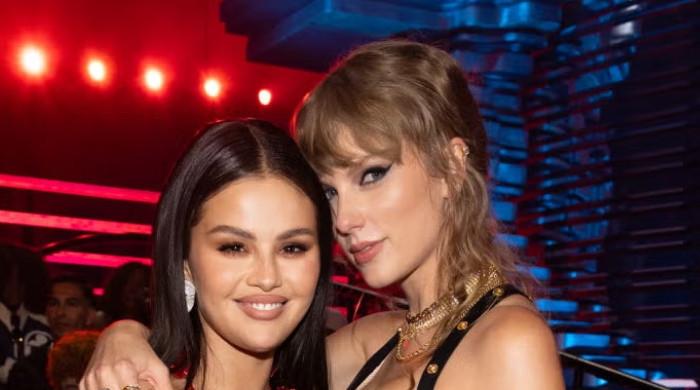
Selena Gomez and Benny Blanco are officially wife and husband.
As fans will be aware, Taylor Swift agreed to play the “flower girl” for her BFF when Gomez announced her engagement to Blanco.
Howeever, the songbird made a special declaration of…
Source link

Kitty Song Covey is entering her senior year – and apparently, she still hasn’t discovered the concept of “chill.”
Anna Cathcart is back as everyone’s favourite chaos queen in season 3 of XO, Kitty, premiering on Netflix this spring. And according to the 22-year-old star, Kitty may want to consider a yoga class. Or three.
“She just needs to calm down a little bit,” Anna told People magazine. “I feel like Kitty has the most chaos [sic] of anyone I know, and that’s what we love about her.”
“But also, girl, you need to sit down sometimes,” she continued. “Take a deep breath, it’s okay. She kind of always has been [that way], but in a controlled way, I guess. She handles it well.”
Season 3 picks up after that cliffhanger (you know the one), and for the first time, fans will see a summer episode – yes, summer at KISS is officially unlocked.
“I’m finally allowed to talk about that because it’s been a secret forever,” Anna shared. “So very excited and I think they’re going to be surprised, but also super happy. So I can’t wait.”
And it’s not just poolside vibes. “[Kitty’s] making some big decisions in her life and it’s senior year, all of that, so I’m very excited for them to see,” she added.
Translation? Expect romance, identity spirals, possibly tears – and definitely Kitty-level impulsive decision-making.

Holly Willoughby is preparing to make her TV comeback with her won Youtube channel, following reports of her solo project.
Since leaving This Morning, she briefly hosted ITV’s You Bet! and Netflix’s reality show Celebrity Bear Hunt.
It has now been reported that the 44-year-old is following other stars who have their own channels, including Ant and Dec, chef Gordon Ramsay and rapper KSI.
By comparison, Gordon Ramsay leads with 21.9 million Youtube subscribers, followed by KSI at 17.3 million.
A source close to Ms Willoughby previously told Daily Mail:
‘She is working with her husband Dan Baldwin’s production company Hungry Bear to develop a ‘multi-strand programme for digital platforms’ in a move she is said to be ‘thrilled and excited’ about.
She also has a production company on hand, Hungry Bear, which creates Gladiators and Michael McIntyre’s Big Show and is run by her husband Dan Baldwin.
A TV insider said: ‘This is a massive game-changer for Holly and the wider industry because this show and her channel will be a threat to the main broadcasters, particularly This Morning and ITV.
‘Advertisers are increasingly turning away from traditional terrestrial telly and looking for new opportunities and new ways to promote themselves online — and with a magazine show like this it’s the perfect vehicle.
‘And if any of the big-name retailers could cherry-pick a presenter who’s an ideal figure to front it, then it is surely Holly.’
Ms Willoughby has largely been off our screens since she left This Morning in October 2023, after she was told a former security guard had planned to kidnap, rape and murder her.
- Interbank rate stays range-bound through the week.
- IMF review talks begin under EFF and RSF.
- Remittances rise year-on-year, dip month-on-month.
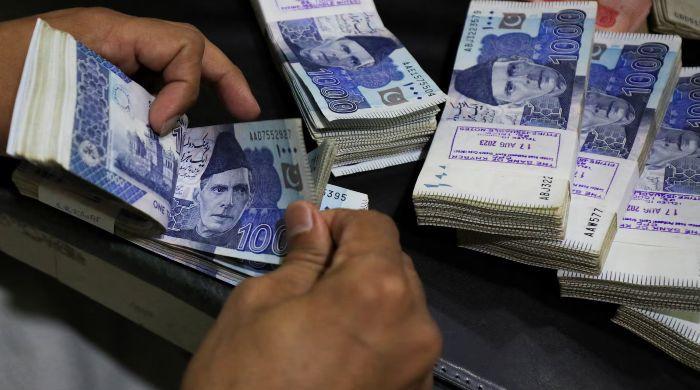
KARACHI: The Pakistani rupee is expected to stay stable and may strengthen slightly in the near term, supported by seasonal remittance inflows during Ramadan and ahead of Eid, The News reported, citing a report released on Saturday.
The currency traded in a tight band in the interbank market this week, closing at 279.55 to the dollar on Monday and at 279.47 on Friday.
The International Monetary Fund (IMF) team began talks with Pakistani authorities on Wednesday for the third review under the $7 billion Extended Financing Facility (EFF) and the second review of the $1.1 billion Resilience and Sustainability Facility (RSF).
Upon successful completion, Pakistan would become eligible by the end of April for about $1 billion under the EFF and an additional $200 million under the RSF.
The geopolitical situation has worsened as the United States and Israel launched strikes on Iran, plunging the region into a new conflict.
The rupee has appreciated by approximately 60 paisa since the beginning of the year, said Tresmark, a platform that provides live financial rates, in a client note. While this increase is modest on its own, it is more significant when considering the broader context, it said.
The rupee has strengthened despite several challenges, including rising geopolitical risks and US posturing in the region, escalating tensions along the western border, isolated internal security incidents, Brent crude prices trading above $72 a barrel, a steady decline in exports, a widening trade deficit, tariff pressures and a persistent inflation differential with the US.
“Seasonal remittance inflows around Ramadan and Eid are likely to keep the rupee well bid in the near term,” the Tresmark’s report said.
“That said, most economists argue that further appreciation offers limited structural benefit, which makes the recent firmness somewhat counterintuitive,” it added.
Pakistan’s remittances rose 15.4% year-on-year (YoY) in January to $3.5 billion. However, these flows dropped 4% on a month-on-month (MoM) basis. Remittances increased 11.3% to $23.2 billion in the first seven months of the fiscal year 2026.
“Premiums have marginally improved. If costing is tight, exporters should opt for forwards, as rupee outlook continues to look stable to slightly stronger,” it said.
According to the report, the rupee’s stability is not isolated. Several high-carry or reform-backed EM currencies have also held firm despite geopolitical noise, including the Egyptian pound, Thai baht, South African rand, Brazilian real, Mexican peso, and Indonesian rupiah.


Anna Cathcart teases big changes in ‘XO, Kitty’ season 3

Transfer rumors, news: MLS an option for Liverpool’s Salah

Make the Most of Chrome’s Toolbar by Customizing It to Your Liking

-
 Business1 week ago
US Top Court Blocks Trump’s Tariff Orders: Does It Mean Zero Duties For Indian Goods?
-

 Fashion1 week ago
ICE cotton ticks higher on crude oil rally
-

 Entertainment1 week ago
The White Lotus” creator Mike White reflects on his time on “Survivor
-
 Business1 week ago
Eye-popping rise in one year: Betting on just gold and silver for long-term wealth creation? Think again! – The Times of India
-

 Politics1 week ago
Pakistan carries out precision strikes on seven militant hideouts in Afghanistan
-

 Sports1 week ago
Brett Favre blasts NFL for no longer appealing to ‘true’ fans: ‘There’s been a slight shift’
-
 Politics1 week ago
US Supreme Court strikes down Trump’s trade tariff measures
-
 Entertainment1 week ago
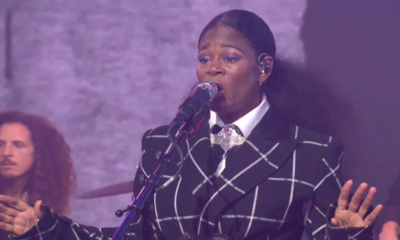
Saturday Sessions: Say She She performs "Under the Sun"