

Politics
‘Hero’ who disarmed Bondi gunman recovers in hospital as donations pour in

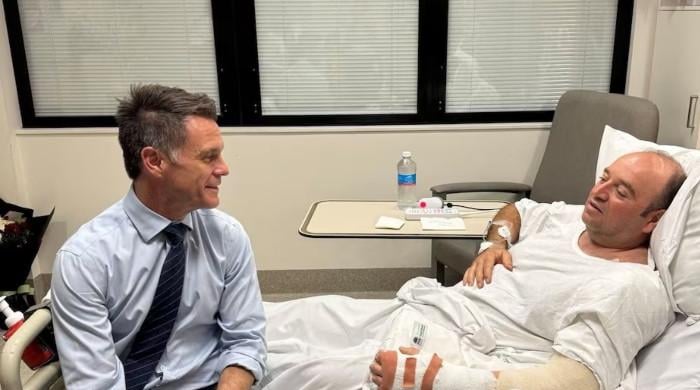
Donations for a Sydney man who wrestled a gun from one of the alleged attackers during a mass shooting at Bondi Beach have surged past A$1.1 million ($744,000), as he recovers in hospital after surgery for bullet wounds.
Forty-three-year-old Ahmed al Ahmed, a Muslim father-of-two, hid behind parked cars before charging at one of the gunmen from behind, seizing his rifle and knocking him to the ground.
Prime Minister Anthony Albanese said Ahmed’s bravery saved lives.
“What we’ve seen in the last 24 hours was the worst of humanity in a terrorist act. But we also saw an example of the best of humanity in Ahmed Al Ahmed running towards danger, putting his own life at risk,” Albanese told state broadcaster ABC News.
He was shot twice by a second perpetrator, Albanese said.
Ahmed’s family said he was hit in the hand and arm.
Australian police on Monday said a 50-year-old father and his 24-year-old son carried out the attack at a Jewish celebration on Sunday afternoon, killing 15 people in the country’s worst mass shooting in almost 30 years.
Hailed a hero for disarming the gunman
Ahmed’s father, Mohamed Fateh al Ahmed, told ABC News in an interview that his son was an Australian citizen and sells fruits and vegetables.
“My son is a hero. He served in the police, he has the passion to defend people.”
“When he saw people lying on the ground and the blood, quickly his conscience pushed him to attack one of the terrorists and take away his weapon,” Mohamed Fateh said.
Jozay Alkanji, Ahmed’s cousin, said he had had initial surgery and may need more.
Tributes have poured in from leaders both abroad and at home.
Chris Minns, the premier of New South Wales, where Sydney is located, said in a social media post he visited Ahmed at St George Hospital and conveyed the gratitude of people across the state.
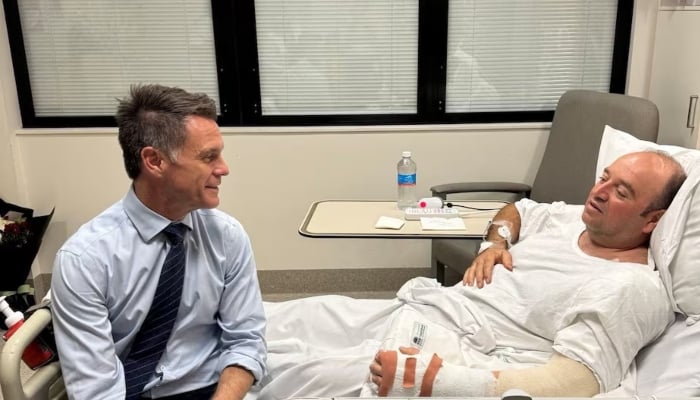
“Ahmed is a real-life hero,” his post said. “Thank you, Ahmed.” A photo showed Minns at his bedside, and Ahmed propped on pillows with his left arm in a cast.
US President Donald Trump called Ahmed “a very, very brave person” who saved many lives.
A GoFundMe campaign set up for Ahmed has raised more than A$1.1 million within one day. Billionaire hedge fund manager Bill Ackman was the largest donor, contributing A$99,999 and sharing the fundraiser on his X account.
Supporters thank Ahmed for saving lives
Outside St George Hospital, strangers came to show their support.
Misha and Veronica Pochuev left flowers for Ahmed with their seven-year-old daughter, Miroslava.
“My husband is Russian, my father is Jewish, my grandpa is Muslim. This is not only about Bondi, this is about every person,” Veronica said.
Yomna Touni, 43, stayed at the hospital for hours to offer assistance on behalf of a Muslim-run charity also raising funds for Ahmed.
“The intention is to raise as much money as possible for his speedy recovery,” she said.
- Trump seeks $5 billion on each of two counts.
- BBC faces crisis, resignations over documentary edit.
- Admits error of judgment but denies legal basis for lawsuit.
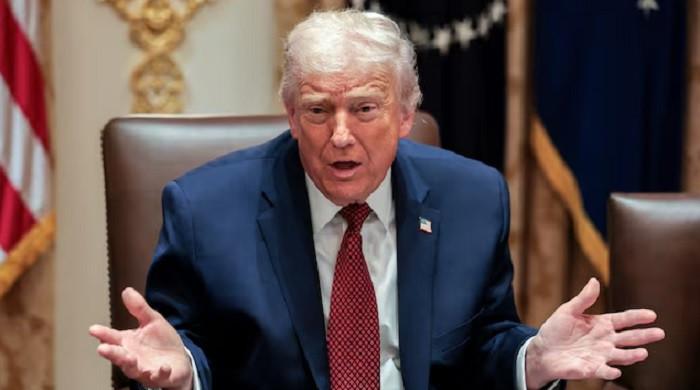
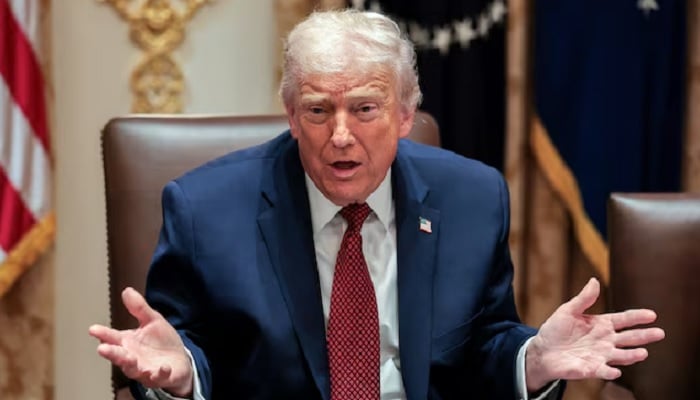
President Donald Trump sued the BBC on Monday for defamation over edited clips of a speech that made it appear he directed supporters to storm the US Capitol, opening an international front in his fight against media coverage he deems untrue or unfair.
Trump accused Britain’s publicly owned broadcaster of defaming him by splicing together parts of a January 6, 2021, speech, including one section where he told supporters to march on the Capitol and another where he said “fight like hell”. It omitted a section in which he called for peaceful protest.
Trump’s lawsuit alleges the BBC defamed him and violated a Florida law that bars deceptive and unfair trade practices. He is seeking $5 billion in damages for each of the lawsuit’s two counts.
The BBC has apologised to Trump, admitted an error of judgment and acknowledged that the edit gave the mistaken impression that he had made a direct call for violent action. But the broadcaster has said there is no legal basis to sue.
Trump, in his lawsuit filed Monday in Miami federal court, said the BBC, despite its apology, “has made no showing of actual remorse for its wrongdoing nor meaningful institutional changes to prevent future journalistic abuses.”
The BBC is funded through a mandatory license fee on all TV viewers, which UK lawyers say could make any payout to Trump politically fraught.
A spokesman for Trump’s legal team said in a statement that the BBC “has a long pattern of deceiving its audience in coverage of President Trump, all in service of its own leftist political agenda.”
A BBC spokesperson told Reuters earlier on Monday that it had “no further contact from President Trump’s lawyers at this point. Our position remains the same.” The broadcaster did not immediately respond to a request for comment after the lawsuit was filed.
Crisis led to resignations
Facing one of the biggest crises in its 103-year history, the BBC has said it has no plans to rebroadcast the documentary on any of its platforms.
The dispute over the clip, featured on the BBC’s “Panorama” documentary show shortly before the 2024 presidential election, sparked a public relations crisis for the broadcaster, leading to the resignations of its two most senior officials.
Trump’s lawyers say the BBC caused him overwhelming reputational and financial harm.
The documentary drew scrutiny after the leak of a BBC memo by an external standards adviser that raised concerns about how it was edited, part of a wider investigation of political bias at the publicly funded broadcaster.
The documentary was not broadcast in the United States.
Trump may have sued in the US because defamation claims in Britain must be brought within a year of publication, a window that has closed for the “Panorama” episode.
To overcome the US Constitution’s legal protections for free speech and the press, Trump will need to prove not only that the edit was false and defamatory but also that the BBC knowingly misled viewers or acted recklessly.
The broadcaster could argue that the documentary was substantially true and its editing decisions did not create a false impression, legal experts said. It could also claim the program did not damage Trump’s reputation.
Other media have settled with Trump, including CBS and ABC, when Trump sued them following his comeback win in the November 2024 election.
Trump has filed lawsuits against the New York Times, the Wall Street Journal and a newspaper in Iowa, all three of which have denied wrongdoing.
The attack on the US Capitol in January 2021 was aimed at blocking Congress from certifying Joe Biden’s presidential win over Trump in the 2020 US election.

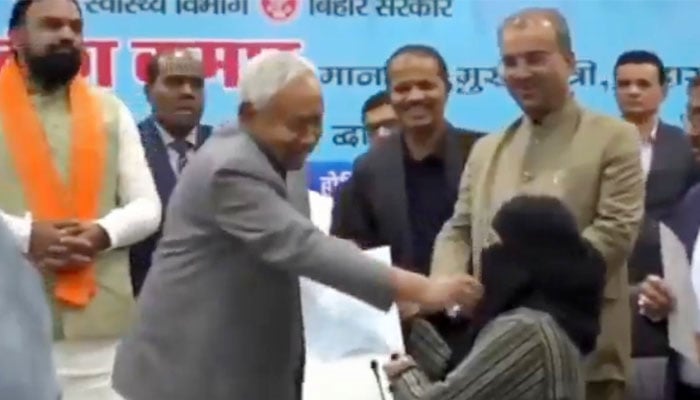
In yet another incident of hate crime against religious minorities in India, Bihar Chief Minister Nitish Kumar removed the hijab (veil) of a newly recruited Muslim doctor during an official event on Monday, drawing widespread criticism worldwide.
The shameful incident took place at “Samvad,” the CM’s secretariat, where appointment letters were being handed over to newly recruited doctors, The Indian Express reported.
When the hijab-clad woman went to collect her job letter, the CM, 75, looked at her and asked: “What is this?”
Then, he bent a little and pulled her hijab down.
Meanwhile, the flustered appointee was hastily pulled aside by an official standing near the stage.
The shocking incident triggered a wave of anguish among minorities in the country and drew strong criticism from the opposition parties, especially the Congress and the Rashtriya Janata Dal (RJD).
Reacting to the video, the Congress accused Kumar of inappropriate conduct towards the woman official, calling it a “vile act”.
In a post on X, the party said, “This is Bihar’s Chief Minister Nitish Kumar. Look at his shamelessness—a female doctor had come to collect her appointment letter, and Nitish Kumar pulled off her hijab. A man occupying the highest position in Bihar is openly indulging in such a vile act.”
The RJD questioned Kumar’s mental health.
“What has happened to Nitish ji? His mental state has now reached a completely pitiable condition,” the party said in a post on X.
In India, hate crimes against religious minorities have alarmingly increased during the tenure of Prime Minister Narendra Modi.
Last month, a US report recommended designating India as a country of “special concern” due to religious prejudice and serious violations of religious freedom.
US Commission on International Religious Freedom, in its report, exposed religious discrimination in India and extremist policies of the RSS and the BJP’s Hindutva agenda.
The report revealed that Modi and the BJP had implemented discriminatory policies against minorities in line with the Hindutva ideology.
It added that the BJP, as the political wing of the RSS, promotes Hindu nationalism.
The RSS has been involved for decades in violent acts against minorities, particularly Muslims and Sikhs.


- Private firms may import, process uranium under new bill.
- Foreign firms in joint ventures may apply for licence.
- New bill requires approval from both houses of parliament.
NEW DELHI: India on Monday set in motion steps to end decades of state control over nuclear power, by introducing a bill in parliament that would allow private firms to build and operate plants as the government seeks to make atomic energy central to its clean energy push.
Foreign companies in a joint venture with Indian companies could apply for a licence if selected to do so by the government.
India’s nuclear sector has been tightly guarded since its first reactor went online in 1969, shaped by Cold War politics and fuel-technology restrictions after its 1974 nuclear test.
State-run Nuclear Power Corp of India Ltd (NPCIL) owns and operates India’s current fleet of nuclear power plants but Reuters reported last year that India was looking to invite domestic private firms such as Tata Power, Adani Power and Reliance Industries to invest about $26 billion in the sector.
The new bill, which must be approved by the lower and upper houses of parliament to become law, would allow any “person expressly permitted by the central government” to apply for a licence to enter the nuclear sector, a major shift from decades when only state-run companies could operate reactors.
India plans to expand nuclear power capacity to 100 gigawatts (GW) over the next two decades, more than 12 times the current 8.2 GW.
The new bill, named the Sustainable Harnessing of Advancement of Nuclear Energy for Transforming India Bill, 2025, drops a rule that lets operators sue suppliers for equipment defects, a provision foreign suppliers have long opposed. Foreign suppliers include General Electric Co, Westinghouse Electric Co and France’s EDF.
The bill doubles operator liability for large reactors to 30 billion rupees ($330.75 million), retains the overall compensation cap at previous levels and proposes a nuclear liability fund to cover accident claims in line with global norms.
Private firms will be allowed to import and process uranium, according to the bill. The government has kept strategic activities such as uranium mining, nuclear fuel enrichment and fuel reprocessing under government control, and all operators would require licences.


Indian textile sector struggling in energy, waste management: ICRA ESG

Spurs mull bringing Wemby off bench in Cup final

Fear, fiat and the future

-

 Politics1 week ago
Thailand launches air strikes against Cambodian military: army
-
 Politics1 week ago
Zelenskiy says Ukraine’s peace talks with US constructive but not easy
-
 Politics5 days ago
Trump launches gold card programme for expedited visas with a $1m price tag
-
 Fashion1 week ago
Germany’s LuxExperience appoints Francis Belin as new CEO of Mytheresa
-

 Tech6 days ago
Jennifer Lewis ScD ’91: “Can we make tissues that are made from you, for you?”
-
 Business5 days ago
Rivian turns to AI, autonomy to woo investors as EV sales stall
-

 Entertainment1 week ago
Too big to fail? IndiGo crisis exposes risks in Indian aviation
-

 Sports5 days ago
Police detain Michigan head football coach Sherrone Moore after firing, salacious details emerge: report