

Business
Higher business taxes to cost pub sector £150m and threaten jobs – analysis

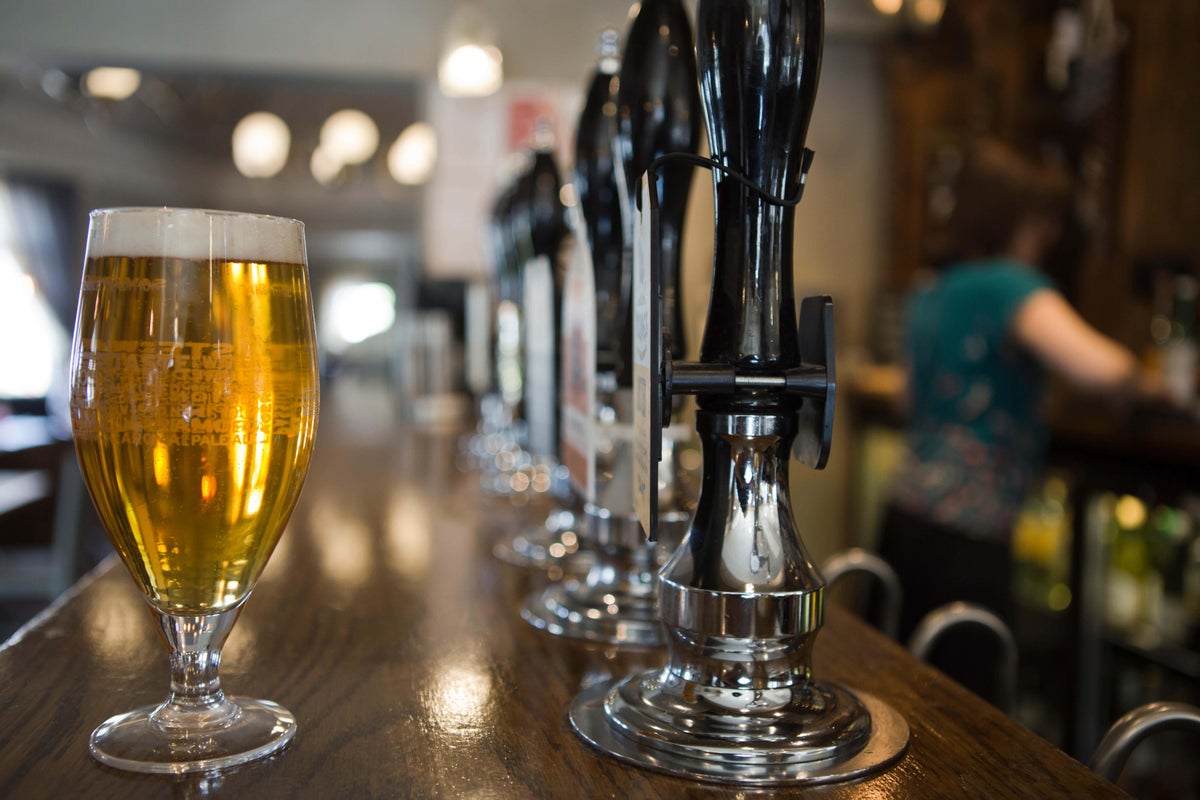
Pubs are facing steeper business taxes that could cost the sector an extra £150 million and threaten thousands of jobs, new analysis suggests.
Firms will end up paying more despite business rates being lowered in the Budget, industry bosses are warning.
This is because they are facing a cut to existing tax relief next year, coupled with revaluations that could push up how much pubs can be taxed.
New analysis from the British Beer and Pub Association (BBPA) estimates that higher bills will cost the industry an extra £150 million – the equivalent to 12,500 jobs.
The BBPA calculated that bills will rise by £3,867 for the average small pub from next year, and by £11,085 for the average medium-sized pub.
Emma McClarkin, chief executive of the BBPA, said pubs across the country “are anxiously doing the sums and many will now see their bills will dramatically go up, not down, despite the impression the Budget gave”.
“The new lower multipliers combined with the loss of the existing relief will not counter the huge increase in rateable values,” she told the Press Association.
In the Budget, the Government confirmed a current 40% discount for retail, hospitality and leisure businesses – which is capped at £110,000 per business – will end on March 31 next year.
This will be replaced by a new system from the next financial year, which will see rates multipliers for retail, hospitality and leisure firms set 5p lower than the standard rate with no cap in support.
Rachel Reeves said it would be the “lowest rates since 1991” and would be paid for through higher rates on properties worth more than £500,000 – including the warehouses used by “online giants”.
However, the discount is less generous than the 20p reduction it could have been, industry groups say.
And analysis since Wednesday’s Budget has indicated that the change, combined with an increase in rateable values for most pubs, will result in a sharp annual increase to bills.
Separate calculations by industry group UKHospitality found that the average pub’s business rates, even with the reduced multiplier, will increase by 15% next year – amounting to an extra £1,400.
By 2027-28, the average pub’s rates will be £4,500 higher than today, and by 2028-29, they will be £7,000 higher, according to its analysis.
Kate Nicholls, chair of UKHospitality, said plans in the Budget were “quickly unravelling”.
“We repeatedly warned the Treasury ahead of the Budget that hospitality would be uniquely impacted by significant increases to rateable values, due to the pandemic impacting previous valuations,” she said.
“The Government can solve this issue. I’m certain they did not intend to provide online giants, office blocks and out-of-town supermarkets with a better deal than local pubs, neighbourhood restaurants and coastal hotels.”
Business
Life sciences lab real estate is clawing back from disaster. Here’s what that means for investors
Business
Trump administration in advanced talks for a rescue package for Spirit Airlines, source says

A Spirit commercial airliner prepares to land at San Diego International Airport in San Diego, California, U.S., January 18, 2024.
Mike Blake | Reuters
The Trump administration is in advanced talks for a financing package for Spirit Airlines as the carrier is facing the risk of a liquidation, according to a person familiar with the matter.
Spirit had been facing a potentially imminent liquidation, people familiar with the matter told CNBC last week, speaking on the condition of anonymity to discuss matters that had not yet been made public. The Dania Beach, Florida-based carrier in August filed for its second Chapter 11 bankruptcy in less than a year, after it struggled to increase revenue to cover rising costs.
President Donald Trump hinted at potential government aid on Tuesday, telling CNBC’s “Squawk Box“, “Spirit’s in trouble, and I’d love somebody to buy Spirit. It’s 14,000 jobs, and maybe the federal government should help that one out.”
The White House didn’t immediately comment.
“We are hopeful that the government will recognize the needs for emergency funds especially in the current economic environment,” a spokesperson for the Associated of Flight Attendants-CWA, which represents Spirit’s cabin crews, said in a statement. “The last thing our economy needs is tens of thousands more people out of work and the last thing the travelling public needs is fewer choices in air travel.”
The terms of the financing deal weren’t immediately known. The Wall Street Journal earlier reported that the talks were in an advanced stage.
The U.S. airline industry accepted more than $50 billion in taxpayer aid to weather the Covid-19 pandemic, which is still its biggest-ever crisis, but those funds weren’t handed to one specific airline. Some of the aid gave the U.S. government stock warrants for airlines.
Airlines also received a government bailout following the Sept. 11, 2001, terrorist attacks, but that money was also for more than one company. The U.S. in 2008-2009 also bailed out the auto industry during the financial crisis and took stakes in manufacturers.
The Trump administration has taken equity stakes in some companies it deemed critical to national security like Intel and USA RareEarth, though Spirit stands out as it is in bankruptcy.
In February, Spirit said it expected to exit bankruptcy in late spring or early summer, telling a U.S. court that it would shrink and focus its planes on high-demand routes and travel periods. Pilot and flight attendant unions had also made concessions, including going on furlough in recent months, in a bid to help Spirit survive.
But jet fuel prices have nearly doubled in some parts of the U.S. since then, further adding to challenges for Spirit and the rest of the airline industry.
As a low-fare airline that also faces competition from larger carriers with their own no-frills, basic economy offerings, it has grown harder for Spirit to cover expenses. Spirit had introduced extra-legroom seats and other premium options to try to cater to higher-spending customers.


5 AI Models Tried to Scam Me. Some of Them Were Scary Good
Tesla widens India bet with launch of Model Y L – The Times of India

Life sciences lab real estate is clawing back from disaster. Here’s what that means for investors

-

 Fashion6 days ago
France’s LVMH Q1 revenue falls 6%, shows resilience amid Iran war
-

 Entertainment1 week ago
Is Claude down? Here’s why users are seeing errors
-

 Sports1 week ago
PSL 11: Peshawar Zalmi win toss, opt to field first against Quetta Gladiators
-

 Tech1 week ago
The Deepfake Nudes Crisis in Schools Is Much Worse Than You Thought
-

 Tech1 week ago
Bremont Is Sending a Watch to the Moon’s Surface
-

 Tech1 week ago
Human-machine teaming dives underwater
-
 Business1 week ago
BP sees ‘exceptional’ oil trading result as Iran war sends crude costs soaring
-

 Fashion1 week ago
What no one is saying about the 2026 apparel slowdown