

Politics
historic Moon mission set for lift-off

- Crew includes three Americans, one Canadian member.
- First woman, non-American, person of colour onboard.
- Mission mirrors Apollo 8’s historic 1968 lunar flyby.
WASHINGTOM: More than half a century after the groundbreaking Apollo programme’s last crewed flight to the Moon, three men and one woman are preparing for a lunar journey set to turn a new page in American space exploration.
The long-delayed Nasa mission dubbed Artemis II is slated to lift off from Florida and venture to Earth’s natural satellite as early as April 1.
They won’t land but are instead on a mission to fly by, much as Apollo 8 did in 1968.
Americans Reid Wiseman, Victor Glober, and Christina Koch — along with Canadian Jeremy Hansen — will carry out the approximately 10-day trip.
The odyssey will mark a series of firsts: the first time a woman, a person of colour, and a non-American will venture on a Moon mission.
It’s also the inaugural crewed flight of Nasa’s new lunar rocket, dubbed SLS.
The mammoth orange-and-white rocket is designed to allow the United States to repeatedly return to the Moon in years to come, with the goal of establishing a permanent base that will offer a stepping stone for further exploration.
“We’re going back to the Moon because it’s the next step in our journey to Mars,” said Wiseman, the Artemis II commander, on a Nasa podcast.
Space Race 2.0?
The Artemis program — named in honour of Apollo’s goddess twin — aims to test technologies needed to one day send humans to Mars, a far more distant journey.
That ambition presents an immense challenge, which is compounded by pressure to achieve it before China does.
China is currently aiming to land humans on the Moon by 2030.
Beijing is also targeting the lunar South Pole, not least for its rich natural resource potential.
The competition recalls the 1960s-era Space Race between the US and the Soviet Union — but Harvard professor Matthew Hersch said that rivalry was “unique” and “will not be repeated anytime soon.”
He told AFP the Chinese are “not really competing with anyone but themselves.”
Washington’s lunar program investment is significantly lower now than during the Cold War era — but the technology has changed dramatically.
“The computer technology that supports the Artemis 2 crew would be almost unimaginable to the Apollo 8 crew, which went to the Moon in a spacecraft with the electronics of a modern high-end toaster oven,” Hersch said.
And yet the Artemis 2 mission will not be without risks, even by Nasa’s own admission.
The crew will board a spacecraft that has never once carried humans or travelled to the Moon, which is more than 384,000 kilometres (238,855 miles) from Earth — or roughly 1,000 times further away than the International Space Station.
“We don’t accept anything less than perfect, otherwise we’re accepting greater risk,” Nasa’s former chief astronaut Peggy Whitson told AFP.
“That is an important process that everyone has to embrace in order for us to be really successful, because we have to live with that knowledge, because of our space flight history, that when accidents happen, people will die,” she said.
Minimising risks and preventing disaster will involve the crew performing a series of checks and manoeuvres while still in Earth’s vicinity.
If all goes well, they’ll set forth for the Moon.
Ambitious timeline
The crew’s objective will be to verify that both the rocket and the spacecraft are in working order, in the hopes of paving the way for a return and Moon landing in 2028 — the final year of President Donald Trump’s term.
That deadline has raised eyebrows among experts, in part because Washington is relying on the private sector’s technological headway.
The astronauts will require a second vehicle to descend to the moon’s surface, a lunar lander that remains under development by rival space companies owned by billionaires Elon Musk and Jeff Bezos.
The Artemis program has also been plagued by delays and massive cost overruns.
Still, Nasa hopes that Artemis 2 can succeed in recreating the rare moment of unity and hope that Apollo 8, when a crew flew by the Moon on Christmas Eve 1968, allowed for.
In the shadow of a tumultuous year, approximately one billion people worldwide tuned in to their flickering television sets to follow the monumental journey of Frank Borman, Jim Lovell, and Bill Anders.
The astronauts — who immortalised the famous “Earthrise” photograph taken from lunar orbit — were credited with having “saved 1968.”
Nearly 60 years later, the country is once again mired in deep division and uncertainty, and the crew of Artemis 2 will soon have their chance to inspire.
- Agreement “focuses on integrated systems, data analysis tools”.
- Saudi Arabia, Ukraine sign MoU on defence procurement: SPA.
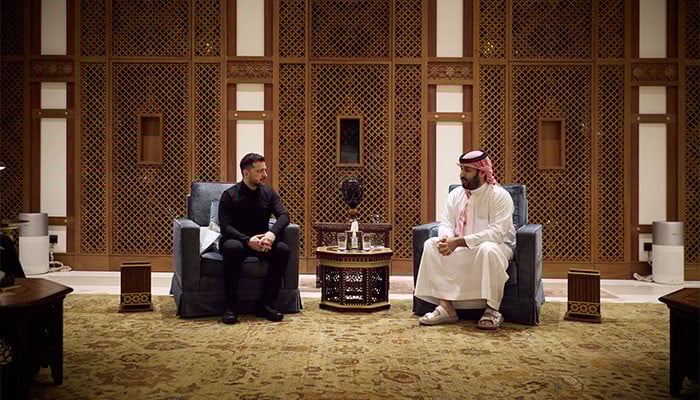
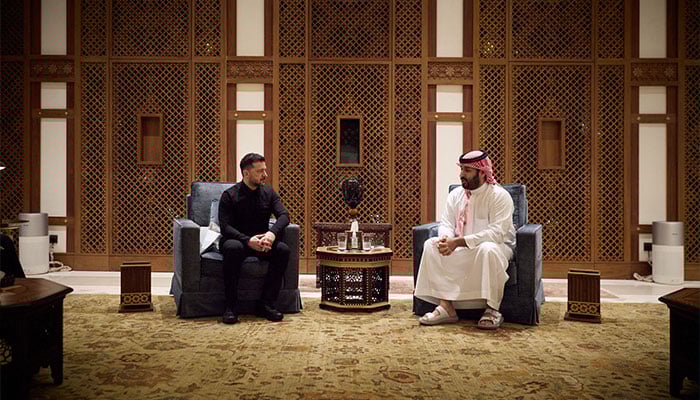
- Zelensky meets Crown Prince MBS, confirms defence arrangement.
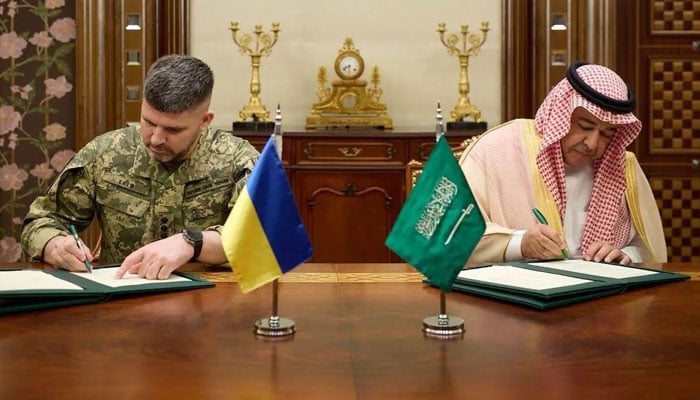
Ukraine and Saudi Arabia have signed an air defence agreement during President Volodymyr Zelensky’s visit to the kingdom facing Iranian drone attacks, two senior officials told AFP on Friday.
Kyiv has sought to leverage its expertise in downing Russian drones to help Gulf nations, which are being attacked with the same kind of Iranian-designed Shahed drones that Russia fires on Ukraine.
“The point of the agreement is that Ukraine will support them in developing all the necessary components of air defence, which they currently lack,” one official said of the document which, according to another was signed on Thursday.
Both spoke to AFP on the condition of anonymity.
Kyiv has been using a mix of cheap drone interceptors, electronic jamming tools and anti-aircraft guns to down Russian drones fired at its cities on a nightly basis for four years.
It touts its anti-drone defences as the best in the world.
Ukraine has proposed swapping its interceptors for vastly more expensive air-defence missiles that Gulf countries are using to down Iranian drones. Ukraine says it needs more of them to fend off Russian missile attacks.
The deal signed between Ukraine and Saudi Arabia “is not only about interceptors as such, but about building a system, integrating it with other air defence components, Ukrainian experience in its use, AI, and all the other elements of data analysis needed to counter Shaheds and other drones,” one of the officials said.
Zelensky confirmed on social media that both countries had “reached an important arrangement” on defence cooperation and that he had met Saudi Crown Prince Mohammed bin Salman during his visit.
“We are ready to share our expertise and systems with Saudi Arabia,” Zelensky said, adding: “Saudi Arabia also has capabilities that are of interest to Ukraine, and this cooperation can be mutually beneficial.”
He did not disclose what exactly has been agreed as part of the deal.
Zelensky also met Ukrainian anti-drone experts that have been deployed to the country since US and Israel launched strikes on Iran that spurred retaliatory drone and missile attacks from Tehran.
“Even in such a short time, Ukrainian experts were able to share extensive expertise,” Zelensky said.
“Ukraine’s expertise is unique, and recognised as such, and that is why everyone is so interested in our technologies and experience.”
MoU on defence procurement
The Saudi Ministry of Defence and its Ukrainian counterpart have signed a memorandum of understanding related to defence procurement arrangements in Jeddah, Saudi state news agency SPA reported.
Saudi Assistant Minister of Defence for Executive Affairs Dr Khaled Al-Biyari and Ukrainian Chief of the General Staff of the Armed Forces Lieutenant General Andrii Hnatov signed the agreement, it added.
- India’s military spending reaches $71 billion this fiscal year.
- India’s defence spending highest ever in a fiscal year.
- India ranks as second-largest arms importer globally.
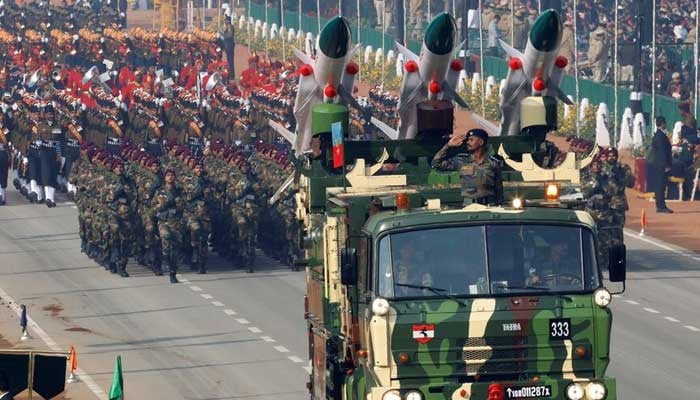
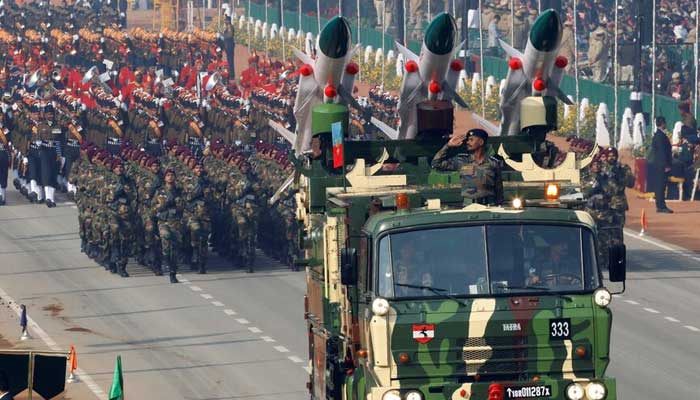
NEW DELHI: India approved proposals worth $25 billion on Friday to buy transport aircraft, Russian S-400 missile systems and remotely piloted strike aircraft as it pushes its military modernisation and replenishes equipment after its conflict with Pakistan.
The decision comes on the back of another major approval last month worth $40 billion to purchase more French Rafale fighter jets for the air force and Boeing P-8I reconnaissance aircraft for the navy.
Friday’s approvals also covered purchases of armoured piercing tank ammunition, gun systems and aerial surveillance systems for the army, increasing the life of the Sukhoi-30 fighter jets operated by the air force, and hovercraft for the coastguard, a statement from the defence ministry said.
Separately, the ministry also signed a 4.45 billion rupees ($47 million) contract on Friday with Russia’s JSC Rosoboronexport to acquire Tunguska air defence missile systems for the army.
In all, India has approved 55 proposals worth 6.73 trillion rupees ($71 billion) and signed contracts for another 503 proposals amounting to 2.28 trillion rupees in the fiscal year ending March 31, the statement said, adding that both were the highest in a fiscal year.
India is the world’s fifth-largest military spender and the second-largest arms importer after Ukraine, according to latest data from the Stockholm International Peace Research Institute.
It has for decades been modernising its mostly Soviet-era equipment and increasingly looking to new sources including France, Israel, the United States and Germany. In recent years, it has pushed to manufacture everything from guns and drones to fighter jets and submarines at home, either on its own or in collaboration with foreign partners.
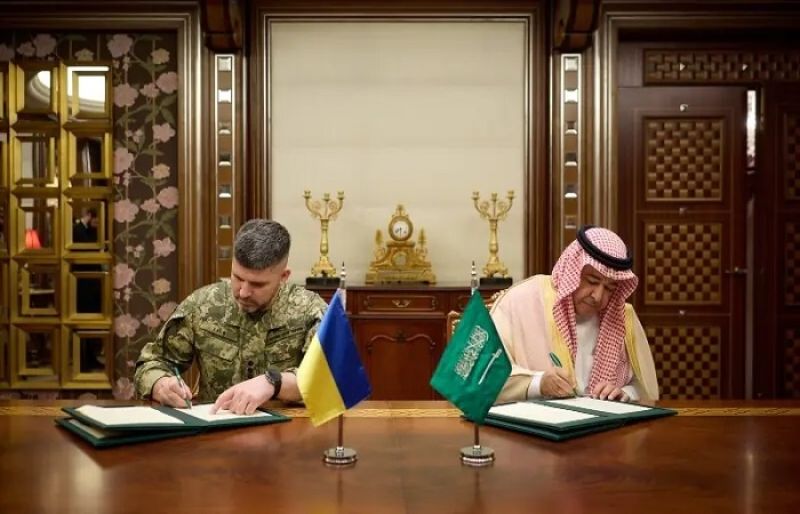
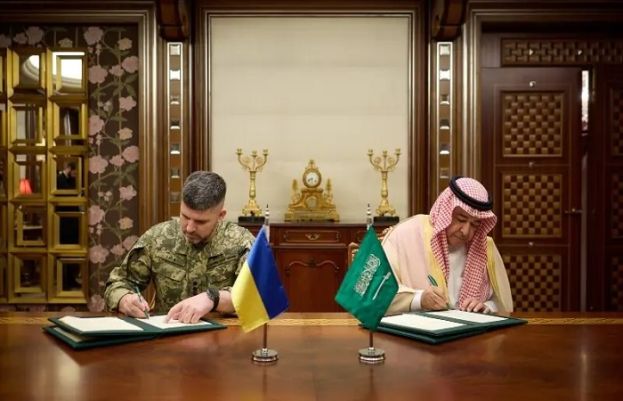
Ukraine and Saudi Arabia have signed an air defence agreement during President Volodymyr Zelensky’s visit to the kingdom, which is facing Iranian drone attacks, two senior officials told AFP on Friday.
Kyiv has sought to leverage its expertise in downing Russian drones to help Gulf nations, which are being attacked with the same kind of Iranian-designed Shahed drones that Russia fires on Ukraine.
“The point of the agreement is that Ukraine will support them in developing all the necessary components of air defence, which they currently lack,” one official said of the document which, according to another was signed on Thursday.
Both spoke to AFP on the condition of anonymity.
Kyiv has been using a mix of cheap drone interceptors, electronic jamming tools and anti-aircraft guns to down Russian drones fired at its cities on a nightly basis for four years.
It touts its anti-drone defences as the best in the world.
Ukraine has proposed swapping its interceptors for vastly more expensive air-defence missiles that Gulf countries are using to down Iranian drones.
Ukraine says it needs more of them to fend off Russian missile attacks.
The deal signed between Ukraine and Saudi Arabia “is not only about interceptors as such, but about building a system, integrating it with other air defence components, Ukrainian experience in its use, AI, and all the other elements of data analysis needed to counter Shaheds and other drones,” one of the officials said.
Zelensky confirmed on social media that both countries had “reached an important arrangement” on defence cooperation and that he had met Saudi Crown Prince Mohammed bin Salman during his visit.
“We are ready to share our expertise and systems with Saudi Arabia,” Zelensky said, adding: “Saudi Arabia also has capabilities that are of interest to Ukraine, and this cooperation can be mutually beneficial.” He did not disclose what exactly had been agreed as part of the deal.
Zelensky also met with Ukrainian anti-drone experts who have been deployed to the country since the US and Israel launched strikes on Iran that spurred retaliatory drone and missile attacks from Tehran.
“Even in such a short time, Ukrainian experts were able to share extensive expertise,” Zelensky said.
“Ukraine’s expertise is unique, and recognised as such, and that is why everyone is so interested in our technologies and experience.”

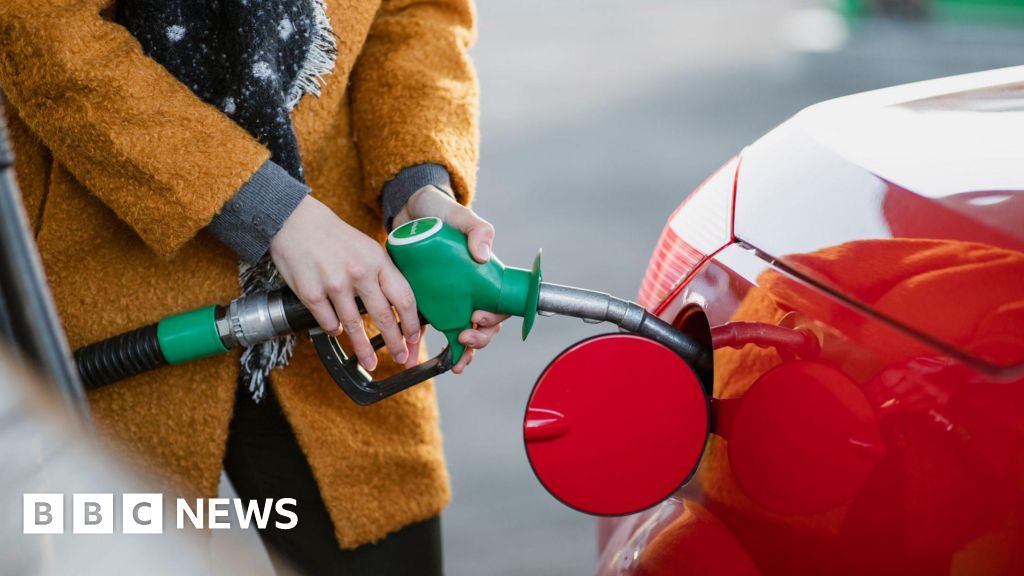
Asda boss rejects profiteering claims as petrol price tops 150p

Britney Spears turns a new page after recent legal trauma

This Premium Sennheiser Soundbar Is $1,000 Off

-

 Entertainment1 week ago
Val Kilmer revived 1 year after death through AI
-

 Fashion7 days ago
China’s textile & apparel exports surge 17% to $50 bn in Jan-Feb 2026
-
 Business7 days ago
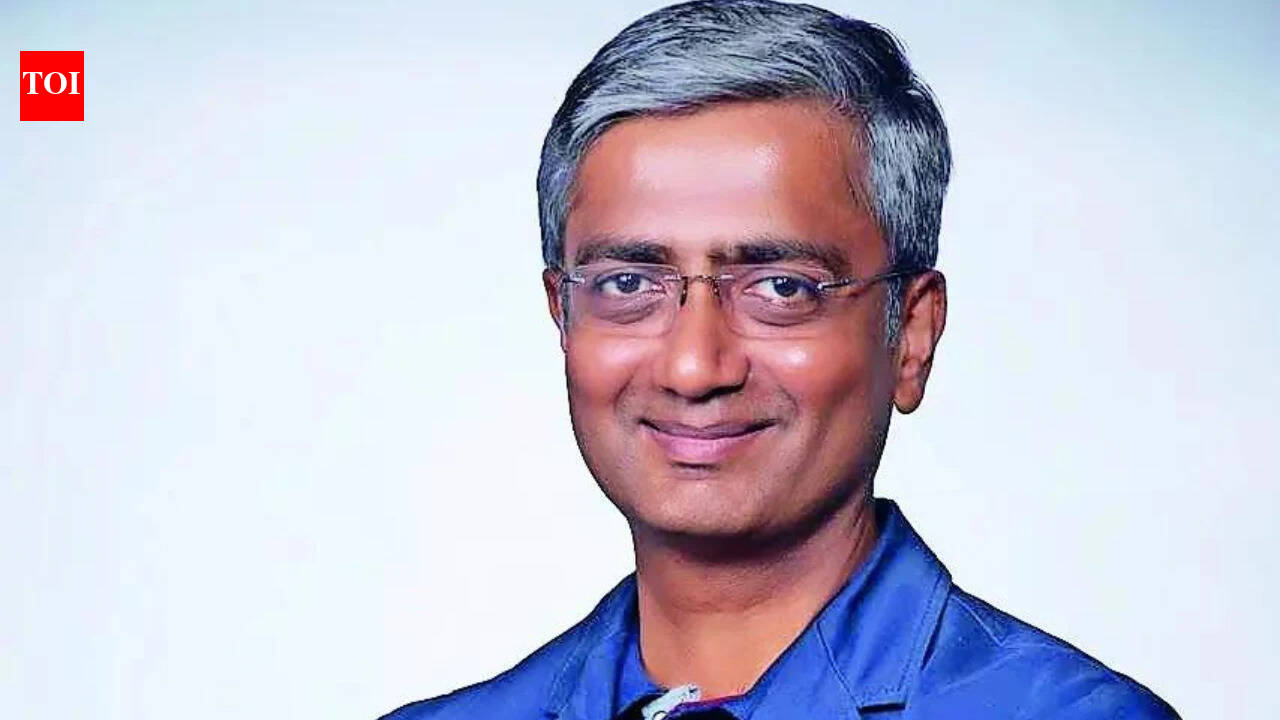
Flipkart group CFO to leave co amid IPO plans – The Times of India
-

 Sports7 days ago
Rating Adidas’ 2026 World Cup away shirts: Argentina, Spain, Mexico and more
-
 Business1 week ago
Video: The Effects of High Oil Prices
-

 Sports7 days ago
American Conference Commissioner Tim Pernetti thanks Trump for Army-Navy game executive order
-
Tech1 week ago
The Corsair 4000D RS PC Case Keeps Your System Cool
-

 Tech1 week ago
‘Uncanny Valley’: Nvidia’s ‘Super Bowl of AI,’ Tesla Disappoints, and Meta’s VR Metaverse ‘Shutdown’