

Politics
Hitan Mehta appointed CEO of British Asian Trust

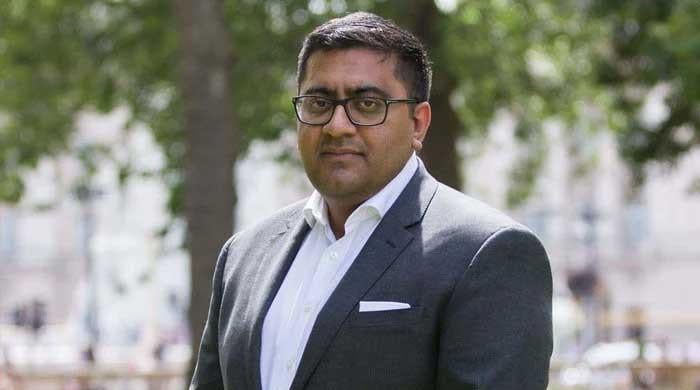
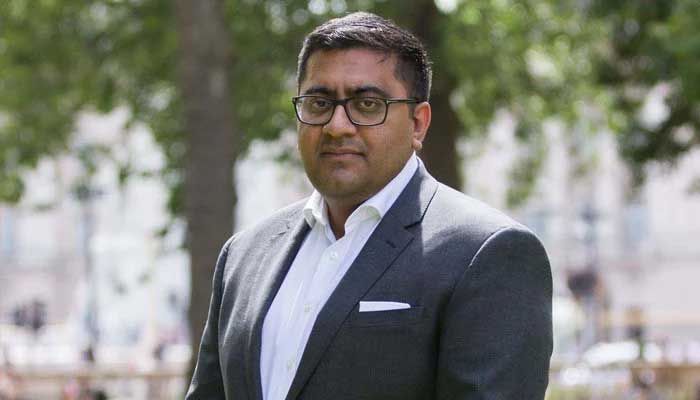
LONDON: The Board of Trustees of the British Asian Trust has announced the appointment of Hitan Mehta OBE as its new Chief Executive.
Mehta succeeds Richard Hawkes OBE, who has stepped down after 10 years of transformative leadership.
The Board extended its thanks to Hawkes for his decade of service. It said: “Under his leadership, the British Asian Trust has significantly expanded its scale and impact, improving the lives of more than 18 million people across South Asia. The board wishes him every success in the future”.
Mehta played a pivotal role in establishing the British Asian Trust in 2007 as its first-ever employee. Over the past 18 years, he has worked closely with His Majesty King Charles III, including previously as The Prince of Wales.
As a long-standing member of the British Asian Trust’s senior leadership, he has worked side by side with Hawkes to grow the organisation into one of the most respected and innovative international charities working across South Asia.
Throughout his tenure, Mehta has been central to the British Asian Trust’s global expansion, helping shape its growth across the UK, South Asia, the Gulf, and most recently North America.
He has led the Trust’s efforts to deepen engagement with the global South Asian diaspora, building influential networks across philanthropy, finance and business to strengthen the Trust’s mission worldwide.
Hawkes commented: “After an amazing 10 years at the British Asian Trust, now is the right moment for me to explore new challenges and pass on the baton to Mehta, who I have worked with closely for the last decade. I would like to thank the board for the privilege of being CEO and wish the organisation every success in the future”.
Expressing his reflections on the appointment, Mehta said, “It is an honour to step into this role at such a pivotal moment for the British Asian Trust. As we enter an important period of global and UK diaspora”.
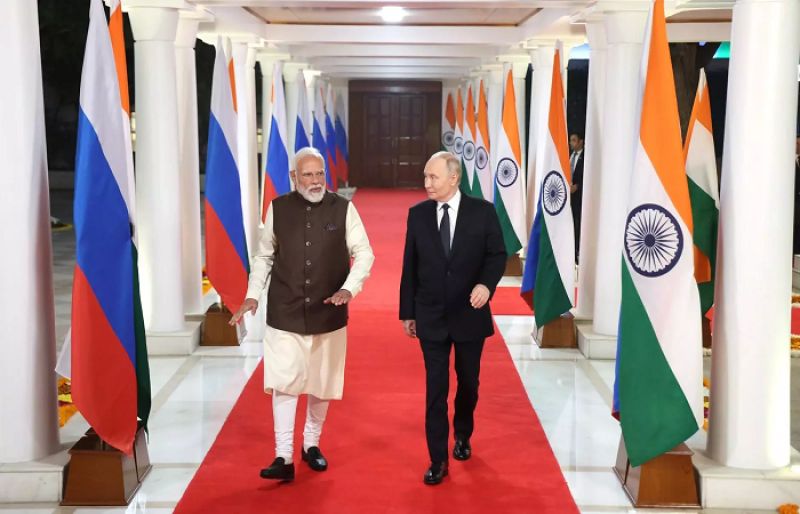

India’s Prime Minister Narendra Modi is hosting Russian President Vladimir Putin for a high-stakes summit on Friday, with defence cooperation and energy trade dominating the agenda as New Delhi faces mounting US pressure to curb its imports of Russian oil.
The two leaders are also expected to review the shifting geopolitical landscape shaped by Russia’s invasion of Ukraine and the global trade instability triggered by US President Donald Trump’s steep tariffs—measures that have directly impacted India’s economy.
Putin’s trip marks his first visit to India since the war in Ukraine began and comes at a time when the two countries are negotiating major defence acquisitions, co-production agreements, oil supply deals, and broader economic partnerships.
Modi personally received Putin at the New Delhi airport on Thursday, greeting him with a warm embrace on a red carpet before accompanying him in the same vehicle to a private dinner—echoing a similar gesture Putin extended to Modi during their September meeting in China.
“India–Russia friendship is time-tested and has greatly benefitted our people,” Modi posted on social media, sharing a photograph of the two leaders smiling together in the car.
The warm optics came just months after President Trump imposed 50% tariffs on most Indian products, citing India’s continued purchase of Russian crude—revenue Washington argues is helping Moscow finance the war in Ukraine.
Speaking to India Today ahead of the summit, Putin described himself as “very happy” to reunite with “my friend” Modi.
“Our cooperation with India spans an enormous range,” he said, referencing joint work in shipbuilding, aviation, nuclear energy and space.
Political analyst Ashok Malik of The Asia Group said the visit aligns with India’s strategy of diversifying both its strategic partnerships and economic dependencies amid tariff pressure from Washington.
On Friday, Putin will receive a ceremonial honour guard welcome at the presidential palace before beginning formal talks with Modi.
Balancing acts
India is walking a diplomatic tightrope — relying on strategic Russian oil imports while trying not to provoke Trump during ongoing tariff negotiations.
“Balancing acts are second nature to Indian foreign policy making”, wrote Pankaj Saran, a former Indian envoy to Russia, writing in the Times of India.
The leaders will also address business and industry leaders before Putin attends a state banquet hosted by the Indian President Droupadi Murmu.
India, the world’s most populous nation, has become a major buyer of Russian oil, saving itself billions of dollars and providing Moscow with a much-needed export market after it was cut off from traditional buyers in Europe because of the war.
Putin also told India Today that Modi is “not someone who gives in to pressure”, when asked about the impact of US tariffs.
The Russian share of India’s arms imports fell from 76 percent in 2009-13 to 36 percent in 2019-23, according to the Stockholm International Peace Research Institute.
Besides discussions around cutting-edge defence hardware, which includes air defence systems, fighter jets, and nuclear submarines, New Delhi will push for easier access to the wider Russian market.
Bilateral trade reached $68.7 billion in 2024-25 — almost six times higher than the pre-pandemic levels — but Indian exports accounted for only $4.88 billion.
The two countries are expected to announce an agreement on easier mobility of Indian workers into Russia.
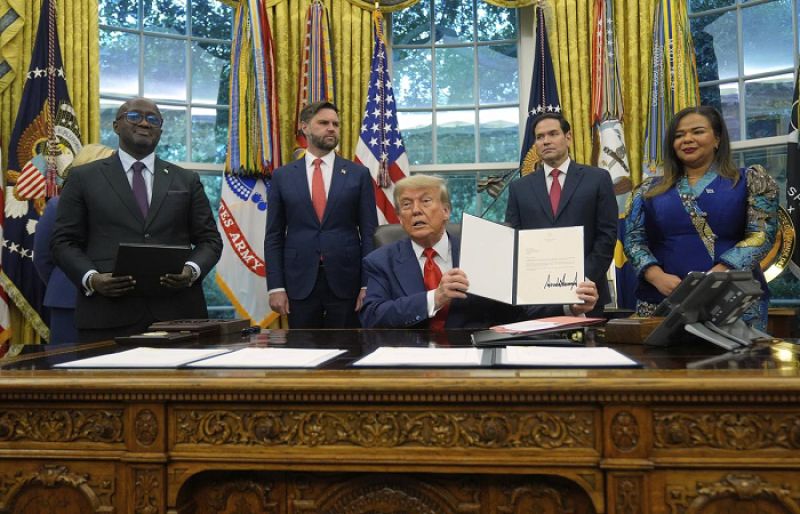

In a major diplomatic breakthrough, President Donald Trump on Thursday brokered a historic agreement between Rwanda and the Democratic Republic of Congo (DRC), effectively ending three decades of conflict between the neighboring nations.
The pact, officially named the Washington Accord, was signed at the Donald Trump Institute of Peace in Washington, where Rwandan President Paul Kagame and Congolese President Félix Tshisekedi declared that the long-standing hostilities between their countries had come to an end.
The signing followed high-level meetings at the White House, where Trump held separate and joint discussions with both leaders to finalize terms aimed at resolving tensions and fostering trust.
Under the accord, Rwanda has committed to ending support for armed groups operating inside Congo, while both nations pledged to refrain from any military action against each other.
The United States also announced plans to invest in mineral exploration and development projects across both countries, considered crucial for long-term regional stability.
“Today, the world has witnessed another major conflict resolved,” President Trump said at the ceremony. “This agreement opens the door to peace, prosperity, and opportunity for the people of Rwanda and Congo.”
Rwandan President Kagame described the deal as historic, noting that previous international efforts had failed to bridge the divide. “For 30 years, no one was able to end this conflict. Many nations tried to mediate but did not succeed,” he said. “President Donald Trump played a neutral and decisive role in helping us achieve peace. If this agreement fails, the responsibility will be ours — not his.”
Congo’s President Tshisekedi echoed the sentiment, emphasizing that the Washington Accord would bring lasting benefits to the entire Great Lakes region. “We have signed this peace agreement for the future of our people,” he said.
“I thank President Trump and his administration for their support. This accord will lead to greater stability and prosperity throughout the region.”
Leaders and senior officials from several African nations attended the ceremony and congratulated both countries on what they called a landmark step toward lasting peace.


The United States is planning to expand its travel ban to cover more than 30 countries, US Homeland Security Secretary Kristi Noem said Thursday. In an interview on Fox News’ The Ingraham Angle, Noem was asked whether the Trump administration would increase the number of countries on the travel ban list to 32.
She replied, “I won’t be specific on the number, but it’s over 30, and the president is continuing to evaluate countries.”
In June, President Donald Trump signed a proclamation banning citizens of 12 countries from entering the US and imposing restrictions on travelers from seven others, citing concerns over “foreign terrorists” and other security threats. The bans apply to immigrants, tourists, students, and business travelers alike.
Noem did not disclose which countries might be added to the expanded list, but stressed that travel restrictions would target nations without stable governments or adequate systems to vet their citizens.
“If they don’t have a stable government there, if they don’t have a country that can sustain itself and tell us who those individuals are and help us vet them, why should we allow people from that country to come here?” she said.
Earlier reports from Reuters indicated that the administration was considering banning citizens of up to 36 additional countries, according to an internal State Department cable.
The potential expansion follows heightened migration restrictions after the shooting of two National Guard members in Washington, DC, last week.
Investigators identified the shooter as an Afghan national who had entered the US in 2021 under a resettlement program. Trump officials have argued that the program lacked sufficient vetting.
In the aftermath, Trump pledged to “permanently pause” migration from all “Third World countries,” though he did not specify which nations he meant.
Separately, Homeland Security officials said the president had ordered a comprehensive review of asylum cases approved under former President Joe Biden’s administration, as well as Green Cards issued to citizens of 19 countries.
Since returning to office in January, Trump has aggressively prioritised immigration enforcement, sending federal agents to major US cities and turning away asylum seekers at the US-Mexico border.
His administration has frequently highlighted the deportation push, but until now it has put less emphasis on efforts to reshape legal immigration.


Millie Bobby Brown gears up for first-ever Holiday season with baby girl

Hitan Mehta appointed CEO of British Asian Trust
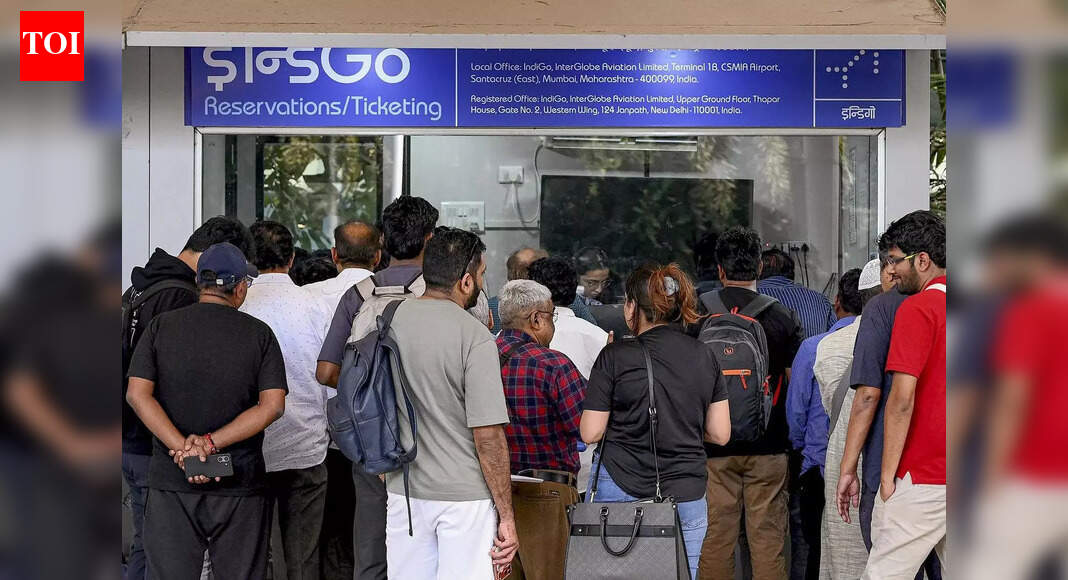
Rs 70k to Bengaluru but Rs 25k to London: Airfares explode amid massive IndiGo crisis; flyers rush for options – The Times of India

-

 Tech5 days ago
Get Your Steps In From Your Home Office With This Walking Pad—On Sale This Week
-

 Sports4 days ago
India Triumphs Over South Africa in First ODI Thanks to Kohli’s Heroics – SUCH TV
-

 Fashion4 days ago
Results are in: US Black Friday store visits down, e-visits up, apparel shines
-

 Entertainment4 days ago
Sadie Sink talks about the future of Max in ‘Stranger Things’
-
 Politics4 days ago
Elon Musk reveals partner’s half-Indian roots, son’s middle name ‘Sekhar’
-

 Tech4 days ago
Prague’s City Center Sparkles, Buzzes, and Burns at the Signal Festival
-

 Sports4 days ago
Broncos secure thrilling OT victory over Commanders behind clutch performances
-
 Business4 days ago
Key Financial Deadlines That Have Been Extended For December 2025; Know The Last Date