

Business
Hollywood turns to video games to bring fresh IP to the big screen


Warner Bros. | Universal Studios | Amazon Prime
Hollywood is finally leveling up.
For decades, studios have tried to capitalize on the financial success and cultural relevance of video games, but it’s only been in the past few years that things have clicked.
With the box office achievements of Universal’s “The Super Mario Bros. Movie” and Warner Bros.’ “A Minecraft Movie,” alongside television hits like Amazon Prime Video’s “Fallout” and HBO’s “The Last of Us,” Hollywood has doubled down on its investment in content based on video game franchises and related intellectual property.
“Adaptations of popular games used to be met with a high degree of cynicism and creative misfires, but recent blockbusters and commercial hits have reversed the curse,” said Shawn Robbins, director of analytics at Fandango and founder of Box Office Theory.
Just this week, Paramount announced it would develop a live-action Call of Duty movie and distribute the latest Street Fighter adaptation as part of a three-year distribution deal with Legendary. Also on the development docket are features based on “Elden Ring,” “Helldivers,” “Horizon Zero Dawn” and “The Legend of Zelda.”
On the television side, treatments for Tomb Raider, God of War, Mass Effect and Assassin’s Creed are in the works.
“Video game movies and TV shows are not new, but they’re certainly getting a better volume and they’re getting better,” said Alicia Reese, analyst at Wedbush.
Start screen
The first video game adaptation to hit theaters was 1993’s “Super Mario Brothers.” The live-action feature based on the hit Nintendo property tallied $20.9 million domestically at the time and was widely panned by critics.
For the next two decades, Hollywood managed to make enough back on production budgets that studios kept justifying future adaptations, but there always seemed to be something lost in translation between the game controller and the theater.
Between 1993 and 2018, only three video game-based films generated more than $100 million at the domestic box office — 2001’s “Lara Croft: Tomb Raider,” 2016’s “The Angry Birds Movie” and 2018’s “Rampage,” according to data from Comscore.
During this same period, not a single video game movie generated a “fresh” rating from review aggregator Rotten Tomatoes. The site’s rating has become a benchmark over the past two decades, as moviegoers often consult the website before they decide to go see a film.
Rotten Tomatoes aggregates reviews from major publications and reputable blogs and determines what percentage of those reviews were positive versus negative. If at least 60% of a film’s reviews are positive, it will receive a red tomato, which is considered “fresh.” If it gets less than 60%, it is given a green splat.
Next level
And then something shifted in 2019.
Warner Bro.’s “Pokémon Detective Pikachu” not only hauled in $144 million domestically, it scored a 68% “fresh” rating. The film became the second-highest video game adaptation ever with $433.5 million in global receipts. Universal’s 2016 “Warcraft” was the only film with higher ticket sales at the time, with $433.6 million worldwide; however, only $47.3 million of that came from domestic audiences, Comscore reported.
Ben Schwartz voices Sonic in Paramount Pictures’ “Sonic the Hedgehog.”
Paramount Pictures
A month before pandemic shutdowns, Paramount’s “Sonic the Hedgehog” hit theaters, earning a 64% “fresh” rating and zapping up $144 million domestically and $319 million globally.
Its run was cut short, but audience turnout and enthusiasm brought two more theatrical Sonic films and a spin-off streaming show called “Knuckles.” The franchise has now generated more than $1 billion at the global box office since 2019 and a fourth film is due out in 2027.
The franchise paved the way for “The Super Mario Bros. Movie,” which debuted in April 2023 and shattered box office records for video game adaptations. It generated $574 million domestically, the most of any video game film ever, and more than $1.3 billion globally, the first and only film of the genre to reach that feat.
Another big hit for the industry was 2025’s “A Minecraft Movie,” which topped $423 million in the U.S. and Canada and $957 million at the global box office.
Jack Black, Jason Momoa, and Sebastian Hansen as seen in Warner Bros. and Legendary Entertainment’s “A Minecraft Movie.”
Warner Bros.
While critical responses to “Super Mario” and “Minecraft” were lukewarm — 59% and 48%, respectively — audience scores were much stronger at 95% and 85%, respectively.
“If it weren’t for ‘Minecraft,’ 2025 year-to-date would be looking, honestly, pretty dismal,” said Doug Creutz, an analyst at TD Cowen. “‘Minecraft’ really helped at the time of the year, April, when it’s usually a little quieter.”
Fueling fandoms
Video game films have hit their stride as technological advancements in computer-generated imagery made creating the worlds within these digital spaces easier and also more realistic.
Previous video game adaptations focused more on worldbuilding than character development, Toby Ascher, who acquired the rights to Sonic and produced the film franchise, told CNBC back in March when discussing how Paramount handled the production of the first Sonic film.
Now, that worldbuilding is easier, so studio creatives can focus on the story they are bringing to the big screen, said industry analyst David Poland.
“‘Minecraft, like the world of it, almost becomes a background,” Poland said. “Then you’re able to tell these stories where the obsession is not getting the background correct, but getting a story that people actually engage with. So, in some ways, I think the technology has allowed them to get away from the games to a certain extent, and get to things that people connect with while also maintaining the integrity of the games in the first place.”
At the same time, the kids who grew up playing video games have now become adults and are the ones making these films.
“I don’t think anyone in town really thought making a Sonic movie was a good idea,” Ascher said back in March. “But, I think our strategy was that we had grown up with these games. We’ve grown up with these characters, and we wanted to treat them like any other character. We wanted to give them real emotional arcs, and real emotional stories where you could relate to them.”
Paramount’s Chairman and CEO David Ellison also touted his fandom in announcing the company’s partnership with Activision to bring Call of Duty to the big screen.
“As a lifelong fan of Call of Duty this is truly a dream come true,” Ellison said. “From the first Allied campaigns in the original Call of Duty, through Modern Warfare and Black Ops, I’ve spent countless hours playing this franchise that I absolutely love.”
Chris Pratt and Charlie Day voice Mario and Luigi, respectively, in Universal and Illumination’s “The Super Mario Bros. Movie.”
Universal
The Entertainment Software Association estimates that more than 205 million Americans play video games, with the highest concentration of gamers coming from Gen Alpha, Gen Z and Millennials. That is a massive audience of people who have spent a lot of time invested in this kind of IP, Poland noted.
“If movie studios and theater owners want to meet young audiences where they are and have them become a consistent part of the future of moviegoing, the video game world is unsurpassed in untapped potential,” Robbins said.
“The additional upside is that the non-gamer audience could show up for these films and discover them for the first time,” he added. “Quality will always be king, though, so care must be taken and audiences must be heard. Ultimately, engaging Gens Z and Alpha directly through the communities of social influencers and content creators could pay tremendous dividends for the movie business.”
Drawing younger generations to cinemas is key when it comes to keeping the box office booming. Ultimately, analysts don’t see video game movies growing the industry exponentially, but rather acting as a replacement for genres that are not drawing in audiences and luring in a younger demographic and training them to be more avid moviegoers.
“As a genre, the video game adaptation represents a new frontier and studios may be looking to such future projects to fill the void that has been left by some inconsistent performances by films from the superhero category that historically has been heavily relied upon to be a key pillar of the box office,” said Paul Dergarabedian, senior media analyst at Comscore. “A virtual treasure trove of beloved brands, characters, situations, and stories await producers and filmmakers who are hoping to further cash in on video game fever.”
Disclosure: Comcast is the parent company of NBCUniversal and CNBC. NBCUniversal owns Rotten Tomatoes and Fandango.






Business
Fuel price hike impact: How it will change what you eat, how you travel and what you can afford
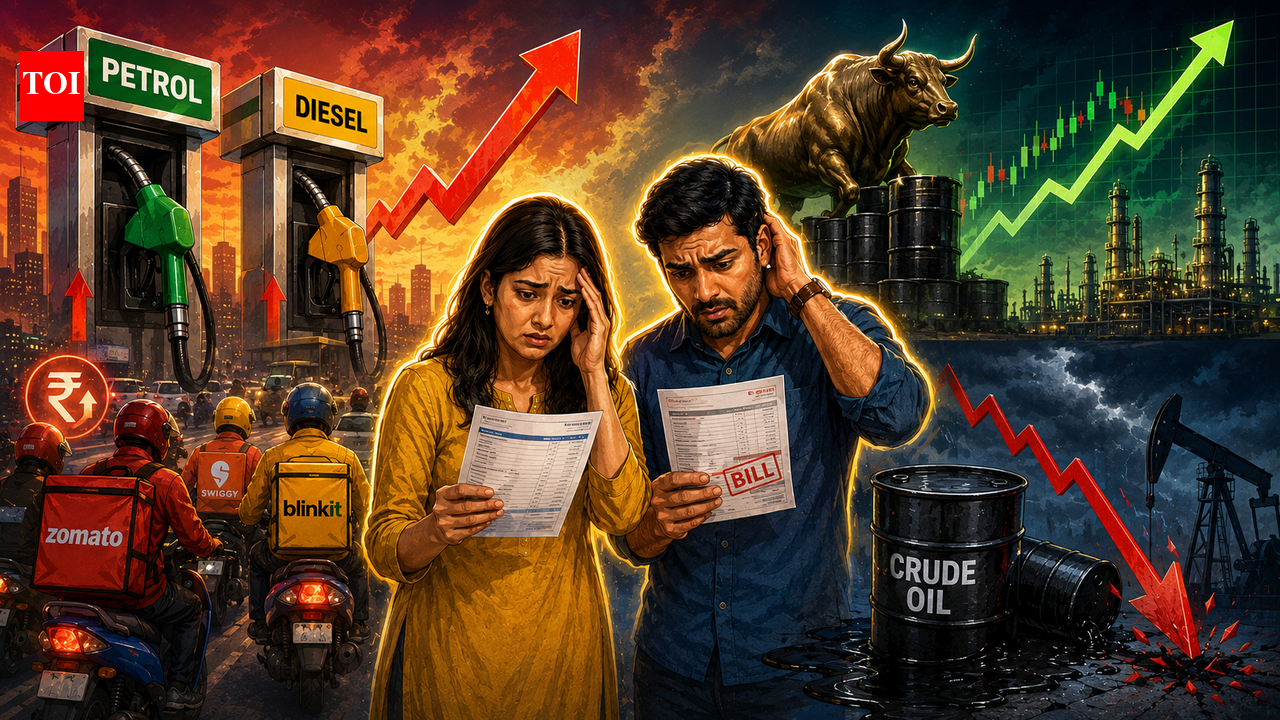
Your next trip to the fuel station just got more expensive!Fuel prices across the nation saw another revision, now becoming costlier by Rs 7.5 per litre since the Middle East crisis began. Early Monday, petrol prices were hiked by Rs 2.61 per litre, while diesel prices were increased by Rs 2.71, marking the fourth increase in just ten days.These back-to-back revisions are now raising concerns over a ripple effect on household budgets, inflationary pressures, and everyday commuting costs, leaving consumers to quietly do the math all over again.The latest round of price hikes comes against the backdrop of the ongoing conflict in the Middle East, which has tightened global energy supplies. With crude shipments under pressure and geopolitical tensions showing little sign of easing, international oil prices have been trending higher, with the impact steadily filtering into domestic retail markets.Retail fuel prices had remained largely unchanged for nearly four years before the first hike on May 15, making the sharp, fortnight-long surge in prices all the more striking.Prices continue to vary across states due to differing local taxes.

Impact of rising petrol and diesel prices
Impact on transportation
Transportation is the first and most direct sector to feel the impact of petrol and diesel price hikes. Your drive to the office, that weekend road trip, and quick grocery run — everything will now cost slightly more. With the latest increase, transporters are under significant operational pressure after four rapid fuel revisions. Fuel alone accounts for more than half of truck operating costs, and when added to rising expenses such as tires, insurance, tolls, maintenance, finance costs and statutory compliances, transport operations are now facing severe pressure on viability.“Fuel alone accounts for nearly 55% of truck operating costs. Along with increasing costs of tyres, insurance, tolls, maintenance, finance costs and statutory compliances, the viability of transport operations is under severe pressure,” one transporter told TOI.Transporters also argue that instead of repeated smaller hikes, a single transparent fuel pricing decision would allow better planning of freight structures and business viability.
Supply chains and deliveries
Rising fuel prices are also creating wider pressure across supply chains and delivery networks in the country. Logistics operations are under strain, with transporters already raising freight charges, a move that is expected to increase the cost of delivered goods, including essential items. At the same time, higher operating costs are affecting delivery schedules, reducing overall efficiency in supply chains and last-mile distribution systems.In several regions, reports suggest that a large number of vehicles are being kept idle as operating costs and challenges continue to rise, leading to estimated losses of nearly Rs 3,500 per vehicle per day in some sectors. The ripple effect is already visible, with disruptions in vehicle movement, pressure on supply chains, delayed deliveries, and growing strain on manufacturing, import-export activity, and the movement of essential commodities.
Household bills go up
Rising petrol and diesel prices are set to squeeze household budgets, making everyday expenses, from food delivery and groceries to dining out, more expensive. As fuel costs climb, transport-linked expenses across essential goods are also rising, adding to the burden on consumers and pushing up overall living costs. The impact is expected to deepen further, with inflationary pressures building across the economy. Your daily consumption basket: including staples, packaged foods and other essentials could get costlier in the months ahead as higher fuel prices feed into supply chain and input costs. The latest fuel price revision, amid ongoing Middle East tensions, is also likely to pressure FMCG companies, which may be left with limited options such as selective price hikes or reductions in product grammage, according to industry executives. Freight costs are set to increase distribution and input costs, further straining margins of companies already grappling with 8-10% inflation.“If fuel prices remain elevated over multiple quarters, companies may eventually resort to calibrated price hikes or grammage reductions, which could weigh on consumption recovery, particularly in price-sensitive rural markets’’ Naveen Malpani, partner and consumer & retail industry leader, Grant Thornton Bharat had told TOI.FMCG companies like Nestle, Hindustan Unilever, Marico and Dabur have seen demand recovery but are facing rising input costs and inflation pressures. To offset this, they have already taken 2–5% price hikes and may consider further increases along with cost-cutting measures.
Impact on economy
Finance minister Nirmala Sitharaman on Monday assured that India’s economy continues to show resilience on a broader note. “We should appreciate that the challenges are more externally driven. We must also recognise that India’s domestic economic situation remains positive and resilient even today,” the FM said.
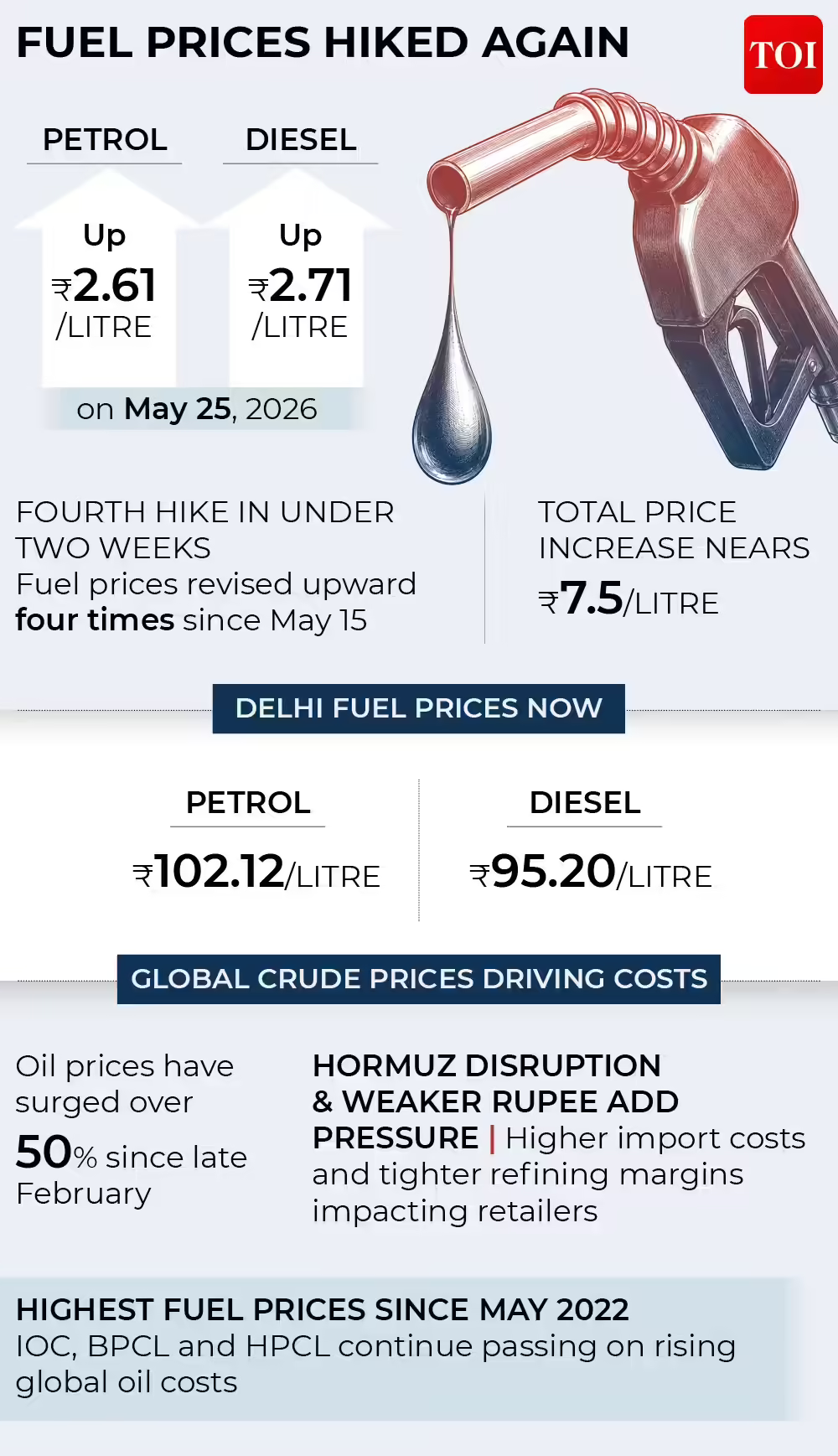
At the same time, rising fuel prices have raised concerns about creating wider economic pressure as transportation costs feed into supply chains. This is increasing the cost of essentials, including fruits and vegetables, and adding inflationary pressure across sectors. The movement of goods, manufacturing activity, and import-export operations are all experiencing stress due to higher logistics costs and delivery disruptions.
OMC shares soar
Fuel price revisions have also influenced market activity. Shares of major oil marketing companies moved higher on Monday, with Hindustan Petroleum Corporation Limited (HPCL), Indian Oil Corporation (IOC), and Bharat Petroleum Corporation Limited (BPCL) all soared in green.IOC shares rose 4% to Rs 145, HPCL surged 6% to Rs 412.55, and BPCL advanced over 4.5% to Rs 309 on the BSE. The movement came as crude oil prices touched a two-week low amid signs of progress in US-Iran peace talks.Meanwhile, before the recent price hike, the government had been stepping in to help oil marketing companies (OMCs) manage the pressure from rising crude prices by cutting excise duties. Now, the FM highlighted, any reduction in excise duty on petrol and diesel would result in a revenue impact of around Rs 1 lakh crore.
What’s ahead for OMCs?
Earlier, in the absence of price hikes, oil marketing companies (OMCs) were facing heavy losses of up to Rs 1,000 crore per day. Now, with fuel prices rising by nearly Rs 7 per litre, the question is whether these losses will be reduced or not.The recent series of back-to-back price increases is expected to provide some relief to OMCs, but it is unlikely to fully offset their burden. Even if the situation in West Asia stabilises, uncertainty around the Strait of Hormuz is expected to persist for some time, keeping crude prices elevated, likely above $90 per barrel.At the same time, a weakening rupee continues to add pressure on margins. “Combined with a weakening rupee, this continues to pressure OMC margins, and they could still face under-recoveries. Going forward, some calibrated price revisions may be required. The government will need to balance OMC financial health against the impact on consumers,” Sourav Mitra, Partner – Oil and Gas, Grant Thornton Bharat told TOI.

3 F’s in focus
Finance minister Nirmala Sitharaman has also urged the country to focus on the 3 Fs, of fuel, fertiliser and forex. Apart from elevated crude oil prices, fertiliser costs have also surged to “unimaginable” levels, the FM noted, adding that high gold prices are creating additional challenges on the external front. She emphasised the need to focus on the “three Fs,” fuel, fertiliser and forex, pointing out that Prime Minister Narendra Modi’s recent appeals have been made in this context.Taken together, the latest fuel price revisions are no longer just a heavier cost at the petrol pump, they are beginning to ripple through daily lives. From transporters recalibrating freight rates and supply chains under strain, to households quietly tightening monthly budgets, the impact is gradually seeping into everyday life. With global crude trends still uncertain and geopolitical tensions far from settled, the outlook for fuel prices remains vulnerable to developments beyond the country.
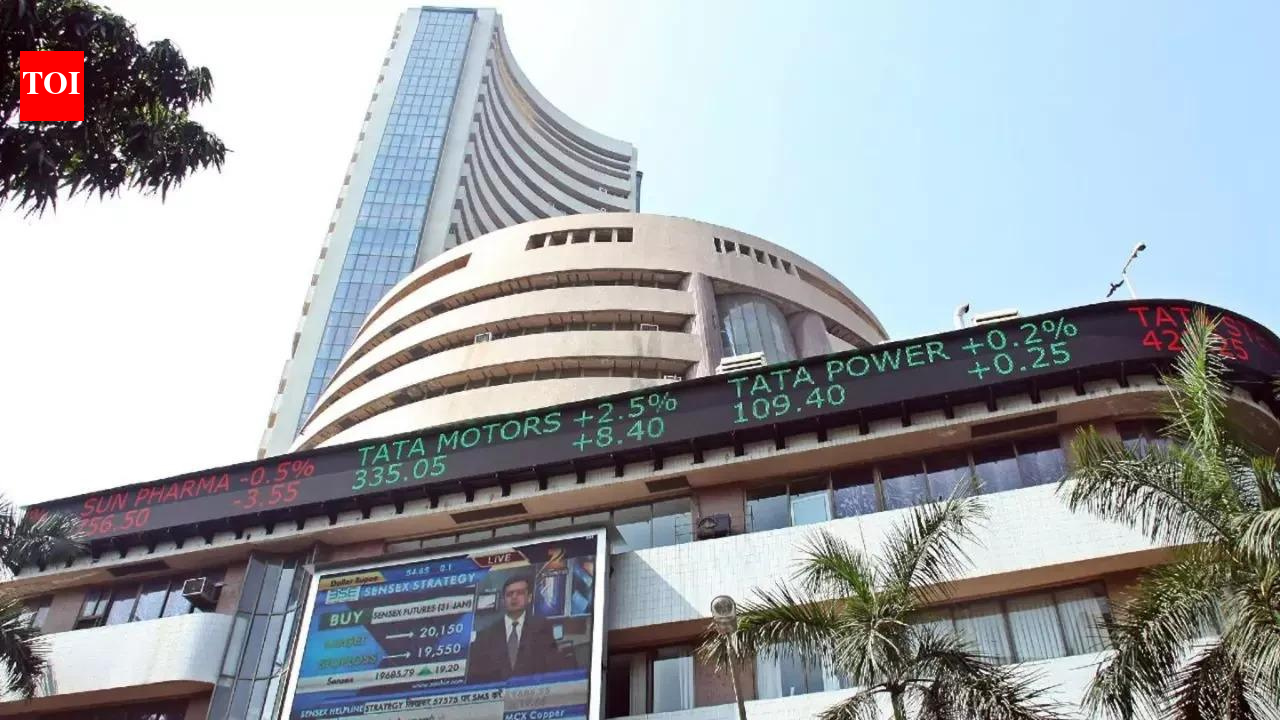
Stock market rallied sharply on Monday, with the Sensex soaring more than 1,000 points and the Nifty reclaiming the 24,000 mark, as easing geopolitical tensions in West Asia and falling crude oil prices boosted investor sentiment globally.The 30-share BSE Sensex jumped 1,073.61 points, or 1.42 per cent, to close at 76,488.96, while the NSE Nifty 50 surged 312.40 points, or 1.32 per cent, to settle at 24,031.70.The rally came after optimism grew around a possible agreement between the United States and Iran, following remarks by US President Donald Trump over the weekend that a deal was “largely negotiated”.
Nifty50 top gainers
| Company Name | Current Price (Rs) | Price Change | % Change |
|---|---|---|---|
| Eicher Motors | 7,414 | 433.00 ↑ | 6.20% ↑ |
| Adani Ent. | 2,850 | 132.00 ↑ | 4.88% ↑ |
| Bajaj Finance | 941.90 | 25.40 ↑ | 2.77% ↑ |
| Tata Motors PV | 373.25 | 9.90 ↑ | 2.73% ↑ |
| L&T | 4,033 | 107.00 ↑ | 2.72% ↑ |
| HDFC Bank | 786.85 | 20.10 ↑ | 2.62% ↑ |
| Eternal | 247.67 | 5.72 ↑ | 2.37% ↑ |
| Bajaj Finserv | 1,807 | 41.40 ↑ | 2.35% ↑ |
| Kotak Bank | 392.85 | 8.71 ↑ | 2.27% ↑ |
| Shriram Finance | 961.95 | 21.00 ↑ | 2.23% ↑ |
Sensex top gainers
| Company Name | Current Price (Rs) | Price Change | % Change |
|---|---|---|---|
| Bajaj Finance | 941.90 | 25.40 ↑ | 2.77% ↑ |
| L&T | 4,033 | 107.00 ↑ | 2.72% ↑ |
| HDFC Bank | 786.85 | 20.10 ↑ | 2.62% ↑ |
| Eternal | 247.67 | 5.72 ↑ | 2.37% ↑ |
| Bajaj Finserv | 1,807 | 41.40 ↑ | 2.35% ↑ |
| Kotak Bank | 392.85 | 8.71 ↑ | 2.27% ↑ |
| ICICI Bank | 1,292 | 27.50 ↑ | 2.18% ↑ |
| SBI | 969.60 | 20.40 ↑ | 2.15% ↑ |
| Axis Bank | 1,311 | 25.80 ↑ | 2.01% ↑ |
| Titan Company | 4,159 | 79.40 ↑ | 1.95% ↑ |
Nifty50 top losers
| Company Name | Current Price (Rs) | Price Change | % Change |
|---|---|---|---|
| Max Healthcare | 1,001 | -22.40 ↓ | -2.19% ↓ |
| ONGC | 284.95 | -5.06 ↓ | -1.75% ↓ |
| Hindalco | 1,100 | -9.61 ↓ | -0.87% ↓ |
| Nestle India | 1,414 | -9.50 ↓ | -0.67% ↓ |
| Bajaj Auto | 10,491 | -58.50 ↓ | -0.56% ↓ |
| Infosys | 1,169 | -6.00 ↓ | -0.52% ↓ |
| TCS | 2,308 | -9.11 ↓ | -0.40% ↓ |
| Tata Consumer | 1,187 | -4.60 ↓ | -0.39% ↓ |
| HUL | 2,197 | -7.10 ↓ | -0.33% ↓ |
| Sun Pharma | 1,841 | -4.00 ↓ | -0.22% ↓ |
Sensex top losers
| Company Name | Current Price (Rs) | Price Change | % Change |
|---|---|---|---|
| Infosys | 1,169 | -6.00 ↓ | -0.52% ↓ |
| TCS | 2,308 | -9.11 ↓ | -0.40% ↓ |
| HUL | 2,197 | -7.10 ↓ | -0.33% ↓ |
| Sun Pharma | 1,841 | -4.00 ↓ | -0.22% ↓ |
| Kwality Wall’s | 26.33 | -0.06 ↓ | -0.19% ↓ |
Oil prices tumble as Iran deal hopes rise
Investor confidence improved as markets increasingly priced in the possibility of a diplomatic breakthrough between Washington and Tehran, which could lead to the reopening of the Strait of Hormuz and ease global energy supply concerns.According to news agency ANI, market expert Ponmudi R said optimism surrounding a potential US-Iran agreement revived risk appetite across global markets.“Investor sentiment improved significantly after Donald Trump stated over the weekend that a deal was ‘largely negotiated’, encouraging markets to increasingly price in the possibility of a near-term diplomatic resolution,” he said.He added that markets would look for the “successful implementation of a lasting peace agreement and the credible reopening of the Strait of Hormuz”.Brent crude prices dropped sharply below the $100 per barrel mark and were trading around $98 per barrel, down more than 5 per cent during the session.The Indian rupee also recovered strongly, gaining 48 paise to trade at Rs 95.21 against the US dollar after recent weakness.
Banking stocks lead market rally
Financial stocks led the gains on Dalal Street. Bajaj Finance, Larsen & Toubro, HDFC Bank, Eternal, Bajaj Finserv and Kotak Mahindra Bank emerged among the top Sensex gainers.Sectorally, Nifty PSU Bank rose 2.73 per cent, while Nifty Private Bank advanced 2.02 per cent, as per ANI. Nifty Auto climbed 1.66 per cent and Realty gained 1.54 per cent.However, FMCG stocks remained under pressure. Infosys, Tata Consultancy Services, Sun Pharma and Hindustan Unilever were among the laggards.
Global markets gain amid improving sentiment
Asian markets also ended higher on Monday amid improving global risk appetite. Japan’s Nikkei 225 surged 2.76 per cent, while Taiwan’s weighted index jumped 3.15 per cent.European markets were trading in positive territory, while US markets had settled higher on Friday.Meanwhile, Foreign Institutional Investors (FIIs) offloaded equities worth Rs 4,440.47 crore on Friday, according to exchange data.
Business
PSX gains over 2,500 points as US-Iran peace hopes fuel bullish rally | The Express Tribune
KSE-100 surges past 170,000 intraday on strong institutional buying, easing geopolitical tensions
KARACHI:
The Pakistan Stock Exchange (PSX) extended strong bullish momentum on Monday as the benchmark KSE-100 Index hovered around 170,423.30 points at 1:24pm, up 2,579.06 points or 1.54% in intraday trade.
During the session, the benchmark index touched an intraday high of 171,519.26 points, while the day’s low was recorded at 170,161.66 points. Market participation remained strong, with traded volume reaching 125.96 million shares and total traded value standing at Rs11.75 billion.
Read: PSX gains 2,248 points in mixed week
Investor sentiment remained upbeat amid reports of a likely peace agreement between the United States and Iran, which boosted confidence across regional markets and improved risk appetite among investors.
Analysts said the rally was driven by aggressive institutional buying and renewed optimism over easing geopolitical tensions following progress in US-Iran negotiations.
The previous close of the KSE-100 index was 167,844.24 points.


Vietnam launches Hai Phong customs pilot from June 1

Is American men’s tennis in trouble as French Open begins?

Memorial Day Deals on Our Top Smart Bird Feeders, Camera Bags, and More

-

 Tech1 week ago
Why Is Your Grill So Dumb? The Best Grills Set Temp Like an Oven
-

 Tech1 week ago
This Solar-Powered Smart Sprinkler Keeps My Lawn Watered Without Any Power Cables
-

 Fashion4 days ago
ICE cotton sees mixed trend as rain forecasts weaken sentiment
-

 Fashion5 days ago
US cotton planting advances to 41%, concerns persist in Texas
-
 Fashion1 week ago
Turkiye’s current account deficit expected to widen in 2026: Minister
-

 Fashion1 week ago
India’s Pearl Global’s FY26 revenue crosses $521 mn milestone
-

 Fashion6 days ago
Nigeria Kwara Garment Factory, KWS Garment Production Village ink pact
-

 Entertainment1 week ago
Princess of Wales praised as ‘step ahead’ of royal family