

Fashion
HOMETEX Shenzhen launches business matchmaking zone

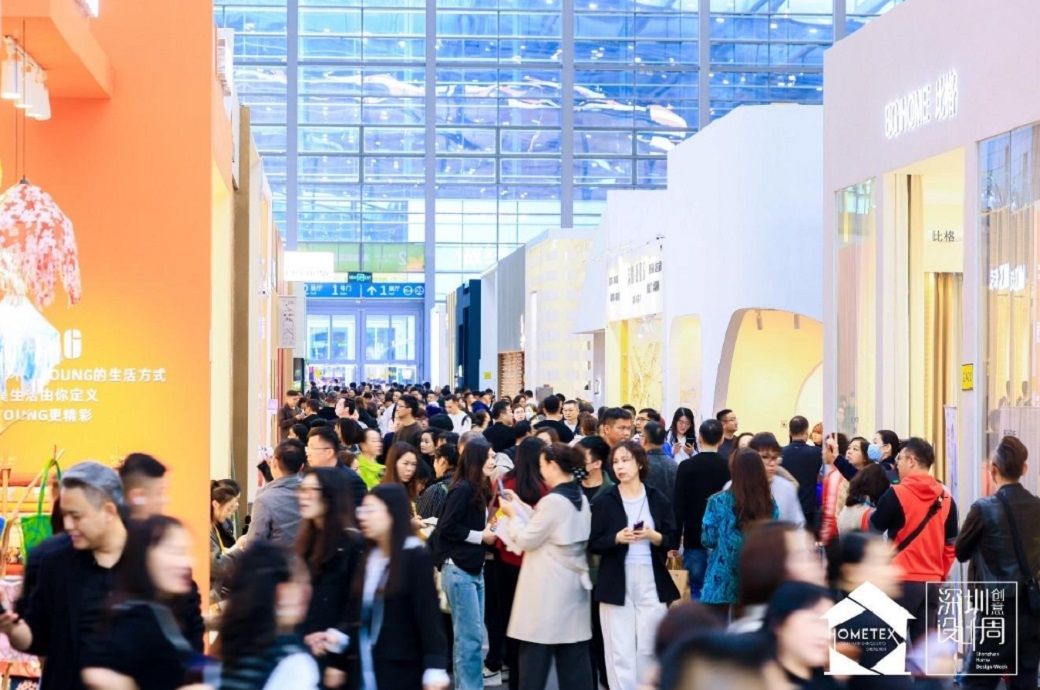
As the 2026 Year of the Horse approaches—a year that symbolizes vitality, success and forward momentum in Chinese culture—HOMETEX Shenzhen is rolling out exclusive holiday benefits for valued global buyers. From February 9 to 22, 2026, industry professionals who complete exhibition registration and are approved as verified buyers will be entitled to a suite of exclusive perks, including a limited-edition Year of the Horse mascot and premium sourcing privileges.
HOMETEX Shenzhen is launching a Business Matchmaking Zone to connect global buyers with suppliers through one-on-one meetings and efficient sourcing.
Verified buyers registering between February 9 to 22, 2026 receive exclusive perks including a Year of the Horse mascot and premium sourcing privileges, alongside curated exhibitor collaborations and targeted procurement support.
In addition to the exclusive mascot, verified buyers joining the Business Matchmaking Zone will also enjoy the following exclusive benefits:
- Accommodation
- Transportation from hotel and the show venue
- VIP Badge
- Fast-track entry
Co-created by Hometex Shenzhen and 5 exhibitors, this Year of the Horse-themed mascot has a lively design. It carries the classic Chinese New Year blessing. Its tail features a tiny, delicate pom-pom—adding a sweet touch that symbolizes abundant good fortune and fulfilled new year wishes.
Inspired by traditional Chinese brocade’s decorated lattice (a timeless textile motif), its precise, elegant lines extend in eight directions. For centuries, this pattern has signified “smooth paths in all directions and success in all things” in Chinese culture—an ancient textile craftsmanship masterpiece now adopted by top global luxury brands.
The Sponsored Exhibitors
QIANPAICASA | Booth 1H23
Focus on Sustainable Innovations in Natural Fiber Blending
A pioneer in eco-friendly fabrics, Qianpai Textile prioritizes advanced natural fiber blending tech in 2026, launching 10+ innovative blends of wool, linen, cotton and recycled eco-fibers. These new fabrics feature superior touch and visual appeal, with strengthened green sustainability credentials, offering the high-end market quality options with social responsibility.
RIJIN | Booth 1H22
Window Screens with Focus on Functional & Experiential Upgrades
RIJIN showcases product upgrades via material and process innovation, enhancing screen flexibility, drape and health features. With full-chain quality control from yarn to finished products and new antibacterial processes, it delivers better, more reassuring window screen solutions for end consumers.
Gufeng Textile | Booth 1A25
Full-Range Window Screen Brands for Diverse Scenarios
Three brands under Gufeng Textile debut together with clear market positioning: Mr. π for high-end custom spaces interprets window screen light and shadow art; Wutong Treesy Textiles, focusing on quality essentials, offers solid diverse options; Lan Elements for the mass market sticks to high cost-performance. One-stop access to full-category window screen solutions from luxury to practical is available at Hometex Shenzhen 2026.
I KE | Booth 1A27
New Fabric Series Interpreting the Essence of “Natural Aesthetics”
I KE stays focused on its core cotton and linen segment, presenting a more in-depth and creative range of natural-textured fabrics at the show. Highlighting raw material textures, translucent light-shadow interplay and spatial ambience integration, the new products embody its philosophy of “Fabrics as a carrier of everyday aesthetics”.
Redefining High-End Custom Luxury Handcrafted Fabrics
Yuxuan Textile deepens its focus on high-end customization, presenting stunning collections of hand-embroidered velvet and special gold-stamped fabrics. Blending European classical aesthetics with exquisite craftsmanship, each piece is a work of art, offering one-of-a-kind curtain solutions for luxury residences and commercial spaces, and redefining the luxury of fabrics.
How to Join?
- Register for the show, select “Yes” to the on-site matchmaking questionnaire “Would you like to join on-site business matchmaking?”
- Once verified as a qualified buyer, share your preferred time slots.
- Pick target suppliers —we’ll handle all exhibitor communication/coordination.
- Receive your confirmed supplier list and prepare for on-site talks
Terms & Conditions
- Collection: March 7-9, 2026 (during the exhibition). Unclaimed gifts will be forfeited. Collection details will be emailed later.
- One gift per registration—transfer or reuse is strictly prohibited.
- Eligibility: Registrations must be submitted between February 9-22, 2026.
- HOMETEX Shenzhen reserves the final right of interpretation for this activity.
Seize this chance to blend festive joy with real business value! Register now for a prosperous Year of the Horse and successful 2026 sourcing at HOMETEX Shenzhen.
Note: The headline, insights, and image of this press release may have been refined by the Fibre2Fashion staff; the rest of the content remains unchanged.
Fibre2Fashion News Desk (HU)








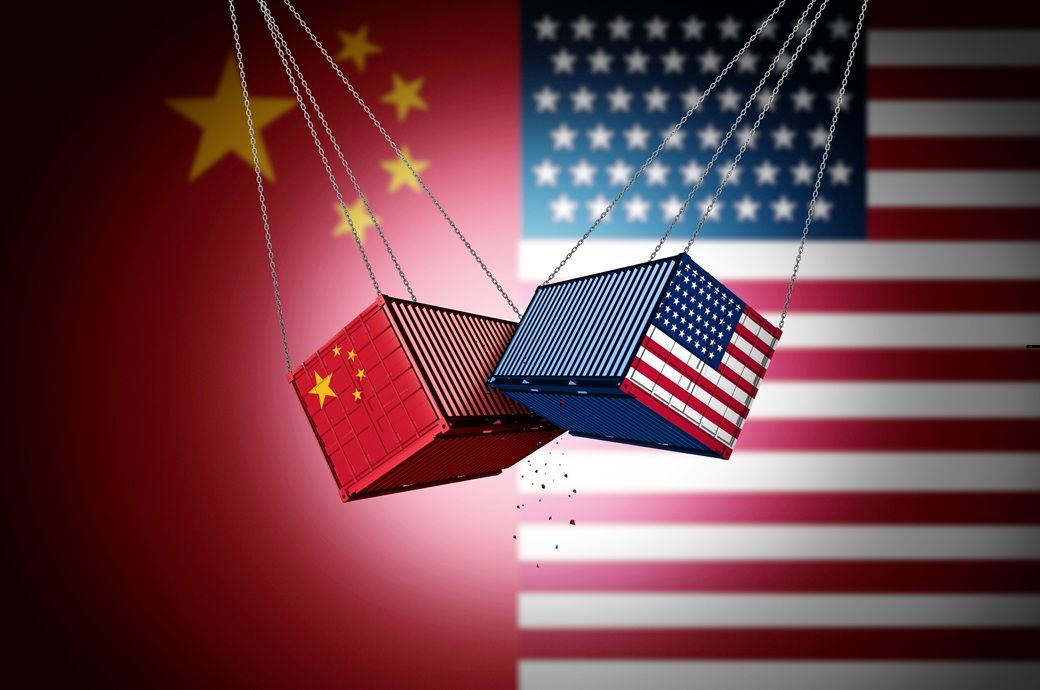
The move follows two separate Section 301 investigations by the Office of the US Trade Representative on March 12 and 13, targeting multiple economies, including China, over concerns such as “overcapacity” and alleged lapses in preventing imports linked to forced labour. Beijing expressed strong dissatisfaction and firm opposition to these actions.
China has launched two trade barrier investigations into the United States (US) measures following recent Section 301 probes by Washington.
The move targets actions affecting global supply chains and green trade.
Beijing opposed the US investigations and said it would take steps based on findings, signalling rising trade tensions between the two economies.
A ministry spokesperson said the probes were initiated in accordance with China’s Foreign Trade Law and related rules, adding that appropriate measures would be taken based on the findings.
Commerce Minister Wang Wentao also raised concerns over the US actions during a meeting with US Trade Representative Jamieson Greer on the sidelines of the 14th WTO Ministerial Conference in Yaoundé, Cameroon.
Fibre2Fashion News Desk (CG)

According to the informal agreement, there will be a new handling fee for each item entering the EU from non-EU countries and sent directly to EU consumers, to cover the extra cost of handling an ever-increasing number of individual parcels.
This will be paid by the same entity responsible for paying other customs charges for the same parcel, to avoid shifting the cost to consumers.
The European Parliament and European Council have reached a deal on a major reform of the EU Customs Code to address problems relating to e-commerce, safety of goods and efficiency.
A new handling fee will be charged for each item entering the EU from non-EU nations and sent directly to EU consumers.
The European Commission will establish the level of the fee and reassess it every two years.
The European Commission will establish the level of the fee and reassess it every two years. Member states will start collecting it as soon as the necessary information technology (IT) system becomes operational, and in any case no later than November 1, this year.
Under the new rules, sellers and platforms that facilitate distance sales of goods from non-EU countries directly to EU customers will be treated as importers. This will oblige them to provide customs authorities with all the necessary data, pay or guarantee any charges, and make sure that the goods comply with EU laws, an official release said.
These companies must be established in the EU or be represented by an EU-based entity having either authorised economic operator (AEO) or trusted trader status. This should prevent the use of shell companies.
To incentivise bulk shipments that are easier for customs authorities to check, non-EU country sellers and platforms are encouraged to operate warehouses in the EU. Their intra-EU client shipments would benefit from a lower handling fee, provided their goods were imported in collective packaging and large enough quantities to make customs checks more efficient.
Companies that repeatedly ignore EU rules could be punished with a fine of at least 1 per cent (and up to 6 per cent) of the total value of goods imported into the EU in the previous 12 months.
Additionally, customs authorities may suspend, revoke, or annul their trusted trader or AEO status and flag them as high-risk operators.
Import-export companies that follow the rules and agree to cooperate transparently with the customs authorities may benefit from a simplified ‘trust and check’ regime. This would initially require them to go through thorough vetting and grant customs authorities access to their electronic systems.
In exchange, their shipments would be checked less frequently and they would have more flexibility regarding the payment of duties and fees.
The current AEO qualification will remain in place to keep customs status accessible to smaller economic operators.
The reform also establishes a new customs data hub to be managed by the new EU Customs Authority (EUCA). It will be available for optional use by 2031 and mandatory by 2034.
The data hub will replace at least 111 software systems currently used by customs.
The provisional agreement needs to be officially approved by Parliament in plenary as well as by the EU Council, before it will become law.
Fibre2Fashion News Desk (DS)
This was driven by an 8.36-per cent YoY decline in import volume and a 7.76-per cent YoY decrease in average unit prices.
The EU’s apparel imports fell by 15.48 per cent YoY in January to €7.03 billion, according to Eurostat.
Bangladesh’s apparel exports to the EU fell to €1.43 billion in January—a 25.25-per cent drop in value.
China remained the top exporter of apparel to the EU (€2.22 billion), but still saw a 6.9-per cent decline YoY in value.
India, Pakistan, Vietnam and Cambodia also remained in negative territory.
Bangladesh’s apparel exports to the bloc fell to €1.43 billion in January—a sharp 25.25-per cent drop in value. It saw a 17.49-per cent YoY decrease in the quantity of goods shipped, coupled with a 9.41 per cent drop in the unit price per kilogram.
China remained the top exporter of apparel to the EU (€2.22 billion), but still saw a 6.9-per cent decline YoY in value. Its unit prices dropped by 8.01 per cent YoY, while its export volume grew a bit by 1.21 per cent YoY.
Turkey faced a severe hit with a 29.12-per cent YoY decrease in apparel export value to the EU in the month, totaling €619.98 million.
Other countries like India, Pakistan, Vietnam and Cambodia remained in negative territory, reflecting a broad-based slowdown in the European fashion retail market.
Fibre2Fashion News Desk (DS)


China launches twin probes into US trade practices

USMNT handed reality check by Doku, Belgium ahead of World Cup

Hubert Kós leads Texas men to second straight NCAA swim title

-
 Business1 week ago
Flipkart group CFO to leave co amid IPO plans – The Times of India
-

 Fashion1 week ago
China’s textile & apparel exports surge 17% to $50 bn in Jan-Feb 2026
-

 Sports1 week ago
Rating Adidas’ 2026 World Cup away shirts: Argentina, Spain, Mexico and more
-

 Sports1 week ago
American Conference Commissioner Tim Pernetti thanks Trump for Army-Navy game executive order
-
Tech1 week ago
The Corsair 4000D RS PC Case Keeps Your System Cool
-

 Tech1 week ago
Gamers Hate Nvidia’s DLSS 5. Developers Aren’t Crazy About It, Either
-
 Business5 days ago
Property Play: Home flippers see smallest profits since the Great Recession, real estate data firm says
-
 Business1 week ago
‘Marriage penalty’ in Washington state’s new millionaire tax stirs debate