The report’s authors questioned tech industry claims that introducing a new commercial text and data mining (TDM) exception for AI training would significantly expand the AI sector. They warned that weakening the UK’s copyright law in this way would exacerbate existing harms to rightsholders and stall the emerging licensing market.
Some of the witnesses who gave evidence told the committee that technical measures are essential in supporting attribution, transparency, licensing and remuneration in a licensing-first system.
John Collomosse, director of DECaDE, the UKRI Next Stage Centre for the Decentralised Digital Economy, told the committee that, at each stage of the AI lifecycle, the challenge facing rightsholders is how to meaningfully control whether their work is used and under what terms, and how they can gain an opportunity to share in the value created by the model outputs.
Another witness, Eugene Huang, senior strategy advisor and co-founder of ProRata.ai, said there should be mechanisms in place that can support remuneration linked to both inputs and outputs of AI models.
One of the proposed ways to protect copyrighted content is the idea of open provenance standards, such as the Coalition for Content Provenance and Authenticity (C2PA) specification, which, when combined with watermarking and fingerprinting, would mean durable, machine-readable signals are attached to individual assets.
The committee was told that this would need to be created “at source” by creators and rightsholders to enable stakeholders along sector-specific supply chains to understand this data and manage it effectively.
Collomosse said that once provenance is established in this way, it becomes easier to confirm authenticity and “assign ownership”. He said rightsholders could then “set up their own preferences and licensing schemes on top of that using other standards”, enabling remuneration models to be layered onto individual assets rather than relying solely on blanket licensing.
The committee is calling on the government to develop a licensing-first regime, underpinned by robust transparency, that safeguards creators’ livelihoods while supporting sustainable AI growth.
Committee chair Barbara Keeley warned: “Our creative industries face a clear and present danger from uncredited and unremunerated use of copyrighted material to train AI models. Photographers, musicians, authors and publishers are seeing their work fed into AI models, which then produce imitations that take employment and earning opportunities from the original creators.”
Watering down the protections in our existing copyright regime to lure the biggest US tech companies is a race to the bottom that does not serve UK interests Barbara Keeley, Communications and Digital Committee
The industry’s response appeared to show there is less appetite for such controls.
In the report, Google argued that, while governments may be tempted to promote a “one-size-fits-all” standard, it is important that industry retains “flexibility and room for the evolution of standards and best practices”.
Meta said prescribing specific approaches “would risk freezing in time the current state of development while new standards and new tools are still emerging, locking the UK out as the rest of the world continues to innovate”.
Microsoft said any legislative approach should recognise that provenance tools do not work equally well for all types of content, remain “technology agnostic”, and avoid mandating requirements in areas “where they are not yet feasible or effective”.
Keeley noted that while AI may contribute to future economic growth, the UK creative industries create jobs and economic value now. “Watering down the protections in our existing copyright regime to lure the biggest US tech companies is a race to the bottom that does not serve UK interests. We should not sacrifice our creative industries for AI jam tomorrow,” she said.
“The government should now make clear it will not pursue a new text and data mining exception with an opt-out mechanism for training commercial AI models. Instead, it should focus on strengthening UK protections for creators, including against unauthorised digital replicas and ‘in the style of’ uses of creators’ work and identity,” Keeley added.
“The government’s task should be to create the conditions that will allow a licensing-first approach to AI training to flourish, backed by effective transparency requirements and technical standards for data provenance and labelling, so that rightsholders and developers can participate confidently in this emerging market,” she continued.
Keeley called on the government and AI industry in the UK to be based on transparent and responsible use of training data. “We are calling on the government to embrace the opportunities this presents, and to demonstrate its commitment to the UK’s gold-standard copyright regime and our outstanding creative industries in its forthcoming economic assessment and update on AI and copyright,” she said.
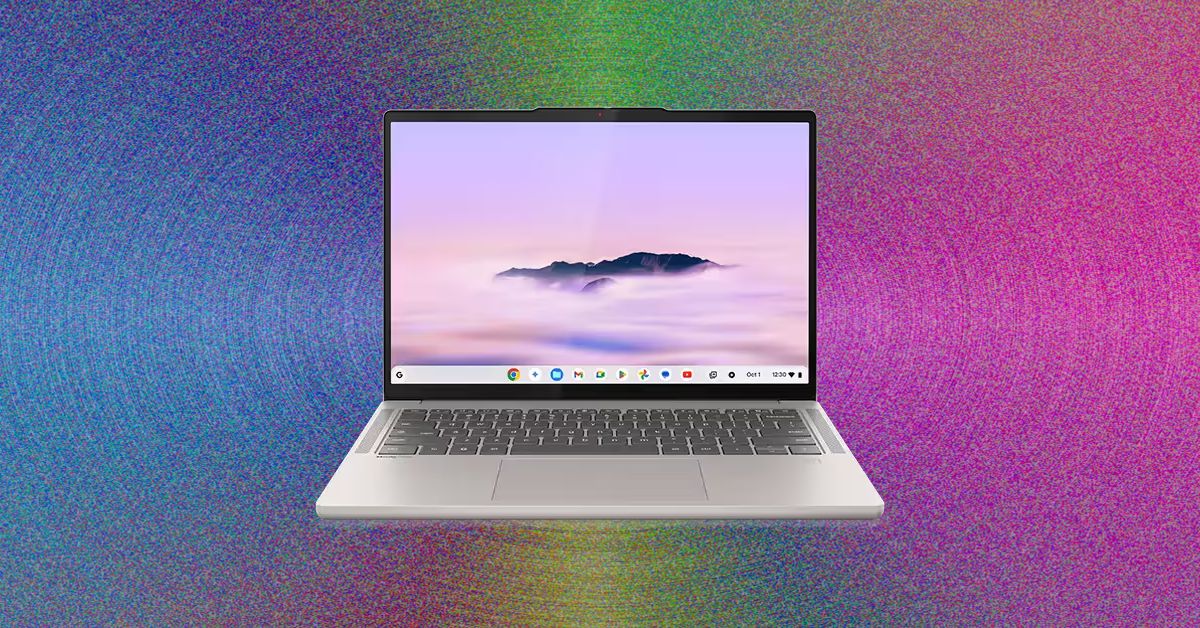
I was delighted to see that the Acer Chromebook Plus 516 didn’t skimp on a crappy touchpad. That goes a long way toward improving the experiencing of actually using the laptop on a moment-by-moment basis. I wasn’t annoyed every time I had to click-and-drag or select a bit of text. This one’s biggest weakness is definitely the screen, which is true of just about every cheap Chromebook I’ve tested. The colors are ugly and desaturated, giving the whole thing a sickly green tint. It’s also not the sharpest in the world, as it’s stretching 1920 x 1200 pixels across a large, 16-inch screen. But in terms of usability and performance, the Acer Chromebook Plus 516 is a great value, combining an Intel Core i3 processor with 8 GB of RAM and a 128 GB of storage. For a Chromebook that’s often on sale for $350, it’s a steal.
While we’re here, let’s go even cheaper, shall we? Asus has two dirt-cheap Chromebooks that I tested last year that I was mildly impressed by. The Asus Chromebook CX14 and CX15. Notice in the name that these are not “Chromebook Plus” models, meaning they can be configured with less RAM and storage, and even use lower-powered processors. That’s exactly what you get on the cheaper configurations of the CX14 and CX15, which is how you sometimes get prices down to as low as $130. I definitely recommend the version with 8 GB of RAM, but regardless of which you choose, the both the CX14 and larger CX15 are mildly attractive laptops. You’d know that’s a big compliment if you’ve seen just how ugly Chromebooks of this price have been in the past.
With these, though, I appreciate the relatively thin bezels and chassis thickness, as well as the larger touchpad and comfortable keyboard. The CX15 even comes in a striking blue color. The touchpad isn’t great, nor is the display. Like the Acer Chromebook Plus 516, it suffers from poor color reproduction and only goes up to 250 nits of brightness. It only has a 720p webcam too, which makes video calls a bit rough. But that’s going to be true of nearly all the competition (and there isn’t much).
Of the two models, I definitely prefer the CX14 though, as it doesn’t have a numberpad and off-center touchpad, which I’ve always found to be awkward to use. Look—no one’s going to love using a computer that costs the less than $200, but if it’s what you can afford, the Asus Chromebook CX14 will at least get you by without too much frustration.
Whatever you do, don’t just head over to Amazon and buy whatever ancient Chromebook is selling for $100 for your kid. It’s worth the extra cash to get something with better battery life, a more modern look, and decent performance.
Other Good Chromebooks We’ve Tested
We’ve tested dozens and dozens of Chromebooks over the past years, having reviewed every major release across the spectrum of price. Unlike Macs and Windows laptops, Chromebooks tends to stick around a bit longer though, and aren’t refreshed as often. I stand by my picks above, but here are a few standouts from our testing that are still worth buying for the right person.
Two of Big Tech’s most influential billionaires, Sam Altman and Elon Musk, will go head-to-head in a highly anticipated trial beginning April 27. In Musk v. Altman, a judge, advised by a jury, will ultimately determine whether OpenAI has strayed from its founding mission to ensure that artificial general intelligence (AGI) benefits humanity, and the ruling could influence how the world’s leading AI developer controls and distributes its technology. For now, you can learn more about the trial here.
On the Panel
On May 8, a panel of WIRED experts will go live to answer your questions about this consequential case.
Zoë Schiffer: WIRED’s director of business and industry, who oversees coverage of business and Silicon Valley.
Maxwell Zeff: a senior writer at WIRED covering the business of artificial intelligence. He writes the weekly Model Behavior newsletter, which focuses on the people, communities, and companies behind Silicon Valley’s AI scene.
Paresh Dave: a senior writer at WIRED covering the inner workings of Big Tech companies. He writes about how apps and gadgets are built and about their impacts while giving voice to the stories of the underappreciated and disadvantaged.
Ask a Question
Submit all your burning questions about this historic legal battle at WIRED’s next, subscriber-only livestream scheduled for May 8 at noon ET / 9 PT. To leave questions in advance as the trial unfolds, head to the comment section below.
Become a Subscriber
The event will be streamed right here. For subscribers who are not able to join, a replay of the livestream will be available after the event. Not a subscriber yet?Subscribe now to get access to this livestream, plus full access to WIRED.
Service provider Blackbox Hosting has consolidated storage from two full racks down to just 8U of rack space following migration to Everpure FlashArray hardware. The move has allowed the provider to deliver “sovereign” cloud services with a 10:1 data reduction ratio and an 85% reduction in power utilisation.
Blackbox Hosting evolved over 14 years from a single rack to supporting more than 1,500 virtual machines (VMs), and has datacentre capacity at Canary Wharf with a secondary site in Slough.
The company operates a fully managed, sovereign (see box) model for major software suppliers including Iris Software Group, which supports payroll and financial management for approximately 60% of UK academies.
Blackbox previously relied on HPE 3PAR 8400 all-flash arrays. However, as the hardware approached end-of-life, the company faced mounting challenges.
“Support renewal costs were significant, and we had issues with HPE support,” said Matthew Burden, CEO at Blackbox Hosting. “We had a power supply failure in a DR site, and despite a four-hour SLA [service-level agreement], it took nearly two weeks to replace. They also began charging for firmware updates that were previously included.”
The 3PAR environment was cumbersome, said Burden, and required two full racks of hardware to manage the company’s near-petabyte scale.
When it looked for a more performant and dense alternative, Blackbox turned to Pure Storage, which recently rebranded as Everpure.
High density; ‘one-second’ RPO
Blackbox has deployed a range of Pure Storage FlashArray models across its two datacentres to support its active-passive high-availability design.
The deployment includes two FlashArray//X50 R3s, two X50 R4s, and two FlashArray//C20 units for file clusters.
The hardware supports predominantly Hyper-V and VMware VMs, running 90% Windows-based workloads, primarily SQL Server, plus Linux servers.
The transition from 3PAR to Pure has seen a dramatic consolidation of physical space. “We went from two entire racks filled with disks to two 4U boxes,” said Burden. “Our total provisioned storage is 998TB and we get a total reduction of 10:1. 3PAR had deduplication, but not compression on SSDs.”
Beyond space savings, the disaster recovery (DR) capabilities have seen a massive upgrade. Previously, the company’s recovery point objective (RPO) was limited to 15 minutes. “With Pure Storage, it is one second,” said Durden. “We replicate all 1,500 VMs to our backup datacentre. For a customer with 1,000 VMs, we can spin those up for quarterly testing and they are only one second out from live data.”
Performance and sustainability
The shift to non-volatile memory express-based flash has also provided a significant boost to the provider’s green credentials. Sustainability reports generated via Pure’s Evergreen dashboard show an 85% saving in power utilisation compared with the legacy HPE environment.
For the end users – which include major corporate energy, finance and transport organisations – the benefit is felt in application speed. “We’ve had clients with huge databases that were always slow with previous providers,” said Justin Field, commercial director at Blackbox. “They can pull data significantly faster now, which is a big play for us when competing against hyperscalers.”
Burden also highlighted the “zero-touch” operational simplicity of the new arrays. “The older arrays were very cumbersome; you had to know exactly what you were doing,” he said. “The Pure web interface is very simple, which makes the operational side much easier. Plus, with Evergreen, we don’t have to pull arrays out for upgrades. We can just put in new controllers as scale increases.”












 Fashion6 days ago
 Entertainment7 days ago
 Fashion1 week ago
 Tech1 week ago
 Sports7 days ago
 Tech1 week ago
 Tech1 week ago