

Business
Housebuilders in focus as firms set to reveal figures amid sluggish market


Housebuilding giants will be centre stage next week as Persimmon, Vistry and Taylor Wimpey publish trading updates that are expected to offer a fresh snapshot of the UK housing market.
The updates will be closely watched by Government ministers, who have pledged to accelerate housebuilding, and by investors looking for signs of recovery and the Budget’s impact on the housing market as the UK heads into 2026.
Persimmon is due to publish a full-year trading statement on Tuesday, while Vistry will announce its fourth quarter trading statement on Wednesday and Taylor Wimpey a trading statement on Thursday.
UK housebuilding activity has remained in its deepest slump since the start of the pandemic, while the wider construction sector has been in contraction for a year, according to the latest S&P Global UK construction purchasing managers’ index (PMI) published on Wednesday.
The index rose slightly to 40.1 in December from 39.4 in November, remaining well below the 50-point level that signals growth, marking the 12th consecutive month of declining activity.
Survey respondents cited fragile confidence, weak demand and clients delaying decisions ahead of the autumn budget.
Richard Hunter, head of markets at interactive investor, said Persimmon “has been hamstrung by the wider factors over which it has little influence, including but not limited to a faltering domestic economy”.
However, Aarin Chiekrie, an equity analyst at Hargreaves Lansdown, highlighted that Persimmon’s homes are typically valued around 15% below the new-build national average, which “offers some resilience to ride current market challenges” and should provide some relief on building cost pressures.
Meanwhile Vistry, formerly Bovis Homes, has benefited from supportive government policy towards affordable housing, with average weekly sales rates rising by 11% between July and early November compared to the previous year, according to Hargreaves Lansdown.
On Friday, figures release by HMRC revealed UK house sales were 8% higher in November than a year earlier, with around 100,350 homes changing hands, an indication of some optimism in the market.
Jason Tebb, president of OnTheMarket, said: “With the budget done and dusted, uncertainty at least has been removed and those who put their moves on pause are returning to the market, encouraged by lower mortgage rates from some of the big lenders, with others expected to follow.
“As January progresses, well-priced homes continue to attract interest.”

Changes announced in the Budget mean all energy bills will see some kind of reduction, but it will vary.
Source link

The Indian government has proposed the Income-tax Rules 2026, making PAN cards mandatory for select high-value transactions. Replacing the 1962 rules, these changes aim to simplify and bring transparency to the tax system. After considering suggestions, the rules are expected to be finalized and implemented by April 1, 2026.
Here’s a detailed look about how PAN cards are used in various financial transactions.

Immovable Property Transactions: PAN will be required for property transactions exceeding Rs 20 lakh, which is up from Rs 10 lakh. It will include purchase, sale, gift, or joint development agreements.

Motor Vehicles Purchase: PAN is now required for motor vehicle purchases exceeding Rs 5 lakh, including two-wheelers that have been exempted so far. Additionally, those who buy premium bikes or expensive cars will need to quote PAN. Meanwhile, tractors are still excluded.

Cash Deposits And Withdrawals: PAN will be required for aggregate cash deposits or withdrawals exceeding Rs 10 lakh in a financial year. As per the existing rules, it is required for cash deposits of more than Rs 50,000 in a day at a bank or post office.

Hotel And Restaurant Payments: It will be required for cash payments exceeding Rs 1 lakh, which is up from Rs 50,000.

Insurances: PAN will be required to initiate account-based relationship with insurance companies, irrespective of the premium account.
Business
Himadri Speciality Starts Commercial Operations Of 70,000 TPA Carbon Black Line; Details Here
Last Updated:
With the brownfield expansion, the company’s total carbon black capacity has risen to 2,50,000 TPA.




Shares of Himadri Speciality Chemical were trading 0.70% higher at Rs 491.5 apiece on the NSE on Wednesday.
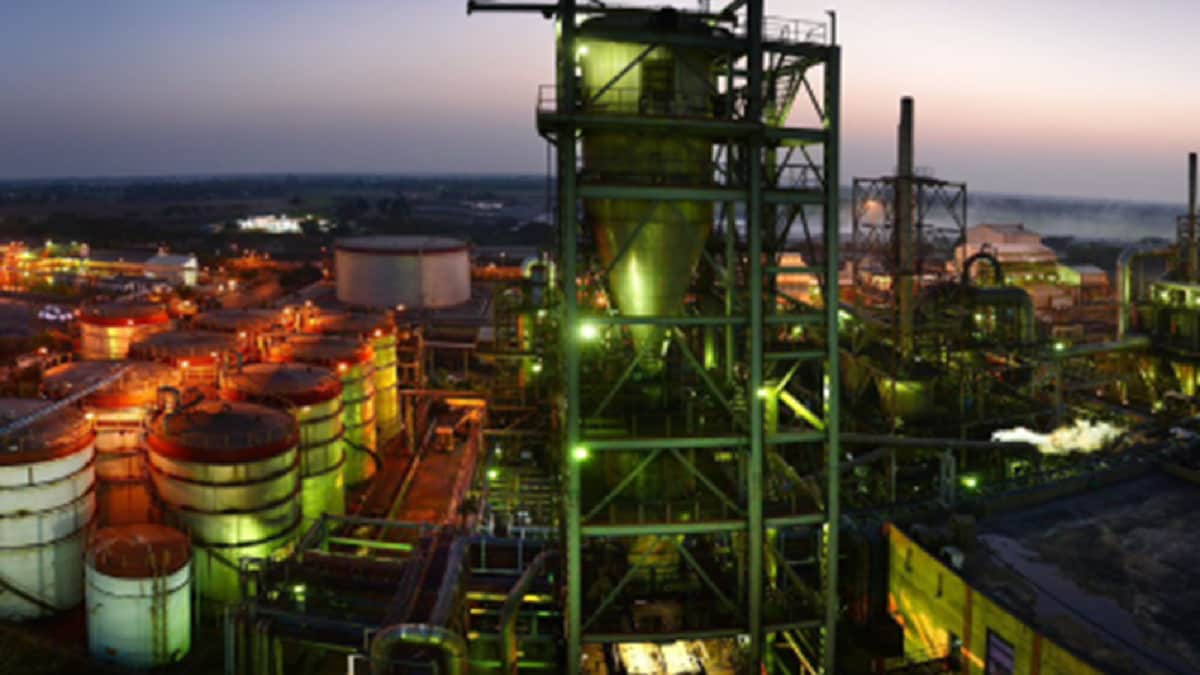
Himadri Speciality Chemical Ltd has commenced commercial operations of its newly commissioned 70,000 tonnes per annum (TPA) speciality carbon black line at its Mahistikry manufacturing facility in Hooghly, West Bengal, the company said on Tuesday (February 24).
With the brownfield expansion, the company’s total carbon black capacity has risen to 2,50,000 TPA. Of this, 1,30,000 TPA comprises speciality carbon black capacity at the Mahistikry site, making it the world’s largest single-location speciality carbon black manufacturing facility.
The expansion bolsters Himadri’s speciality portfolio and strengthens its ability to cater to high-value, performance-driven applications across plastics, inks, paints, coatings and other niche segments.
According to the company, the project integrates advanced process technologies, modern quality control systems, energy-efficient operations and scalable infrastructure to ensure consistent production of premium grades for global customers.
Anurag Choudhary, CMD and CEO, Himadri Speciality Chemical Ltd, said, “The commencement of commercial operations of our 70,000 MTPA (metric tonnes per annum) speciality carbon black line at Mahistikry marks the beginning of the next phase of growth in our advanced carbon materials journey. With this expansion, Mahistikry becomes the world’s largest single-location Speciality Carbon Black facility, with a capacity of 1,30,000 MTPA. This positions us strongly to capture rising global demand in premium, application-specific segments such as plastics, inks, paints, coatings, and other specialised industries.”
He added, “The newly-commissioned capacity is expected to contribute meaningfully to revenue growth and strengthen the Company’s margin profile over the medium term. As global demand continues to shift toward high-performance, customised carbon solutions, Himadri’s enhanced scale provides competitive advantages through operational efficiencies, supply reliability, faster market responsiveness, and improved product innovation capabilities.”
Shares of Himadri Speciality Chemical were trading 0.70% higher at Rs 491.5 apiece on the NSE on Wednesday.
 Click here to add News18 as your preferred news source on Google.
Check JEE Mains Result 2026 Link Here
February 25, 2026, 11:25 IST
Read More

Energy bills to fall in April in price cap change and charges shake-up

Mid-market emerges as fashion’s new growth engine: Lectra study

Benny Blanco trends for all the wrong reasons after show launch

-

 Entertainment1 week ago
Queen Camilla reveals her sister’s connection to Princess Diana
-

 Tech1 week ago
Rakuten Mobile proposal selected for Jaxa space strategy | Computer Weekly
-

 Politics1 week ago
Ramadan moon sighted in Saudi Arabia, other Gulf countries
-

 Entertainment1 week ago
Robert Duvall, known for his roles in "The Godfather" and "Apocalypse Now," dies at 95
-
 Business1 week ago
Tax Saving FD: This Simple Investment Can Help You Earn And Save More
-

 Politics1 week ago
Tarique Rahman Takes Oath as Bangladesh’s Prime Minister Following Decisive BNP Triumph
-

 Tech1 week ago
Businesses may be caught by government proposals to restrict VPN use | Computer Weekly
-

 Fashion1 week ago
Australia’s GDP projected to grow 2.1% in 2026: IMF