

Business
Households urged to send in meter readings ahead of latest energy price rise

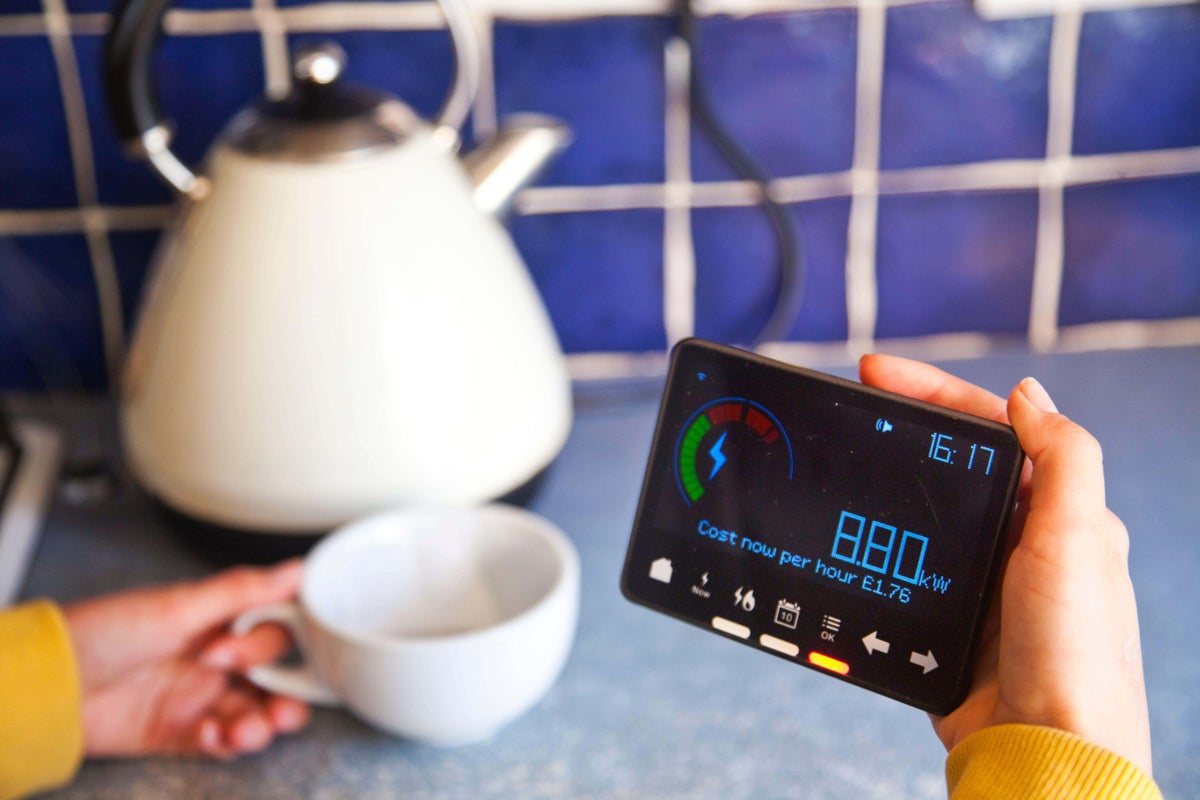
More than seven million households still on a standard energy tariff have been urged to send in meter readings to avoid paying higher prices from October 1.
The energy price cap will rise by 2% from Wednesday for a typical household in England, Scotland and Wales, just as cooler temperatures see many switching on their central heating.
This means that the energy bill for the average household paying by direct debit for gas and electricity will rise from the current £1,720 to £1,755 per year.
Uswitch calculated that the average home on a standard tariff would spend £140 on energy in October compared with £63 in September, thanks to a combination of higher rates and increased usage in autumn.
Uswitch energy spokesman Ben Gallizzi said: “Households should take a moment to read their energy meter in the coming days to avoid the possibility of being charged at October’s higher energy rates.
“Customers who don’t have a smart meter should submit their readings before or on Wednesday October 1, so their supplier has an updated – and accurate – view of their account.
“Energy billpayers can get ahead of October’s price hike by fixing at cheaper rates now. Currently, there are a range of fixed deals currently available that are around £215 cheaper than the October price cap for the average household.
“If you can switch to a deal cheaper than the October price cap, now is a good time to make the change. We urge customers to run an energy comparison as soon as possible.”
The increase in energy costs come despite wholesale prices falling by 2% over the three months prior to Ofgem’s latest price cap decision.
However, standing charges – the figure consumers pay per day to have energy supplied to their homes – are set to rise by 4% for electricity and 14% for gas, or 7p a day, primarily driven by the Government’s expansion of the Warm Home Discount.
Around 2.7 million more low-income households, including 900,000 families with children, are eligible for the £150 Warm Home Discount this winter, after the Government confirmed it would remove the “hard to heat” eligibility criteria.
The Government has said the change will see an estimated 6.1 million households receive the discount this winter.
Ofgem said the latest increase was also driven by an increase in electricity balancing costs – incurred by network operators to ensure a stable electricity supply for when there is both too much power and too little power in the system – adding around £1.23 a month to the average household bill.
The End Fuel Poverty Coalition said the latest increase represented a 2.21% year-on-year rise and meant energy bills would be 68% or £713 a year higher than in the winter of 2020-21.
Ofgem changes the price cap for households every three months, largely based on the cost of energy on wholesale markets.
The energy price cap was introduced by the government in January 2019 and sets a maximum price that energy suppliers can charge consumers in England, Scotland and Wales for each kilowatt hour (kWh) of energy they use.
It does not limit total bills because householders still pay for the amount of energy they consume.

Billionaire investor Justin Sun is suing the family’s World Liberty crypto venture after spending $45m on its tokens.
Source link

Business
Life sciences lab real estate is clawing back from disaster. Here’s what that means for investors



Google debuts ‘workspace intelligence’ to power AI agents across gmail, docs, chat
Trump family crypto firm sued over alleged ‘extortion’

5 AI Models Tried to Scam Me. Some of Them Were Scary Good

-

 Fashion6 days ago
France’s LVMH Q1 revenue falls 6%, shows resilience amid Iran war
-

 Entertainment1 week ago
Is Claude down? Here’s why users are seeing errors
-

 Tech1 week ago
The Deepfake Nudes Crisis in Schools Is Much Worse Than You Thought
-

 Sports1 week ago
PSL 11: Peshawar Zalmi win toss, opt to field first against Quetta Gladiators
-

 Tech1 week ago
Bremont Is Sending a Watch to the Moon’s Surface
-

 Tech1 week ago
Human-machine teaming dives underwater
-
 Business1 week ago
BP sees ‘exceptional’ oil trading result as Iran war sends crude costs soaring
-

 Fashion1 week ago
What no one is saying about the 2026 apparel slowdown