

Sports
How BYU built its roster to maximize the season of AJ Dybantsa

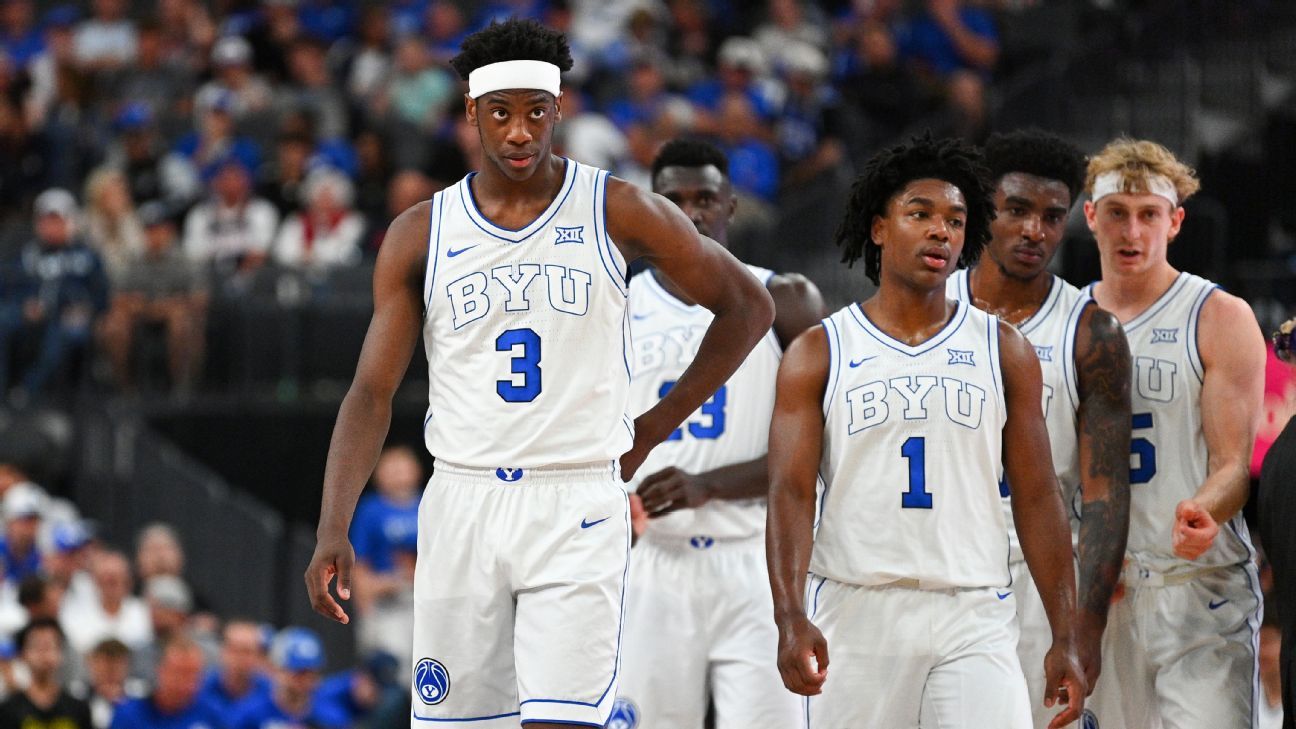
Shortly after AJ Dybantsa announced his commitment to BYU in December 2024, coach Kevin Young and the Cougars’ staff hit pause on their celebrations to answer the next question: How could they build around him?
The No. 1 prospect of the 2025 high school class and the program’s first five-star recruit since the ESPN recruiting database started in 2007 would be the Cougars’ foundational building block, but they needed to assemble a winning team.
“Everybody had a different point of view,” Justin Young, BYU’s director of recruiting and Kevin’s brother, told ESPN. “Do we need to have specific positions around him? Or specialists?”
BYU ultimately focused on retaining and recruiting players who could play off Dybantsa in a dynamic offense — clear the lane and create opportunities for the Cougars star but also take shots when needed — and ended up with a balanced mix of stars and role players. Now the Cougars are developing the chemistry they’ll need to make another deep NCAA tournament run a year after a trip to the Sweet 16. And all of it is an effort to maximize what’s expected to be the only season of Dybantsa, ESPN’s projected No. 2 pick in the 2026 NBA draft, in Provo.
“You can’t squander [a chance like this] at a place like BYU,” Justin Young said. “You just can’t. It’s malpractice. When you have the buy-in — like, AJ is trying to win [a title], that dude honestly believes it every day he wakes up — you have to capitalize.”
Here are the three steps the Cougars, who face Clemson at Tuesday’s Jimmy V Classic (6:30 p.m. ET, ESPN), have followed in pursuit of making the most of this season’s opportunity.
Step 1: Recruit an elite guard
BYU’s staff knew it needed a backcourt star to pair with Dybantsa and All-Big 12 returnee Richie Saunders. With Dallin Hall initially expected to return, the Cougars didn’t know whether they needed a combo guard who could play alongside Hall, or someone to run point when Hall wasn’t on the floor.
Six days after the Cougars lost to Alabama in the Sweet 16, though, Hall entered the transfer portal and their need became evident: Even with Young’s plans to put the ball in Dybantsa’s hands, they needed a pure point guard.
Five days after that, Baylor’s Robert Wright III also entered the portal — and immediately became BYU’s target.
“It was pretty clear that he was the best point guard in the portal,” Kevin Young said.
Wright was a top-25 recruit in the 2024 high school class who established himself as one of the most dynamic freshmen point guards in the country once he was inserted into the Bears’ lineup for the second half of last season. Young and his staff witnessed Wright’s impact when he went for 22 points and 6 assists against the Cougars this past January.
Justin Young had been monitoring Wright since he was the starting point guard at Montverde Academy (Florida) — a team that also starred 2025 NBA draft first-round picks Cooper Flagg, Derik Queen, Asa Newell and Liam McNeeley.
“That might be the best high school team I’ve ever seen,” Justin Young said. “And he [performed] every single game.”
The Cougars had found their star guard answer in Wright. Lost in the hype of his addition, though, was how equally important Saunders’ return was — he was one of the best players in the country down the stretch of last season, averaging 20.0 points on 44.8% shooting from 3 over the final 11 games.
“He’s one of the best closeout players in college,” Kevin Young said. “And in a quote unquote big three, he fits next to ball-dominant guys.”
With Saunders, Wright and Dybantsa, BYU’s perimeter core was set: Wright as the playmaker at point guard, Dybantsa on one wing as the do-everything offensive focal point and Saunders on the other getting open catch-and-shoot opportunities. On paper, the trio was as explosive as any in the country.
“It makes not only my life easier, but their lives easier too,” Dybantsa said last month. “It’s not all about points for us but it’s just about winning, and whoever gets off gets off and us being happy for each other. … We can space the floor, so it gets each other open shots.”
Step 2: Find role players to complement the big three
There are cautionary tales about programs that don’t typically recruit elite talent unexpectedly landing lottery prospects — and not maximizing the potential of the teams they lead.
Ben Simmons was the No. 1 recruit in 2015 when he committed to LSU, which also brought in five-star guard Antonio Blakeney. The Tigers didn’t make the NCAA tournament. Markelle Fultz was the No. 1 pick of the 2017 NBA draft after one season at Washington. The Huskies went 9-22 in his lone college campaign. And most recently, Rutgers recruited eventual 2025 NBA draft lottery picks Dylan Harper and Ace Bailey. The Scarlet Knights stumbled to a 15-17 finish.
“The real moral of those stories is it’s not good enough to just go get one or two good players,” Kevin Young said. “One thing that gets really lost at every level is roster composition and team-building.”
Young knew this from first-hand experience. He worked with top-heavy rosters as an NBA assistant, most notably with the Phoenix Suns, who traded for Bradley Beal to form a big three with Kevin Durant and Devin Booker in 2023. They lost in the first round of the playoffs before missing them altogether, with Beal and Durant both departing in 2025.
“Sometimes you get paralyzed by the talent, so it’s more about still trying to get everyone to play together and not get hung up on the status of the ‘big three,'” Kevin Young said. “It doesn’t matter if you’re not winning.”
Kevin Young first looked internally to find the rest of what he hoped to be a winning roster. Keba Keita, one of the best defensive big men in the country who started 35 games last season, was slated to return. The Cougars also brought back Dawson Baker and Mihailo Bošković, as well as Khadim Mboup who redshirted last season.
“I don’t want to say [retention is] the secret sauce in this era of college basketball, but it’s a separator,” Kevin Young said.
Next was the transfer portal. The Cougars had the budget to spend on another star after securing Wright’s commitment — Yaxel Lendeborg and Darrion Williams were among the in-demand transfers BYU was linked to — but opted for depth after consulting Dybantsa and Saunders about the types of players with which they work best.
“We went to them and were like, ‘What players can we put around you to be successful? Help us think through this,'” Justin Young said. “The NBA does it all the time. Talk to your franchise guys, your max contract guys, what works well with you in your mind. … When you have four Tier 1, alpha-male college players, the ball doesn’t move around that much.”
BYU was focused on finding floor-spacers, guys who would be happy to take and make open shots with the opposition’s attention on Dybantsa, Wright and Saunders.
Southern Illinois transfer Kennard Davis Jr. was the best of the group. He was immediately penciled into the starting lineup as a 3-and-D piece after averaging 16.3 points for the Salukis last season. He has transitioned nicely into the complementary role BYU hoped he would fill while also proving he can step up when needed (see: his 18 points against Miami on Thanksgiving).
Washington transfer Dominique Diomande was a high-ceiling addition, the ideal bench option alongside SC Next 100 recruit Xavion Staton, who played at Utah Prep with Dybantsa. UC Riverside transfer Nate Pickens and Idaho transfer Tyler Mrus, who had big games against the Cougars last season (Pickens with 18 points and Mrus with 17 points), gave the Cougars two more perimeter shooters.
Despite losing Pickens (ankle) and Baker (ACL tear) to injury since the start of the season — and missing Davis for three games (one due to injury and the other two due to suspension) — the results so far have netted BYU the nation’s fifth-best offensive rating with 124.7 points per 100 possessions as the final (and ongoing) step of the Cougars’ roster construction process is put to the test.
Step 3: Develop chemistry
BYU’s big three are living up to expectations from a numbers perspective: Dybantsa is averaging 19.4 points on 54.4% shooting, Wright is putting up 16.9 points and 6.3 assists, and Saunders is averaging 18.9 points and shooting 42.6% from 3.
How well they play off each other is still a work in progress — there were some signs of “my turn, your turn” early on — but it has improved over the first five weeks of the season. Their near-comeback from a 20-point deficit against UConn on Nov. 15 was a turning point.
“I definitely noticed a change,” Wright said. “It’s just us getting more comfortable and building chemistry with each other. We’re a new team, so we got to build chemistry faster than other teams. And in the tougher games, that’s when you learn something.”
The Cougars’ 98-70 win over Wisconsin a week later showed their true potential as the trio combined for 54 points, 16 assists and 8 3-pointers. The team finished 14 for 34 from 3 and had 18 assists on 31 made baskets.
“That game felt good,” Kevin Young said. “That’s what I told them after the game. That’s BYU basketball for 25-26. That’s what we want it to look like and feel like.”
After Tuesday’s game against Clemson, BYU returns to the Marriott Center for the first time in more than 30 days to host four straight games. That stretch leading up to the start of Big 12 play in January will give the Cougars a chance to figure out ways to make the offense flow even better, much like they did last season, when they finally hit their stride in the second half of conference play.
With the potential for this to be the only season that BYU is home to a potential No. 1 pick and multiple All-America candidates, the team is aware it has a short window to make the most of these efforts.
“When you have great talent, it’s a lot of responsibility to do everything you can … to make it work and not squander something that can be a really good thing,” Kevin Young said.
NEWYou can now listen to Fox News articles!
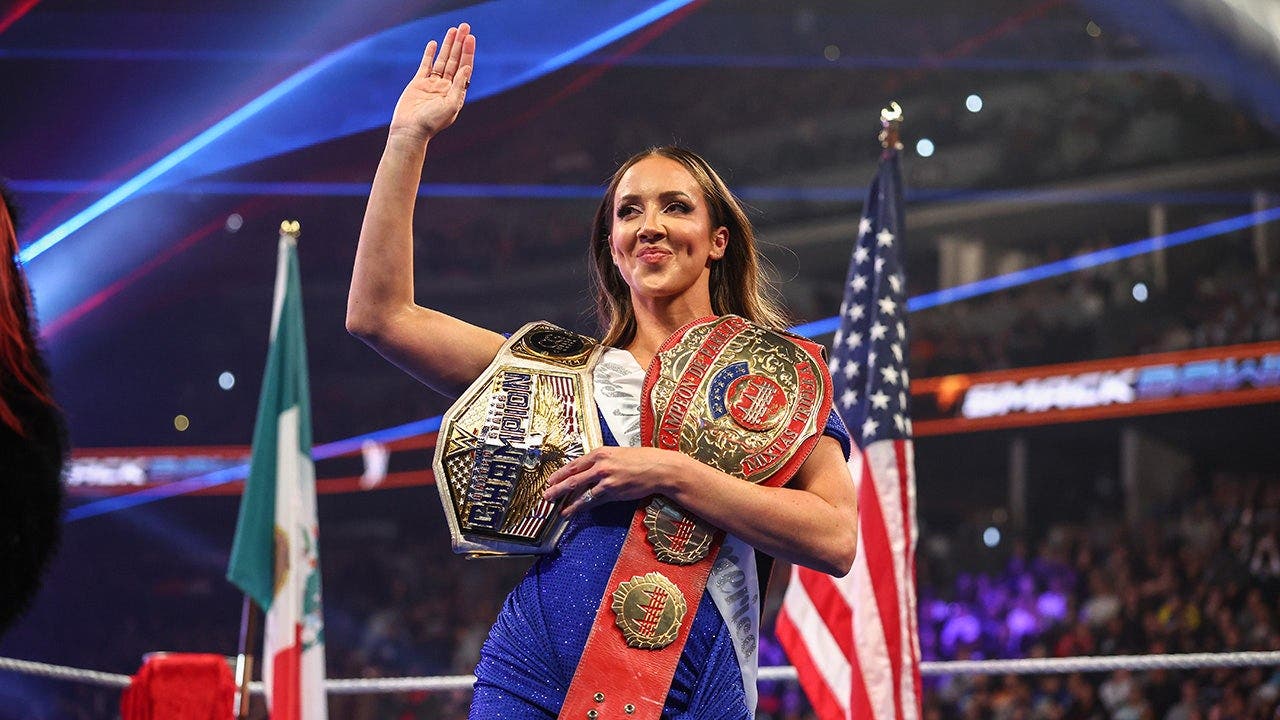
WWE star Chelsea Green revealed Monday she underwent a “heart procedure” as she shared photos of herself and husband Matt Cardona from her hospital bed.
Green said doctors caught her SVT. The Mayo Clinic says that SVT, or supraventricular tachycardia, is a “type of irregular heartbeat, also called an arrhythmia. It’s a very fast or erratic heartbeat that affects the heart’s upper chambers.”
ZERO BS. JUST DAKICH. TAKE THE DON’T @ ME PODCAST ON THE ROAD. DOWNLOAD NOW!
Chelsea Green enters the ring during Monday Night RAW at Little Caesars Arena in Detroit, Mich., on July 28, 2025. (Rich Freeda/WWE)
The two-time WWE women’s United States champion said she had been dealing with the issue for 10 years.
“After 10 years, doctors finally caught my SVT and I was able to get a heart procedure done! 3 hours later and I’m on the mend,” she wrote on Instagram.
On Tuesday, she added on X: “My latest episode during WrestleMania pushed my resting heart rate to 228 for almost 15 minutes. Yesterday, Dr. Girgis spent 3 hours working on me… and I had to be awake for the last hour of the procedure!! “
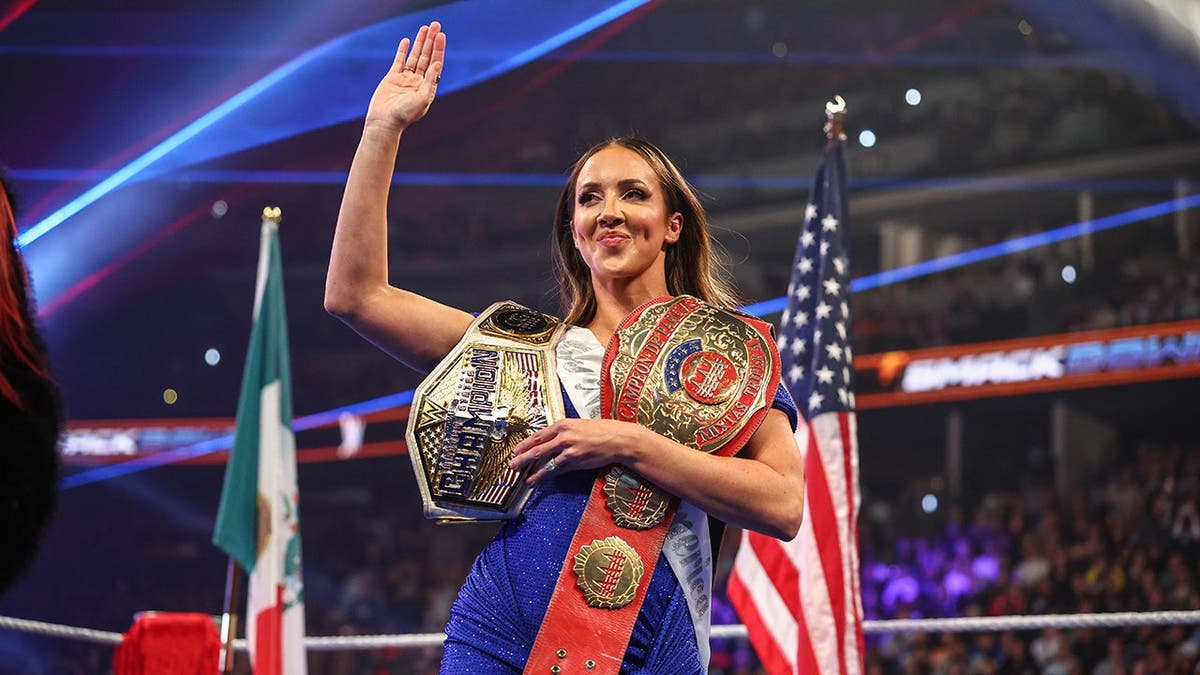
Chelsea Green waves during SmackDown at Ball Arena in Denver, Colo., on Nov. 28, 2025. (Michael Owens/WWE)
CLICK HERE FOR MORE SPORTS COVERAGE ON FOXNEWS.COM
She said the procedure was minimally invasive and expected to be back to work soon.
Green has had her share of bad luck over the last few months. She suffered an ankle injury that has kept her sidelined for several months, keeping her off the WrestleMania 42 card.
In February, Green and Ethan Page dropped the AAA World Mixed Tag Team Championship to Mr. Iguana and Lola Vice.
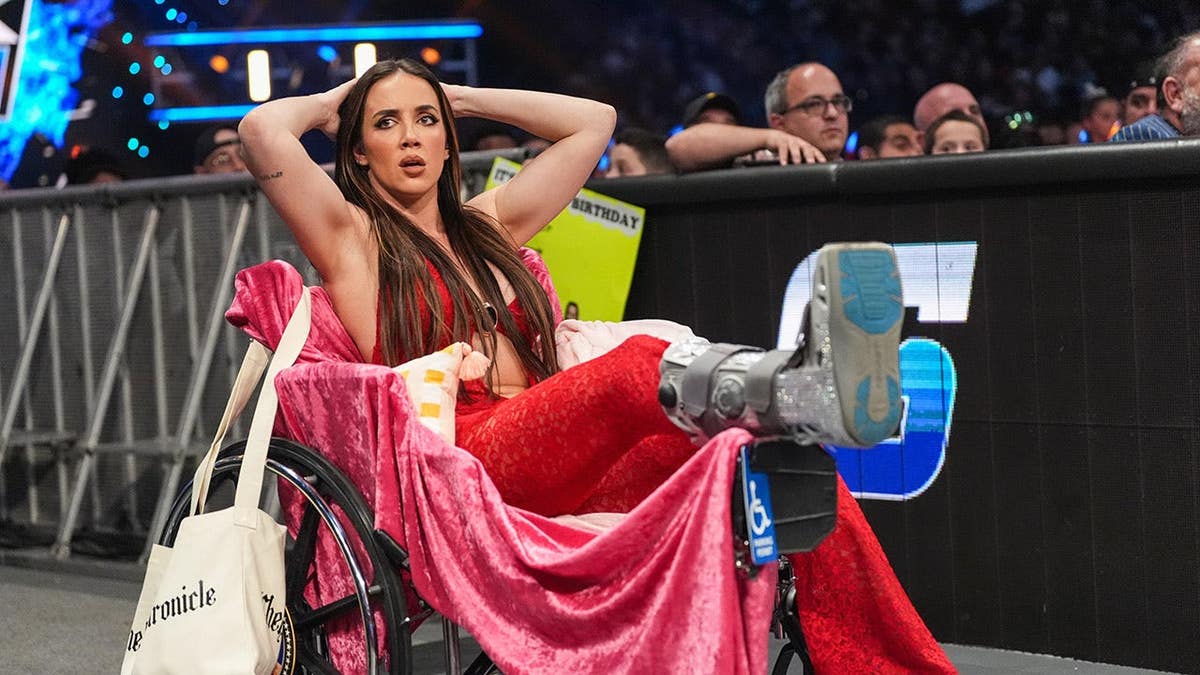
Chelsea Green looks on during SmackDown at FLA Live Arena in Sunrise, Fla., on Feb. 20, 2026. (Craig Ambrosio/WWE)
CLICK HERE TO DOWNLOAD THE FOX NEWS APP
Pro wrestling fans are eagerly awaiting her return to the ring.
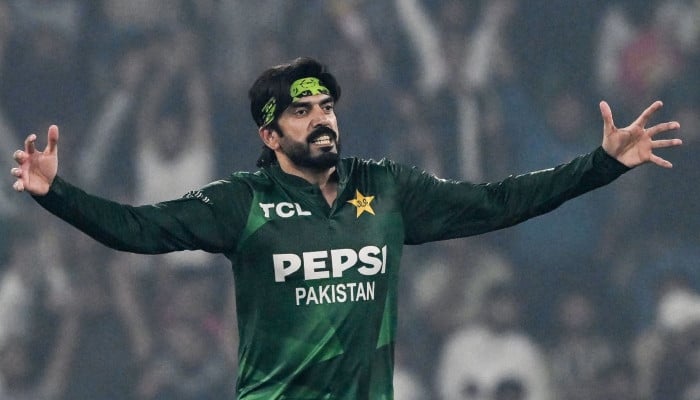
Pakistan’s mystery spinner Usman Tariq has been roped in by Warwickshire Bears for the Vitality T20 Blast, set to commence on May 22, the club announced on Tuesday.
In a statement, the club said that the 30-year-old spinner had offers to play franchise cricket in various leagues across the globe, but it won the competition to acquire his services.
As a result, Tariq will spend most of England’s summer season at the Edgbaston Stadium as his maiden Vitality Blast stint will be followed by The Hundred campaign with the Birmingham Phoenix, who signed him for £140,000 at the players’ draft in March.
Reacting to his allegiance with the Bears, Tariq termed it a great feeling before expressing his eagerness to bring energy to the squad, which he was impatiently looking forward to joining.
“I am very excited to bring more fun and energy to the Bears. I can’t wait to get involved with the squad, and it’s a great feeling to be part of this team. I hope to see as many people as possible at Edgbaston this summer,” Tariq was quoted as saying by the Bears.
Bears’ Performance Director James Thomas labelled Tariq “exactly the type of high-impact player” they were looking to bring in and thus expressed profound delight over securing his services for the upcoming tournament.
“Usman is exactly the type of high-impact player we want to bring into Warwickshire, so we’re delighted to get this deal completed,” Thomas said in a statement.
“His skill set and tactical awareness make him a genuine threat in modern white-ball cricket, but it’s his hunger to compete and continually improve that really stands out.
“What makes this signing particularly exciting is the alignment between Warwickshire and Birmingham Phoenix. Bringing Usman into the Bears for the Vitality Blast, before transitioning into The Hundred with the Phoenix, reflects the strength of our integrated model across club and franchise.
“It allows us to create continuity for the player, maximise performance impact across both competitions, and build stronger connections with our supporters in Birmingham and Warwickshire. Ultimately, this is about strengthening the team, the franchise, and our presence in the area, and we believe Usman can play a key role in that this summer.”
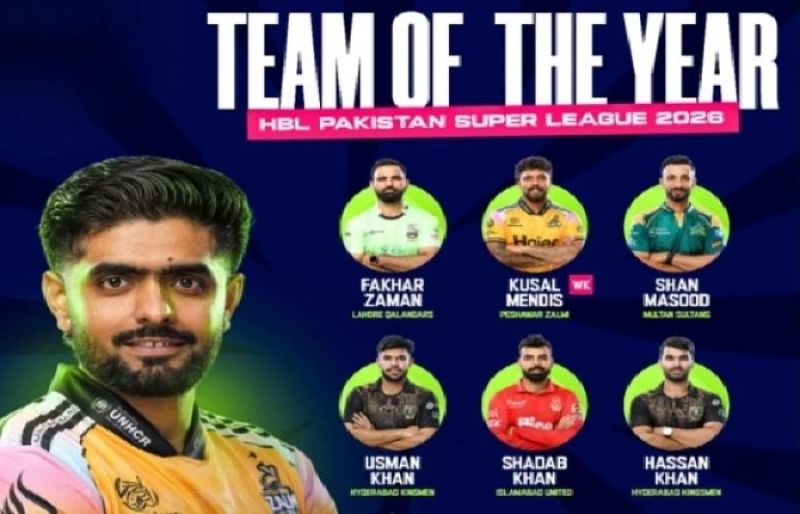
The Pakistan Cricket Board (PCB) on Monday announced the Pakistan Super League (PSL) 11 Team of the Tournament, naming Babar Azam skipper after a title-winning campaign.
The Team of the Tournament comprises three players each from Peshawar Zalmi and Hyderabad Kingsmen, two apiece from Lahore Qalandars and Islamabad United, and one player each from Multan Sultans and Quetta Gladiators.
The selection was made by a five-member panel drawn from the commentary team. The jury also finalised the Emerging Team of the Tournament, recognising the standout young performers of the season.
A total of 44 matches were played from March 26 to May 3 across Lahore and Karachi.
Babar Azam, who lifted his third PSL title as a player and first as captain, finished as the leading run-scorer with 588 runs.
Opening the innings, he also claimed the Hanif Mohammad Cap and equalled the record for most runs in a single PSL season, matching Fakhar Zaman’s tally from 2022.
His campaign featured two centuries in four matches against Quetta Gladiators and Islamabad United.
Peshawar Zalmi are further represented by Kusal Mendis and Sufyan Moqim. Mendis scored 550 runs, including four half-centuries and a century, while also contributing eight dismissals behind the stumps.
His century came against Karachi Kings at the National Bank Stadium on April 9. Left-arm wrist-spinner Sufyan Moqim took 22 wickets at an average of 14.40 and an economy rate of 7.20, earning both Player of the Tournament and Best Bowler honours.
Hyderabad Kingsmen have three representatives in Usman Khan, Hassan Khan and Hunain Shah. Usman finished fourth among the top run-scorers with 389 runs, including a century and three half-centuries.
Hassan contributed 139 runs at a strike rate of 195 alongside six wickets and strong fielding performances. Hunain Shah impressed with 17 wickets in 10 matches, emerging as a key bowler in the latter stages of the competition.
Lahore Qalandars’ Fakhar Zaman and Shaheen Shah Afridi also feature in the XI. Fakhar scored 401 runs to finish third overall, while Shaheen claimed 16 wickets at an economy rate of 7.86.
Multan Sultans’ Shan Masood is included after scoring 367 runs at an average of 45.87 and a strike rate of 158.18. Islamabad United captain Shadab Khan also makes the side after a strong all-round season, scoring 173 runs and taking 17 wickets, earning the Best All-Rounder of the Tournament award.
Teammate Richard Gleeson is selected for his impactful new-ball performances, finishing with 12 wickets at an economy rate of 7.13.
Quetta Gladiators’ Hasan Nawaz has been named as the 12th player after scoring 291 runs.
PSL 11 Team of the Tournament
Babar Azam (Peshawar Zalmi) (c), Fakhar Zaman (Lahore Qalandars), Kusal Mendis (Peshawar Zalmi) (wk), Shan Masood (Multan Sultans), Usman Khan (Hyderabad Kingsmen), Shadab Khan (Islamabad United), Hassan Khan (Hyderabad Kingsmen), Shaheen Shah Afridi (Lahore Qalandars), Hunain Shah (Hyderabad Kingsmen), Sufyan Moqim (Peshawar Zalmi), Richard Gleeson (Islamabad United) and Hasan Nawaz (Quetta Gladiators) (12th player).


Cotton price surge lifts yarn rates sharply in South India

Oil prices fall as Trump pauses Project Freedom to seek final peace deal with Iran

US’ Crocs’ Q1 strong on DTC growth; margins, EPS decline

A Brain Implant for Depression Is About to Be Tested in Humans

Pro wrestling star Steph De Lander reveals how colleague’s advice helped lead her to title triumph at ACW

‘I had £20,000 stolen and had to fight a 13-month fraud reporting rule to get it back’

-
 Tech1 week ago
A Brain Implant for Depression Is About to Be Tested in Humans
-
 Sports1 week ago
Pro wrestling star Steph De Lander reveals how colleague’s advice helped lead her to title triumph at ACW
-
Business1 week ago
‘I had £20,000 stolen and had to fight a 13-month fraud reporting rule to get it back’
-

 Entertainment1 week ago
Norway joins Type 26 Frigate Programme to boost NATO naval power
-

 Entertainment1 week ago
Melania Trump says ABC should ‘take a stand’ on late-night host Kimmel
-

 Tech1 week ago
Are tech leaders risking a cyber resourcing crisis? | Computer Weekly
-
 Business6 days ago
PSX plunges over 4,800 points | The Express Tribune
-
 Business1 week ago
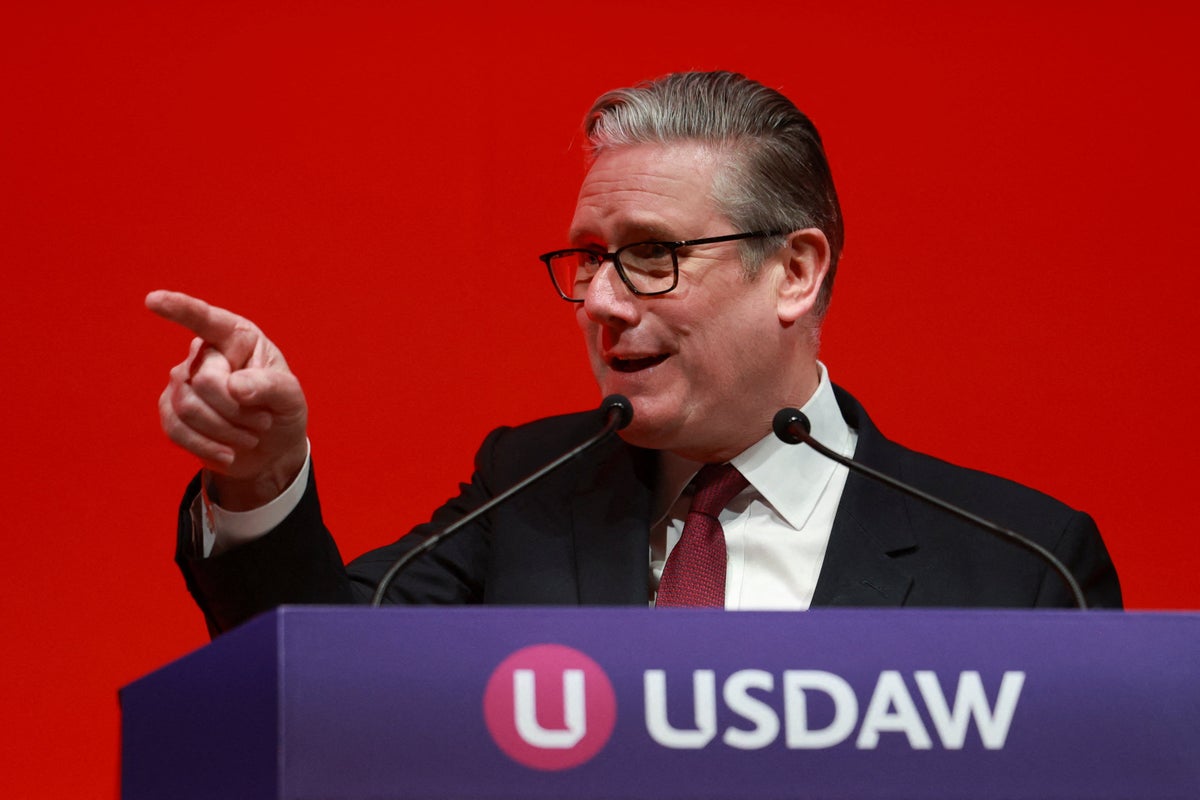
Starmer says ‘tide could be turning’ on shoplifting epidemic