

Sports
How Dusty May and Michigan turned a team of transfers into a national champion

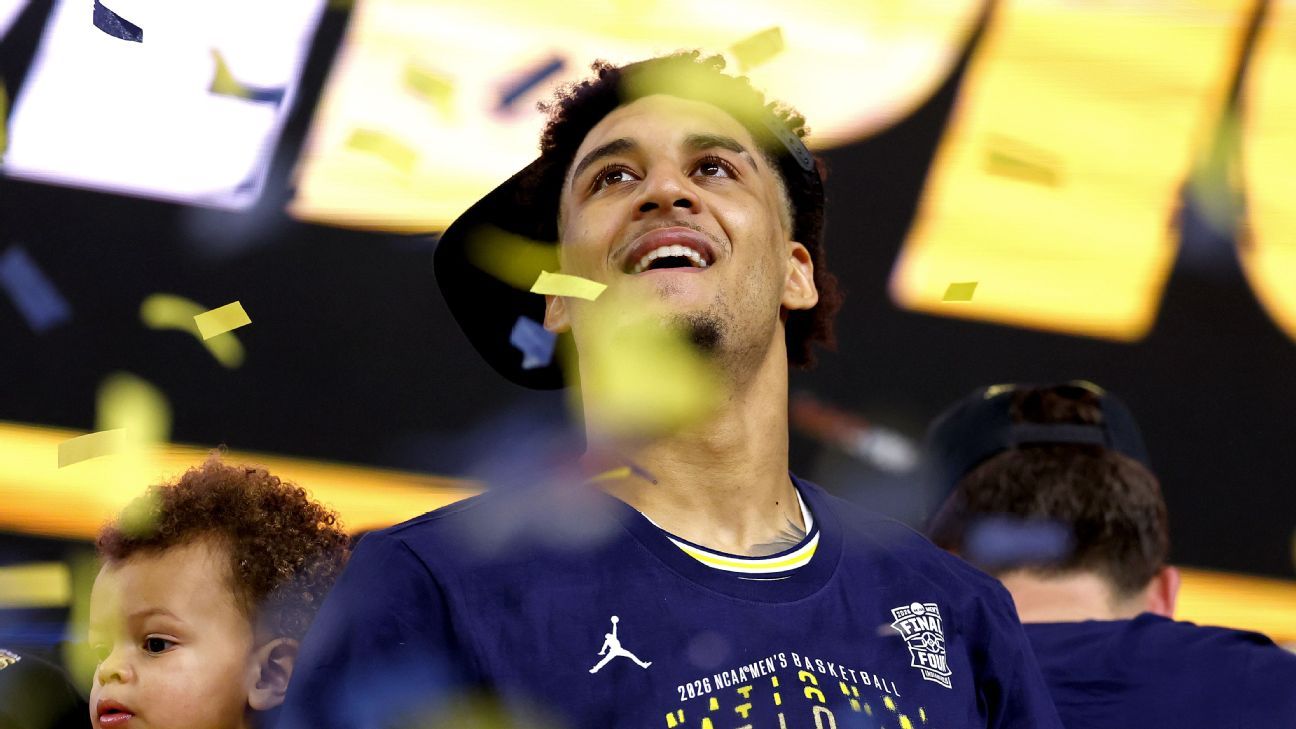
INDIANAPOLIS — BEFORE HE could become the star of the second national championship basketball team in Michigan basketball history, Yaxel Lendeborg had to make a choice.
After he simultaneously entered the 2025 NBA draft and the transfer portal after two promising years at UAB, NBA executives told him he could be a late first-round pick. But the Michigan Wolverines‘ promise to develop the 6-foot-9 talent into an undeniable pro prospect — along with their seven-figure NIL offer — was too tempting to pass up.
“We said, ‘You’ve got to get good at some of these other things, and we’re going to help you learn it,'” Michigan assistant coach Mike Boynton Jr. said about the recruitment process. “‘And then when you struggle, we’re going to watch film and figure out what we can do to improve it. And when you do it well, we’re going to be damn unstoppable.'”
They were right. And it turned out Lendeborg was the missing piece for a Michigan program that cut the nets down at Lucas Oil Stadium on Monday, capping a dominant 37-3 season with a 69-63 win over the UConn Huskies, marking the Big Ten’s first men’s basketball title since 2000.
Lendeborg, clearly affected by the knee injury that sidelined him for most of his team’s win over Arizona in the Final Four, refused to exit the national title matchup even when he missed his first five shots and was at times hobbling on the court. But he played with energy — and scored 13 points — even when it was clear he wasn’t 100 percent.
Even as he grappled with the reality of his limitations, his teammates and coaches didn’t let him lose his confidence.
“We just told him that we know how good he is, that he didn’t need to play with any kind of extra pressure to score or make shots,” Boynton said after Monday’s victory. “We wanted him to shoot the shots that were there, but otherwise just play good basketball. And he still did that. He made some really key plays for us, made some big passes. He set some good screens, came up with some deflections and he brought some energy to our team, which we needed.”
That resilience was part of the reason Michigan recruited him in the first place. When Lendeborg arrived in Ann Arbor, he joined a group of transfers with similar ambitions, an unlikely band of upperclassmen who won this year’s title in a season in which the talent of a generational freshman class dominated the headlines.
Former North Carolina standout Elliot Cadeau had something to prove after a rocky stint in Chapel Hill. Morez Johnson Jr. didn’t want to be stuck in a box at Illinois. Aday Mara needed a chance to showcase the tools he has with a 7-foot-3 frame after leaving UCLA. The self-described “Monstars” thought they would jell under Dusty May, a coach with a track record of putting the pieces together.
Coming off last season’s run to the Sweet 16, May — steeped in a coaching philosophy that embraces the idea that a player being in the right situation is more important than being at the same school for four years — pursued the best available talent in the portal. It’s a philosophy that May witnessed Bob Knight use to win games at Indiana when May was a student manager for the Hoosiers in the late 1990s — and put into action himself in his years as an assistant.
With the right combination of talent, May believed, beautiful things could happen. When he landed Lendeborg, it all came to fruition.
“I feel like we’re the best team in college basketball,” Lendeborg said at the Players Era Festival in November. “We might be the best Michigan team ever. We’re going to try to go for that.”
The Wolverines had just routed San Diego State, Auburn and Gonzaga by 110 points combined. That’s when they began to refer to themselves as not just one of the greatest teams in school history but “the best team ever assembled” — just weeks into the season they would end as champions.
Even as May watched One Shining Moment on the Jumbotron after the win on Monday, he admitted that, yes, he believed his team could win it all — but he also understood this group had no guarantees.
“I didn’t have this vision,” May said, standing on a court littered with confetti. “We thought it was possible but we didn’t see this one coming.”
MICHIGAN’S ROSTER ISN’T that unique. Kentucky spent more than $20 million on its team. Duke had multiple projected first-round picks. Arizona had one of the most balanced rosters in the field, too. The best teams in America all spent millions to chase the rings the Wolverines earned. Yet, their approach worked because everyone on the roster — from Lendeborg, the team’s leading scorer, to the last man on the bench — came to Ann Arbor and bought in on the idea that doing less can mean so much more on a squad with an abundance of stars.
Their system isn’t bogged down by restrictions or assignments. It’s fostered by trust. The Wolverines switch on defense and believe that even their big men can chase your fastest guards. In the NCAA tournament, they tossed passes all over the floor like they were playing a video game together, not competing in a single-elimination affair with a title on the line. They just rolled the ball out onto the court and dared any opponent to beat them.
“I would say just the freedom that we have as players, the confidence that he gives us, it’s probably one of the keys,” Mara said of May’s coaching. “We don’t play with sets or plays. We just hoop, so it’s easier like that to create, to play your game.”
Two important developments made Michigan’s championship possible. The NCAA’s 2025 blanket waiver granted former junior college players such as Lendeborg additional eligibility, and the NIL system made another year in college for fringe NBA first-round prospects a win-win scenario. Both paved the way for constructing a starting lineup of all transfers.
Lendeborg, Johnson and Mara are projected first-round picks in ESPN’s latest NBA mock draft, rising significantly from their projections at their previous schools.
At UCLA, Mick Cronin didn’t use Mara the way May has this season. Having grown up watching fellow Spaniards Pau Gasol and Marc Gasol, Mara craved the chance to play in a system that would give him the “freedom” to play like a fluid big man, too.
Johnson was a high-energy dunking machine at Illinois — not the more versatile two-way player he has become at Michigan — and he worried his NBA dreams had died. He’s now listed as an “excellent” offensive player who has made 69% of his shots around the rim, according to Synergy Sports.
Cadeau also craved a fresh start. The five-star recruit had a couple of up-and-down seasons in Chapel Hill and already had a relationship with the Michigan staff.
“There’s a confidence element to it with all these guys,” Boynton said. “Elliot obviously lost some of that, some of his swag. The thing that makes a little guard good is just, like, believing you’re better than what everybody talks about.”
In the portal, the players who led this national title push were not only pursuing their personal goals — they were looking for a home.
“The transfer portal helps out a lot of people, especially me, coming from a program where I didn’t play that much and I felt restricted,” Johnson said before his team’s first-round matchup against Howard. “Coming here with Coach May, I started to love basketball again. It was fun. “
FIFTY-TWO MILES south of Lucas Oil Stadium, Bob Knight planted a seed that has stuck with May throughout his coaching career.
In 1987, Keith Smart hit the winning shot for Indiana vs. Syracuse in the national championship. Knight brought Smart to Bloomington after he’d been a star in junior college, which had college basketball’s original pool of immediately eligible talent. By the time May arrived as a student manager in 1995, Knight had modeled how to build a team with players who started their careers elsewhere.
“What we do as well as anything is see the best in people, and instead of bringing in a player and saying he’s too this or too that, it’s ‘OK, how can we use that as an advantage?'” May said.
Before he assembled this Michigan team, May watched Indiana standouts and juco transfers William Gladness and Rob Turner thrive for the Hoosiers in the late 1990s. When May was an assistant at Murray State during the 2006-07 season, junior college transfer Bruce Carter was the team’s leading scorer. A year later, when May joined the UAB staff as an assistant, Indiana transfer Robert Vaden ranked in the top 20 nationally in scoring (21.1 points per game) for the Blazers. Later, three of May’s top five scorers at Louisiana Tech were transfers in his first year as an assistant for the Bulldogs. And players such as Canyon Barry, who had started at Charleston, were standouts when May was with Mike White’s staff at Florida.
May then led Florida Atlantic to the Final Four as a head coach in 2023, with Texas Tech transfer Vlad Goldin in the paint. Two years after that run, Goldin and Danny Wolf — a first-round pick in 2025 — led the Wolverines to the Sweet 16. The success of that pairing set the tone for this season’s frontcourt trio and backed up May’s mantra that a player can reach their potential only if they’re in the right place.
“I think we all are better in certain situations than others,” May said Sunday. “When the Oklahoma City Thunder won the championship last year … I wasn’t judging them because Shai Gilgeous-Alexander was drafted by the Clippers or because they signed Isaiah Hartenstein as a free agent. I thought, ‘Wow, those guys played beautiful basketball, that’s a great team, that’s a real model for young players to watch, a group that obviously cared about each other, that played the game the right way, that represented their organization, their city, their families, their last name.'”
Once he had his starting lineup locked in, May faced his next challenge: making sure they were all on the same page.
He had to order a few pizzas to make it happen.
JOHNSON WASN’T CONCERNED about the fact that he, Lendeborg and Mara were all centers at their former schools. May and his staff had been honest with him about the selflessness the team’s starting rotation would require and the potency the group would possess if everyone bought in.
Off the court, however, the Illinois transfer wondered whether everyone would get along. That didn’t last long. At May’s house over the summer, the head coach invited the Wood Fired Up pizza truck in Ann Arbor to make customized pies for everyone on the team.
“Hawaiian pizza,” Johnson said of his order.
While they were munching on slices, they were also talking and vibing. Michigan returnees Will Tschetter, Nimari Burnett and Roddy Gayle Jr. were key holdovers from last season’s squad who helped Lendeborg & Co. adapt to the program’s culture. At the Final Four, the Wolverines have had a Nintendo Switch 2 with a nonstop game of Mario Kart World going in the corner of the locker room. Their season has included laughs and get-togethers throughout.
“We were playing, um, what’s that thing called? Toss bags? Um, wait, no, cornhole, cornhole,” Johnson said. “Dusty is pretty good. [Charlie May] is pretty good. I’m not good. I didn’t really play because I don’t like to lose.”
It might seem silly to think that a couple of pizzas and a few rounds of cornhole could be a factor for Michigan’s national championship team, but it was a setting for a group of guys who didn’t know much about one another — beyond how they played on the court — to form relationships.
That connection translated to the floor on Saturday, when Cadeau started 2-for-14 in the first half against Arizona — although May said later he asked the point guard to throw a few shots off the backboard to make it easier for Mara to get rebounds and score against the Wildcats’ big frontcourt. Rather than critique his effort at halftime, Cadeau said the staff told him to “keep shooting.”
“It’s just having a great connection off the court as well and having a lot of team dinners, hanging out with each other,” said Cadeau, who scored or assisted on 37 of Michigan’s 91 points against Arizona, per ESPN Research.
“This is one of the most connected teams I’ve played on that actually hangs out with each other off the floor. With having five different playmakers on the court at all times, I really think that our passion makes it look like we have chemistry. We do have chemistry, but that just helps build it.”
WHEN UAB HEAD coach Andy Kennedy sat down with Lendeborg last spring, he was honest with the player about his future.
“I said, ‘I know your goal is the NBA and you put yourself in a position for that to be a possibility,'” Kennedy said. “I said, ‘If you want us to give you some guidance as to helping you find your next spot’ … and he looked at us like we were crazy. ‘What? Are you guys running me off?'”
No, they were nudging him toward a brighter, more lucrative future — one Lendeborg took full advantage of in his sole year in Ann Arbor. Lendeborg’s long road — two years at junior college, two at UAB — led him to Michigan, where he was an All-American, earned Big Ten Player of the Year and won a championship.
The portal was only the beginning for this group. Between last offseason and when the final buzzer rang Monday, Michigan’s players blossomed. Fans can debate whether this group is the best Michigan team of all time or one of the best we’ve seen in recent college basketball history. What’s not up for debate is that Michigan — and its collection of transfers — was the best team in the country this season.
And for anyone who thinks May took a rent-a-player approach to this championship run, the players who believe they’re better than any men’s college basketball team ever assembled aren’t concerned.
“Being in this situation, I’ve had the best year of my life,” Lendeborg said before the first game of the tournament. “I’m in the spotlight, getting coached by a new coach that came from a mid-major, so he knows how everything works. And, man, we’re really not bad kids. He did a good job recruiting guys that care for each other and put the team above themselves. If that’s what they want to call a ‘mercenary,’ I would love to be a mercenary. That’s cool with me.”
ESPN’s Jeff Borzello and Pete Thamel contributed to this report.
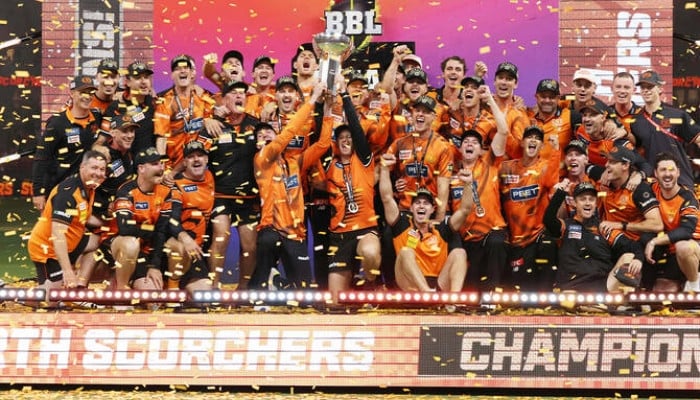
SYDNEY: As Twenty20 cricket competitions explode around the world, Australia’s Big Bash League is struggling to chart a vision for the future, after plans to privatise its franchises stalled.
Cricket Australia chief Todd Greenberg is adamant that outside investment is necessary to shore up the game’s financial future and keep pace with a boom in other well-funded leagues played in a similar time slot.
They include the UAE’s ILT20, South Africa’s SA20, and New Zealand’s privately-backed NZ20 scheduled to start in December 2027, all bidding for the best local and overseas players.
“If those salary caps (of other leagues) are significantly higher than ours over the coming years, and players can earn more in those areas, then players will follow those. That’s a real risk to us,” Greenberg told local media.
“I want to make sure that for Australian cricket, our ambition is to have a league that runs at the key part of the year for us, which is the December-January window, and it’s the best T20 league in the world at that moment in time.
“To do that, we have to have a significant amount of money in our salary caps to attract not only the best players from overseas, but to retain and attract our own best players.”
He added: “The concept of bringing private capital to cricket is inevitable at some point.”
While not a direct competitor as it runs in a different window, the benchmark Indian Premier League has seen massive success thanks to wealthy benefactors, with England’s The Hundred also on a roll after an influx of private capital.
But it is a thorny issue in Australia with an initial proposal to sell stakes in each of BBL’s eight teams stalling last month amid concerns about a loss of control for the game’s local custodians.
While the Victorian, Western Australian and Tasmanian cricket associations voiced support and South Australia said it was open to the idea, New South Wales and Queensland rejected the move.
Queensland Cricket, which controls the Brisbane Heat, said it was worried about player payments skyrocketing to unsustainable levels, and that private owners may not be as invested in the grassroots game.
Cricket NSW, which operates the Sydney Sixers and Sydney Thunder, was similarly concerned that it could be detrimental to how the sport is governed and how local players are produced.
‘Sugar hit’
There are also fears about an Indian takeover, with the most likely buyers seen as the rich IPL team owners who have invested in other short-form competitions around the globe.
Former Australian captain Greg Chappell is in the “No” camp, arguing that the BBL belongs to the states and communities that have built it into a successful and well-attended product.
While acknowledging the commercial realities, he said selling it off was not the answer.
“The moment you introduce private ownership at scale, you introduce a set of priorities that may not always align with the long-term health of the game,” he wrote in the Sydney Morning Herald.
“Private investors, however well-intentioned, answer to shareholders, not to Australian cricket.”
Andrew Jones, a former head of strategy at Cricket Australia who was instrumental in the launch of the BBL, is similarly unconvinced.
“A one-off sale is a sugar hit, not a solution,” he said in The Australian newspaper, arguing that revenues can be better grown through sponsorships, wagering, ticketing, and more focus on commercialising the women’s game.
Despite scepticism, Greenberg remains confident and is now eyeing a hybrid ownership model.
This would allow the BBL franchises keen to sell stakes to do so while allowing those against to maintain complete ownership.
“If we end up not going together at the same time, can we still extract the same level of revenue, and can we extract the same level of value?” he said.
“I think we can, but I’ve got to do the work to satisfy a recommendation that would ultimately go to the members and our board.”
Sports
NASCAR’s Truck Series and O’Reilly Autoparts Series honor Kyle Busch with moments of silence at Charlotte
NEWYou can now listen to Fox News articles!
The NASCAR world is paying tribute to Kyle Busch this weekend, and that includes some classy ones from two series in which the late driver had a lot of success.
While Busch — who passed away Thursday after “severe pneumonia [that] progressed into sepsis” — had been a full-time driver in NASCAR’s top series, the Cup Series, for more than 20 years, he still competed occasionally in both the O’Reilly Auto Parts Series and the Craftsman Truck Series.
He was especially known for his dominance in the Truck Series, winning 69 of his 184 races, and at one point owned a team. In fact, the final win of Busch’s career came just under a week before his death in a Truck Series race at Dover.
ZERO BS. JUST DAKICH. TAKE THE DON’T @ ME PODCAST ON THE ROAD. DOWNLOAD NOW!
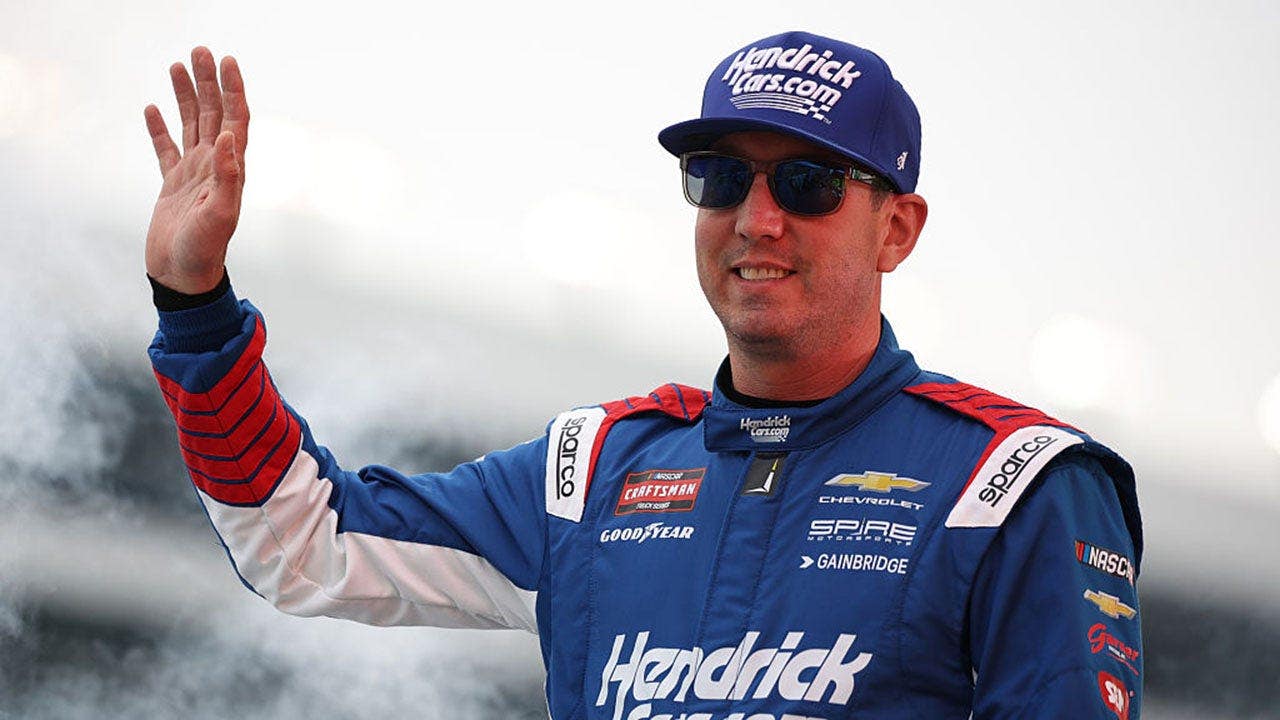
Kyle Busch, driver of the No. 7 HendrickCars.com Chevrolet, is introduced before the NASCAR Craftsman Truck Series SpeedyCash.com 250 at Texas Motor Speedway in Fort Worth, Texas, on May 1, 2026. (James Gilbert/Getty Images)
On Friday, the Truck Series was in Charlotte as part of the Coca-Cola 600 weekend for a race that Busch was supposed to take part in.
NASCAR, RACING WORLD REACTS TO KYLE BUSCH’S SHOCKING DEATH AT 41: ‘CANNOT COMPREHEND THIS NEWS’
Corey Day was in the No. 7 Chevrolet for Spire Motorsports, the truck in which Busch took his final win, and it was set to start on pole after Friday’s qualifying was rained out.
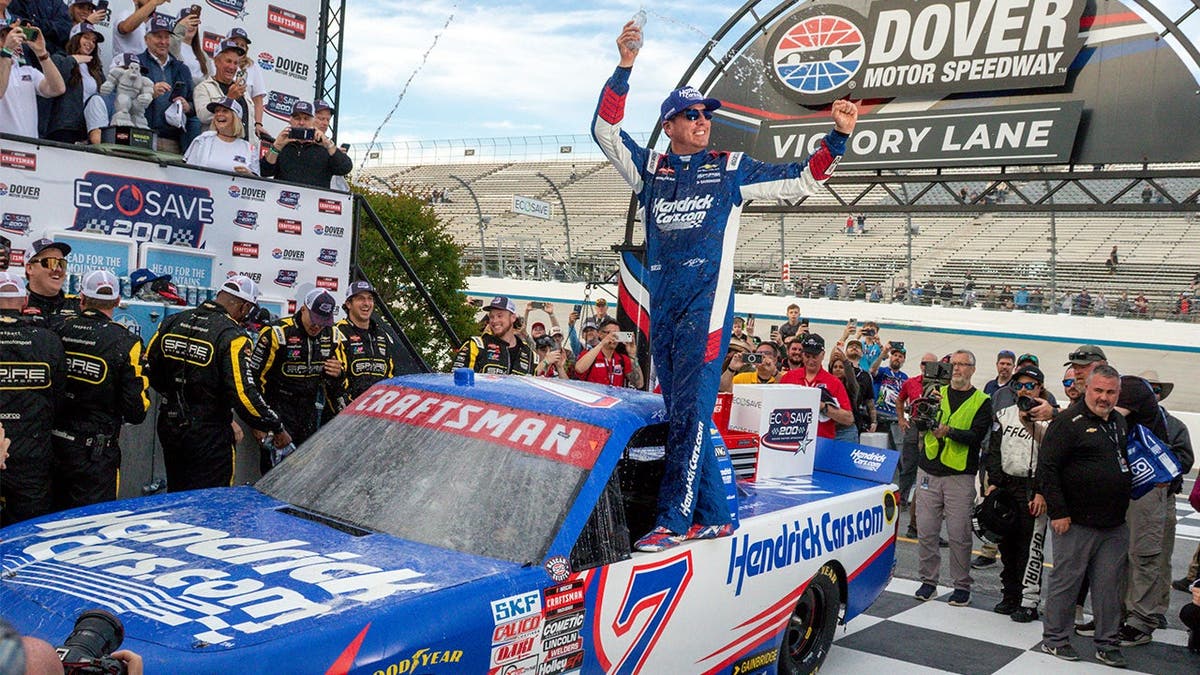
Kyle Busch celebrates the final win of his NASCAR career at Dover Motor Speedway. (Photo by David Hahn/Icon Sportswire)
Before the race was set to begin on Friday evening, teams and fans held a moment of silence for Busch.
Unfortunately, the race never got underway and was postponed until Saturday morning and then again to Saturday night.
The O’Reilly Autoparts Series, which Busch raced in many times and won many times during his career, also took a moment to remember him before their race at Charlotte on Saturday.
CLICK HERE TO DOWNLOAD THE FOX NEWS APP
That race was also suspended due to rain.
There will be some heavy hearts on Sunday when the Coca-Cola 600, the NASCAR Cup Series’ longest race of the year, gets started at 6 p.m. ET.

NEWYou can now listen to Fox News articles!
While Kyle Busch was a legend in the NASCAR ranks, he was incredibly well respected throughout the world of motorsports.
That’s why one of Busch’s NASCAR numbers — the one I’d argue is most iconic — will make an appearance in the 110th Running of the Indianapolis 500.
Busch had a bunch of numbers across NASCAR’s three national series, but in the Cup Series, he used No. 5, No. 18 and No. 8.
ZERO BS. JUST DAKICH. TAKE THE DON’T @ ME PODCAST ON THE ROAD. DOWNLOAD NOW!
Kyle Busch used No. 18 during his years with Joe Gibbs Racing. (Isaac Brekken/AP)
For many fans, No. 18 is the number they associate with Busch, as he used it for 15 years, including during both of his championship seasons.
NASCAR, RACING WORLD REACTS TO KYLE BUSCH’S SHOCKING DEATH AT 41: ‘CANNOT COMPREHEND THIS NEWS’
You can close your eyes and picture it on the side of those legendary M&M’s paint schemes.
Well, Sports Business Journal’s Adam Stern shared that Dale Coyne Racing, which runs the No. 18 Honda driven by Romain Grosjean, will display the classic No. 18 used on Busch’s car during his time with Joe Gibbs Racing in the Cup Series.
How about that tribute?
Of course, the numbers are typically trademarked, so as Stern reported, the idea — which came from Fox Sports IndyCar commentator Townsend Bell — required getting in touch with Joe Gibbs Racing.
Busch never raced in the Indy 500 or in the IndyCar Series; however, he did have a lot of success at the Indianapolis Motor Speedway in NASCAR.
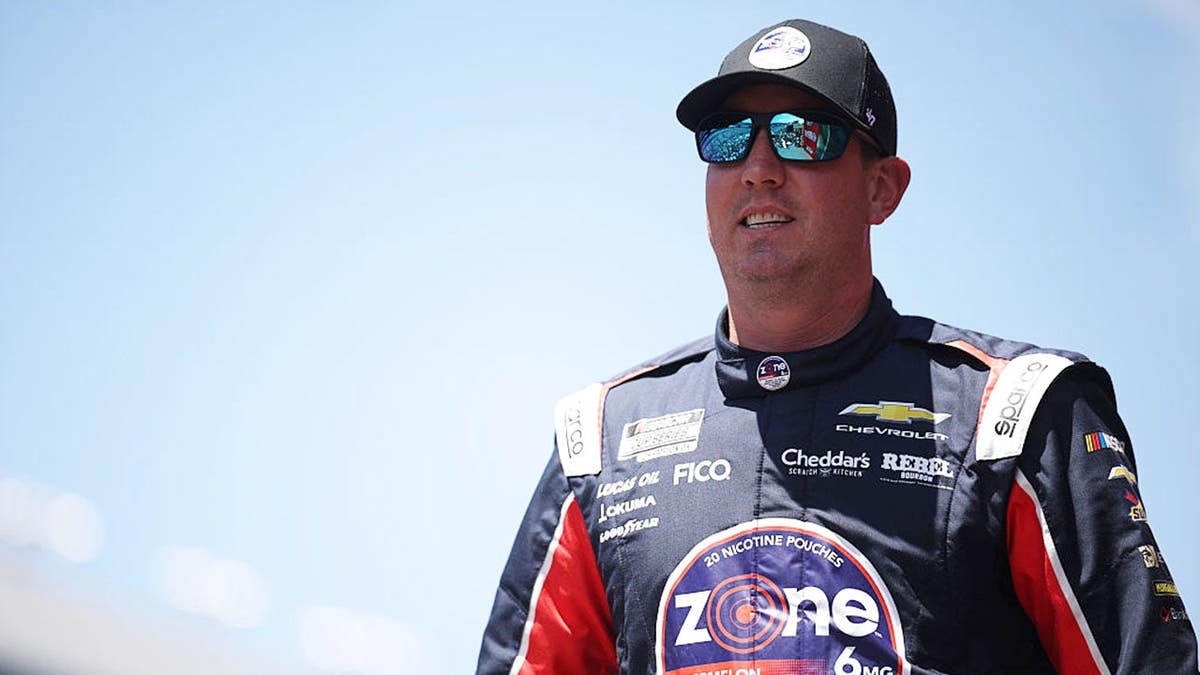
NASCAR star Kyle Busch died on Thursday at just 41 years old. (James Gilbert/Getty Images)
His brother, retired NASCAR driver and former Cup Series champ, Kurt Busch, attempted double duty by competing in both the Indianapolis 500 and Coca-Cola 600 on the same day in 2014.
It’s a heck of a tribute from the folks at Dale Coyne Racing with an assist from JGR.
CLICK HERE TO DOWNLOAD THE FOX NEWS APP
And while I don’t want to play favorites, wouldn’t it be something to see that No. 18 in Victory Lane?
Grosjean will start Sunday’s race in 24th, which means he has some ground to make up, but anything can happen in the Indy 500.


Royals take protective step for Beatrice, Eugenie as key appearance looms

Market recap: 6 of top-10 most-valued firms add Rs 74,111 crore; Reliance biggest winner

Katie Price refuses to accept Lee Andrews dad’s arrest story

-

 Entertainment1 week ago
Where Pete Davidson, Elsie Hewitt stand after breakup: Details revealed
-

 Politics1 week ago
Rising diesel costs from Iran war strain US school budgets
-

 Entertainment1 week ago
Drake drops highly anticipated "Iceman" album, plus two surprise albums
-

 Tech1 week ago
Greg Brockman Officially Takes Control of OpenAI’s Products in Latest Shakeup
-

 Tech7 days ago
Why Is Your Grill So Dumb? The Best Grills Set Temp Like an Oven
-
 Business1 week ago
UK borrowing costs rise and pound falls as leadership drama continues
-

 Tech7 days ago
This Solar-Powered Smart Sprinkler Keeps My Lawn Watered Without Any Power Cables
-

 Fashion1 week ago
RMG trade bodies seek policy support from Bangladesh PM