

Business
How IndiGo Managed To Hold A Country Of 1.4 Billion People Hostage, Forced Govt To Bend Rules | Analysis


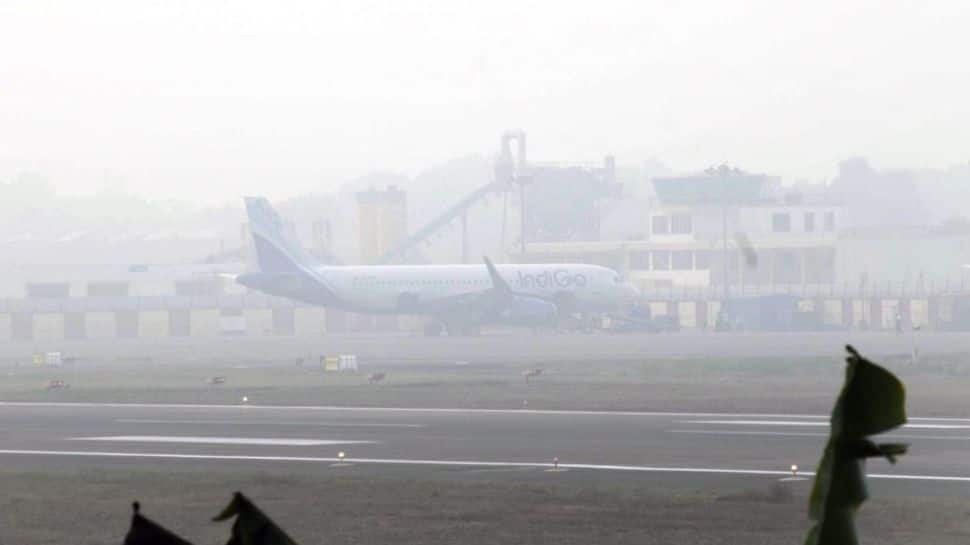
At a time when most Indian airlines are posting losses, IndiGo stands out as the only profitable carrier. Yet, while loss-making airlines managed to comply with DGCA directives within the allotted 18-month period, the one airline turning a profit failed to do so. The DGCA had provided ample time for compliance and workforce planning. But while others focused on meeting regulatory requirements, IndiGo appeared to pursue a different strategy—creating disruption to pressure the government. Incredibly, this approach worked: instead of imposing penalties, the government chose to relax the norms.
Aviation expert Harsh Vardhan squarely called this entire crisis a failure of IndiGo’s management. He said this is an extremely unprecedented situation. Passengers have been suffering for three days, and this is the peak tourist, wedding, and business season. IndiGo’s claim that the new FDTL policy suddenly created problems is nothing but a management failure. The policy wasn’t introduced overnight—it was formulated over years of deliberation and was finalised a year ago.
Harsh Vardhan reminded that the soft launch of the FDTL took place on July 1, 2025, and it was fully implemented from November 1, 2025. Other operators like Air India and SpiceJet made timely adjustments, which is why no major crisis emerged there. What surprises him most is the timing—if the policy was effective from November 1, why did this sudden “rampage” begin only a month later, at the start of December?
“The Government of India has decided to institute a high-level inquiry into this disruption. The inquiry will examine what went wrong at Indigo, determine accountability wherever required for appropriate actions, and recommend measures to prevent similar disruptions in the future, ensuring that passengers do not face such hardships again,” said the Ministry of Civil Aviation in a statement.
No one knows what will come out of the inquiry but, interestingly, IndiGo got rewarded for its blackmailing, instead of getting punished as the government relaxed norms.
Due to the IndiGo induced turbulence, the airfare on key routes touched Rs 80,000 to Rs 90,000. IndiGo didn’t merely cancel flights—it brought the system to a standstill, grounding aircraft, showcasing its clout, and effectively challenging the government to respond. Instead of asserting its authority, the NDA government backed down and rolled back its own directive. Through deliberate mismanagement, the airline pushed the system toward chaos. The suspension of over a thousand IndiGo flights severely disrupted the economy, sending hotel prices and ticket fares on other airlines soaring.
“The central government has ordered a probe and refunds—but the question is: when the monopoly of private companies and the government’s silence come together, who will protect the common people? Who are you working for? The public or the interests of big corporate houses?” Former Delhi Dy CM Manish Sisodia rightly questioned the government.
Shockingly, a country of 1.4 billion people relies primarily on just two major domestic carriers—IndiGo and Air India. IndiGo’s dominance is so significant that even Leader of the Opposition Rahul Gandhi publicly criticised the government for its oversight failures. “IndiGo fiasco is the cost of this Govt’s monopoly model. Once again, it’s ordinary Indians who pay the price – in delays, cancellations and helplessness. India deserves fair competition in every sector, not match-fixing monopolies,” said Gandhi.
For two decades, successive governments have allowed major airlines to collapse instead of restructuring them under new ownership. Jet Airways and Kingfisher Airlines are prime examples: both could have been revived by removing problematic promoters, yet no institutional mechanism was activated. The pattern repeated itself with Go First. When three airlines vanish in a decade, it signals not merely corporate failures but a systemic unwillingness to safeguard competition and consumer interest, wrote Prashant Tewari, public policy expert, mentioned in a recent report in The Pioneer.
Today, IndiGo controls over half of India’s domestic aviation market, with the Air India group holding most of the remainder. Smaller airlines operate on the margins, too weak to influence pricing or service standards.
Tewari wrote that disappearance of three airlines within years show government’s failure of protecting competition and consumer interest.
This duopoly-like environment has suffocated passengers: airfares on busy domestic routes routinely exceed those for comparable distances in Europe, Southeast Asia, or even the United States. A two-hour flight within India can cost more than a four-hour international journey elsewhere.
“IndiGo airline fiasco shows that Modi govt is either incompetent or in collusion. In either case, India deserves better. People have never suffered so much,” said Former Delhi CM and AAP convener Arvind Kejriwal.
For years, India’s aviation sector has needed at least eight to ten robust operators to foster true competition, stabilise fares, and minimise disruptions. Instead, new entrants face steep barriers, licensing moves painfully slowly, and foreign carriers seeking expansion are hindered by outdated protectionist policies disguised as national security concerns. This refusal to liberalise the skies has turned India into one of the world’s most expensive domestic aviation markets.
According to Tewari, the duoploy ecosystem suits certain entrenched interests. With opaque decision-making, India’s aviation sector functions with minimal accountability, he opined.
Though the government’s UDAN scheme was launched to make air travel accessible to the common citizen, soaring fares have made flying increasingly unaffordable.
Besides opening new airports, the government must urgently liberalise the sector, encourage new domestic players, revive grounded airlines under competent management, and allow credible foreign carriers to compete under regulated conditions. Until then, Indian travellers will continue to pay excessively, learning the same harsh lessons again and again.



Business
Sugarcane price hike: Govt raises FRP to Rs 365/quintal for 2026-27, farmers to benefit from higher returns – The Times of India
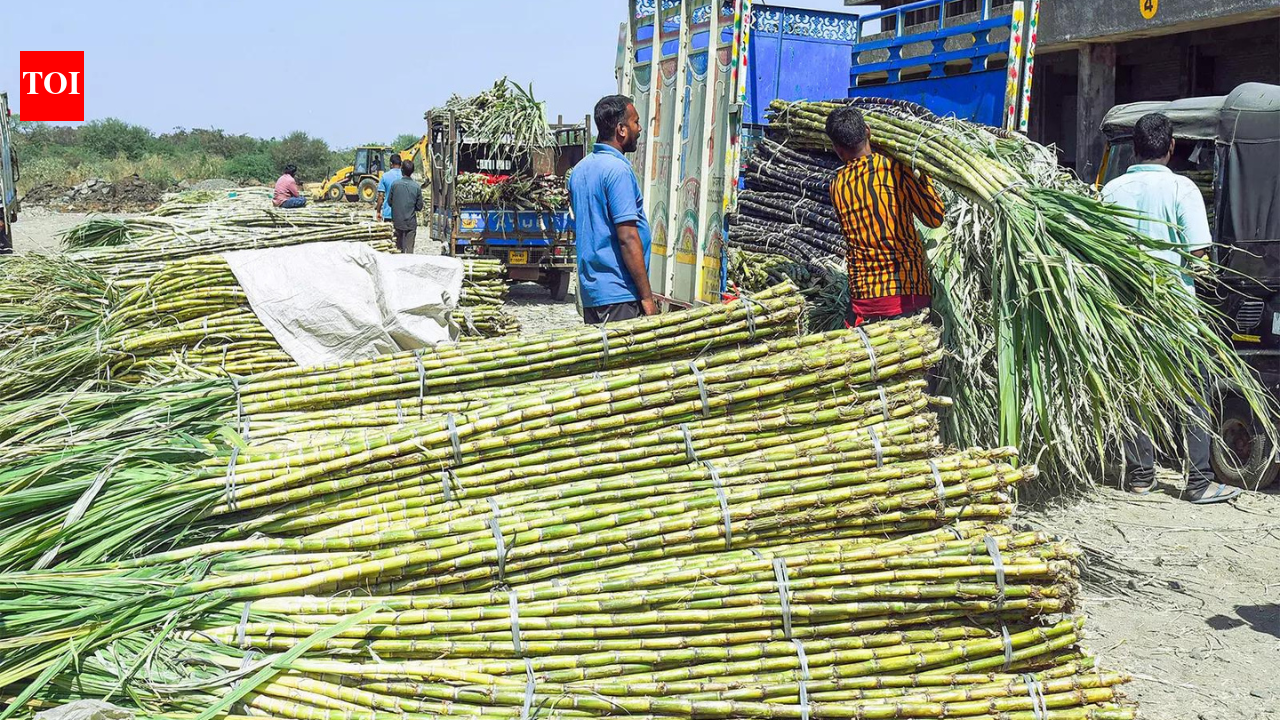
The government has increased the fair and remunerative price (FRP) of sugarcane by Rs 10 to Rs 365 per quintal for the 2026-27 season beginning October, PTI reported.The decision was approved by the Cabinet Committee on Economic Affairs (CCEA), chaired by Prime Minister Narendra Modi.“The FRP will be Rs 365/quintal for a basic recovery rate of 10.25 per cent,” Union Minister Ashwini Vaishnaw said after the meeting.The revised FRP is 2.81 per cent higher than the current rate of Rs 355 per quintal for the 2025-26 season.For every 0.1 per cent increase in sugar recovery above 10.25 per cent, the FRP will rise by Rs 3.56 per quintal, providing an incentive to mills for higher efficiency.To safeguard farmers supplying to mills with lower recovery rates, the government has decided that there will be no deduction in FRP for recovery below 9.5 per cent. In such cases, farmers will receive Rs 338.3 per quintal in the 2026-27 season.The production cost of sugarcane for 2026-27 has been estimated at Rs 182 per quintal, making the FRP 100.5 per cent higher than the cost.“Farmers are expected to get more than Rs 1 lakh crore,” Vaishnaw said.The move is expected to benefit nearly one crore sugarcane farmers, along with farm labourers and workers engaged in sugar mills.The FRP has been fixed based on recommendations of the Commission for Agricultural Costs and Prices (CACP) and consultations with state governments and stakeholders.The sugar sector supports the livelihoods of around five crore farmers and their families, and about five lakh workers directly employed in sugar mills, besides those involved in related activities such as transportation.Sugar mills are required to purchase sugarcane from farmers at the FRP or higher.Vaishnaw said the FRP has been increased every year over the past decade, and the latest revision will also support ethanol production from surplus sugarcane.On cane dues, he said that in the 2024-25 season, about Rs 1,02,209 crore, or nearly 99.5 per cent, of the total payable dues of Rs 1,02,687 crore had been cleared as of April 20, 2026.For the ongoing 2025-26 season, Rs 99,961 crore, or 88.6 per cent, has been paid out of total dues of Rs 1,12,740 crore.

Downing Street would not deny reports that Chancellor Rachel Reeves rowed with her US counterpart during a visit to Washington DC earlier this year.
Ms Reeves had an argument with Scott Bessent when she visited the US capital for the International Monetary Fund’s spring meetings, according to the Financial Times.
The Chancellor publicly criticised the US-led war against Iran before travelling across the Atlantic, prompting Mr Bessent to berate her on the sidelines of the gathering, the newspaper reported.
Ms Reeves reportedly hit back that she did not work for the US treasury secretary, and disliked how he had spoken to her, before reiterating her argument that America lacked clear goals going into the conflict and was not making the world safer.
On Tuesday, the Prime Minister’s official spokesman was asked if he would steer away from the reports, and appeared not to.
He did however insist Ms Reeves and her US counterpart have had “constructive” engagements since the Washington DC visit.
The spokesman said: “We would not get into private conversations. The Chancellor and the US treasury secretary have a good relationship.
“They have had constructive conversations together since the Chancellor’s visits to Washington.
“I think there is a readout from the US Department of Treasury, which made clear the productive nature of their relationship.”
The Chancellor emerged as one of the most outspoken UK Government critics of the US decision to go to war in Iran before travelling to the IMF meetings in April.
At the time, she described the war as a “folly” and said: “This is a war that we did not start. It was a war that we did not want.
“I feel very frustrated and angry that the US went into this war without a clear exit plan, without a clear idea of what they were trying to achieve.”
Business
Govt lists 40 sub-sectors for faster FDI clearance from border nations-check details – The Times of India

The government has identified 40 sub-sectors, including rare earth magnets and printed circuit boards, for expedited clearance of foreign direct investment (FDI) proposals from countries sharing land borders with India, PTI reported.Under the revised framework, proposals from countries such as China, Pakistan, Bangladesh, Nepal, Bhutan, Myanmar and Afghanistan in these sectors will be processed within 60 days, as per the updated standard operating procedure (SOP).The move follows a decision taken in March to fast-track FDI approvals in specified manufacturing sectors from these countries.However, the government has clarified that majority ownership and control of the investee entity must remain with resident Indian citizens or Indian-owned entities at all times.The 40 identified sub-sectors fall under six broad categories –capital goods manufacturing, electronic capital goods and electronic components, polysilicon and ingot-wafer production, advanced battery components, rare earth permanent magnets, and rare earth processing.These include manufacturing of insulation items, castings and forgings for thermal, hydro and nuclear power plants, machine tools, display components such as LCD and LED panels, camera modules, electronic capacitors, speakers and microphones, lithium-ion batteries, wearables, and rare earth metal and magnet processing facilities.The SOP also introduces detailed reporting norms for investments involving entities with direct or indirect ownership from land-bordering countries.“The reporting under these guidelines will be governed under the Foreign Exchange Management (Mode of Payment and Reporting of Non-debt Instruments) Regulations, 2019, and the information will be accessible by the Reserve Bank of India (RBI),” the DPIIT said.The responsibility for reporting lies with the Indian investee company, which must submit required details to the DPIIT before receiving foreign capital.“The reporting is to be made prior to the inward remittance of foreign capital. In cases which do not involve foreign capital inward remittances, the reporting is to be made prior to execution of the relevant transactions, including issuance/transfer of capital instruments, as the case may be,” it added.Investors will be required to disclose details such as shareholding patterns, beneficial ownership, organisational structure, promoters, board composition, key managerial personnel and control rights.The Indian entity will also need to provide incorporation details and disclose existing or proposed shareholding linked to entities from land-bordering countries.


Pakistan ‘hopeful’ efforts will lead to early resolution of US-Iran conflict: DPM Dar
Sugarcane price hike: Govt raises FRP to Rs 365/quintal for 2026-27, farmers to benefit from higher returns – The Times of India

Climate is now in the cost sheet

-

 Tech1 week ago
A Brain Implant for Depression Is About to Be Tested in Humans
-

 Sports1 week ago
Pro wrestling star Steph De Lander reveals how colleague’s advice helped lead her to title triumph at ACW
-

 Tech1 week ago
Almost 90% of women leave tech industry within 10 years | Computer Weekly
-
 Business1 week ago
‘I had £20,000 stolen and had to fight a 13-month fraud reporting rule to get it back’
-

 Entertainment1 week ago
Norway joins Type 26 Frigate Programme to boost NATO naval power
-

 Entertainment1 week ago
Melania Trump says ABC should ‘take a stand’ on late-night host Kimmel
-
 Business6 days ago
PSX plunges over 4,800 points | The Express Tribune
-

 Tech1 week ago
This Ambitious Laptop Doesn’t Leave Much Room for Your Hands