

Business
How long will Jamie Dimon stay as JPMorgan CEO? Bank chief signals ‘few more years’ at the helm – The Times of India

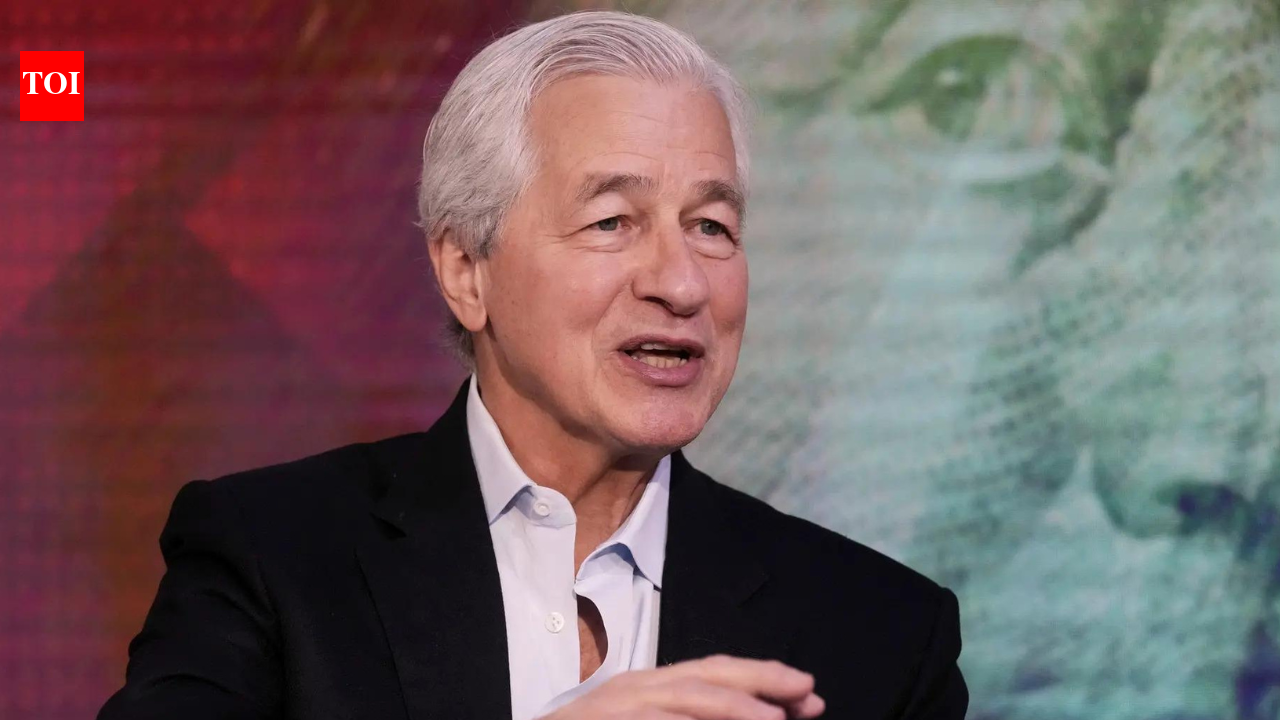
JPMorgan Chase CEO Jamie Dimon signalled he plans to remain in charge of the largest US bank for “a few years,” offering fresh clarity on leadership succession even as the lender projected strong investment banking and trading performance, Reuters reported.Speaking at the bank’s Investor Day in New York, Dimon said he does not intend to step down immediately and may continue with the firm in a different role after eventually relinquishing the chief executive position.“I’m here for a few years as CEO, and maybe a few after that, as executive chairman, pending whatever the board wants to do,” Dimon said.His remarks come amid long-running investor speculation over succession planning at JPMorgan, where Dimon has led the bank for two decades. The lender’s board, he has previously said, remains focused on preparing a deep bench of executives capable of eventually taking over leadership.Under Dimon’s tenure, JPMorgan has risen to become Wall Street’s largest bank by both assets and market value, with a market capitalisation exceeding $800 billion — eclipsing the combined value of rivals Bank of America and Citigroup.Alongside leadership commentary, JPMorgan said it expects investment banking fees and markets revenue to post strong growth in the first quarter, easing concerns that recent equity market turbulence could disrupt dealmaking activity.Investor worries had grown after a sharp sell-off in software and technology stocks — driven by fears of artificial intelligence disruption — raised doubts about mergers and acquisitions and IPO pipelines for high-growth companies.Allaying those concerns, the bank said investment banking fees are expected to rise by a mid-teens percentage, potentially reaching the high teens in the quarter.“We started the year strong. Pipelines were very good, and it was broad based. The one thing I will say in M&A (is that) there are powerful strategic drivers,” Doug Petno, Co-CEO of JPMorgan’s commercial and investment bank, said. “I think a lot of these transactions will survive the volatility and carry on.”Markets revenue is also expected to increase by a mid-teens percentage, supported by elevated trading activity during volatile market conditions, when investors hedge risks and reposition portfolios.The bank kept its forecast for annual adjusted expenses unchanged at $105 billion as it continues investing heavily in technology and artificial intelligence initiatives.JPMorgan expects to spend $19.8 billion on technology in 2026, up 10% from a year earlier.“We continue to invest in AI and we’re seeing tangible benefits in multiple areas. Machine learning and analytical AI have been driving improvements in revenue,” Chief Financial Officer Jeremy Barnum said, as quoted Reuters.UBS analyst Erika Najarian said markets increasingly view large money-centre banks as relative beneficiaries of AI disruption, adding investors are keen to understand both productivity gains and revenue opportunities from the technology.Executives said US consumers remain resilient despite elevated interest rates and economic uncertainty, helping sustain spending and credit quality.JPMorgan executive Marianne Lake said the bank had not seen deterioration among lower-income consumers and that “everything is solid” on the consumer front.The lender is targeting a return on tangible common equity of 17%, a key profitability metric measuring how efficiently tangible equity generates profits.In January, JPMorgan reported fourth-quarter earnings that exceeded analysts’ estimates as volatile markets boosted trading income. The bank beat Wall Street profit forecasts in all four quarters last year, according to LSEG-compiled data.JPMorgan shares rose 34.4% in 2025, outperforming both large-cap US banking peers and the broader equity market, while the stock traded marginally higher in post-market activity.


Business
Indian electronic firms seek PLI 2.0, eye 30–35% share in global mobile production by FY31 – The Times of India
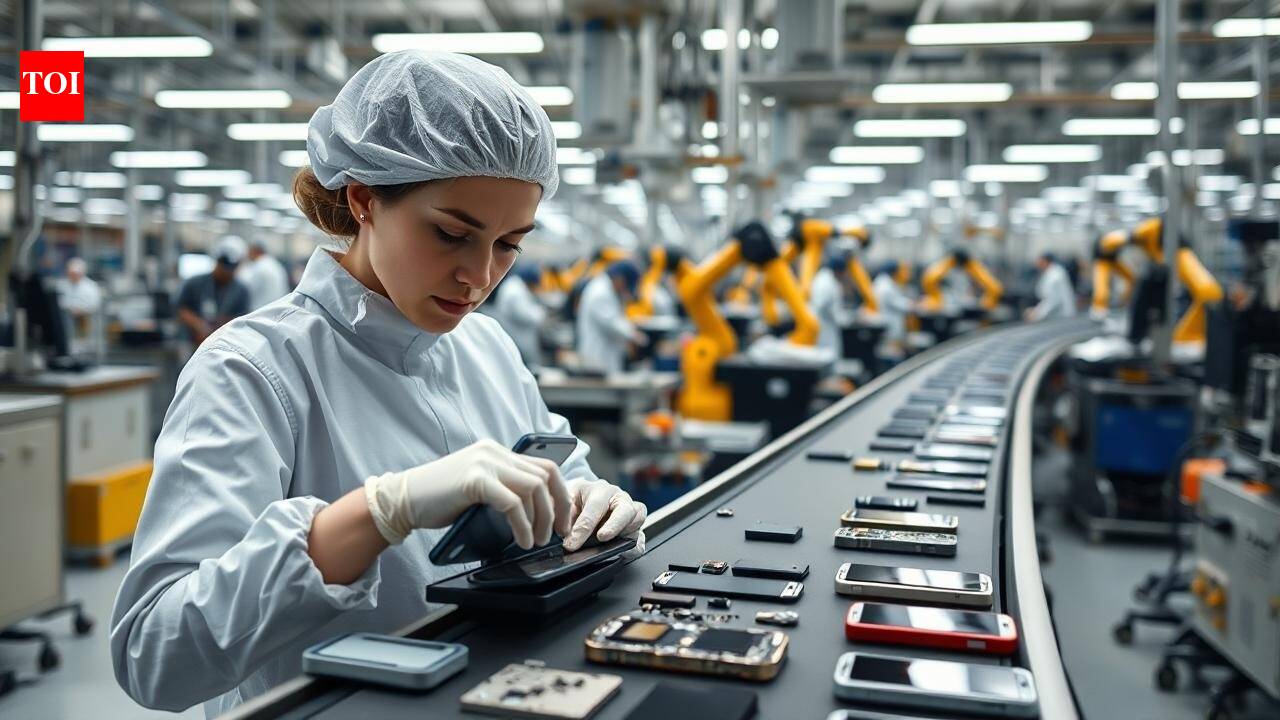
With the production-linked incentive (PLI) scheme now over, India’s electronics industry has pitched a fresh expansion plan, seeking continued government support as it eyes a strong jump in manufacturing and exports over the next five years. During discussions with the ministry of electronics and IT (MeitY), the industry said that by FY31, India could capture 30–35% of global mobile production. This would take annual output to $110–130 billion, with exports estimated at $55–70 billion. At present, according to ET, India accounts for about 15% of global mobile phone production, with manufacturing output exceeding $64 billion. Industry executives said the current production-linked incentive (PLI) scheme has played a key role in this growth. With the scheme set to end on March 31, companies are pushing for a new version to keep the momentum going. Talks are underway on a proposed PLI 2.0 scheme, which is likely to run from 2026 to 2031. Government officials said a new incentive programme is being considered, though details have not yet been finalised. The industry has also shared a roadmap with the government to meet production and export targets by FY31. “With a strong foundation, we have an opportunity to achieve 30-35% of global mobile production in the next five years,” Pankaj Mohindroo, chairman of India Cellular and Electronics Association (ICEA), told ET. “To realise this ambition, it is critical to sustain the current momentum and continue investments. We are actively engaging with the government to shape the next phase of this growth journey.” Industry players said increasing India’s global share would help strengthen the supply chain, deepen the manufacturing ecosystem and support research and development at scale. One executive said scale is more important than value addition alone for long-term sustainability. The government is also examining how much domestic value addition should be required for incentives and how exports can be increased without breaching World Trade Organization norms. Experts said the growth in production will depend largely on exports, as domestic demand is expected to weaken. India’s smartphone market could shrink by more than 13% this year due to rising memory costs, which may push device prices up by 15–40%, according to an earlier report. Data from the commerce ministry showed smartphone exports rose 47.4%, from $20.44 billion in 2024 to $30.13 billion in 2025. The United States accounted for $19.7 billion, or 65% of total exports. Meanwhile, China’s smartphone exports fell from $132.6 billion to $120.6 billion during the same period, with shipments to the US declining sharply due to fentanyl-related tariffs. India’s tariff advantage in the US market has narrowed after the US Supreme Court struck down sweeping global tariffs imposed by the Trump administration. China continues to have an advantage due to its strong supply chain and advanced manufacturing capabilities, while India is still developing these.
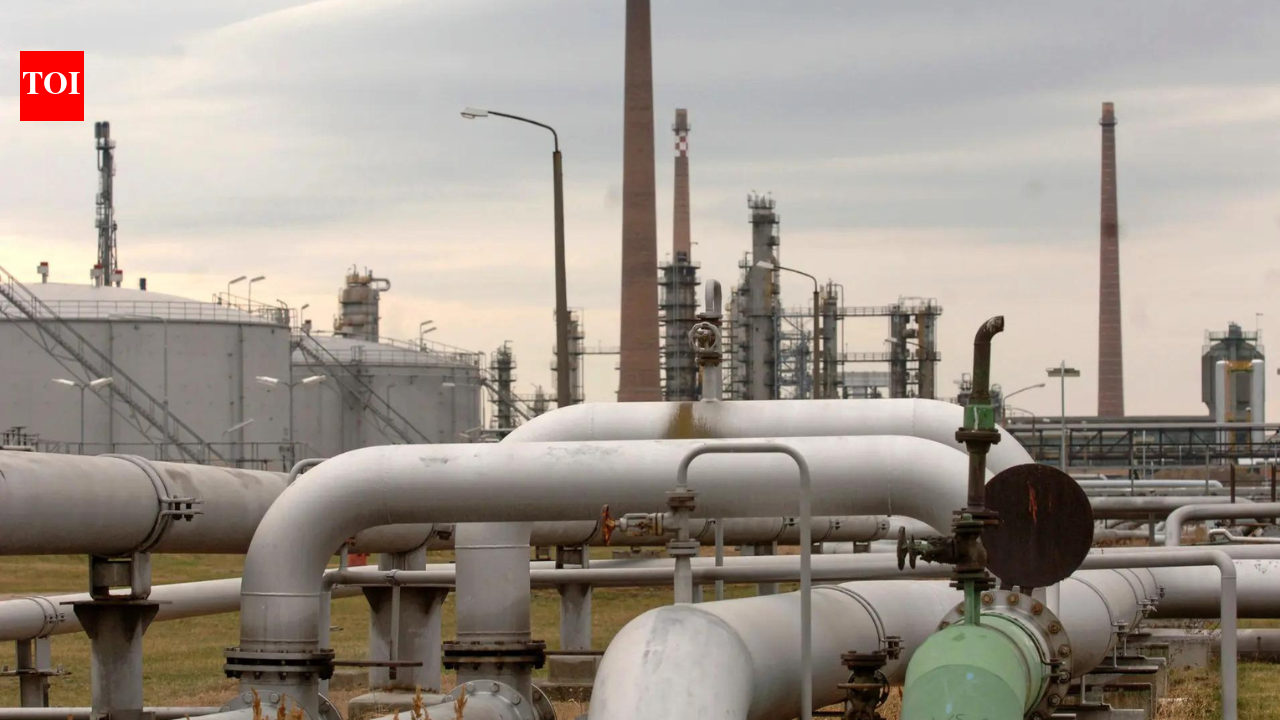
NEW DELHI: Govt on Saturday significantly increased export duties on diesel and aviation turbine fuel to dissuade oil refiners from exporting these fuels and to ensure adequate availability in the domestic market amid ongoing tensions in West Asia. The ministry of finance issued a series of notifications hiking the export duty on diesel by more than 150% – from Rs 21.5 per litre to Rs 55.5 per litre – with immediate effect. The levy on ATF, or jet fuel, was increased from Rs 29.5 per litre to Rs 42 per litre. The export duty on petrol continues to be nil. Under the revised structure, the special additional excise duty on high-speed diesel has been raised to Rs 24 per litre, while the road and infrastructure cess now stands at Rs 36 per litre, which means a large chunk will now flow to the Centre. Govt said these duties are not meant to boost revenue, but to stop fuel exporters from taking undue advantage of price differences. The Centre had, on March 27, imposed an export duty of Rs 21.5 per litre on diesel and Rs 29.5 per litre on ATF in a bid to check windfall gains, as fuel was in short supply in international markets due to a squeeze on energy supplies amid the military conflict and export curbs imposed by China. It had also slashed excise duty on diesel and petrol to shield consumers and oil companies from the impact of high crude prices. Retail prices of automobile fuels in India have not increased despite high volatility in the international crude market, while only a small part of the international price pressure has been passed on to domestic flights. The windfall tax on exports of diesel and ATF helps the Centre partly offset the impact of the excise duty cut. On March 27, govt had estimated revenue gains from export duties at around Rs 1,500 crore in a fortnight. The further hike in export duties is likely to lead to higher revenue gains. In a statement, the ministry of petroleum had said, “At a time when international diesel prices have surged sharply, the levy is designed to disincentivise exports and ensure that refinery output is directed first tow-ards meeting domestic demand.“
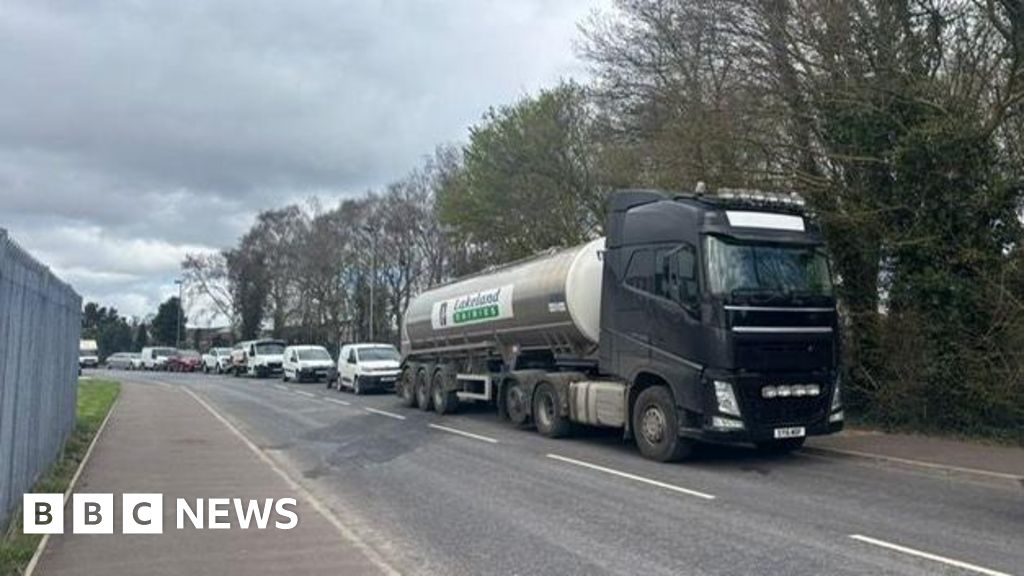
A convoy of vans, lorries, tractors, and even a limousine took part in a slow moving protest around the town centre on Saturday afternoon.
Source link


IRGC Navy warns military vessels of ‘firm response’ to attempts at crossing Strait of Hormuz
[CinePlex360] Please moderate: “Meta’s lat
Indian electronic firms seek PLI 2.0, eye 30–35% share in global mobile production by FY31 – The Times of India

-

 Entertainment1 week ago
Joe Jonas shares candid glimpse into parenthood with Sophie Turner
-

 Tech1 week ago
Our Favorite iPad Is $50 Off
-

 Sports1 week ago
UConn Final Four run could trigger a $50M furniture giveaway for Massachusetts-based Jordan’s Furniture
-

 Fashion5 days ago
India’s exports face reset as EU links trade to carbon metrics: EY
-

 Entertainment1 week ago
Blake Lively reacts to harassment claims dismissal against Justin Baldoni
-
 Business1 week ago
Video: Why Is the Labor Market Stuck?
-

 Politics1 week ago
Iran can sustain Strait of Hormuz closure for years, will cut US military logistics: Official
-

 Entertainment1 week ago
Barbie Ferreira reveals where she stands with ‘Euphoria’ girls after exit