

Business
How Saks’ acquisition of Neiman Marcus plunged the company into bankruptcy: ‘Recipe for disaster’


For more than a decade, the former executive chairman of Saks Global dreamed of adding Neiman Marcus to his collection of legacy department stores, believing the combined entities would create a luxury powerhouse strong enough to defy changes dragging down the industry.
Instead, Richard Baker’s $2.7 billion acquisition of Neiman Marcus in 2024 ultimately plunged the company into bankruptcy just over a year after the transaction closed. From the very start, the company was struggling to pay its bills — which led to angry vendors and little room for error.
In a Wednesday declaration filed in Houston’s bankruptcy court hours after Saks filed for Chapter 11 bankruptcy protection, chief restructuring officer Mark Weinsten wrote that the deal led to “immediate liquidity challenges” and created an “unsustainable” capital structure.
Mickey Chadha, Moody’s Ratings vice president of corporate finance, called it a “recipe for disaster.”
“You had the two companies that weren’t doing great, and then you combine the two companies and put on a large amount of debt,” said Chadha. “It was an unsustainable capital structure right from the beginning.”
The deal, funded with $2.2 billion in junk bonds, brought an influx of liquidity. But once the transaction closed and both companies paid debts related to the agreement, there wasn’t enough money left over to pay Saks’ vendors.
With bills running late, vendors were less willing to send Saks inventory. Soon, the retailer lacked an adequate assortment to drive sales, leading the situation to deteriorate.
“This created inventory gaps which then drove customers away and caused revenue and cash generation to plummet. This classic vicious spiral put the business in an unsustainable position,” retail analyst Neil Saunders, the managing director of GlobalData, wrote in an emailed note.
“While the previous management team always presented the merger as an opportunity to create a luxury powerhouse, behind the glossy facade the deal was an entanglement of complex financial engineering that made it impossible for the group to execute their stated vision.”
With Neiman Marcus, Bergdorf Goodman and Saks Fifth Avenue under the new Saks Global umbrella, the company expected to see $600 million in run-rate synergies over the five years after the deal closed, Weinsten said. But soon after the transaction closed, Saks realized integrating Neiman Marcus was going to be more difficult, and costly, than expected.
Just ahead of last year’s critical holiday shopping season, Saks was “affected by one-time merchandising system integration issues,” which disrupted inventory flows at Neiman Marcus and Bergdorf Goodman at a time when sales and inventory were already at a “seasonal low point,” Weinsten wrote.
Saks’s borrowing was asset based, meaning loans were backed by its inventory. Once the company had less merchandise on hand, Saks could not borrow as much as it needed to. With less liquidity, it couldn’t pay vendors according to the terms they agreed upon.
Soon, $244 million in “catch-up payments” Saks had scrounged up to pay its vendors was “negated,” and once again the company was struggling to stock its shelves with the assortment its wealthy customers had come to expect, Weinsten said.
By the end of the second fiscal quarter on Aug. 2, inventory was 9% below the previous year’s levels, and it had over $550 million less in inventory receipts than it previously expected. That further reduced its liquidity under the terms of its asset-based loan.
It spelled trouble for the key holiday season because Saks couldn’t do what a retailer always needs to do to remain competitive: “chase” inventory so it had in-demand and on-trend items available during the busiest time of the year.
“You can’t really sustain that much debt just on synergies,” said Chadha. “You have to grow the top line, increase your sales and increase profitability in order to sustain that much amount of debt.”
Four months after Saks secured new financing, it missed an interest payment to bondholders at the end of December. Two weeks later, it was bankrupt.
‘Not a declining brick-and-mortar business’
In Weinsten’s declaration to the court, he made it clear it was Saks’ liquidity challenges, and its subsequent issues with vendors, that plunged it into bankruptcy — not larger issues related to the luxury goods market or the decline of department stores.
“[Saks] is not a declining brick-and-mortar business,” Weinsten wrote. “There are strong indications that the Debtors’ most lucrative customers are continuing to spend through their retail channels … in that respect, the constraints faced by the Company are not driven by declining demand; where product is available, performance has remained robust.”
He said the company does not need to make significant investments in marketing or capital expenditures to improve sales trends. Also, the synergies it expected to achieve through its merger with Neiman Marcus are starting to materialize more quickly.
By the end of its current fiscal year 2025, Saks had predicted run-rate synergies of approximately $150 million, but it’s now expecting that number to grow to $300 million. It’s seeing strong retention rates with its top customers and positive sales when inventory is in stock.
“This indicates that the Company’s challenges are tied to inventory availability and vendor confidence,” Weinsten said. “Not underlying demand for luxury goods.”
Through its restructuring plan, which is subject to court approval, Saks has secured $1.75 billion in new financing and has pledged to make “go-forward” payments to vendors, honor all customer programs and continue staff payroll and benefits. A portion of the funds, $500 million, will be available to the company after it emerges from bankruptcy, which it said it expects to do later this year.
Whether it’ll be able to win back its vendors and get the business back to growth will fall on the company’s new CEO, former Neiman Marcus CEO Geoffroy van Raemdonck.
While the company’s executives assert conditions are strong for a rebound as long as the company replenishes its balance sheet, department stores aren’t what they used to be. Luxury brands have their own websites and stores and are no longer as reliant on wholesalers like Saks and Neiman Marcus as they once were.
“They’re going to have to do something drastic, right? They can’t survive with this financing, just as is … because just filing is not going to change what Saks really does. It’s not going to get people into the door to buy more stuff,” said Chadha. “You’re going to have to change the overall operation, so it’s going to take a while. It’s an uphill battle. They’re not in the best space. It’s a department store, as it is.”



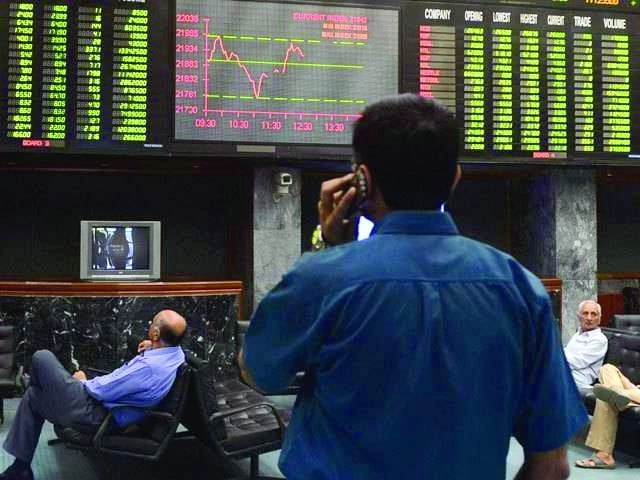


The federal government announced a Rs26.77 per litre hike in the price of petrol and high-speed diesel each on Friday, according to a notification issued by the Petroleum Division.
The new prices will be effective from April 25, 2026 for a week, the notification stated.
Following the increase, the price of HSD has jumped from Rs353.42 to Rs380.19, while the petrol price now stands at Rs393.35.
The government has been reviewing petroleum prices every Friday night following the now-paused US-Israel war on Iran, which began on February 28.
In the previous weekly review, the prime minister announced a reduction of Rs32.12 per litre in the price of high-speed diesel, while the petrol price remained unchanged.
The government jacked up petrol and diesel prices despite oil prices falling globally on Friday after it appeared a second round of Middle East talks was back on, bolstering prospects for an end to a war that has crippled energy shipments from the Gulf.
Oil prices had been climbing earlier as investors worried about a lack of progress in ending the Middle East crisis, with Tehran keeping the Strait of Hormuz closed and the US maintaining a blockade of Iranian ports.
But they dropped on reports that Iran’s Foreign Minister Abbas Araghchi was to arrive in Islamabad on Friday night.
Brent crude, the international benchmark contract, fell back below $100 a barrel.
facebook twitter
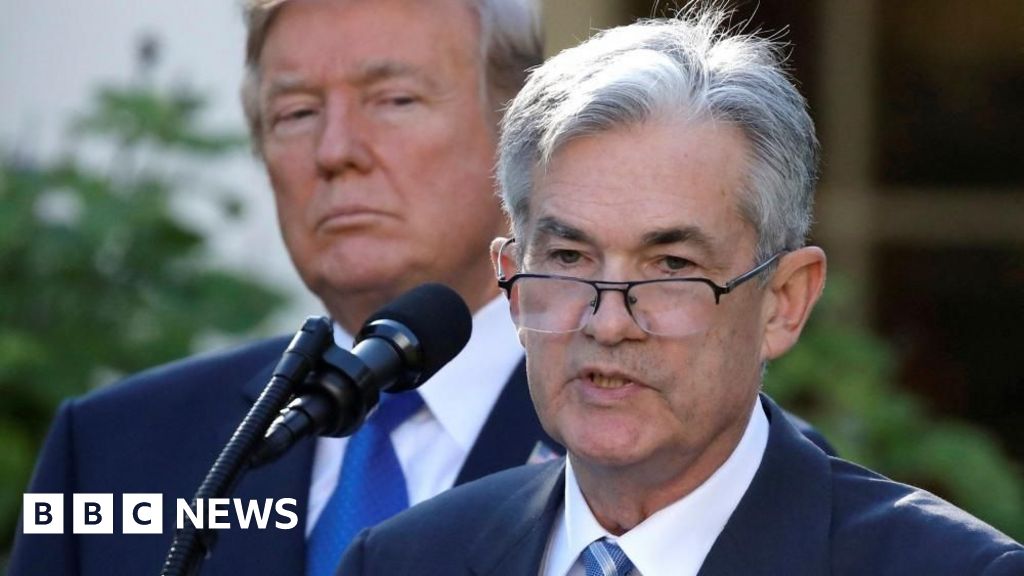
Powell’s term is nearing its end and the US Senate is considering Trump’s nominee for his replacement, Kevin Warsh. A key Republican, Thom Tillis, has withheld his support for Warsh unless the Trump administration would drop its investigation into Powell.
Business
Intel bags big gains! Chipmaker’s shares jump 26% on blockbuster results; how Trump admin benefits – The Times of India
Intel share price soared sharply on Friday after the chipmaker delivered a first-quarter performance that exceeded market expectations. And the win was not just for the chipmaker, but also the whole of US!The stock climbed 26.7% during trading on Friday, marking what could be its strongest single-day gain since 1987. Momentum continued after the closing bell, with shares rising a further 20% in after-hours trading as investors reacted to signs of a sustained turnaround driven by artificial intelligence.Intel reported revenue of $13.58 billion (€11.6bn) for the quarter, ahead of the $12.3 billion (€10.5 bn) forecast and up 7.2% from a year earlier. Adjusted earnings per share came in at $0.29, far exceeding expectations of $0.01.A key contributor to this performance was the company’s Data Centre and AI (DCAI) division, which delivered revenue of $5.05 billion (€4.2bn), up 22.4% year-on-year and well above analyst estimates of $4.41 billion (€3.77bn). The results indicate strong demand for Intel’s Xeon 6 processors and Gaudi 3 AI accelerators, particularly among enterprise clients and cloud service providers.Chief executive Lip-Bu Tan pointed to a broader shift in artificial intelligence usage as a major factor behind the growth. He said, “the next wave of AI will bring intelligence closer to the end user, moving from foundational models to inference to agentic.” He added, “This shift is significantly increasing the need for Intel’s CPUs and wafer and advanced packaging offerings.”The company also issued an upbeat outlook for the second quarter, forecasting revenue in the range of $13.8 billion (€11.8billion) to $14.8 billion (€12.6billion), surpassing investor expectations of $13 billion (€11.1billion).
But how is Washington winning?
The rally has had a direct impact on the US administration’s investment in Intel. In 2025, during a period of severe financial strain for the company, the administration of Donald Trump acquired a 9.9% stake in a move aimed at stabilising the business. The government invested $8.9 billion (€7.8bn) at a share price of $20.47 (€18.01), with $5.7 billion (€5bn) of that amount coming from previously approved but unpaid grants, according to the Euro News.At the time, Intel was facing multi-billion dollar losses and operational challenges, prompting concerns over its viability. As part of the intervention, the company cancelled planned factory projects in Germany and Poland, redirected focus towards US-based manufacturing, and reduced its global workforce by 25%, cutting around 25,000 jobs.Following the latest jump, Intel’s shares are now trading at $81.3 (€71.5), representing an increase of nearly 300% since the government first took its stake. The sharp rise highlights how the company’s improved financial performance has translated into substantial gains for the US administration.


NASCAR makes major change in front office, including new CEO in unprecedented move: report

Extended interview: Don Cheadle – CBS News

Charlie Sheen updates on relationship with old pal Jon Cryer

-

 Fashion1 week ago
France’s LVMH Q1 revenue falls 6%, shows resilience amid Iran war
-

 Tech1 week ago
CYBERUK ’26: UK lagging on legal protections for cyber pros | Computer Weekly
-

 Sports5 days ago
WWE WrestleMania 42 Night 2: Live match results and analysis
-

 Sports1 week ago
Faheem Ashraf backs Islamabad United’s push, calls league a ‘career-changing platform’
-

 Sports5 days ago
NCAA men’s gymnastics championship: All-time winners list
-
 Business1 week ago
PepsiCo earnings beat estimates as North American food business improves
-

 Tech1 week ago
Anthropic Plots Major London Expansion
-
 Business1 week ago
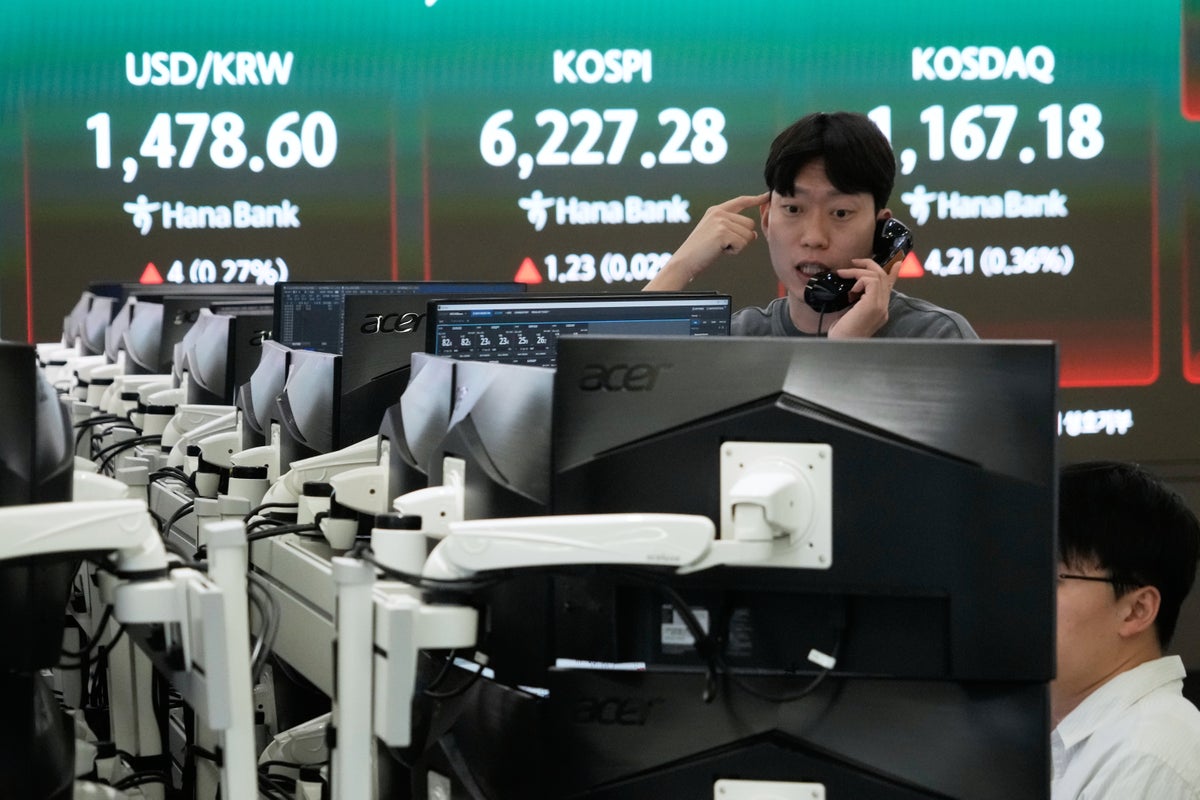
Oil prices fall again amid Middle East ceasefire hopes