

Business
How to tell the health of a battery in a used EV

Chris BaraniukTechnology Reporter
 Corbis via Getty Images
When Kerry Dunstan and his partner set out to buy a new electric car this summer, one of the questions they asked was, “How’s the battery?”.
They’d found a 2021 Nissan Leaf with just 29,000 miles on it, and the dealer told them the condition of the battery, or its state of health (SOH), was still around 93%.
The couple were sold. For £12,500, they got an EV with a big boot and plenty of room for passengers.
Though Mr Dunstan, a cabinetmaker who also owns a somewhat snazzier electric Volvo SUV, hasn’t quite fallen in love with the aging Leaf.
“I like sporty, jazzy cars – and it’s just a bit ‘meh’,” he says.
However, he adds the Leaf has performed exactly as expected during the three months they’ve owned it.
It used to be that age and mileage were the two headline details pored over by would-be buyers of second-hand cars. But as more people shift to electric, scrutinising the health of a car’s battery has become arguably even more important.
How has that battery been treated? Did the last owner regularly fast charge it to 100%, for example? That has the potential to shorten an EV battery’s lifespan.
This battery black box problem has put some consumers off buying a second-hand EV. But battery analytics firms say they can reveal the condition of an old EV’s battery with high accuracy. And industry experts say some EVs are lasting longer than many predicted.
Take Mr Dunstan’s Nissan Leaf. This is a model of EV built without the kind of sophisticated, liquid-based battery cooling system common to many other EVs. While Nissan has rectified this in the latest generation of Leafs, earlier models show a considerable shortening of their range year by year, according to data analysed by US insurance and research firm NimbleFins.
Mr Dunstan is unfazed. “I charge both my EVs to 100% and I put them on charge when I need to charge them – I don’t worry about it,” he says.

 Kerry Dunstan
For people in the market for a second-hand EV who are plagued by battery anxieties, however, Austria-based firm Aviloo says it has a solution. “We really can, completely independently, determine the state of health of a battery,” says chief product officer, Patrick Schabus.
Aviloo is one of several battery analytics businesses in the market. The company, which provides battery health certificates for major UK outlet British Car Auctions, offers two products.
There’s a premium test, where EV owners plug a data logging box roughly the size of a glasses case into their car so that it can monitor battery performance while they use the car over a few days, going from 100% charge down to 10%.
Or, they can opt for a quicker flash test, which uses a different box to suck up data from the car’s battery management software and then analyse it with the help of a computer model. “We can do this at a standstill in under two minutes,” says Mr Schabus.
The premium test observes battery discharge closely, picking up fluctuations in current or voltage, and can reveal extra detailed information about the health of individual cells in the battery, says Aviloo.
Marcus Berger, Aviloo’s chief executive, says his company’s analytics results sometimes diverge “substantially” from the battery SOH percentages produced by some cars’ own built-in analytics systems.
He challenges conventional wisdom that batteries with an SOH below 80% are too far gone: “An EV with a state of health below 80% can still be a great car… It just needs to be priced [appropriately].”
In New Zealand, EV owner Lucy Hawcroft, who works in a sustainability role for an infrastructure firm, bought a Nissan Leaf with her husband roughly three years ago. She recalls getting an SOH result of 95% or so from the dealership. But a year later an independent mechanic checked the SOH again for them.
“It dropped quite a bit,” she recalls. “My husband was a bit surprised, or concerned, about that.”
However, the car still has a range of around 160km (100 miles) when fully charged. The pair mostly use it for short journeys of up to 10km. Mrs Hawcroft says she has friends whose EVs have much bigger ranges, of around 400km: “That would be ideal.”
For David Smith, sales director at Cleevely Electric Vehicles in Cheltenham, being able to analyse used EVs’ batteries in detail is a deal-maker. Most customers ask for this information, he says. His company uses SOH reports from ClearWatt, another battery analytics firm.
“They’re completely independent. We can’t interfere with the reports,” he says. “Once customers have seen the report, that aids the sale nine times out of 10.”
Matt Cleevely, managing director at Cleevely Electric Vehicles, adds that it’s often possible to replace groups of cells or modules within a battery pack – far cheaper than installing a whole new battery.
 Lucy Crawford
As for how you should charge your own EV in order to best take care of its battery, Simona Onori at Stanford University says, “There is likely a sweet spot between frequent fast charging and avoiding it altogether.” However, she adds that, to her knowledge, this is not something that has yet been thoroughly studied.
Despite some consumers’ wariness, battery technology has noticeably improved in recent years, says Max Reid, head of battery costs at market research firm CRU. “The older batteries might last maybe 500 to 1,000 [charging] cycles,” he explains. “Now, it’s 10,000 cycles in some of these new EV cells coming out.”
Batteries that are no longer good enough for the EV they were designed for can still be useful, says Paul Chaundy at Second Life EV Batteries, in Dorset. For instance, some of his customers are businesses that use former EV batteries to store electricity at their premises. They might have, say, six electric forklifts but a grid connection only large enough for charging ports to supply two or three of the forklifts.
Regarding the varying methodologies car manufacturers use to generate SOH reports for their own vehicles, Mr Chaundy says, “We need more standards around that, I think.”
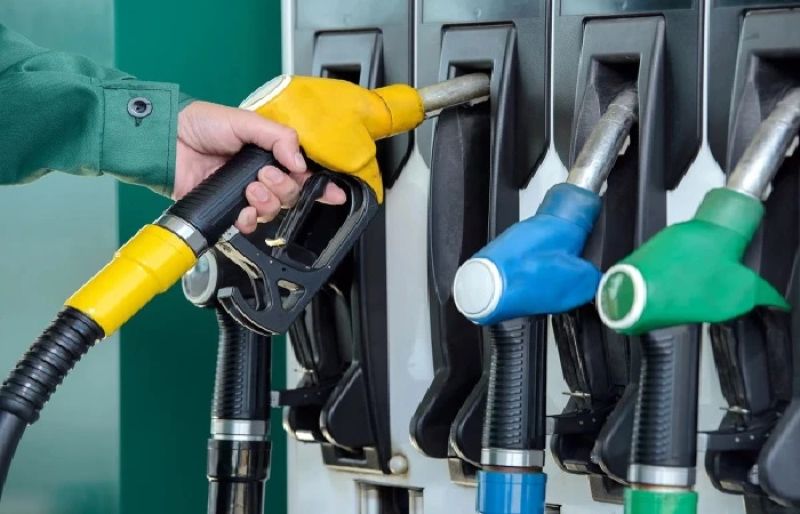
The federal government announced a Rs26.77 per litre hike in the price of petrol and high-speed diesel each on Friday, according to a notification issued by the Petroleum Division.
The new prices will be effective from April 25, 2026 for a week, the notification stated.
Following the increase, the price of HSD has jumped from Rs353.42 to Rs380.19, while the petrol price now stands at Rs393.35.
The government has been reviewing petroleum prices every Friday night following the now-paused US-Israel war on Iran, which began on February 28.
In the previous weekly review, the prime minister announced a reduction of Rs32.12 per litre in the price of high-speed diesel, while the petrol price remained unchanged.
The government jacked up petrol and diesel prices despite oil prices falling globally on Friday after it appeared a second round of Middle East talks was back on, bolstering prospects for an end to a war that has crippled energy shipments from the Gulf.
Oil prices had been climbing earlier as investors worried about a lack of progress in ending the Middle East crisis, with Tehran keeping the Strait of Hormuz closed and the US maintaining a blockade of Iranian ports.
But they dropped on reports that Iran’s Foreign Minister Abbas Araghchi was to arrive in Islamabad on Friday night.
Brent crude, the international benchmark contract, fell back below $100 a barrel.
facebook twitter
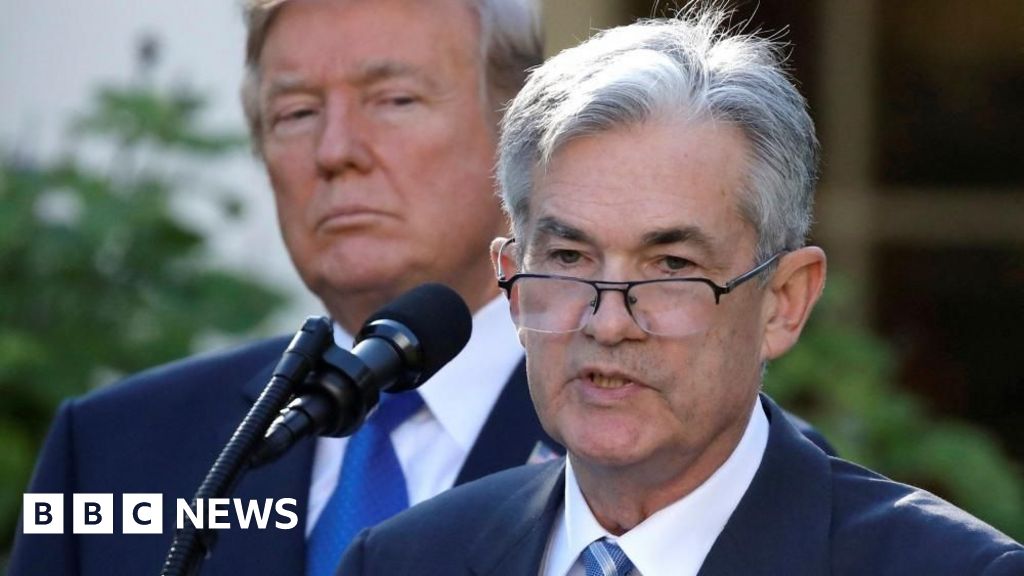
Powell’s term is nearing its end and the US Senate is considering Trump’s nominee for his replacement, Kevin Warsh. A key Republican, Thom Tillis, has withheld his support for Warsh unless the Trump administration would drop its investigation into Powell.
Business
Intel bags big gains! Chipmaker’s shares jump 26% on blockbuster results; how Trump admin benefits – The Times of India
Intel share price soared sharply on Friday after the chipmaker delivered a first-quarter performance that exceeded market expectations. And the win was not just for the chipmaker, but also the whole of US!The stock climbed 26.7% during trading on Friday, marking what could be its strongest single-day gain since 1987. Momentum continued after the closing bell, with shares rising a further 20% in after-hours trading as investors reacted to signs of a sustained turnaround driven by artificial intelligence.Intel reported revenue of $13.58 billion (€11.6bn) for the quarter, ahead of the $12.3 billion (€10.5 bn) forecast and up 7.2% from a year earlier. Adjusted earnings per share came in at $0.29, far exceeding expectations of $0.01.A key contributor to this performance was the company’s Data Centre and AI (DCAI) division, which delivered revenue of $5.05 billion (€4.2bn), up 22.4% year-on-year and well above analyst estimates of $4.41 billion (€3.77bn). The results indicate strong demand for Intel’s Xeon 6 processors and Gaudi 3 AI accelerators, particularly among enterprise clients and cloud service providers.Chief executive Lip-Bu Tan pointed to a broader shift in artificial intelligence usage as a major factor behind the growth. He said, “the next wave of AI will bring intelligence closer to the end user, moving from foundational models to inference to agentic.” He added, “This shift is significantly increasing the need for Intel’s CPUs and wafer and advanced packaging offerings.”The company also issued an upbeat outlook for the second quarter, forecasting revenue in the range of $13.8 billion (€11.8billion) to $14.8 billion (€12.6billion), surpassing investor expectations of $13 billion (€11.1billion).
But how is Washington winning?
The rally has had a direct impact on the US administration’s investment in Intel. In 2025, during a period of severe financial strain for the company, the administration of Donald Trump acquired a 9.9% stake in a move aimed at stabilising the business. The government invested $8.9 billion (€7.8bn) at a share price of $20.47 (€18.01), with $5.7 billion (€5bn) of that amount coming from previously approved but unpaid grants, according to the Euro News.At the time, Intel was facing multi-billion dollar losses and operational challenges, prompting concerns over its viability. As part of the intervention, the company cancelled planned factory projects in Germany and Poland, redirected focus towards US-based manufacturing, and reduced its global workforce by 25%, cutting around 25,000 jobs.Following the latest jump, Intel’s shares are now trading at $81.3 (€71.5), representing an increase of nearly 300% since the government first took its stake. The sharp rise highlights how the company’s improved financial performance has translated into substantial gains for the US administration.


NASCAR makes major change in front office, including new CEO in unprecedented move: report

Extended interview: Don Cheadle – CBS News

Charlie Sheen updates on relationship with old pal Jon Cryer

-

 Fashion1 week ago
France’s LVMH Q1 revenue falls 6%, shows resilience amid Iran war
-

 Tech1 week ago
CYBERUK ’26: UK lagging on legal protections for cyber pros | Computer Weekly
-

 Sports5 days ago
WWE WrestleMania 42 Night 2: Live match results and analysis
-

 Sports1 week ago
Faheem Ashraf backs Islamabad United’s push, calls league a ‘career-changing platform’
-

 Sports5 days ago
NCAA men’s gymnastics championship: All-time winners list
-
 Business1 week ago
PepsiCo earnings beat estimates as North American food business improves
-

 Tech1 week ago
Anthropic Plots Major London Expansion
-

 Entertainment4 days ago
Lee Anderson, Zarah Sultana kicked out of UK Parliament for calling PM ‘liar’