

Tech
How to Watch the Lyrids Meteor Shower at Its Peak


In mid-April, astronomy enthusiasts will be able to enjoy one of the classic celestial spectacles. The meteor shower known as the Lyrids will illuminate the sky, especially in the northern hemisphere, and anyone will be able to see it with the naked eye, weather permitting—if they know where to look.
The Lyrids began to appear as early as April 14, but their activity peaks between the night of April 21 and the early morning of April 22, according to NASA. During those hours, the shower will show 15 to 20 meteors per hour under dark skies.
The shower gets its name because the meteors appear to emerge from the constellation Lyra. Locating the radiant is simple if you use an astronomical mapping app: Just find Vega, the fifth brightest star in the sky, surpassed only by Sirius, Canopus, Alpha Centauri A, and Arcturus. Once you locate it, look around it; the luminous traces of the Lyrids will seem to be projected from that point due to a perspective effect. Keep in mind that it takes 20 to 30 minutes for the human eye to adjust to darkness.
The moon will be in early crescent phase during the peak, so its light will interfere very little. With a dark sky, meteors should stand out easily. The shower is usually visible from 10 pm to dawn, although early morning offers the best conditions. It is best to stay away from light pollution and, if possible, to observe from high ground. An outing to the mountains works well.
Each meteor shower has a different origin. In April, Earth crosses the cloud of fragments left by comet C/1861 G1 (Thatcher) in its orbit around the sun. This comet, discovered in 1861, takes about 415 years to complete its journey. The grains of ice and rock that it released centuries ago enter the atmosphere at high speed and produce the flashes we know as the Lyrids.
After the Lyrids, the calendar still holds several spectacles for those who follow the night sky. The Eta Aquarids will arrive in May with debris from Halley’s Comet. The Perseids will appear in August, the Orionids will return in October, and the year will close with the Leonids in November and the Geminids in December. The latter is considered the most intense and reliable shower on the calendar.
This story originally appeared on WIRED en Español and has been translated from Spanish.











Google DeepMind’s AlphaFold has already revolutionized scientists’ understanding of proteins. Now, the ability of the platform to design safe and effective drugs is about to be put to the test.
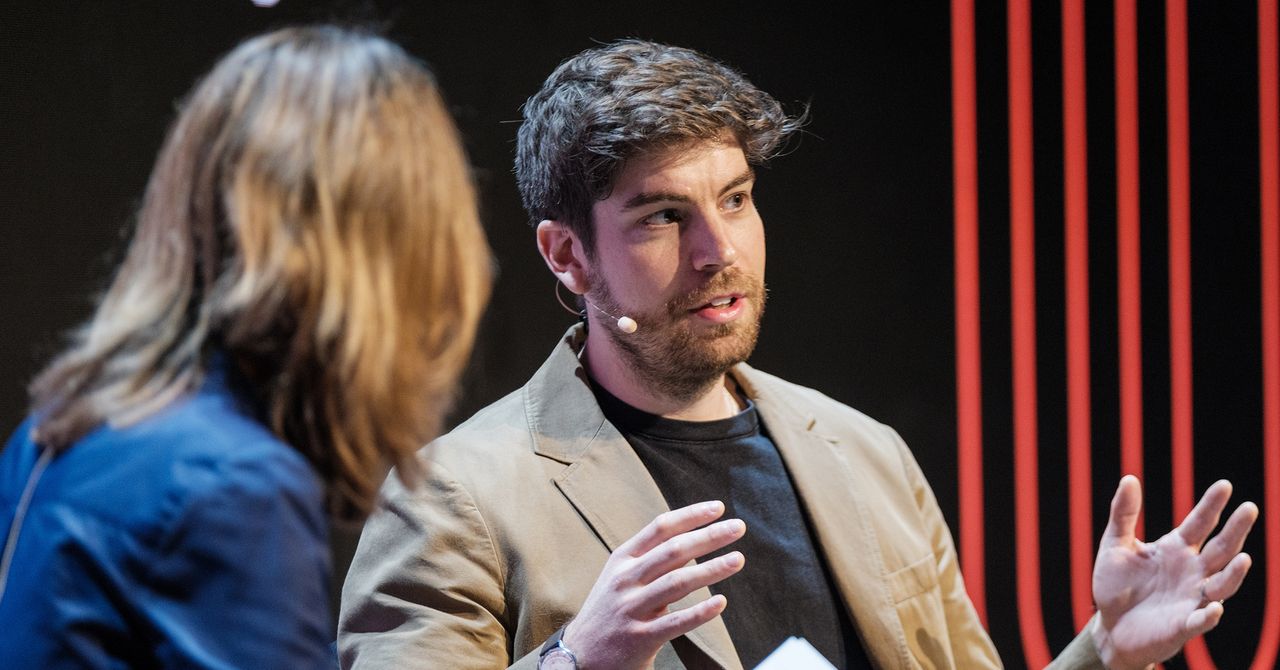
Isomorphic Labs, the UK-based biotech spinoff of Google DeepMind, will soon begin human trials of drugs designed by its Nobel Prize–winning AI technology. “We’re gearing up to go into the clinic,” Isomorphic Labs president Max Jaderberg said on April 16 at WIRED Health in London. “It’s going to be a very exciting moment as we go into clinical trials and start seeing the efficacy of these molecules.”
Jaderberg did not elaborate on the timeline, but it’s later than the company had planned to initiate human studies. Last year, CEO Demis Hassabis said it would have AI-designed drugs in clinical trials by the end of 2025.
Isomorphic Labs was founded in 2021 as a spinoff from Alphabet’s AI research subsidiary, Google DeepMind. The company uses DeepMind’s AlphaFold, a groundbreaking AI platform that predicts protein structures, for drug discovery.
Built from 20 different amino acids, proteins are essential for all living organisms. Long strings of amino acids link together and fold up to make a protein’s three-dimensional structure, which dictates the protein’s function. Researchers had tried to predict protein structures since the 1970s, but this was a painstaking process given the astronomically high number of possible shapes a protein chain can take.
That changed in 2020, when DeepMind’s Hassabis and John Jumper presented stunning results from AlphaFold 2, which uses deep-learning techniques. A year later, the company released an open-source version of AlphaFold available to anyone.
In 2024, DeepMind and Isomorphic Labs released AlphaFold 3, which advanced scientists’ understanding of proteins even further. It moved beyond modeling proteins in isolation to predicting other important molecules, such as DNA and RNA, and their interactions with proteins.
“This is exactly what you need for drug discovery: You need to see how a small molecule is going to bind to a drug, how strongly, and also what else it might bind to,” Hassabis told WIRED at the time.
Since its release, the AlphaFold platform has been able to predict the structure of virtually all the 200 million proteins known to researchers and has been used by more than 2 million people from 190 countries. The breakthrough earned Hassabis and Jumper the Nobel Prize for chemistry in 2024, with the Nobel committee noting that AlphaFold has enabled a number of scientific applications, including a better understanding of antibiotic resistance and the creation of images of enzymes that can decompose plastic.
Earlier this year, Isomorphic Labs announced an even more powerful tool, what it calls IsoDDE, its proprietary drug-design engine. In a technical paper, the company touts that the platform more than doubles the accuracy of AlphaFold 3.
The startup has formed partnerships with Eli Lilly and Novartis to work together on AI drug discovery and is also advancing its own “broad and exciting pipeline of new medicines” in oncology and immunology, Jaderberg said.
“The exciting thing about the molecules that we’re designing is because we have so much more of an understanding about how these molecules work, we’ve engineered them to be very, very potent,” Jaderberg told the audience at WIRED Health. “You can take them at a much lower dose, and they’ll have lower side effects, off target effects.”
Last year, Isomorphic appointed a chief medical officer and announced it had raised $600 million in its first funding round to gear up for clinical trials. Meanwhile, the company has been building a clinical development team. Its mission is to “solve all disease.”
“It’s a crazy mission,” Jaderberg said. “But we really mean it. We say it with a straight face, because we believe this should be possible.”
The vacuum connects to Dyson’s app, where you’ll find resources such as how to empty the dustbin and wash the filter, but not much else. It can tell you how long your last vacuuming session was, but no other details, so it’s not as interesting or as informative as the data you’d get from a robot vacuum.
Fluffy Face
Photograph: Nena Farrell

Photograph: Nena Farrell
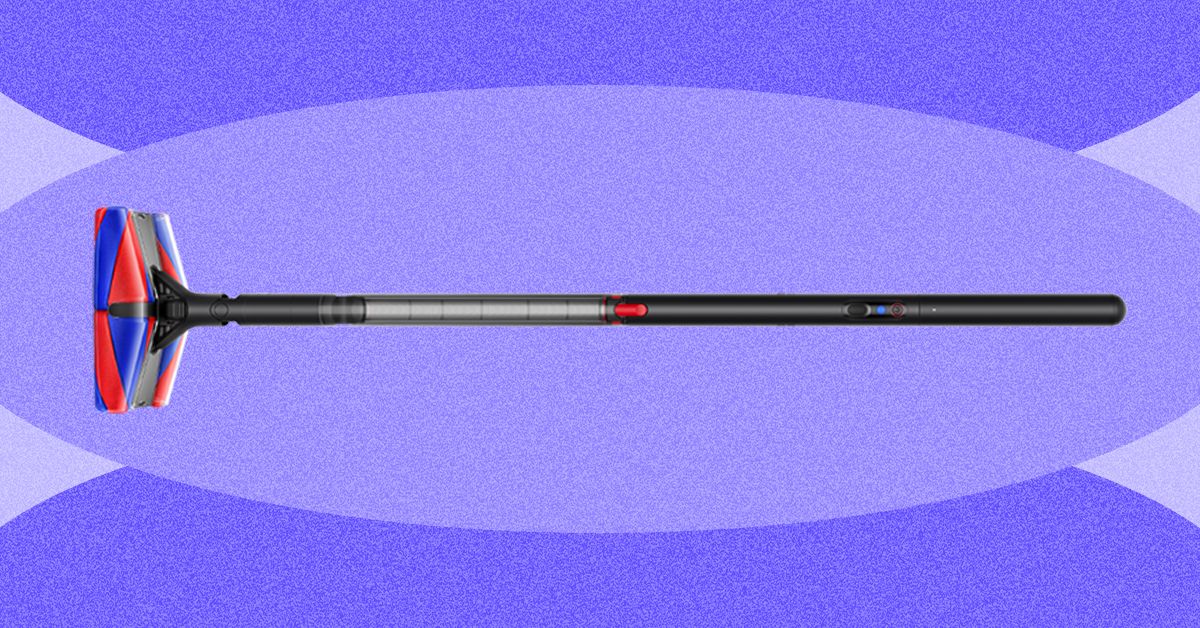
This vacuum’s full name is the Dyson PencilVac Fluffycones, aptly named for the four fluffy cones inside the vacuum head. Dyson’s previous recent stick vacuums all have the Fluffy Optic cleaner head for vacuuming hard floors. While both have a fluffy roller bar, the Fluffycones have a conical shape that Dyson says will detangle and remove hair rather than the hair getting stuck all around it. It did detangle hair for me, but when I vacuumed up larger portions of hair from my bathroom floor (a place where many a stray hair comes to die at the hands of my hairbrush, comb, and towel), it actually bunched up the hair into a ball and spat it back out a few times before finally sucking it up into the dustbin.
Video: Nena Farrell
While the hair results weren’t great, I did love this vacuum for sucking up the cat litter that constantly plagues my home. It did a great job with flour on my hard floors and a solid job with dry oats, but it occasionally just bumped the oats around instead of immediately sucking them up. I was even able to quickly run it over the top of my carpet, but rolling back and forth on the carpet a bunch did stop the cones.
The head is designed to move in just about any direction. The cones make it easy to swivel around, and the green illuminating lights on the front and back help you spot any debris you might otherwise miss. With its compact size that fits in tricky corners, the PencilVac finally lets me vacuum up all the litter around the base of my toilet and pedestal sink. It’s part of what makes me reach for this vacuum over and over, even after my robot vacuum cleaned the day before.
Forward Momentum

Photograph: Nena Farrell
Do I think this vacuum replaces Dyson’s existing cordless options? No. But Dyson has other new vacuums planned that could do that. This vacuum has a specific design for a specific use: smaller homes with entirely hard floors. There’s an accessibility opportunity here, too. This lightweight vacuum can be much easier to use for folks with mobility and strength restrictions. The magnetic charging base also makes it easy to store and access for a variety of people, whether they struggle with fine motor skills or can’t bend over and grab the vacuum.

There is a special agony to existing in limbo, that state of eternal in-between, where time stretches into infinity.
Today, that experience is especially true for people vying to join Raya, the members-only dating app. Obtaining a Raya account requires an invitation from a current member, and even after you’ve applied, you can’t log in until your application is approved. The process creates a bottleneck akin to the line outside a nightclub, where the chosen few breeze inside while the rest are left to wait. Beyond the velvet rope there are some 2.5 million people waiting to get into Raya—many of whom have been idling in limbo for years.
“My application is stuck in purgatory,” Gabriela Mark, a 23-year-old law student and model in San Diego, tells WIRED. “Like, she’s never escaping.”
Mark has been on the waiting list for five years. “I don’t know what their deal is, but there’s a reason I’m trapped on this waitlist and I needed to find out what it was.” In January, having reached her limit, she decided to email Raya. “I am beginning to believe you guys genuinely hate me or are bullying me,” Mark wrote in a colorfully worded letter. “Is my application just floating in the abyss somewhere or a running gag to you guys???”
Mark never received a response, but her story is an increasingly common one. The people WIRED spoke to for this story—who, despite their professional bona fides, have waited anywhere between two and seven years to join—have watched friends get accepted, break up, and cycle through the app while their own status remains unchanged.
Originally marketed as a kind of SoHo House for people in creative industries, Raya launched in 2015 as an app built around aspiration—but it has since shifted into a platform where many people in those industries find themselves unable to participate at all.
“It’s a bit of a mental fuck,” says Jennifer Rojas, who was working as an actress when she applied in 2020. “You start to look inward. Like, maybe it’s me. Maybe it’s this or that. I was opening it every day to check my status.” Now a 40-year-old UGC creator in South Florida, Rojas is going on year six of the waiting list. “I have 17 referrals on the freaking app.”
There is not an exact science to making it past the waiting list. According to previous reporting, the app—which charges users $25 per month, or $50 for a premium membership once approved—receives up to 100,000 applications per month. For prospective users, the biggest advantage comes from referrals by current members, who each get a small stash of “friend passes” to share. list isn’t first-come, first-served, which partially explains why some people have been on it for so long. It changes based on things like how trendy your city is on the app or whether you’ve snagged a referral.
(Raya declined to comment. After an initial call with Raya’s communications team about scheduling an interview with Ifeoma Ojukwi, the vice president of global memberships who oversees the application process, the company stopped responding to requests from WIRED. As is common in online dating, we were ghosted.)
Like so many people who want in, Raya’s exclusivity initially appealed to Mark. She wanted to join because she’d heard it was full of “cool people who seem untouchable.” Reputationally known as the celebrity dating app, everyone from actors Dakota Fanning and Channing Tatum to Olympian Simone Biles have had varying degrees of success on the platform. (Biles met her husband on Raya.) Mark had tried her luck on the app circuit: Hinge was “just OK.” With Tinder she kept running into guys that “just seemed like they wanted to literally bone anything with a hole in it.” As for the other ones, “nothing but trap boys and creatures,” she says.


AI-Designed Drugs by a DeepMind Spinoff Are Headed to Human Trials

Offset teases new album plans after recent shooting accident

Intel bags big gains! Chipmaker’s shares jump 26% on blockbuster results; how Trump admin benefits – The Times of India

-

 Fashion1 week ago
France’s LVMH Q1 revenue falls 6%, shows resilience amid Iran war
-

 Tech1 week ago
CYBERUK ’26: UK lagging on legal protections for cyber pros | Computer Weekly
-

 Sports5 days ago
WWE WrestleMania 42 Night 2: Live match results and analysis
-
 Business1 week ago
PepsiCo earnings beat estimates as North American food business improves
-

 Sports5 days ago
NCAA men’s gymnastics championship: All-time winners list
-

 Tech1 week ago
Cyber Essentials closes the MFA loophole but leaves some organisations adrift | Computer Weekly
-
 Business1 week ago
Oil prices fall again amid Middle East ceasefire hopes
-

 Sports1 week ago
Faheem Ashraf backs Islamabad United’s push, calls league a ‘career-changing platform’