

Business
How Union Budget 2026 puts three kartavyas at the centre of Indias economic strategy

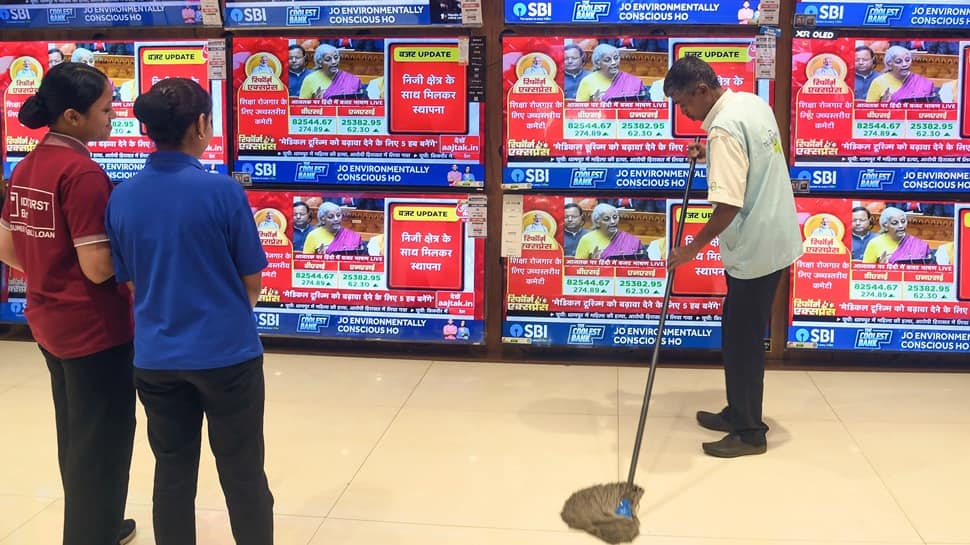
At a time when global trade is fragmenting and supply chains are being re-drawn, India’s Union Budget 2026-27 attempts to answer a simple but difficult question: how does a large, fast-growing economy protect itself from external shocks without turning inward. Presenting the Budget in Parliament, Finance Minister Nirmala Sitharaman acknowledged the challenges upfront. “Today, we face an external environment in which trade and multilateralism are imperilled and access to resources and supply chains are disrupted,” she said. The statement set the tone for a Budget that is less about short-term stimulus and more about long-term positioning.
Rather than headline tax giveaways or sharp fiscal pivots, Budget 2026 leans on continuity, capacity-building and institutional reform. At its core is a framework of three “kartavyas” that the government says will guide economic policy in the years ahead.
The three Kartavyas shaping Budget 2026
The Finance Minister structured the Budget around three duties: accelerating and sustaining economic growth, fulfilling aspirations by building capacity, and ensuring inclusive and broad-based development. These kartavyas are not merely intended to be rhetorical but expected to form the organising logic for proposals spanning manufacturing, employment, infrastructure spending and tax administration. Together, they reflect an attempt to align fiscal policy with India’s longer-term ambition of becoming a developed economy, while navigating a volatile global backdrop.
Growth, but without stepping away from global markets
The first kartavya, sustaining growth, is anchored in manufacturing and productivity. The Budget places particular emphasis on sectors that have become strategically important in recent years, including semiconductors, electronics, capital goods and critical minerals. Initiatives such as India Semiconductor Mission 2.0, the expansion of electronics manufacturing incentives, and the creation of Rare Earth Corridors are intended to reduce India’s reliance on imports for key inputs. These measures come after repeated global disruptions exposed the risks of concentrated supply chains.
Yet the Budget is careful to avoid framing self-reliance as isolation. Sitharaman made it clear that India’s strategy depends on remaining outward-looking. “India must remain deeply integrated with global markets, exporting more and attracting stable long-term investment,” she said.
Ganesh Kumar, Managing Partner, GLS Corporate Advisors LLP, said the Budget reflects a conscious recalibration of India’s industrial strategy rather than a narrow self-reliance push. “The emphasis is not just on capacity creation but on where India wants to sit in the global production stack. By focusing on equipment, materials and downstream manufacturing, the Budget addresses vulnerabilities that became visible only after recent supply chain shocks.”
Building capacity in an age of automation
The second kartavya addresses a concern that is increasingly global: the future of work. As artificial intelligence and automation reshape labour markets, Budget 2026 places capacity-building and employability at the centre of its social and economic agenda. A key proposal is the creation of a High-Level Education-to-Employment and Enterprise Standing Committee. The committee will identify high-growth services sectors, study skill gaps, assess services export potential, and examine how emerging technologies such as AI are altering job profiles.
Beyond institutional review, the Budget also signals an expansion of upskilling and reskilling efforts, particularly for engineers, technology professionals and service-sector workers. The goal is to move away from fragmented skilling schemes and towards a more integrated education-employment pipeline.
“This is an attempt to deal with employability structurally rather than episodically,” said Bhavik Thanawala, Partner, GLS Corporate Advisors LLP. “By factoring in AI and services exports, the Budget recognises how quickly job markets are changing.”
Inclusion, regions and cooperative federalism
The third kartavya focuses on inclusion, both social and regional. Budget 2026 continues targeted interventions for healthcare, mental health institutions, assistive devices for Divyangjans and region-specific development. Programmes such as Purvodaya for eastern India and enhanced support for the North-East aim to address uneven development across states. At the same time, the Budget reinforces cooperative federalism by retaining the states’ share of tax devolution at 41 percent.
For FY 2026-27, Finance Commission grants amounting to Rs. 1.4 lakh crore have been earmarked for rural and urban local bodies and disaster management, underlining the Centre’s reliance on states as partners in service delivery.
Trust-based tax reform and fiscal discipline
Running beneath all three kartavyas is a continued emphasis on fiscal discipline and trust-based tax administration. The fiscal deficit for FY 2026-27 is estimated at 4.3 percent of GDP, keeping the government on its consolidation path while sustaining high capital expenditure. On the tax side, the Budget introduces measures aimed at reducing litigation and compliance friction. Interest on compensation awarded by Motor Accident Claims Tribunals has been exempted from tax, and TDS on such interest removed. Assessment and penalty proceedings are proposed to be integrated, technical defaults decriminalised, and prosecution provisions rationalised.
Explaining the rationale, Sitharaman noted that honest taxpayers are often discouraged from settling disputes due to the stigma attached to penalties. “They will now be able to close cases by paying an additional amount in lieu of penalty,” she said. “These changes directly target the reasons disputes drag on for years but the outcome will depend on how uniformly the approach is applied on the ground,” said Amit Parkar, Partner, GLS Corporate Advisors LLP.
A Budget focused more on direction than disruption
Union Budget 2026-27 does not attempt dramatic resets. Instead, it builds incrementally on reforms announced over the past few years, including the transition to the new Income Tax Act from April 1, 2026. By emphasising stability, capacity-building and inclusion, the Budget signals that the government’s focus has shifted from rapid policy churn to steady execution. In an increasingly uncertain global environment, that predictability may be its most deliberate feature.
As the Finance Minister concluded her address, the emphasis remained firmly on continuity rather than disruption. The Budget, she indicated, is designed to navigate near-term uncertainty while keeping sight of India’s longer-term development goals. “India will continue to take confident steps towards Viksit Bharat, balancing ambition with inclusion,” Sitharaman said.
With that framing, Union Budget 2026-27 positions itself as a statement of direction, anchoring growth, capacity-building and inclusion within a stable and reform-oriented fiscal framework.


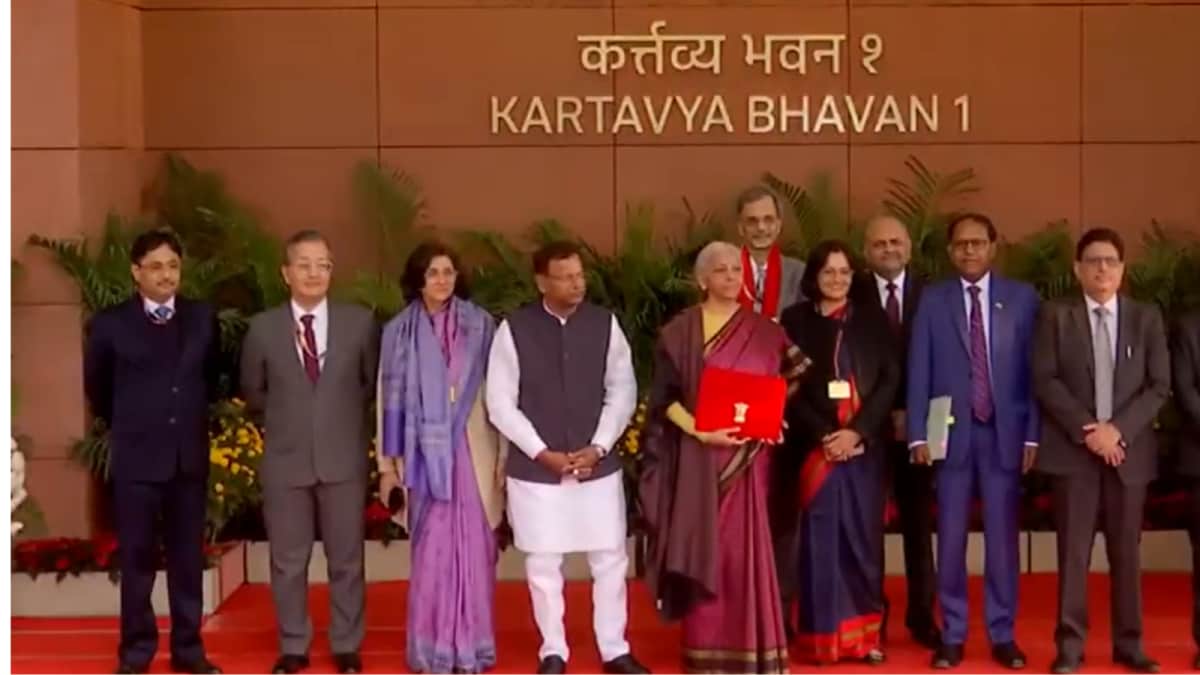
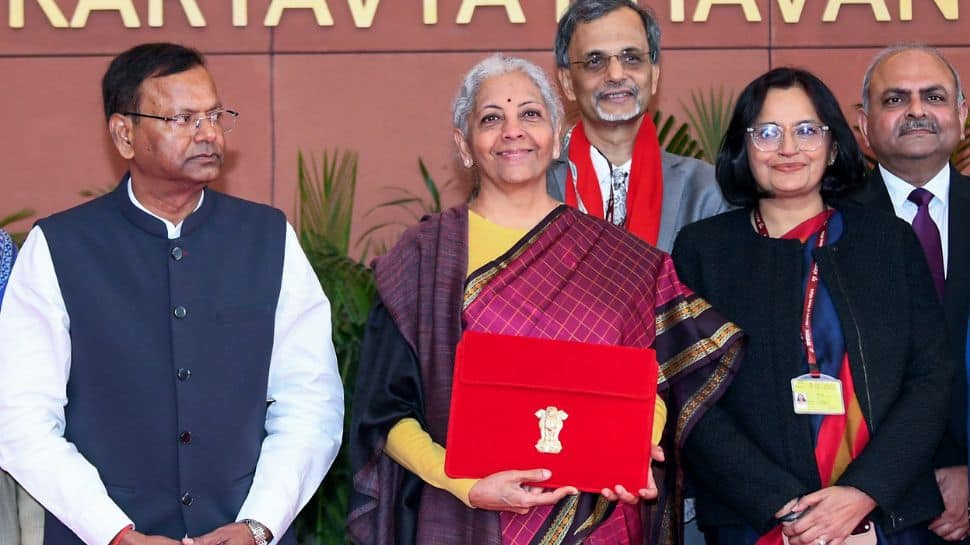

Buying property from an NRI? Worried about obtaining TAN? Not anymore. To relax the compliance burden, the Budget has proposed that resident individuals and HUFs need not have a Tax Deduction and Collection Account Number (TAN) if they are purchasing a property from a non-resident Indian (NRI). The amendment will take effect from Oct 1, 2026.Under the proposed framework, resident individuals or HUFs can report the tax deducted at source (TDS) by quoting PAN, as is done when the transactions are between two residents. Presently, if a person buys an immovable property from a resident seller, the person is not required to obtain TAN to deduct tax at source. However, where the seller of the immovable property is a non-resident, the buyer is required to obtain TAN to deduct tax at source.Ameet Patel, partner at Manohar Chowdhry & Associates, said this used to be a detailed process. “At present, if a resident were to purchase an immovable property from an NRI, there is no separate relaxation regarding compliance with TDS responsibilities. As a result, in such cases, the buyer needs to obtain a TAN, register on the portal, and then deduct TDS u/s. 195, and pay to the govt. Under section 195, as with all other regular TDS sections, a quarterly e-TDS statement is required. A buyer would need professional help for all this.”Hinesh Doshi, CA, welcomed the move. “There used to be an unnecessary compliance burden due to this. While the process to obtain TAN is simple, people used to obtain TAN for just one transaction. So, this is a good riddance.”

The former One Direction member-turned-solo artist appears on the Sunday Times list for the first time.
Source link
Last Updated:
Budget 2026: FM Nirmala Sitharaman gives a strong push to manufacturing, infrastructure and job creation, while proposing a simpler tax and customs system.



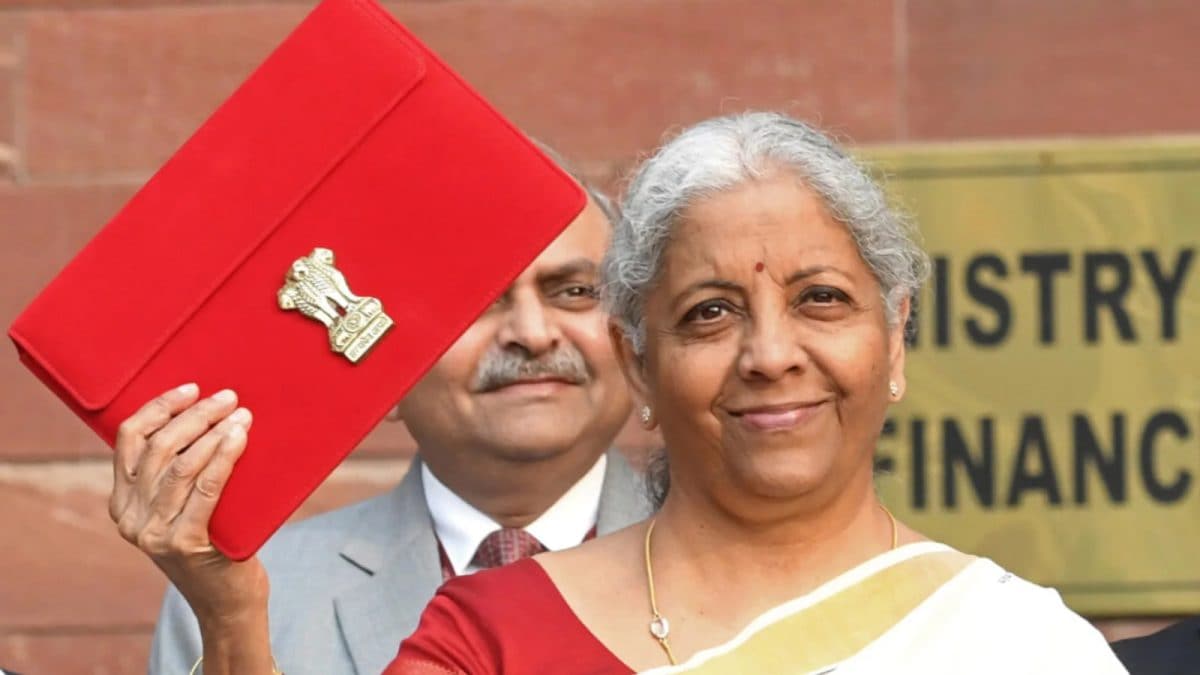
Finance Minister Nirmala Sitharaman presents the Union Budget 2026-27.
Budget 2026 Takeaways: Finance Minister Nirmala Sitharaman on Sunday presented the Union Budget 2026-27, giving a strong push to manufacturing, infrastructure and job creation, proposing a simpler tax and customs regime, and hailing the government’s modernisation drive as a “reforms express”.
The Budget 2026 is anchored around three ‘kartavyas’ — driving growth by enhancing productivity and competitiveness, building people’s capacity, and ensuring inclusive development under the vision of Sabka Saath, Sabka Vikaas.
In her ninth consecutive Budget in Parliament, Sitharaman laid out a multi-pronged strategy to sustain growth amid global uncertainty, including expanding domestic electronics and semiconductor capabilities, de-risking infrastructure projects, skilling India’s youth for emerging technologies, and easing compliance for taxpayers and importers.
Here are the key takeaways from Budget 2026 across manufacturing, infrastructure, skills, AI, taxation and customs duty.
Manufacturing Gets A Boost
Budget 2026 put a special emphasis on the manufacturing landscape in India. The outlay for electronics components manufacturing was raised sharply to Rs 40,000 crore, while new schemes for rare earth magnets, chemical parks, container manufacturing and capital goods seek to reduce import dependency, and strengthen domestic supply chains. Textiles got an integrated, employment-oriented package covering fibres, clusters, skilling and sustainability.
Infrastructure-Led Growth
Infrastructure got a boost with a higher capex allocation and initiatives like a risk guarantee fund to de-risk projects for private developers, new dedicated freight corridors and national waterways, dedicated REITs (real estate investment trusts) for recycling of significant real estate assets of central public sector enterprises (CPSEs), and a seaplane VGF (viability gap funding) scheme.
The Centre’s capital expenditure (capex) target has been increased to Rs 12.2 lakh crore for FY27, up from Rs 11.2 lakh crore earmarked for the current financial year. Moreover, maintaining the fiscal discipline, Sitharaman said the government expects the fiscal deficit to be at 4.3 per cent of the GDP in 2026-27, lower than 4.4 per cent projected for the current financial year.
Tier-II and Tier-III cities were placed at the centre of urban growth via City Economic Regions, backed by reform-linked funding.
“We shall continue to focus on developing infrastructure in cities with over 5 lakh population (Tier II and Tier III), which have expanded to become growth centres,” Sitharaman said in her Budget Speech.
Greater Emphasis On Skilling
The Budget placed renewed emphasis on the services economy as a jobs engine. A high-powered Education-to-Employment and Enterprise Committee will realign skilling with market needs, including the impact of emerging technologies.
Content creation and creative industries get a boost through AVGC labs in schools and colleges, support for animation, gaming and comics, and new institutional capacity for design and hospitality. Tourism-linked skilling, from guides to digital heritage documentation, signals a clear intent to convert culture and content into employment and exports.
“I propose to support the Indian Institute of Creative Technologies, Mumbai in setting up AVGC Content Creator Labs in 15,000 secondary schools and 500 colleges,” FM Sitharaman said. AVGC stands for animation, visual effects, gaming and comics.
AI & Semiconductors Push
Artificial intelligence (AI) was positioned as a cross-sector force multiplier rather than a standalone theme. The Budget provided a push to artificial intelligence (AI) by promoting adoption with governance, agriculture, education and skilling, including proposals for AI-enabled advisory tools for farmers and AI integration in education curricula.
On hardware, the semiconductor strategy expanded decisively under ISM 2.0 (India Semiconductor Mission 2.0), with focus on domestic equipment manufacturing, materials, research centres and workforce development, signalling a long-term commitment to building a resilient chip ecosystem in India.
Taxation, ITR, TDS, TCS
A major structural reform comes with the Income Tax Act, 2025, effective April 1, 2026, containing simpler rules and redesigned forms.
Budget 2026 provided compliance relief for individuals, including extended timelines for revising returns to March 31 from December 31 earlier, staggered ITR due dates, and easier filing of Form 15G/15H through depositories.
Individuals with ITR-1 and ITR-2 returns will continue to file till July 31, and non-audit business cases or trusts are proposed to be allowed time till August 31, according to the Budget Speech 2026-27.
“I propose to extend time available for revising returns from 31st December to up to 31st March with the payment of a nominal fee. I also propose to stagger the timeline for filing of tax returns. Individuals with ITR 1 and ITR 2 returns will continue to file till 31st July and non-audit business cases or trusts are proposed to be allowed time till 31st August,” Sitharaman said.
TDS (Tax deducted at source) rules were clarified for manpower services, while a rule-based system for lower or nil TDS certificates is proposed. TCS rates were cut to 2% for overseas tour packages, education and medical expenses under liberalised remittance scheme (LRS). Litigation is targeted through integrated assessment and penalty orders, lower pre-deposit requirements, and wider immunity provisions.
TDS on the sale of immovable property by a non-resident will be deducted and deposited through resident buyer’s PAN (Permanent Account Number)-based challan instead of requiring TAN (Tax Deduction and Collection Account Number), Sitharaman said.
Customs Duty Tweaks
Customs duty rationalisation continued with a clear focus on domestic manufacturing, energy transition and ease of living. Exemptions have been extended or introduced for capital goods used in lithium-ion batteries, critical minerals processing, nuclear power projects and aircraft manufacturing.
Personal imports will become cheaper with a reduction in duty on goods for personal use from 20% to 10%. Seventeen cancer drugs and additional rare-disease treatments were exempted from customs duty. Process reforms aimed at trust-based, tech-driven clearances, faster cargo movement and lower compliance costs, especially for exporters and MSMEs (micro, small, medium and enterprises).
STT On F&O Hiked
The Budget increased securities transaction tax (STT) on futures trading from 0.02% to 0.05% and on options trading from 0.10% to 0.15%, a move that upset the capital markets with the BSE Sensex crashing more than 2,300 points from the day’s high and the NSE Nifty dropping to 24,571.75.
Securities Transaction Tax (STT) is a direct tax imposed on the buying and selling of securities in India.
Commenting on the Budget, Prime Minister Narendra Modi said, “The Union Budget reflects the aspirations of 140 crore Indians. It strengthens the reform journey and charts a clear roadmap for Viksit Bharat.”
February 01, 2026, 14:43 IST
Read More


Grading Mike LaFleur’s hire, eyeing what’s next for Cards

Global science heavyweights converge in UAE for World Laureates Summit

Timothee Chalamet reveals plans about marrying Kylie Jenner

-

 Sports5 days ago
PSL 11: Local players’ category renewals unveiled ahead of auction
-

 Tech1 week ago
This Mega Snowstorm Will Be a Test for the US Supply Chain
-

 Entertainment5 days ago
Claire Danes reveals how she reacted to pregnancy at 44
-

 Fashion1 week ago
Spain’s apparel imports up 7.10% in Jan-Oct as sourcing realigns
-

 Tech1 week ago
ICE Asks Companies About ‘Ad Tech and Big Data’ Tools It Could Use in Investigations
-

 Sports5 days ago
College football’s top 100 games of the 2025 season
-
 Business6 days ago
Banking services disrupted as bank employees go on nationwide strike demanding five-day work week
-

 Politics1 week ago
Fresh protests after man shot dead in Minneapolis operation