

Business
How Union Budget 2026 puts three kartavyas at the centre of Indias economic strategy


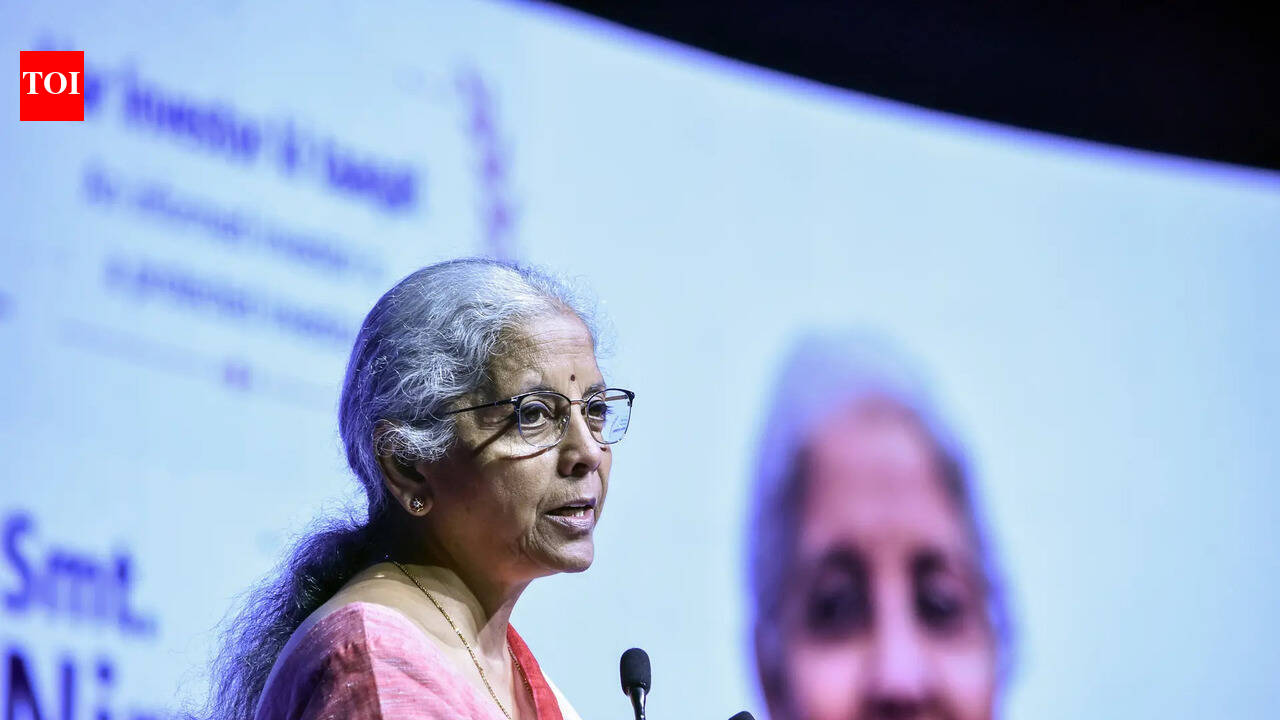
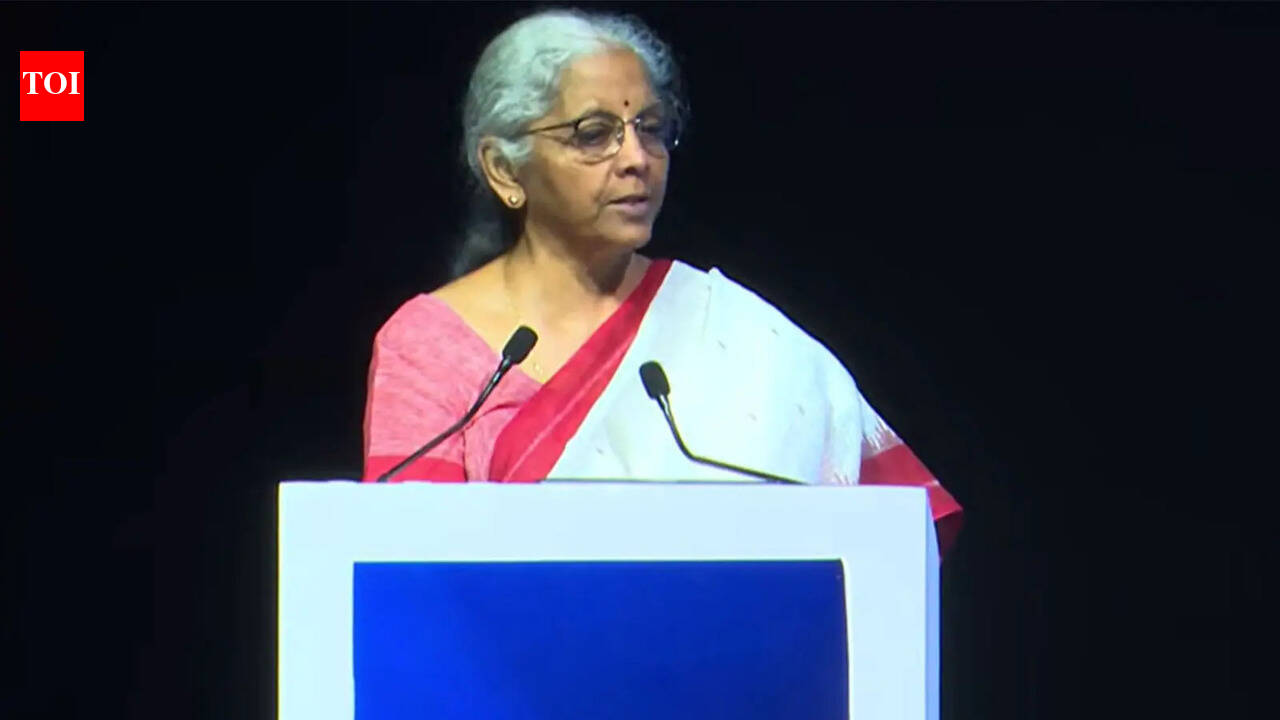
At a time when global trade is fragmenting and supply chains are being re-drawn, India’s Union Budget 2026-27 attempts to answer a simple but difficult question: how does a large, fast-growing economy protect itself from external shocks without turning inward. Presenting the Budget in Parliament, Finance Minister Nirmala Sitharaman acknowledged the challenges upfront. “Today, we face an external environment in which trade and multilateralism are imperilled and access to resources and supply chains are disrupted,” she said. The statement set the tone for a Budget that is less about short-term stimulus and more about long-term positioning.
Rather than headline tax giveaways or sharp fiscal pivots, Budget 2026 leans on continuity, capacity-building and institutional reform. At its core is a framework of three “kartavyas” that the government says will guide economic policy in the years ahead.
The three Kartavyas shaping Budget 2026
The Finance Minister structured the Budget around three duties: accelerating and sustaining economic growth, fulfilling aspirations by building capacity, and ensuring inclusive and broad-based development. These kartavyas are not merely intended to be rhetorical but expected to form the organising logic for proposals spanning manufacturing, employment, infrastructure spending and tax administration. Together, they reflect an attempt to align fiscal policy with India’s longer-term ambition of becoming a developed economy, while navigating a volatile global backdrop.
Growth, but without stepping away from global markets
The first kartavya, sustaining growth, is anchored in manufacturing and productivity. The Budget places particular emphasis on sectors that have become strategically important in recent years, including semiconductors, electronics, capital goods and critical minerals. Initiatives such as India Semiconductor Mission 2.0, the expansion of electronics manufacturing incentives, and the creation of Rare Earth Corridors are intended to reduce India’s reliance on imports for key inputs. These measures come after repeated global disruptions exposed the risks of concentrated supply chains.
Yet the Budget is careful to avoid framing self-reliance as isolation. Sitharaman made it clear that India’s strategy depends on remaining outward-looking. “India must remain deeply integrated with global markets, exporting more and attracting stable long-term investment,” she said.
Ganesh Kumar, Managing Partner, GLS Corporate Advisors LLP, said the Budget reflects a conscious recalibration of India’s industrial strategy rather than a narrow self-reliance push. “The emphasis is not just on capacity creation but on where India wants to sit in the global production stack. By focusing on equipment, materials and downstream manufacturing, the Budget addresses vulnerabilities that became visible only after recent supply chain shocks.”
Building capacity in an age of automation
The second kartavya addresses a concern that is increasingly global: the future of work. As artificial intelligence and automation reshape labour markets, Budget 2026 places capacity-building and employability at the centre of its social and economic agenda. A key proposal is the creation of a High-Level Education-to-Employment and Enterprise Standing Committee. The committee will identify high-growth services sectors, study skill gaps, assess services export potential, and examine how emerging technologies such as AI are altering job profiles.
Beyond institutional review, the Budget also signals an expansion of upskilling and reskilling efforts, particularly for engineers, technology professionals and service-sector workers. The goal is to move away from fragmented skilling schemes and towards a more integrated education-employment pipeline.
“This is an attempt to deal with employability structurally rather than episodically,” said Bhavik Thanawala, Partner, GLS Corporate Advisors LLP. “By factoring in AI and services exports, the Budget recognises how quickly job markets are changing.”
Inclusion, regions and cooperative federalism
The third kartavya focuses on inclusion, both social and regional. Budget 2026 continues targeted interventions for healthcare, mental health institutions, assistive devices for Divyangjans and region-specific development. Programmes such as Purvodaya for eastern India and enhanced support for the North-East aim to address uneven development across states. At the same time, the Budget reinforces cooperative federalism by retaining the states’ share of tax devolution at 41 percent.
For FY 2026-27, Finance Commission grants amounting to Rs. 1.4 lakh crore have been earmarked for rural and urban local bodies and disaster management, underlining the Centre’s reliance on states as partners in service delivery.
Trust-based tax reform and fiscal discipline
Running beneath all three kartavyas is a continued emphasis on fiscal discipline and trust-based tax administration. The fiscal deficit for FY 2026-27 is estimated at 4.3 percent of GDP, keeping the government on its consolidation path while sustaining high capital expenditure. On the tax side, the Budget introduces measures aimed at reducing litigation and compliance friction. Interest on compensation awarded by Motor Accident Claims Tribunals has been exempted from tax, and TDS on such interest removed. Assessment and penalty proceedings are proposed to be integrated, technical defaults decriminalised, and prosecution provisions rationalised.
Explaining the rationale, Sitharaman noted that honest taxpayers are often discouraged from settling disputes due to the stigma attached to penalties. “They will now be able to close cases by paying an additional amount in lieu of penalty,” she said. “These changes directly target the reasons disputes drag on for years but the outcome will depend on how uniformly the approach is applied on the ground,” said Amit Parkar, Partner, GLS Corporate Advisors LLP.
A Budget focused more on direction than disruption
Union Budget 2026-27 does not attempt dramatic resets. Instead, it builds incrementally on reforms announced over the past few years, including the transition to the new Income Tax Act from April 1, 2026. By emphasising stability, capacity-building and inclusion, the Budget signals that the government’s focus has shifted from rapid policy churn to steady execution. In an increasingly uncertain global environment, that predictability may be its most deliberate feature.
As the Finance Minister concluded her address, the emphasis remained firmly on continuity rather than disruption. The Budget, she indicated, is designed to navigate near-term uncertainty while keeping sight of India’s longer-term development goals. “India will continue to take confident steps towards Viksit Bharat, balancing ambition with inclusion,” Sitharaman said.
With that framing, Union Budget 2026-27 positions itself as a statement of direction, anchoring growth, capacity-building and inclusion within a stable and reform-oriented fiscal framework.




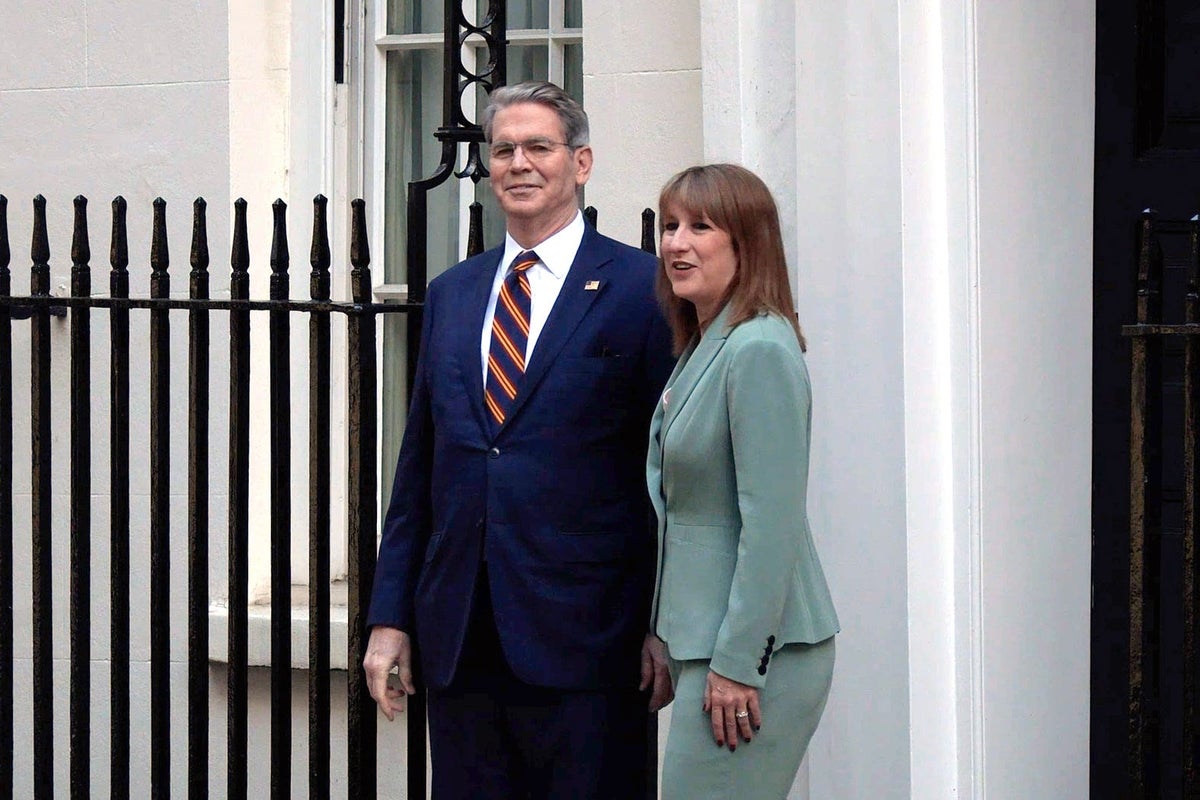
Downing Street would not deny reports that Chancellor Rachel Reeves rowed with her US counterpart during a visit to Washington DC earlier this year.
Ms Reeves had an argument with Scott Bessent when she visited the US capital for the International Monetary Fund’s spring meetings, according to the Financial Times.
The Chancellor publicly criticised the US-led war against Iran before travelling across the Atlantic, prompting Mr Bessent to berate her on the sidelines of the gathering, the newspaper reported.
Ms Reeves reportedly hit back that she did not work for the US treasury secretary, and disliked how he had spoken to her, before reiterating her argument that America lacked clear goals going into the conflict and was not making the world safer.
On Tuesday, the Prime Minister’s official spokesman was asked if he would steer away from the reports, and appeared not to.
He did however insist Ms Reeves and her US counterpart have had “constructive” engagements since the Washington DC visit.
The spokesman said: “We would not get into private conversations. The Chancellor and the US treasury secretary have a good relationship.
“They have had constructive conversations together since the Chancellor’s visits to Washington.
“I think there is a readout from the US Department of Treasury, which made clear the productive nature of their relationship.”
The Chancellor emerged as one of the most outspoken UK Government critics of the US decision to go to war in Iran before travelling to the IMF meetings in April.
At the time, she described the war as a “folly” and said: “This is a war that we did not start. It was a war that we did not want.
“I feel very frustrated and angry that the US went into this war without a clear exit plan, without a clear idea of what they were trying to achieve.”
Business
Govt lists 40 sub-sectors for faster FDI clearance from border nations-check details – The Times of India

The government has identified 40 sub-sectors, including rare earth magnets and printed circuit boards, for expedited clearance of foreign direct investment (FDI) proposals from countries sharing land borders with India, PTI reported.Under the revised framework, proposals from countries such as China, Pakistan, Bangladesh, Nepal, Bhutan, Myanmar and Afghanistan in these sectors will be processed within 60 days, as per the updated standard operating procedure (SOP).The move follows a decision taken in March to fast-track FDI approvals in specified manufacturing sectors from these countries.However, the government has clarified that majority ownership and control of the investee entity must remain with resident Indian citizens or Indian-owned entities at all times.The 40 identified sub-sectors fall under six broad categories –capital goods manufacturing, electronic capital goods and electronic components, polysilicon and ingot-wafer production, advanced battery components, rare earth permanent magnets, and rare earth processing.These include manufacturing of insulation items, castings and forgings for thermal, hydro and nuclear power plants, machine tools, display components such as LCD and LED panels, camera modules, electronic capacitors, speakers and microphones, lithium-ion batteries, wearables, and rare earth metal and magnet processing facilities.The SOP also introduces detailed reporting norms for investments involving entities with direct or indirect ownership from land-bordering countries.“The reporting under these guidelines will be governed under the Foreign Exchange Management (Mode of Payment and Reporting of Non-debt Instruments) Regulations, 2019, and the information will be accessible by the Reserve Bank of India (RBI),” the DPIIT said.The responsibility for reporting lies with the Indian investee company, which must submit required details to the DPIIT before receiving foreign capital.“The reporting is to be made prior to the inward remittance of foreign capital. In cases which do not involve foreign capital inward remittances, the reporting is to be made prior to execution of the relevant transactions, including issuance/transfer of capital instruments, as the case may be,” it added.Investors will be required to disclose details such as shareholding patterns, beneficial ownership, organisational structure, promoters, board composition, key managerial personnel and control rights.The Indian entity will also need to provide incorporation details and disclose existing or proposed shareholding linked to entities from land-bordering countries.

Ferrari technicians inspect supercars on the production line inside the company’s factory in Maranello, Italy, October 2, 2025. REUTERS/Remo Casilli/File Photo
Remo Casilli | Reuters
DETROIT — Ferrari on Tuesday beat Wall Street’s first-quarter earnings expectations and reconfirmed its guidance for the year, weeks ahead of the sports car maker revealing its first all-electric vehicle.
Here’s how the company performed in the first quarter compared with average estimates compiled by LSEG:
- Earnings per share: 2.33 euros (US $2.72) adjusted vs. 2.27 euros expected
- Revenue: 1.85 billion euros vs. 1.81 billion euros expected
Ferrari’s revenue was up more than 3% compared with 1.79 billion euros during the first quarter of 2025, while its operating profit and adjusted earnings increased 1.1% and 4.2% year-over-year, respectively.
The company’s 2026 guidance includes 7.5 billion euros in net revenues and an adjusted operating profit of at least 2.22 billion euros, or 9.45 euros adjusted EPS. Its industrial free cash flow is targeted at 1.5 billion euros or more for the year.
Those results were despite deliveries being down 4.4% year-over-year to 3,436 units, as the sports car maker said it slowed production to “ease the execution of the planned model change-over.”
The company said deliveries “were not impacted by the surge of hostilities in the Middle East, as Ferrari leveraged its geographical allocation flexibility, bringing forward certain deliveries to other regions.”
Ferrari’s results come weeks before the scheduled debut of the Luce, its first fully electric vehicle, on May 25.
“With only twenty days to the world premiere of the Ferrari Luce, the sense of anticipation has never been so high. The Ferrari Luce brings together so much extraordinary technologies and the passion of so many people. It is the evidence of how tradition and innovation can come together to create something unique,” Ferrari CEO Benedetto Vigna said in a statement Tuesday.


Climate is now in the cost sheet

Dolly Parton shares health update after canceling Las Vegas residency
[CinePlex360] Please moderate: “Hundreds in Teh

-

 Tech1 week ago
A Brain Implant for Depression Is About to Be Tested in Humans
-

 Tech1 week ago
Almost 90% of women leave tech industry within 10 years | Computer Weekly
-

 Sports1 week ago
Pro wrestling star Steph De Lander reveals how colleague’s advice helped lead her to title triumph at ACW
-
 Business1 week ago
‘I had £20,000 stolen and had to fight a 13-month fraud reporting rule to get it back’
-

 Entertainment1 week ago
Norway joins Type 26 Frigate Programme to boost NATO naval power
-
 Business6 days ago
PSX plunges over 4,800 points | The Express Tribune
-

 Entertainment1 week ago
Melania Trump says ABC should ‘take a stand’ on late-night host Kimmel
-

 Tech1 week ago
This Ambitious Laptop Doesn’t Leave Much Room for Your Hands