

Business
HSBC reclaims top spot as FTSE 100 hits new high


The FTSE 100 reached fresh heights on Wednesday, with well-received results from HSBC, and gains in mining stocks, paving the way for another record-breaking day.
“The strong showing from the UK stock market so far in 2026, on top of a major success in 2025, bodes well for changing its reputation from unloved to admired,” said Russ Mould, investment director at AJ Bell.
The FTSE 100 index ended up 125.82 points, 1.2%, at 10,806.41, a record close and its best level for the day.
The FTSE 250 ended up 135.85 points, 0.6%, at 23,636.89, and the AIM All-Share closed up 1.26 points, 0.2%, at 816.79.
London’s brighter mood was reflected elsewhere in Europe.
The CAC 40 in Paris closed up 0.5% on Wednesday, while the DAX 40 in Frankfurt ended 0.8% higher.
Stocks in New York were also higher. The Dow Jones Industrial Average was up 0.4%, the S&P 500 index was 0.6% higher, and the Nasdaq Composite advanced 1.0%.
Across the pond all eyes point towards earnings from Nvidia, due for release after the New York market close.
David Morrison, senior market analyst at Trade Nation, said: “Tonight’s results will focus initially on revenues and earnings. In prior quarters, Nvidia has often surprised investors with bullish forward guidance, and if there’s good news here, then that should underpin the share price.
“But data centre revenue, chip demand and hyperscale cloud spending are all important elements, while competition (another recent issue) and margins will also be poured over by analysts.”
The pound was little changed at 1.3537 dollars on Wednesday afternoon, from 1.3536 dollars at the equities close on Tuesday.
The euro stood higher at 1.1804 dollars, from 1.1787 dollars. Against the yen, the dollar was trading higher at 156.39 yen, compared with 155.71 yen.
The yield on the US 10-year Treasury widened to 4.05% on Wednesday from 4.04% on Tuesday. The yield on the US 30-year Treasury was flat at 4.69%.
In London, shares in HSBC hit an all-time high after better-than-expected fourth-quarter results.
The 7.9% gain took the Asia-focused lender’s market value to £239.29 billion, overtaking AstraZeneca as the most valuable listed UK company.
Cambridge-based drugs firm AstraZeneca has a market value of a touch below £236 billion after falling 0.7% on Wednesday, with oil major Shell, up 1.3%, a distant third at £169.72 billion.
For the fourth quarter of 2025, HSBC said adjusted pre-tax profit rose to 8.59 billion dollars from 7.32 billion dollars a year ago, ahead of 7.85 billion dollars consensus.
JPMorgan said the profit beat was driven by strong banking net interest income, and impairments coming in 12% lower than forecast.
Looking ahead, chief executive Georges Elhedery said HSBC is “raising our ambition and targeting a 17% [return on tangible equity] or better, excluding notable items, in each year from 2026 to 2028”.
“We are also targeting year-on-year revenue growth over the same period on the same basis, rising to 5% in 2028,” he added.
JPM said the new targets are slightly above consensus expectations for annual revenue growth of 4.2% in 2028.
Citi analyst Andrew Coombs said it was “a good print”, with “potential for high-single digit consensus EPS upgrades”.
Mining stocks were also in demand as metals prices rose.
Gold firmed to 5,204.64 dollars an ounce on Wednesday from 5,142.02 dollars on Tuesday. Silver rose 4.1% and copper gained 0.9%.
Miners Fresnillo, Antofagasta and Anglo American rose 7.3%, 5.7% and 4.4% respectively.
Also in the green was St James’s Place, after it said it will increase shareholder returns after reporting better-than-expected 2025 results.
The London-based asset manager rose 6.6%, as it reported a post-tax underlying cash result of £462.3 million in 2025, up 3.4% from £447.2 million the year prior, and ahead of £445.5 million company-compiled consensus. Pre-tax profit increased 28% to £1.34 billion from £1.05 billion.
Post-tax underlying cash basic earnings per share of 87.0 pence, increased 6.1% from 82.0p, ahead of 84.2p consensus.
In addition, the firm intends to increase total annual shareholder distributions to 70% (from 50%) of the underlying cash result through a combination of dividends and share buy-backs.
But Diageo shareholders had a day to forget, as shares plunged 13% after it cut full-year sales guidance and slashed its dividend.
London-based Diageo operates in more than 180 countries with a portfolio of more than 200 brands, including top sellers such as Johnnie Walker whisky, Smirnoff vodka, Tanqueray gin and Guinness stout.
It said net sales fell 4.0% year-on-year to 10.46 billion dollars in the six months to December 31, from 10.90 billion dollars a year ago, below VA consensus of 10.57 billion dollars.
Sales declined 2.8% on an organic basis, compared to VA consensus for a 2.0% drop, with organic volumes down 0.9% and a negative price/mix of 1.9%.
“Trading conditions remained challenging in the first half of the year. We believe this was largely due to further macroeconomic and geopolitical uncertainty, and weak consumer confidence in key markets,” the company said in a statement.
For the financial year, Diageo now expects a full-year organic net sales decline of 2% to 3%, “given further weakness in the US”. It had previously predicted an outcome between “flat to slightly down”.
In addition, the firm halved its first-half payout to 20 cents per share from 40.50 cents a year prior.
New chief executive Dave Lewis said he is “confident that this is the right action” to “drive stronger shareholder value over the coming years”.
Dan Coatsworth, head of markets at AJ Bell, said: “There is no point trying to dress up the six-month figures. These are awful results, and the repair job is massive.”
On the FTSE 250, Trainline shares buckled as chief executive Jody Ford signalled his departure.
Shares in the London-based digital rail and coach ticketing platform fell 7.5%, as it said Mr Ford intends to step down as chief executive after more than six years at the company.
A formal search process to find his successor has begun, the firm added.
Brent oil traded lower at 70.76 dollars a barrel on Wednesday afternoon, from 71.16 dollars late Tuesday.
The biggest risers on the FTSE 100 were HSBC, up 102.60p at 1,394.00p, Metlen Energy & Metals, up 2.70p at 37.65p, Fresnillo, up 294.00p at 4,326.00p, St James’s Place, up 83.50p at 1,343.00p and Relx, up 142.00p at 2,415.00p.
The biggest fallers on the FTSE 100 were Diageo, down 238.00p at 1,636.00p, Haleon, down 27.80p at 377.90p, Croda, down 99.00p at 3,113.00p, Babcock International, down 29.00p at 1,374.00p and Tesco, down 8.30p at 492.20p.
Thursday’s global economic calendar has US initial jobless claims data.
Thursday’s domestic corporate calendar has full-year results from jet engine maker Rolls-Royce, advertising agency WPP, exchange operator and data provider London Stock Exchange and kitchen supplier Howden Joinery.
Contributed by Alliance News

India’s coal imports declined 8.5 per cent to 16.55 million tonnes in February, as record domestic stockpiles and firm global prices reduced reliance on overseas supplies, according to data compiled by mjunction services, reported PTI. The country’s coal imports are expected to remain subdued in the near term, with domestic miners stepping up efforts to liquidate accumulated inventories.
“A record high stockpile of domestic coal and firm seaborne prices resulted in a drop in thermal coal imports. With the domestic miners endeavouring to liquidate stocks, the weak trend in imports is expected to continue during the current month,” mjunction MD & CEO Vinaya Varma said.Coal imports had stood at 18.10 million tonnes in February 2024-25, while on a month-on-month basis, imports remained largely flat compared with 16.64 million tonnes in January 2026.Of the total imports in February, non-coking coal shipments fell to 9.80 million tonnes from 11.08 million tonnes a year ago. In contrast, coking coal imports rose to 3.92 million tonnes from 3.79 million tonnes in the same period.During April-February 2025-26, non-coking coal imports stood at 137.60 million tonnes, lower than 152.26 million tonnes in the corresponding period of 2024-25. However, coking coal imports increased to 54.31 million tonnes from 49.62 million tonnes.The decline in imports comes amid a broader push to strengthen domestic coal production under the government’s self-reliance initiative.India’s total coal output rose to 1,047.523 million tonnes in 2024-25 from 997.826 million tonnes in the previous year, registering a growth of about 4.98 per cent.Coal inventories at thermal power plants remained comfortable at around 55 million tonnes as of Tuesday, sufficient for about 24 days of uninterrupted power generation based on average consumption over the past week, a senior coal ministry official said.The stock position indicates “absolute no deficit” on the power generation side, coal Joint Secretary Sanjeev Kumar Kassi said, addressing concerns over potential shortages amid rising summer demand.“Coal stock at the power plants is around 55 million tonnes as of yesterday (Tuesday), adequate for 24 days of uninterrupted power generation based on the average consumption of the last seven days. So we have absolutely no deficit at the power generation side,” he said at an inter-ministerial briefing on developments in West Asia.The official added that domestic coal production is currently matching consumption levels.
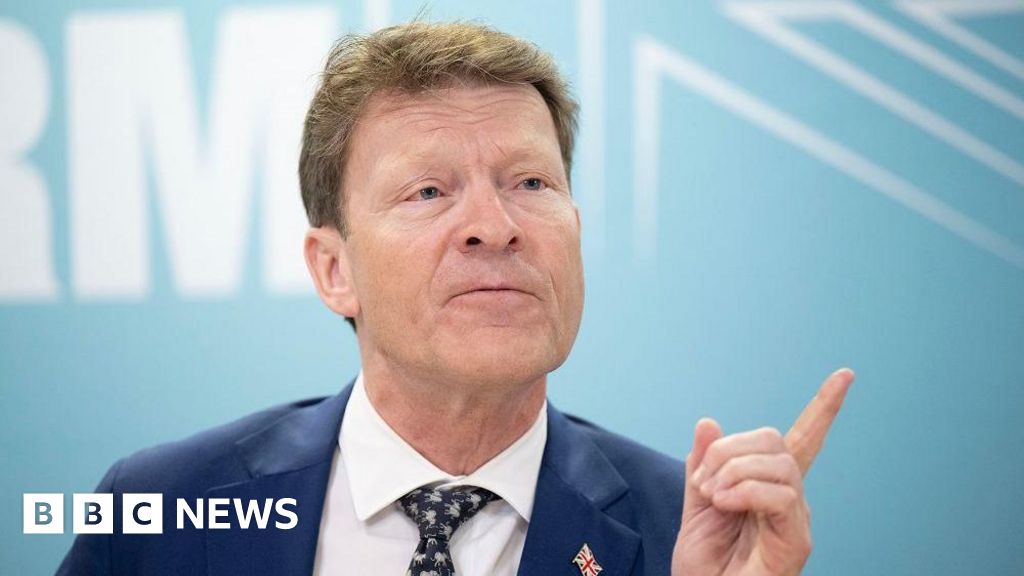
At a press conference in Westminster, Tice said Quidnet Reit Ltd was “a UK company paying UK tax in accordance with UK laws”, adding there was no “obligation” to pay the maximum tax required and suggested few people would likely take such a decision.
Business
India ramps up 5-kg LPG supply, accelerates PNG rollout amid Middle East crisis – The Times of India

India has stepped up supply of smaller 5-kg LPG cylinders and accelerated the rollout of piped natural gas (PNG) connections to manage fuel availability amid disruptions caused by the Middle East conflict, with domestic supplies remaining stable, according to an official statement.More than 13 lakh 5-kg free trade LPG cylinders have been sold since March 23, with daily sales crossing 1 lakh units, as authorities expand access for migrant workers and low-income consumers, PTI reported.At the same time, over 4.24 lakh new PNG connections have been activated since March, with more than 30,000 consumers surrendering LPG connections as part of the transition.The six-week-long war in West Asia has disrupted global energy supply. India relied on import of half of its crude oil, 40 per cent of its gas and 85-90 per cent of LPG from the region, all of which have been impacted.While the country has managed to offset the shortfall in crude oil by sourcing from other regions, LPG supplies have been affected.The government has prioritised LPG supply to domestic households, reducing supplies to commercial users such as hotels and restaurants. To bridge the gap for those without subsidised LPG connections, it has increased supply of market-priced 5-kg cylinders.As against daily sales of about 77,000 5-kg cylinders in February before the crisis, volumes have crossed over 1 lakh per day in the last two to three weeks.The statement said domestic LPG supplies remain stable overall, with no reported stockouts and over 52 lakh cylinders delivered on April 11.Online bookings account for about 98 per cent of demand, while delivery authentication systems now cover 93 per cent of transactions to curb diversion.Commercial LPG availability has been restored to about 70 per cent of pre-crisis levels, supported by targeted allocations and increased supply measures. State-run oil marketing companies — Indian Oil Corporation, Bharat Petroleum Corporation Limited and Hindustan Petroleum Corporation Limited — are coordinating with state governments to streamline distribution.The government has prioritised natural gas allocation, ensuring full supply for household PNG and CNG transport, while increasing supplies to fertiliser plants to about 95 per cent of recent average consumption, aided by additional LNG imports.City gas distributors, including Indraprastha Gas Ltd, Mahanagar Gas Ltd, and GAIL Gas Ltd, have been directed to prioritise PNG connections for commercial users, as part of a broader push to shift demand away from LPG.Refineries are operating at high utilisation with adequate crude inventories, and domestic LPG production has been stepped up. To shield consumers from rising global oil prices, the government has cut excise duty on petrol and diesel by Rs 10 per litre, while raising export levies on diesel and aviation turbine fuel to ensure domestic availability, the statement added.


NBA intel: What execs, coaches, scouts are watching this postseason

Illinois star freshman Keaton Wagler to declare for NBA draft

Pete Davidson shares bad habit comic left after daughter’s birth

-

 Fashion6 days ago
India’s exports face reset as EU links trade to carbon metrics: EY
-

 Politics1 week ago
Trump confirms rescue of airman whose F-15 was downed in Iran
-

 Tech6 days ago
A Single Strike Won’t Shut Off the Gulf’s Desalination System
-

 Entertainment5 days ago
Queen Elizabeth II emotional message for Archie, Lilibet sparks speculation
-

 Fashion5 days ago
ICE cotton hits 11-month high on drought concerns, demand boost
-

 Sports1 week ago
Transfer rumors, news: Arsenal eye Bayer Leverkusen forward
-

 Tech4 days ago
This AI Button Wearable From Ex-Apple Engineers Looks Like an iPod Shuffle
-

 Entertainment1 week ago
Netflix renews ‘Love on the Spectrum’ for season 5