

Fashion
Humility, La Fée Maraboutée’s sister brand, opens its first Paris boutique in Le Marais

Published
December 22, 2025
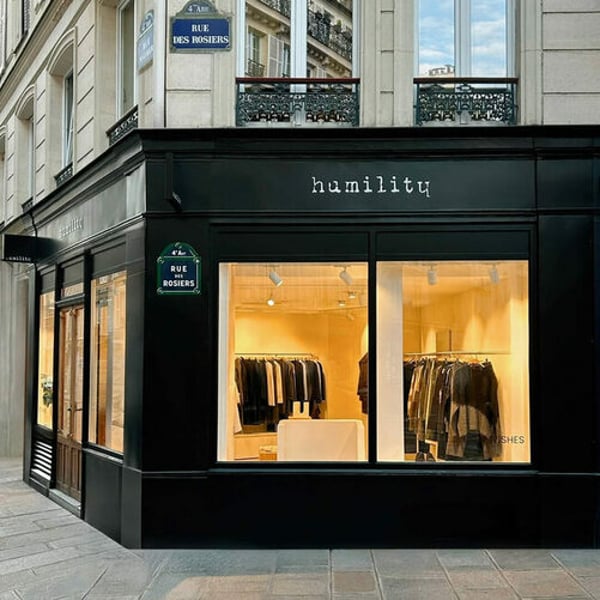
Ten years after its launch, Humility has opened its first Parisian boutique. A sister label to La Fée Maraboutée, the discreetly chic womenswear brand is growing at its own pace. It has just opened the doors of its first Parisian boutique in the Marais, at 11 rue Malher, on the corner of rue des Rosiers.
The brand has taken over the space of multibrand retailer Camélia and now enjoys strong visibility in this highly competitive part of central Paris, attracting both French and international customers. It sits within a nearby retail mix that includes Free People, Cotélac, Balzac, Desigual and Cos.
Launched by La Fée Maraboutée founders Jean-Pierre Braillard and Virginie Mangano, Humility distils pared-back womenswear with understated elegance. Established in 2016 with a proposition radically different from the Roanne-based group’s flagship brand, the label swaps bohemian prints for a more architectural, almost monastic, aesthetic.
The current wardrobe champions ‘effortless’ elegance: oversize cuts, structured lines and a discreet colour palette (black, anthracite, chalk, khaki). Key pieces include the precisely cut Riu trousers, apron dresses with a workwear accent and, true to the group’s DNA, knitwear crafted in bouclé or textured wool blends. Pricing, slightly higher than at La Fée Maraboutée, ranges from 140 to 270 euros, with production predominantly in Europe, particularly Italy.
In terms of distribution, Humility remains selective, relying on a network of around 110 specialist multi-brand retailers, such as Solana in Paris and Lilyaké in Bordeaux. The brand is present through this channel in key European markets: the UK, Germany, Italy, Spain, and the Benelux region.

In recent years, the group has also been developing direct sales, both online and in-store. It is testing its mono-brand concept with a pilot location opened in 2023 in its home region, Lyon, at 24 Grande Rue de la Croix-Rousse, a laboratory that has helped refine the customer experience by adopting a concept-store approach and incorporating jewellery and home décor brands. Today, the brand is strengthening its visibility in department stores with around a dozen strategic corners, notably at Printemps Nation in Paris as well as at Galeries Lafayette in Reims and Tours.
The brand is also active internationally, having presented in Taiwan this summer, during the Mode in France event, its spring-summer 2026 collection inspired by the work of Japanese architect Tadao Ando. This collection will, of course, be showcased in its new Paris boutique.
The French group headed by Gaëlle Lelong does not disclose the brand’s financial performance. In 2024, despite a downturn in business, the parent company, La Fée, posted sales of over 37 million euros and remained profitable.
This article is an automatic translation.
Click here to read the original article.
Copyright © 2025 FashionNetwork.com All rights reserved.








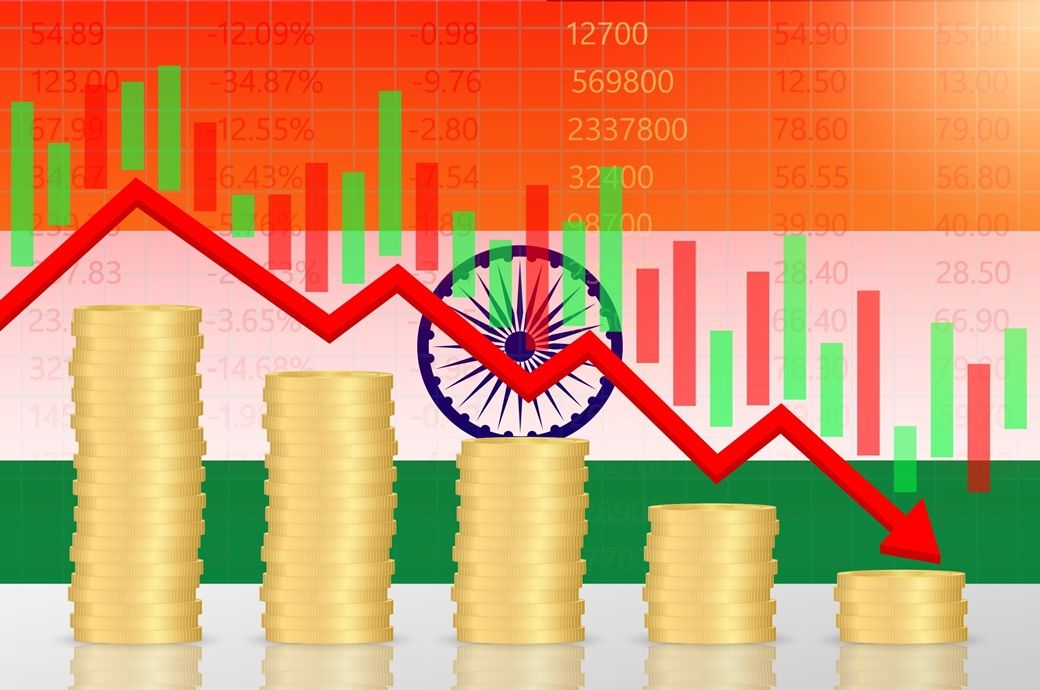
While trends in high frequency indicators for January-February 2026 appear favourable, the heightened uncertainty around the duration of the Middle East conflict casts a shadow on the near-term macroeconomic outlook for India amid high import dependency for items like crude oil, natural gas and fertilisers, it noted.
India’s FY27 GDP growth is likely to slow to 6.5 per cent from the projected 7.5 per cent in FY26 owing to the impact of higher energy prices and concerns around energy availability, ICRA Ratings said.
The heightened uncertainty around the duration of the Iran war casts a shadow on the near-term macroeconomic outlook for India.
If the conflict lasts longer, the adverse effects could widen across sectors.
If the conflict lasts for an extended period, the adverse implications of the same could widen across sectors, amid an uptick in input costs and the consequent impact on profitability of the India corporate sector.
Amid the projected uptrend in the consumer price index-based inflation in FY27 with risks tilted to the upside, ICRA Ratings expects an extended pause on the policy rates by the central bank’s monetary policy committee in the fiscal despite the anticipated softening in the GDP growth. However, it expects the Reserve Bank of India to continue to intervene on the liquidity front during FY27.
The available data for January–February FY2026 indicate a positive trend across most non-agricultural indicators, with the year-on-year performance of 12 out of 18 indicators improving compared to the third quarter of FY26, while the remaining six deteriorated.
Fibre2Fashion News Desk (DS)
Indonesia’s apparel exports rose modestly to $8.705 billion in 2025 from $8.316 billion in 2024, reflecting gradual recovery.
The US remained dominant, accounting for over 56 per cent of shipments, highlighting growing market dependence.
While Japan, South Korea and Europe offered stability, exports stayed concentrated in key products and segments.
Source link

Methanol prices in India have surged nearly 150 per cent from pre-Iran–US tension levels, tracking a sharp rise in crude oil and tightening global energy markets.
Hormuz disruption risks, limited rerouting capacity, rising freight and insurance costs, and constrained imports are fuelling volatility, with prices seen approaching ₹90 per kg.
Source link


Wrigley Field to host Big Ten/SEC volleyball doubleheader

Romelu Lukaku facing disciplinary action after missing Napoli training

Crew that flew Apache helicopters near Kid Rock’s house suspended from flying

-

 Politics1 week ago
Afghanistan announces release of detained US citizen
-

 Sports1 week ago
Broadcast industry CEO says consolidation is ‘essential’ to compete for NFL soaring media rights prices
-

 Entertainment1 week ago
UN warns migratory freshwater fish numbers are spiralling
-

 Tech1 week ago
Can a Home Appliance Fix the Problem of Soft-Plastic Waste?
-
 Business1 week ago
Property Play: Home flippers see smallest profits since the Great Recession, real estate data firm says
-
 Business1 week ago
Gold prices soar in Pakistan – SUCH TV
-

 Fashion1 week ago
ICE cotton slips on weaker crude, profit booking
-
 Business1 week ago
More women are entering wealth management, but few are in advisory roles, study finds