

Business
Hurun Rich List 2025: Mukesh Ambani reclaims spot as India’s richest with Rs 9.55 lakh crore wealth; beats Gautam Adani – The Times of India

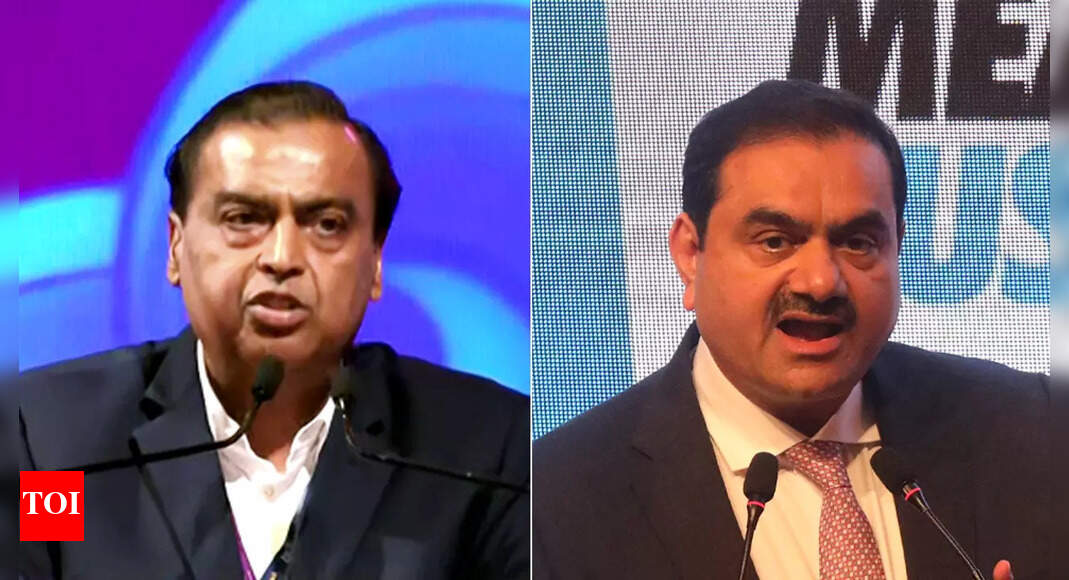
Mukesh Ambani and his family have beaten Gautam Adani to become India’s richest, according to the latest M3M Hurun India Rich List 2025. With a wealth of Rs 9.55 lakh crore, Ambani has reclaimed the top spot, while Adani family stands second with a wealth of Rs 8.15 lakh crore.Making history in the rankings, Roshni Nadar Malhotra and family have achieved the third position with Rs 2.84 lakh crore, establishing her as India’s richest woman. The report acknowledges the significant impact of newcomers on the nation’s wealth distribution.India’s affluent class has experienced substantial expansion, with the country now housing more than 350 billionaires, representing a dramatic increase since the list’s inception 13 years prior. The combined wealth of all listed individuals totals Rs 167 lakh crore, approximating half of India’s gross domestic product.Fresh entrepreneurs are leading wealth creation trends. At age 31, Perplexity’s Aravind Srinivas has become India’s youngest billionaire with Rs 21,190 crore wealth. Actor Shah Rukh Khan made his debut in the billionaire category, amassing Rs 12,490 crore.The Niraj Bajaj family achieved the highest wealth increase, growing their fortune by Rs 69,875 crore to Rs 2.33 lakh crore, according to an ET report quoting the list.With 451 billionaires, Mumbai remains India’s wealth capital, whilst New Delhi follows with 223 and Bengaluru with 116. Industries showing highest representation include pharmaceuticals with 137 entries, industrial products with 132, and chemicals & petrochemicals contributing 125 entries.Women’s participation in wealth creation shows promising growth, with 101 women appearing on the 2025 list, including 26 dollar billionaires. Self-made individuals constitute 66% of the total list, demonstrating strong entrepreneurial spirit, whilst 74% of newcomers built their wealth independently.


People with lower incomes benefitted less from the house-buying scheme than those with high incomes, the influential think tank says.
Source link

Lucid electric vehicles are seen at the New York International Auto Show on April 2, 2026.
Danielle DeVries | CNBC
Lucid Group has named the former chairman and CEO of Schindler Group, an industrial manufacturer of escalators and elevators, as its new chief executive.
Silvio Napoli, who spent nearly 31 years at Schindler, is set to become the all-electric vehicle maker’s second CEO following the abrupt departure of Lucid founder Peter Rawlinson in February 2025.
Interim CEO Marc Winterhoff will remain with the company as its chief operating officer once Napoli takes the reins, according to Lucid. A company spokesman said Napoli is expected to begin as CEO in the coming weeks, pending completion of his relocation from Switzerland and U.S. visa process.
Shares of Lucid fell roughly 5% in midday trading, as the company also announced expanded investments Tuesday of $750 million from an affiliate of Saudi Arabia’s Public Investment Fund — its largest shareholder — and Uber Technologies.
The latter is an expansion of a previously announced tie-up with Uber that includes the ride-hailing company investing another $200 million in Lucid. Uber has also agreed to purchase at least 35,000 Lucid vehicles designed exclusively for use as part of Uber’s future global robotaxi service. That’s up from $300 million and 20,00 vehicles announced in July.
The PIF-backed investment is $550 million, according to Lucid.
Napoli, who also serves on the board of American-Irish multinational power management company Eaton Corp., has not previously led an auto company before, while Rawlinson and Winterhoff are automotive veterans.
The company said Napoli’s “deep operational expertise, financial discipline and track record of leadership in innovation” would position Lucid for its future growth plans, including upcoming midsize EVs and new autonomy initiatives.
“His expertise in capital allocation, operational efficiency and translating advanced technology into consistent high-quality performance over time will be critical as Lucid continues to scale and execute its strategy,” Lucid Chairman Turqi Alnowaiser said in a statement.

NEW DELHI: India’s crude imports from Russia surged in March, with purchases at nearly Rs 5.3 billion (about $6.2 billion) compared with Rs 1.4 billion ($1.6 billion) the previous month, amid the military conflict in West Asia and closure of the Strait of Hormuz.In its latest analysis of Russian fossil fuel exports and sanctions, Centre for Research on Energy and Clean Air (CREA) said India imported Rs 5.8 billion worth of Russian hydrocarbons in March – the second-highest after China – as both volumes and prices increased. Crude accounted for 91% of imports, followed by coal and oil products.The report added India’s total crude imports fell 4% in March, but those from Russia rose four times.
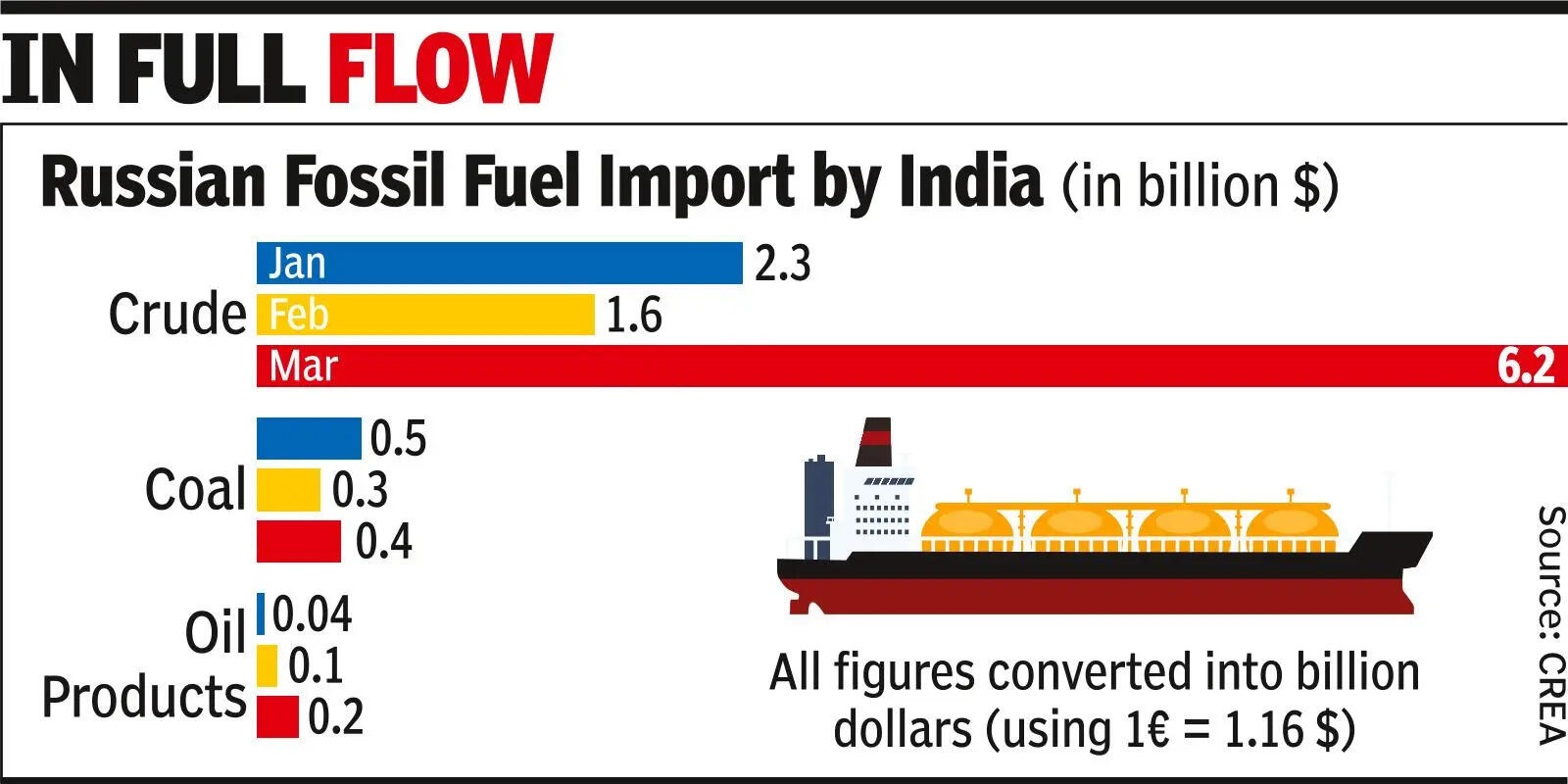
State Refiners Largest Buyers Of Russian Fuel
“The biggest shift was in state-owned refineries’ imports from Russia, which saw a massive 148% month-on-month increase. Their imports were in fact 72% higher than in March 2025, presumably due to Russian barrels being more available in the spot market,” it said. Private refineries registered more than 66% month-on-month increase.In Feb, India was the third-largest importer of Russian hydrocarbons after China and Turkiye, with purchases valued at Rs 1.8 billion and crude accounting for nearly 81% (Rs 1.4 billion) of shipments. The value and volume of imports, however, may differ. Russian Urals were earlier available to India at a discount, but prices surged due to the closure of Hormuz.Though India has been importing Russian barrels in large volumes over the past four years, shipments dipped in Jan and Feb before surging again in March after the US granted a one-month sanctions waiver to ease prices.


Pakistan to receive $3bn additional support from Saudi Arabia: finance minister

Liverpool’s star power can’t match PSG’s in Champions League

ASEAN+3 nations must safeguard fiscal viability, rebuild buffers: AMRO

-

 Fashion1 week ago
India’s exports face reset as EU links trade to carbon metrics: EY
-

 Entertainment7 days ago
Queen Elizabeth II emotional message for Archie, Lilibet sparks speculation
-

 Tech6 days ago
As the Strait of Hormuz Reopens, Global Shipping Will Take Months to Recover
-

 Entertainment1 week ago
Lamar Odom shocking response to Khloé Kardashian account of his overdose
-

 Tech7 days ago
Azure customers up in arms over ‘full’ UK South region | Computer Weekly
-

 Fashion7 days ago
CII submits 20-pt agenda to Indian govt to back firms hit by Iran war
-

 Tech6 days ago
This AI Button Wearable From Ex-Apple Engineers Looks Like an iPod Shuffle
-

 Tech1 week ago
A Single Strike Won’t Shut Off the Gulf’s Desalination System