

Business
Husband In Debt? This 1874 Law Still Secures A Woman’s Money In India


New Delhi: The Married Women’s Property Act (MWPA), 1874, though enacted in colonial India, continues to be a powerful financial shield for women even today. At its core, the Act ensures that a married woman’s income, inheritance, savings, insurance proceeds, and property remain her independent asset, legally protected from her husband’s debts or claims by his creditors.
Key Safeguards Under Married Women’s Property Act (MWPA), 1874
Independent Ownership
A married woman can own, inherit, and dispose of property in her name, without interference from her husband.
Her assets cannot be automatically claimed by creditors if her husband defaults on loans.
Insurance Protection
Life insurance policies taken under the MWPA (with the wife or children as beneficiaries) cannot be attached by creditors.
This ensures that in the event of the husband’s death or financial collapse, the insurance proceeds directly secure the family’s future.
Inheritance Security
Property inherited by a married woman remains her separate estate and cannot be diverted to settle her husband’s liabilities.
Married Women’s Property Act (MWPA), 1874: Why It Matters Today
Even in modern India, where women increasingly contribute to household income and wealth creation, financial risks remain. Business failures, personal debts, or unforeseen liabilities of a spouse can wipe out family resources. The MWPA safeguards a woman’s independent assets, ensuring she is not rendered financially vulnerable due to her husband’s financial decisions.
Also Read: When Love Gets Costly: Wife Gets Tax Notice For Husband’s Rs 6.75-Crore Home
Many women are unaware that a simple step—such as taking a life insurance policy under the MWPA—creates a ring-fence around family security. Financial planners often recommend invoking this Act to ensure women and children remain protected from creditor action.
The Married Women’s Property Act, 1874, though 150 years old, remains one of the strongest legal protections for women in India. By securing independent ownership of assets and safeguarding insurance proceeds, it empowers women to protect their financial interests in a society where risks often spill over from a husband’s financial choices.


Business
Rs 20,000 crore gold, silver rush: What will people buy this Akshaya Tritiya? – The Times of India
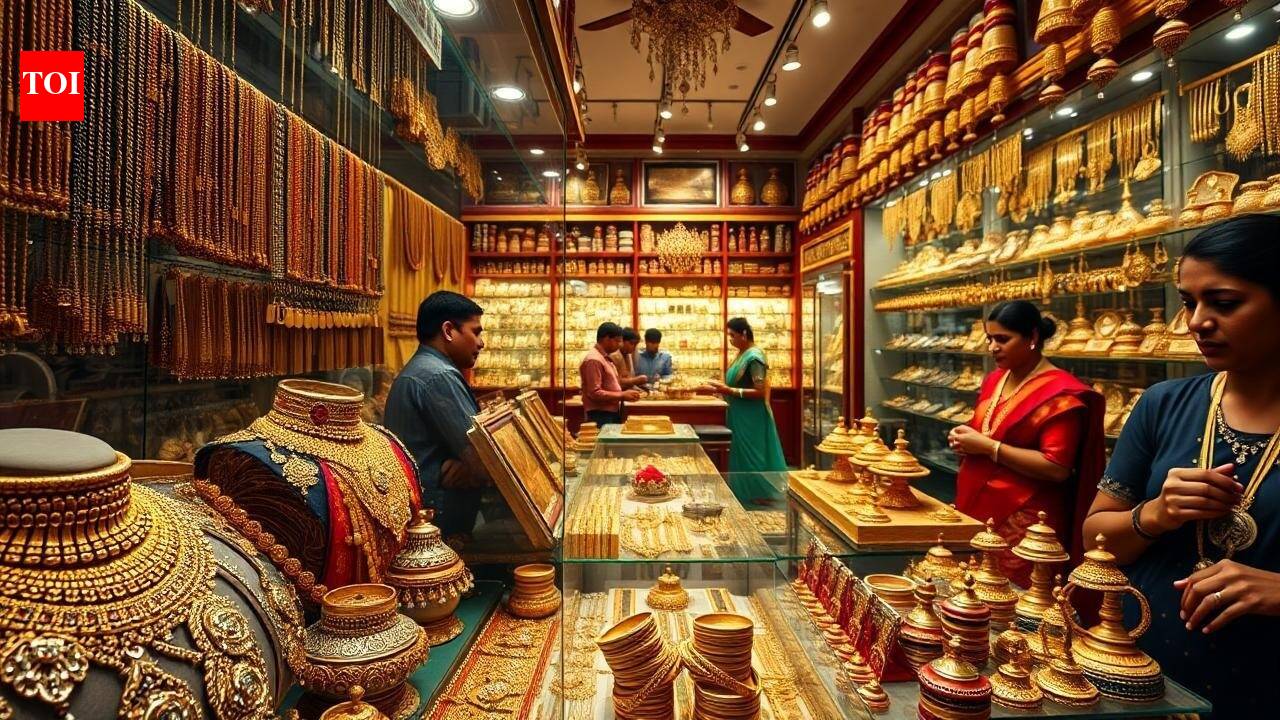
This Akshaya Tritiya, India’s gold and silver markets are heading for bumper purchases, with overall trade likely to cross Rs 20,000 crore even as record-high prices reshape buying patterns. The estimate, shared by the Confederation of All India Traders (CAIT), is higher than last year’s Rs 16,000 crore, signalling growth in value despite a sharp rise in bullion rates.Prices for the yellow metal have surged sharply over the past year, going from Rs 1,00,000 per 10 grams, to Rs 1.58 lakh. Meanwhile, silver has shown a steeper rally, jumping from Rs 85,000 per kilogram to Rs 2.55 lakh per kilogram. According to CAIT, this sharp escalation has not weakened demand, but is instead prompting consumers to make more deliberate and value-oriented purchases.Praveen Khandelwal, member of parliament from Chandni Chowk and secretary general of CAIT told ANI, “Akshaya Tritiya has traditionally been one of India’s most auspicious occasions for purchasing gold… While gold continues to dominate, the nature of purchasing is evolving significantly in response to steep price escalation.”Commenting on customer preference, CAIT national president BC Bhartia highlighted, “There is a clear shift towards lightweight, wearable jewellery, alongside a stronger focus on silver and diamond products. Attractive incentives such as reduced making charges and complimentary gold coins are also helping sustain consumer interest.”Despite the increase in overall trade value, the quantity of metals being sold tells a different story. Pankaj Arora, National President of the All India Jewellers and Goldsmith Federation (AIJGF), an associate of CAIT, explained that the projected Rs 16,000 crore gold trade amounts to nearly 10,000 kilograms (10 tonnes) at current rates. The value, spread across an estimated 2 to 4 lakh jewellers, translates to average sales of only 25 to 50 grams per jeweller, “clearly indicating a sharp decline in volume”.Meanwhile for silver, the estimated Rs 4,000 crore trade corresponds to around 1,56,800 kilograms (157 tonnes), resulting in average sales of about 400 to 800 grams per jeweller during the festival period. “These figures underline a critical shift: while the value of business is expanding due to rising prices, actual consumption is contracting,” Khandelwal said.This gap between value and volume is also reshaping consumer’s buying pattern, with smaller items and lightweight jewellery gaining popularity. At the same time, jewellers are facing challenges due to fluctuating prices, especially when it comes to managing inventory.Even so, festive demand remains steady, with markets witnessing healthy footfall. “Consumers are now adopting a more cautious and pragmatic approach, balancing traditional beliefs with financial discipline,” Khandelwal added.At the same time, it’s not just about physical gold anymore as consumers are increasingly exploring alternatives like digital gold, Sovereign Gold Bonds and gold ETFs, drawn by the promise of liquidity, safety and flexibility when prices are volatile.CAIT and AIJGF have urged jewellers to comply with mandatory hallmarking standards, including HUID certification, and advised buyers to verify the purity and authenticity of their purchases.

Lauren Elcock is among the young Londoners who say rising rents are forcing them to quit the capital.
Source link

As governments across the world restricted the movements of their citizens during Covid lockdowns from 2020, people spent more time online. We bought more online and socialised more online, and this brought us closer to the people who want to scam us. At the same time, realistic video impersonations, voices, websites, and texts became more commonplace, and scammers increased their use of social media including WhatsApp.

Rs 20,000 crore gold, silver rush: What will people buy this Akshaya Tritiya? – The Times of India

Prince Harry corrects blunder before peace with King Charles suffers again
The cost of rising rents: Working four jobs and pushed on to benefits

-

 Entertainment6 days ago
Palace left in shock as Prince William cancels grand ceremony
-

 Sports6 days ago
The case for Man United’s Fernandes as Premier League’s best
-

 Politics1 week ago
Chinese, Taiwanese will unite, Xi tells Taiwan opposition leader
-

 Entertainment1 week ago
Dua Lipa hits major career high ahead of wedding with Callum Turner
-
 Business1 week ago
The FAA wants gamers to apply for air traffic control jobs
-
 Business1 week ago
100% road tax waiver for electric cars, new rules for 2, 3 and 4 wheelers – what Delhi govt’s draft EV policy says – The Times of India
-
 Business6 days ago
UK could adopt EU single market rules under new legislation
-

 Fashion6 days ago
Energy emerges as biggest cost driver in textile margins