

Fashion
ICE cotton stays weak as dollar falls; WASDE report awaited

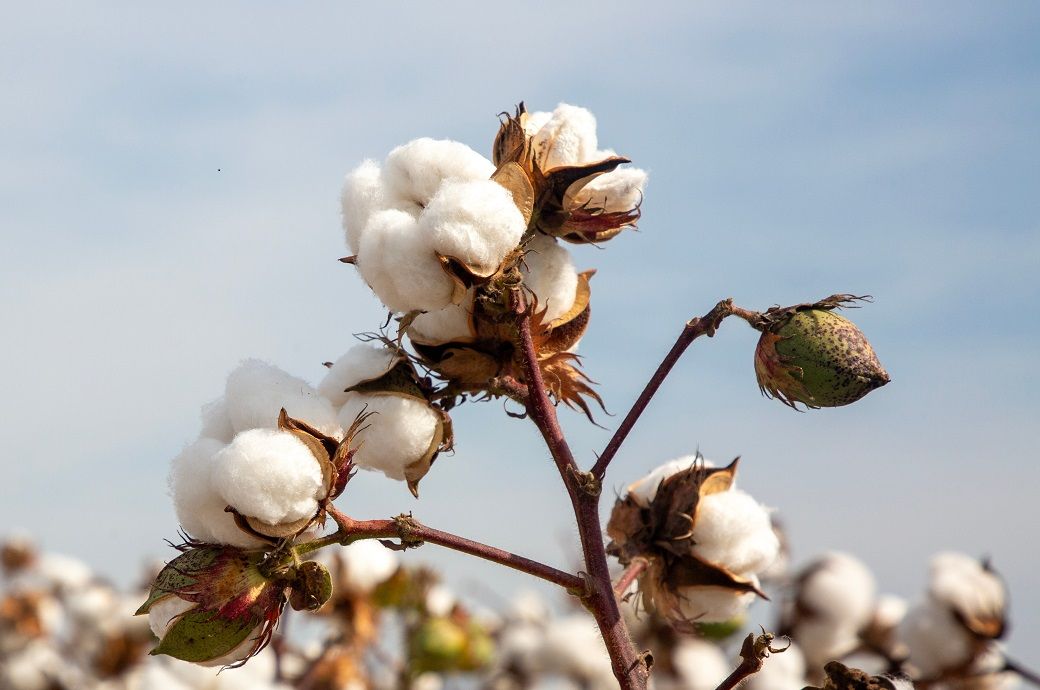
ICE March 2026 cotton futures settled at 64.53 cents per pound, down 0.28 cents or 0.43 per cent. New contract-low closes were recorded for December 2025, March 2026, May 2026, and July 2026 for the second consecutive session.
ICE cotton futures remained weak ahead of WASDE report, with March 2026 settling lower and several contracts hitting new lows.
A softer US dollar offered limited support, while market caution persisted amid weak demand and muted buying.
US government’s reopening and recent export sales data had little impact, and analysts expect higher supply estimates as December’s first delivery date approaches.
The dollar fell to a two-week low, improving foreign buying interest, while Wall Street’s sharp decline and fading expectations of rate cuts added to overall market caution.
Total volume traded today stood at 94,153 contracts, while yesterday’s cleared volume of 115,071 contracts ranked as the eighth-highest on record.
The US government reopened after a 43-day shutdown, with most federal services resuming, and cotton prices remaining flat. Loan programmes will offer temporary relief to growers.
USDA export net sales for the week ending September 25 were 200,600 bales, including 199,500 Upland bales and 1,100 Pima bales for the 2025–26 season. This was the last weekly US cotton sales report issued before the shutdown.
Market sentiment remains under pressure as sellers are not realising profits despite competitive pricing, and demand is expected to stay muted.
Market analysts said the upcoming USDA report may show higher supply and a slight reduction in export projections. The December contract remained under pressure as the first delivery date approaches on November 21.
This morning (Indian Standard Time), ICE cotton for December 2025 was trading at 62.93 cents per pound (up 0.03 cent), cash cotton at 60.40 cents (down 0.40 cent), the March 2026 contract at 64.56 cents (up 0.03 cent), the May 2026 contract at 65.76 cents (up 0.06 cent), the July 2026 contract at 66.85 cents (up 0.04 cent), and the October 2026 contract at 67.33 cents (down 0.26 cent). A few contracts were unchanged from their previous close, with no trading recorded so far today.
Fibre2Fashion News Desk (KUL)










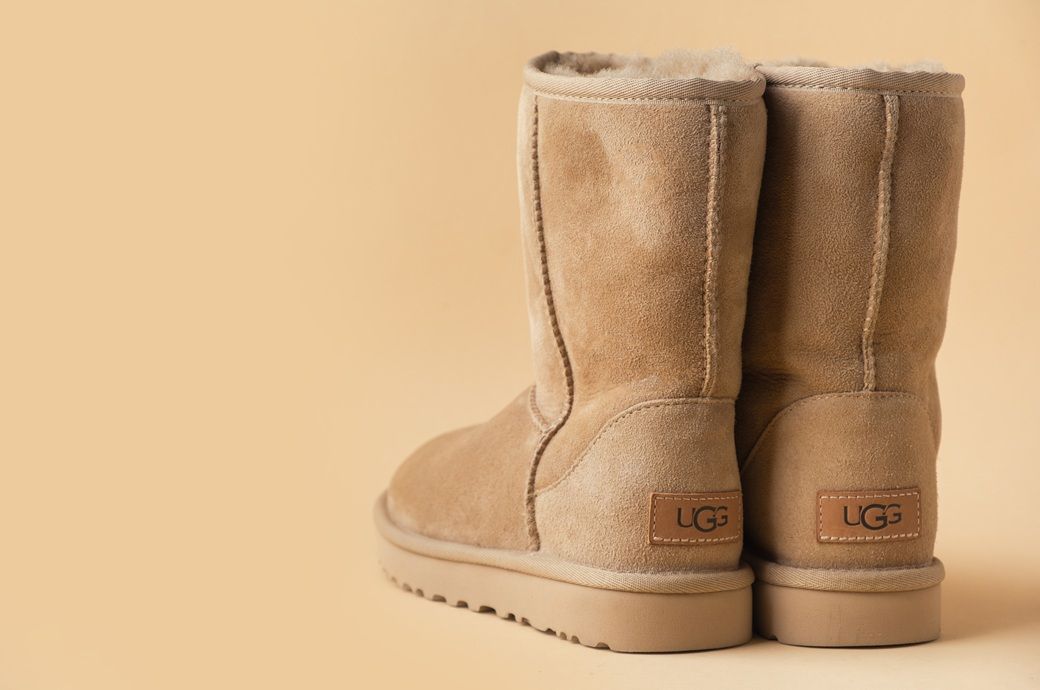
Kenneth Straka, Senior Product Development Manager at Deckers Outdoor Corporation, said that Deckers places strong emphasis on sustainability, noting that founder John Luke often reminded the team that the French word for sustainability is durability. This idea aligned with discussions at the Global Fashion Summit, where the theme centred on “Building Resilient Futures” in the sustainable and circular economy.
Durability has helped UGG become one of the most sought-after boot brands and a key sales driver for Deckers, alongside its sportswear brand Hoka. “One of the things we think about in terms of circularity is making products that last a long time and remain with consumers throughout their lives. We want products that consumers can wear for ** or ** years,” Straka said in an interview with Fibre*Fashion on the sidelines of the Global Fashion Summit in Copenhagen.

In the Tiruppur market, cotton yarn prices increased by ****;*–* per kg in this week despite sluggish local demand. Prices were quoted higher because of limited supply from spinning mills. A trader from the Tiruppur market told Fibre*Fashion, “Domestic demand remained limited, but spinning mills are not relying solely on the domestic market for cotton yarn sales. They are focusing more on exports, where demand and prices remain attractive. Mills have raised yarn prices following higher ICE cotton prices and the CCI’s increase in auction base prices, although ICE cotton has witnessed a sharp decline over the past two days.”
In Tiruppur, knitting cotton yarn prices were noted as: ** count combed cotton yarn at ****;***–*** (~$*.**–*.**) per kg (excluding GST), ** count combed cotton yarn at ****;***–*** (~$*.**–*.**) per kg, ** count combed cotton yarn at ****;***–*** (~$*.**–*.**) per kg, ** count carded cotton yarn at ****;***–*** (~$*.**–*.**) per kg, ** count carded cotton yarn at ****;***–*** (~$*.**–*.**) per kg, and ** count carded cotton yarn at ****;***–*** (~$*.**–*.**) per kg.
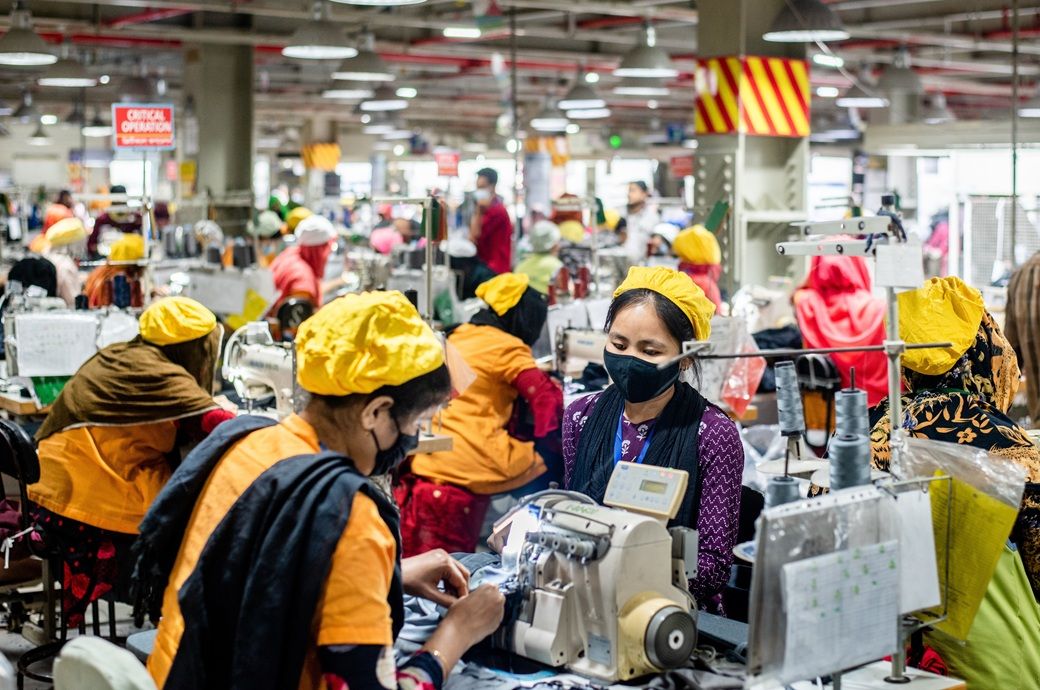
BGMEA president Mahmud Hasan Khan said they discussed export diversification within the garment sector, reopening of closed factories and many factories’ struggle for survival.
Representatives of two top Bangladesh garment trade bodies recently met PM Tarique Rahman and urged him to ensure uninterrupted power and energy supply, quick release of export receipts from banks, reopening of closed factories and easing of customs regulations.
BKMEA raised concerns about misuse of the bond facility and urged action against violators of bond licences.
104 factories have informed the BGMEA about their closure till now, Khan said. BGMEA will scrutinise these cases to identify the genuine reasons for the closures.
Following the scrutiny, the association will send recommendations for reopening these factories, as the government is working to open a Tk 200-billion fund to assist their revival.
BKMEA president Mohammad Hatem said some 400 factories closed in the last three years—nearly 300 of them due to non-cooperation from banks. He said banks release export receipts to exporters’ lien accounts, but delays in payment often force loans into default, leaving exporters unable to pay suppliers on time.
He also demanded uninterrupted supply of power and gas to industrial units as recent shortages of fuel oil have severely affected productivity, according to domestic media ooutlets.
Hatem raised concerns about misuse of the bond facility and urged action against violators of bond licences.
He also called for easing the rules of the National Board of Revenue, particularly customs procedures, to smoothen export and import processes and reduce lead times.
Fibre2Fashion News Desk (DS)


Indy 500: Counting Down The 10 Best Finishes In Race History

“Call Her Daddy” podcast host Alex Cooper announces pregnancy with 1st child

Shania Twain wants to sing at Harry Styles, Zoe Kravitz wedding

-

 Entertainment5 days ago
Conan O’Brien hat tricks as Oscar host
-

 Tech1 week ago
Could Contact-Tracing Apps Help With the Hantavirus? Not Really
-

 Tech1 week ago
I Tried the Best Captioning Smart Glasses, and Only One Leads the Pack
-
 Fashion5 days ago
Italy’s Zegna Group’s Q1 growth boosted by strong organic performance
-

 Sports1 week ago
Bobby Cox, legendary Atlanta Braves manager who led 1995 World Series champions, dead at 84
-

 Entertainment1 week ago
Martin Short: Facing tragedy with joy
-

 Entertainment7 days ago
Tom Brady gets back at Kevin Hart during Netflix roast
-

 Entertainment1 week ago
Martha Stewart: How to make an omelet