

Fashion
ICE cotton weakens on farmers’ selling, but decline capped

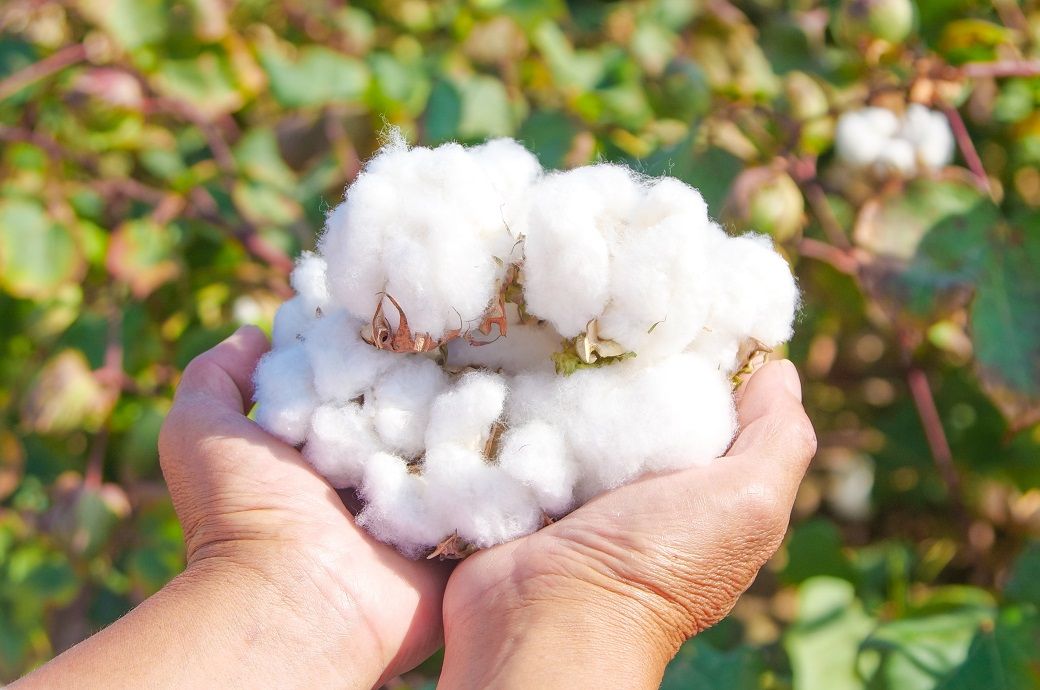
The more active March 2026 cotton futures settled at 64.46 cents per pound, down 0.11 cents, reflecting continued price stagnation. Other contracts closed with declines between 4 and 11 points. The 64-cent low attracted some fundamental buying interest, but farmer selling and algorithmic trades capped any move toward 65 cents.
ICE cotton futures remained weak as farmer selling and algorithmic activity limited any upward move despite support from a softer US dollar and firmer crude oil.
March 2026 settled at 64.46 cents amid low trading volumes and stagnant prices.
Weak US economic data boosted expectations of rate cuts.
JP Morgan sees prices potentially rising to 75 cents by late next year.
The US Dollar Index fell 0.45 per cent to 98.85, touching an intraday low of 98.82, its lowest level since October 29. The weaker dollar made US cotton cheaper for global buyers and supported overall demand.
Rising crude oil prices increased polyester costs, indirectly supporting cotton prices as polyester became less competitive.
Total trading volume was 26,902 contracts, one of the lowest levels in more than two months.
Overall commodities were weaker, while US equity markets moved towards all-time highs. Market sentiment was driven by expectations of a possible December interest rate cut by the Federal Reserve. US ADP data showed private-sector employment fell by 32,000 in November compared to expectations of a 10,000-job increase. Weaker-than-expected economic data strengthened expectations of further monetary easing.
CFTC data showed speculators reduced net short positions by 2,480 contracts, taking their total net short position to 84,607 contracts for the week ending October 21.
JP Morgan projected that ICE cotton futures could rise toward 75 cents per pound by the fourth quarter of next year, while ICE-certified stock remained stable at 19,894 bales as of December 2.
This morning (Indian Standard Time), ICE cotton for March 2026 traded at 64.44 cents per pound (down 0.02 cent), cash cotton at 62.46 cents (down 0.11 cent), the December 2025 contract at 62.66 cents (down 0.11 cent), the May 2026 contract at 65.57 cents (down 0.03 cent), the July 2026 contract at 66.54 cents (down 0.06 cent), and the October 2026 contract at 67.40 cents (down 0.08 cent). A few contracts were unchanged from the previous close, with no trading recorded so far today.
Fibre2Fashion News Desk (KUL)












Fashion demand in 2026 remains intact but more selective, with consumers spending cautiously and prioritising value, durability and versatility.
Intentional purchasing and promotion sensitivity are reshaping pricing dynamics and margin structures.
Polarised consumer behaviour is pushing brands to rebuild trust, justify full price and align sustainability with longevity.
Source link

Directed and shot by Mert Alas, the new chapter sharpens the focus on denim as the ultimate expression of personal style through icon Jung Kook’s distinctive and influential point of view as he lives in the moment.
Calvin Klein, owned by PVH Corp., has unveiled its Spring 2026 denim campaign fronted by BTS icon Jung Kook.
Directed and photographed by Mert Alas, the cinematic film fuses music, movement and city energy, highlighting 90s Straight, Baggy and reworked Trucker silhouettes.
A special appearance by Rosie Perez amplifies the brand’s signature visual storytelling.
The campaign unfolds across a series of immersive worlds, unified and guided by Jung Kook’s style, attitude and way of living. The high-impact film fuses fashion and entertainment, moving to an instantly recognizable soundtrack and brought to life through the artist’s signature choreography and commanding presence. The interplay of music and movement – complete with a cameo from New York City legend Rosie Perez – captures the impact synonymous with Calvin Klein’s iconic visual storytelling.
Calvin Klein jeans are at the center of the wardrobe with hero silhouettes leading the narrative: the effortless attitude of the 90s Straight; the relaxed and nostalgic proportions of the Baggy; and new interpretations of the iconic Trucker jacket — all reimagined with elevated washes and designed for versatility. Casual logo tees and oversized bombers complete the looks, reinforcing denim as both uniform and statement.
“I love Calvin Klein jeans because they’re designed to be lived in,” said Jung Kook. “The looks I wore for this campaign nod to ‘90s style while feeling completely modern. It was exciting to bring together my love of music, dance and fashion against the energy of the city.”
Note: The headline, insights, and image of this press release may have been refined by the Fibre2Fashion staff; the rest of the content remains unchanged.
Fibre2Fashion News Desk (RM)

Premier Li Qiang, who delivered the report at the opening of the fourth session of the 14th National People’s Congress in Beijing, said the growth target is “well aligned with the country’s long-range objectives through the year 2035 and is broadly in line with the long-term growth potential of China’s economy, with favorable conditions in place for achieving this target.”
China has set a GDP growth target of 4.5–5 per cent for 2026, alongside goals to stabilise employment, manage inflation, maintain grain output and cut emissions.
The plan also preserves flexibility for structural reforms under the 15th Five-Year Plan, aiming to balance steady economic expansion with long-term, high-quality and sustainable development.
Main development targets for 2026 also include a surveyed urban unemployment rate of around 5.5 per cent, creation of over 12 million new urban jobs, a rise in the consumer price index of around 2 per cent, personal income growth in step with economic growth, a basic equilibrium in the balance of payments, grain output of around 700 million tonnes, and a drop of around 3.8 per cent in carbon dioxide emissions per unit of GDP.
Qiang said the targets took into account the need to leave room for structural adjustments, risk prevention and reform in the opening year of the 15th Five-Year Plan (2026–30) period, to lay a solid foundation for improved performance in the coming years. Government at local level should, taking into account their own conditions, make solid efforts to deliver positive outcomes, he added.
Analysts said the 2026 target reflects a pragmatic approach in recognising structural and cyclical challenges facing the world’s second-largest economy, while pursuing reasonable growth in line with high-quality development.
Fibre2Fashion News Desk (JP)


US-Israel attack on a premier Tehran hospital targeted newborns, destroyed IVF center

Athletics GM ‘always open’ to Kyler Murray reunion ahead of expected Cardinals release

US mortgage rates rise to 6% after three-week slide as oil-driven bond yields climb – The Times of India

What are Iran’s ballistic missile capabilities?

India Us Trade Deal: Fresh look at India-US trade deal? May be ‘rebalanced’ if circumstances change, says Piyush Goyal – The Times of India

US arrests ex-Air Force pilot for ‘training’ Chinese military

-
 Politics1 week ago
What are Iran’s ballistic missile capabilities?
-
Business6 days ago
India Us Trade Deal: Fresh look at India-US trade deal? May be ‘rebalanced’ if circumstances change, says Piyush Goyal – The Times of India
-
 Politics1 week ago
US arrests ex-Air Force pilot for ‘training’ Chinese military
-
 Business7 days ago
Attock Cement’s acquisition approved | The Express Tribune
-
 Business1 week ago
Households set for lower energy bills amid price cap shake-up
-

 Fashion7 days ago
Policy easing drives Argentina’s garment import surge in 2025
-

 Sports6 days ago
LPGA legend shares her feelings about US women’s Olympic wins: ‘Gets me really emotional’
-
 Fashion7 days ago
Texwin Spinning showcasing premium cotton yarn range at VIATT 2026