

Fashion
IKEA buys US logistics tech firm Locus in online growth push


By
Reuters
Published
October 8, 2025
IKEA has acquired U.S. logistics technology firm Locus, the two companies said on Tuesday, a deal the Swedish furniture retailer said would make its deliveries to shoppers smoother and faster as it invests to expand online sales.
The takeover is in addition to a $2.2 billion push by Ingka Group, the biggest global IKEA franchisee, in the U.S. where it competes with Wayfair and Walmart and is also contending with higher tariffs on imports that are increasing its costs.
IKEA declined to disclose the value of the deal. Locus was valued at $300 million in its most recent funding round in 2021, according to reports at the time.
IKEA said acquiring Locus would simplify its logistics and reduce its delivery expenses by an estimated 100 million euros ($117.41 million) a year globally.
Locus uses artificial intelligence to group orders and predict routes that minimize the time delivery vehicles spend in traffic, a planning process that is currently done manually by IKEA workers, Parag Parekh, chief digital officer at Ingka Group told Reuters in an interview.
Locus will also enable IKEA to offer customers more delivery windows and options, and give live updates on where their package is, as well as delivering faster, Parekh added. It will likely pilot the technology in the U.S. and UK before using it globally.
“Speed is one aspect of it, but more importantly for us, it will be the flexibility, it will be the ability to track… and more importantly, through all of this, help drive a better customer experience,” he said.
Locus’ shareholders included Singapore’s sovereign wealth fund GIC and private equity firms Alpha Wave, Tiger Global, and Qualcomm Ventures prior to the all-share acquisition by Ingka Investments, the retailer’s investment arm.
Under the deal, Locus will operate independently and continue to work with clients beyond IKEA.
Known mostly for its bright blue big-box suburban stores showcasing sofas, beds and bookcases in a labyrinth layout, IKEA has shifted focus onto its online business over the past five years and invested in smaller city-centre stores as it targets younger and more urban shoppers.
Online sales accounted for 28% of total IKEA retail sales in its 2024 financial year, up from 11% in 2019.
The acquisition comes just a week after Ingka Investments bought a building in Manhattan for $213 million, pushing ahead with U.S. expansion despite President Donald Trump imposing higher tariffs on furniture imports.
“In terms of the macroeconomics around us … probably there’s uncertainty on the quarters ahead,” Parekh said. “But as a company we remain committed to the U.S.”
© Thomson Reuters 2025 All rights reserved.











Without seasonal adjustment, this number dropped by 369,000, or 0.8 per cent MoM, with the decrease being a usual seasonal phenomenon.
The seasonally-adjusted number of employed in Germany fell by 14,000 month on month (MoM) in January to 45.5 million, provisional data show.
This number was down by 0.2 per cent YoY in the month.
Around 1.86 million were unemployed in January—a rise of 11.7 per cent YoY.
The unemployment rate rose to 4.2 per cent—a rise of 0.5 pp YoY.
The number of unemployed, at 1.75 million, rose by 0.4 per cent MoM.
In the period from May to December 2025, the number was down by an average of 12,000 MoM.
The number of employed in January 2026 was down by 88,000, or 0.2 per cent, year on year (YoY).
The downward trend in the YoY labour market figures, observed since August 2025, continued, a Destatis release said.
According to the Destatis Labour Force Survey, 1.86 million were unemployed in January 2026—an increase of 195,000, or 11.7 per cent, YoY. The unemployment rate rose to 4.2 per cent—an increase of 0.5 percentage point (pp) YoY.
Adjusted for seasonal and irregular effects, the number of unemployed in January stood at 1.75 million—a MoM increase of 6,000, or 0.4 per cent. The adjusted unemployment rate remained unchanged at 4 per cent.
Fibre2Fashion News Desk (DS)

Activewear sales rose 9 per cent to $3,088 million, while Innerwear sales increased 21 per cent largely due to the acquisition. International sales declined 5 per cent to $240 million.
Gildan Activewear has reported full-year 2025 net sales of $3,619 million, up 11 per cent, supported by HanesBrands integration and growth in Activewear and Innerwear.
Adjusted EPS rose 17 per cent to $3.51, while free cash flow reached $493 million.
The company targets $250 million synergies by 2028, plans Bangladesh Phase 2 expansion, and forecasts 2026 revenue of $6-6.2 billion.
The gross profit increased to $1,130 million and gross margin improved 50 basis points to 31.2 per cent, supported by lower manufacturing and raw material costs alongside favourable pricing, partly offset by tariff pass-through. Adjusted for a $35.4 million inventory fair value step-up related to the transaction, adjusted gross profit reached $1,165 million with adjusted gross margin of 32.2 per cent; the remaining $237 million step-up is expected to flow through cost of sales in 2026, Gildan said in a press release.
Selling, general and administrative (SG&A) expenses were $389 million, while adjusted SG&A rose to $387 million (10.7 per cent of sales) from $308 million (9.4 per cent), reflecting consolidation effects and higher variable compensation. Operating income stood at $620 million (17.1 per cent margin) versus $618 million (18.9 per cent) in 2024, while adjusted operating income increased to $779 million, lifting adjusted operating margin to 21.5 per cent.
Net financial expenses climbed $45 million to $149 million due to acquisition-related borrowing. GAAP diluted EPS from continuing operations was $2.57 compared with $2.46, while adjusted diluted EPS rose 17 per cent to $3.51, benefiting from a lower diluted share base.
Operating cash flow increased to $606 million from $501 million, and free cash flow reached $493 million after capex of $114 million. Year-end net debt was $4,417 million, with leverage at 3.0x net debt to trailing 12-month proforma adjusted EBITDA.
In the fourth quarter (Q4), net sales from continuing operations rose 31.3 per cent to $1,078 million, with operating margin at 9.2 per cent and adjusted operating margin at 20.7 per cent. GAAP diluted EPS declined to $0.32, while adjusted diluted EPS increased to $0.96. Quarterly operating cash flow rose to $336 million and free cash flow to $304 million.
Integration progress is ahead of plan, with expected annual run-rate cost synergies of about $250 million by end-2028, up from the earlier $200 million target. The company plans to close two HanesBrands textile facilities in early 2026 as part of footprint optimisation.
Gildan has initiated a formal sale process for the HanesBrands Australian business, expected to generate approximately $675 million in net sales and $0.21 in diluted EPS in 2026, with proceeds earmarked for debt reduction.
For 2026, excluding HanesBrands Australia, Gildan forecasts revenue of $6-6.2 billion and adjusted diluted EPS of $4.2-4.4, alongside adjusted operating margin of about 20 per cent and free cash flow above $850 million. The company also approved a 10 per cent dividend increase, declaring a quarterly dividend of $0.249 per share.
Looking ahead, Gildan plans to develop a second textile facility within its Bangladesh complex, with initial production targeted for late 2027. From Q1 2026, segment reporting will shift from product categories to Retail and Wholesale to align with its go-to-market structure.
“Our results underscore the impressive execution by our global team whose focus is now on fully capturing the value of our expanded platform. As we look ahead to 2026, we are very excited about the HanesBrands acquisition which doubles our scale, combines iconic brands with our world-class, low-cost, vertically integrated platform, and unlocks a powerful engine for innovation and growth. The integration is well underway, and we now expect to deliver higher than initially targeted run-rate cost synergies reaching approximately $250 million by the end of 2028 with approximately $100 million in 2026,” said Glenn J Chamandy, president and CEO at Gildan Activewear.
Fibre2Fashion News Desk (SG)
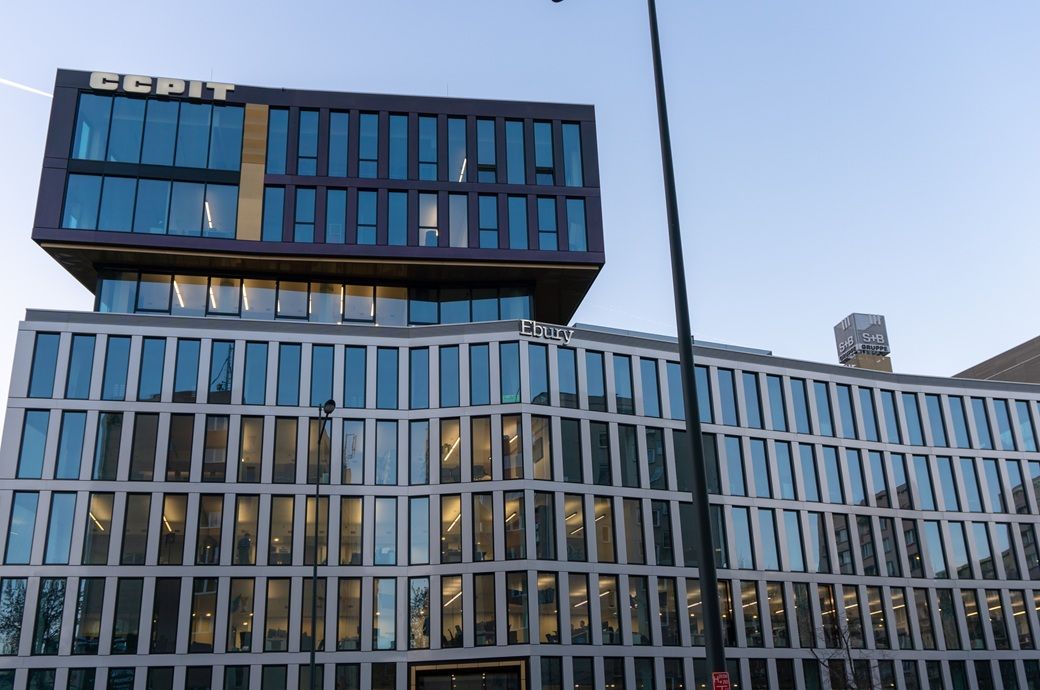
CCPIT has approved 119 activities for Chinese enterprises to participate in US-based exhibitions this year; 30 are over by February, CCPIT spokesperson Wang Wenshuai told in a press conference.
It will also utilise its dedicated working group for foreign-funded enterprises, ensuring that the reasonable demands of US-funded enterprises are met, Wang was cited as saying by a state-controlled media outlet.
The China Council for the Promotion of International Trade will facilitate exchanges and collaboration between Chinese and US firms in investment, trade and technology.
It has approved 119 activities for Chinese enterprises to participate in US-based exhibitions this year; 30 are over by February.
It will also utilise its dedicated working group for foreign-funded enterprises to address US firms’ demand.
CCPIT will use events like the Asia-Pacific Economic Co-operation CEO Summit and the B20 business activities during the December G20 Leaders’ Summit as an opportunity to work with all parties, including the US business community, to build consensus, deepen co-operation and promote inclusive, strong and sustainable growth of the Asia-Pacific and global economies, Wang added.
Fibre2Fashion News Desk (DS)


Employment in Germany continues to drop in Jan 2026

Canada’s Gildan posts $3.6 bn 2025 sales, growth supported by Hanes

Harry Styles shares marriage plans amid rumoured romance with Zoe Kravitz

India Us Trade Deal: Fresh look at India-US trade deal? May be ‘rebalanced’ if circumstances change, says Piyush Goyal – The Times of India

What are Iran’s ballistic missile capabilities?

Attock Cement’s acquisition approved | The Express Tribune

-
Business6 days ago
India Us Trade Deal: Fresh look at India-US trade deal? May be ‘rebalanced’ if circumstances change, says Piyush Goyal – The Times of India
-
Business7 days ago
Attock Cement’s acquisition approved | The Express Tribune
-
 Politics7 days ago
What are Iran’s ballistic missile capabilities?
-
 Business1 week ago
Households set for lower energy bills amid price cap shake-up
-

 Politics1 week ago
US arrests ex-Air Force pilot for ‘training’ Chinese military
-

 Fashion1 week ago
OECD GDP growth slows to 0.3% in Q4 amid mixed trends
-

 Fashion7 days ago
Policy easing drives Argentina’s garment import surge in 2025
-

 Sports6 days ago
LPGA legend shares her feelings about US women’s Olympic wins: ‘Gets me really emotional’