

Sports
Steve Kerr, Doc Rivers join ‘political interference’ letter

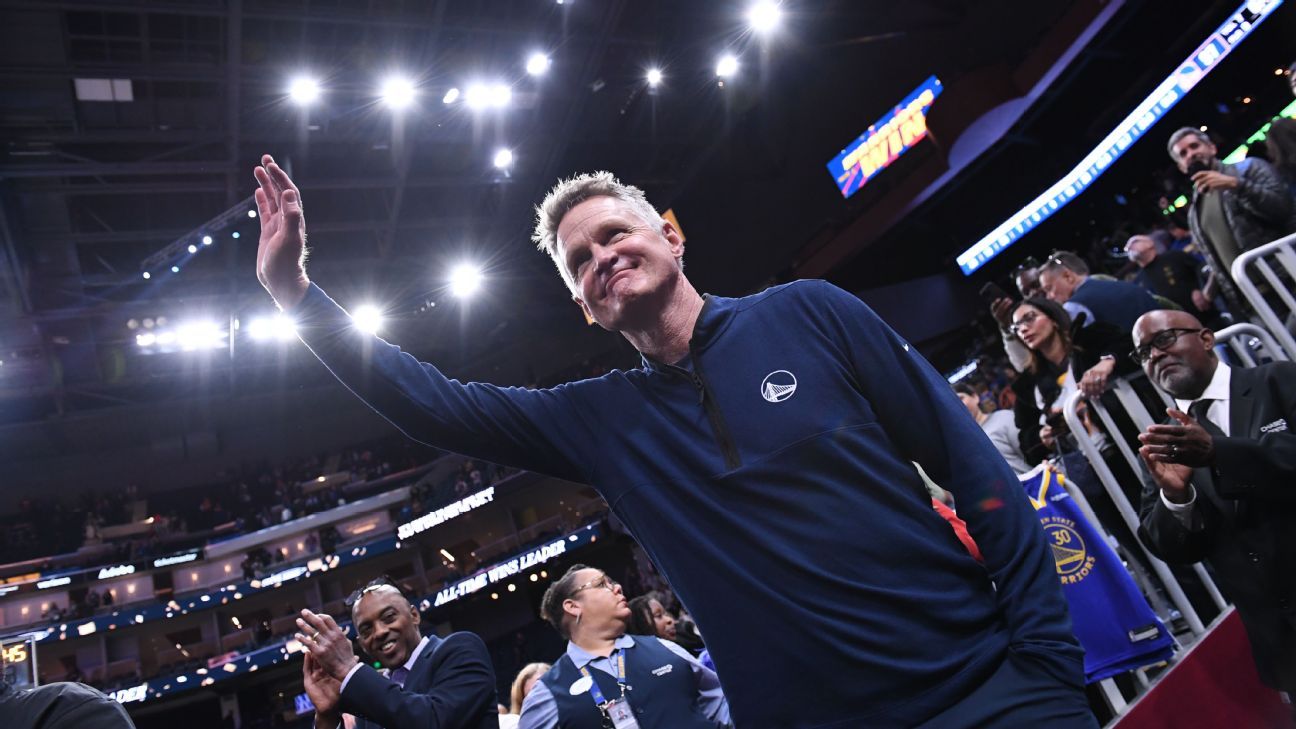
A number of prominent basketball coaches, including NBA champions Steve Kerr and Doc Rivers, signed a public letter released Wednesday contending that political interference in universities threatens to undermine college athletics.
“College sports unite us as a nation, drawing out team spirit and shared values of fair play,” the letter said. “Campuses – big and small, public and private, two- and four-year – are a bedrock foundation for the role sports play in American life. Protecting university independence safeguards this proud tradition.”
Kerr and Rivers are joined in signing the letter by former coaches Jim Boeheim and Muffet McGraw (both of whom have won NCAA basketball titles), former Michigan coach John Beilein, Harvard coach and former Duke All-American Tommy Amaker, and Phil Martelli, who coached perennial NCAA tournament teams at St. Joseph’s. Head men’s basketball coach James Jones of Yale and Judith Sweet, the first woman elected as president of the NCAA, are also among the signees for the group.
The coaches and other athletic administrators who signed the letter said that political interference harms university culture, and that includes college athletics. They point to cuts to funding for research, censorship, intimidation of university leaders and faculty and having federal officers deployed to college campuses as examples of that interference.
“Right now, at both the federal and state levels, acts of political interference threaten the independence of our colleges and universities,” the letter said.
The letter asks that leaders and fans of college sports urge elected officials to support academic independence.
“When students are afraid to speak their minds, they cannot give their all,” the coaches wrote. “When campuses are polarized, it’s hard to maintain the ‘one team’ spirit we instill in the locker room. Unprecedented political pressure on colleges and universities undercuts the values we have sought to instill in student-athletes.”
The letter is on the website of Stand For Campus Freedom, an organization that describes itself as a nonpartisan project “that holds universities accountable to their highest ideals, resists political coercion and strengthens America’s leadership on the world stage.”
-
Jeremy Woo
Close
Jeremy Woo
ESPN
- NBA draft analyst and writer
Joined ESPN.com in 2023
Covered the NBA and NBA draft for Sports Illustrated from 2015-2023
Multiple Authors
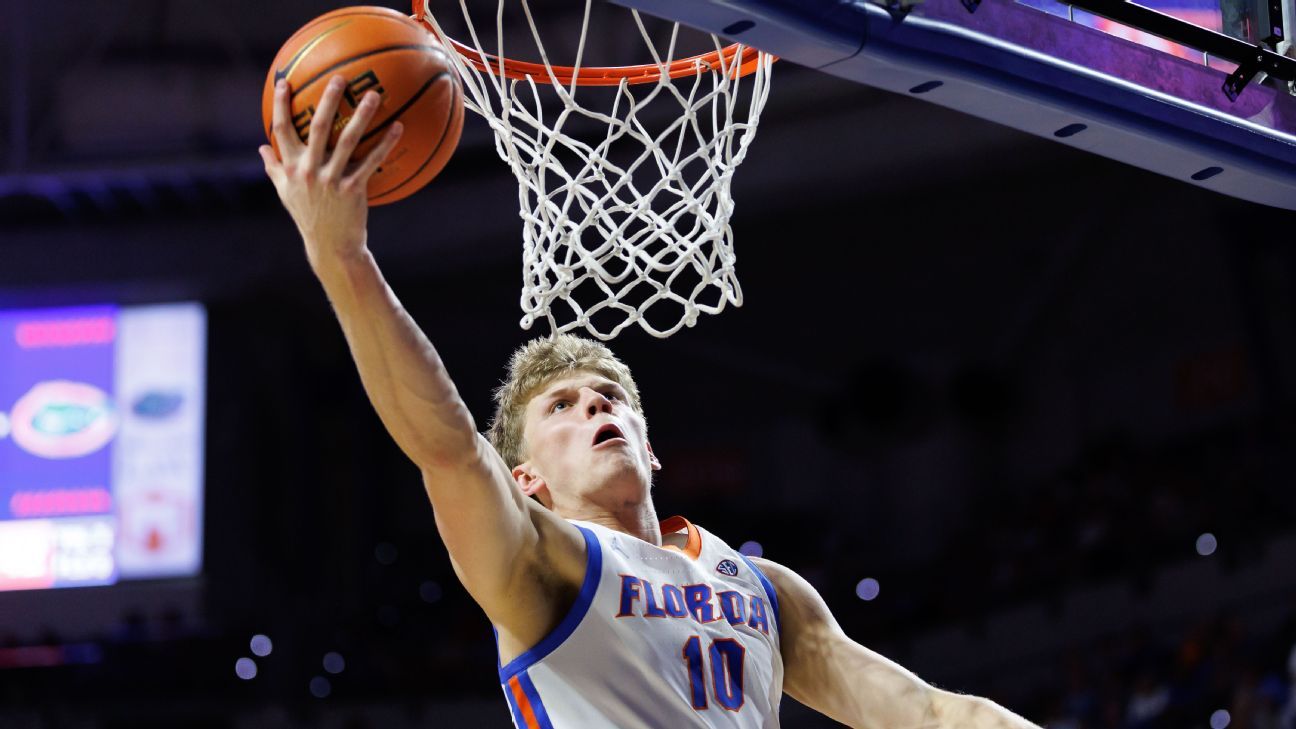
Florida forward Thomas Haugh will return to the Gators for his senior season, he told ESPN on Tuesday, delaying an opportunity as a potential lottery pick and likely cementing Florida as the preseason No. 1 team in men’s college basketball.
Haugh, the No. 13 prospect in ESPN’s Top 100 for the 2026 draft, becomes the highest-ranked prospect to announce his return to college. He is the first player since Michigan State’s Miles Bridges in 2017 to opt for another year of school while projected as an NBA lottery pick.
The 6-foot-9 Pennsylvania native’s decision to return follows the same announcement last week from frontcourt mate Alex Condon, while starting center Rueben Chinyelu announced Monday he’s testing the NBA draft waters but will maintain his college eligibility to return to Florida if he withdraws from the draft.
“Most guys in my position in the draft, it would be a no-brainer to go to the NBA,” Haugh told ESPN. “It’s not just the NIL. It’s a chance to play with my boys. To play for coach [Todd] Golden. To go to the school I love to play for. It was definitely a tougher decision than last year, but it was best for my career and future.”
When the buzzer sounded in Tampa at the end of Florida’s 73-72 second-round loss to 8-seed Iowa, Golden worried that this might have been the last time his national championship-winning frontcourt would play together. Haugh had eyes on the NBA, and Condon and Chinyelu were also weighing NBA options. With the nature of the transfer portal, it was unclear who would be back.
Haugh earned third-team All-America honors and first-team All-SEC honors this past season, averaging 17.1 points and 6.1 rebounds per game, and was tracking comfortably for the middle of the first round. There was no expectation that he’d return.
“I think that lit a fire underneath me,” Haugh said of the NCAA tournament loss. “I [didn’t] want my last memory of Florida basketball to be that.”
“The hardest part was the initial week,” Golden told ESPN. “His mind had been made up, he was going. When the season ended the way it did for us, it was a little bit of a punch in the stomach. Allowed a little more to reflect. Not only on that game, but how the season ended and where we are. That moment allowed for this to happen.”
At their end-of-season meeting, Golden and Haugh joked about him having another year of eligibility. But the idea of Haugh returning for his senior season didn’t appear to have any momentum until Haugh’s family, and agent Aaron Klevan of THE·TEAM, approached Golden and asked what a potential return would look like in terms of situation and compensation.
“They really didn’t need to sell much,” Haugh said. “Coach Golden and the staff did a great job, not pressuring me. They’re my guys. They’re going to text me and call me regardless. They didn’t do much recruiting. I grew up a Florida fan. Tim Tebow. The back-to-back national championships. The 2014 team, I remember. They didn’t really have to sell me.”
While NIL wasn’t the sole factor, Haugh will be among the highest-paid players in college basketball next season. He will earn revenue share compensation similar to what mid-first-round picks are guaranteed, in addition to lucrative true NIL and endorsement deals.
The first-round rookie contract scale is tied to a given year’s salary cap, with guaranteed money tied to each slot 1-30 in descending order of value. In 2025-26, the average Year 1 salary for an NBA rookie picked in the 11-15 range, where Haugh was projected, was $4,309,660 — a number he projects to clear easily this season.
“The unique angle that we were able to drive home to Tommy’s family and Aaron Klevan, this dude has real bottom-line NIL value,” Golden said. “That’s an area right now where elite college athletes have an advantage over mid-tier pros. Tommy Haugh’s legitimate NIL value at Florida is 10-20 times what his NIL value would be on an NBA team next year. Because of the brand awareness at Florida, he will have been here for four years, all of those things along with him returning, our supporters really appreciate the loyalty.”
Financial incentives have broadly changed for all NBA prospects, with college programs now capable of competing against multiyear rookie contracts in the short term. Those market forces, coupled with what NBA executives view as a much thinner draft in 2027, have caused a flood of college players to stay in school without testing the draft waters.
Haugh told ESPN he plans to continue focusing on his 3-point shooting and improving his comfort level playing small forward. There is room for him to improve his current standing with another strong season, particularly with the NBA’s uncertainty around the strength of next year’s incoming freshman class.
“Getting this group of guys back together for one last run, they’re going to have a lot of attention and notoriety, a lot of it deserved,” Golden said. “We’re going to have a ton of pressure, a ton of eyeballs on us this year. But it’s a privilege. Use it to fuel us the right way. Can’t allow it to splinter us. But we’d much rather be the hunted than the hunters. We just have to accept there’s a lot of pressure that comes with that.”
It is an issue that is dividing football, a classic example of one generation questioning the choices of another, but the sight of a former Tottenham and Germany player rolling on the pitch in agony with a severely gashed leg earlier this month might end up changing opinions about the ever-decreasing size of shin guards.
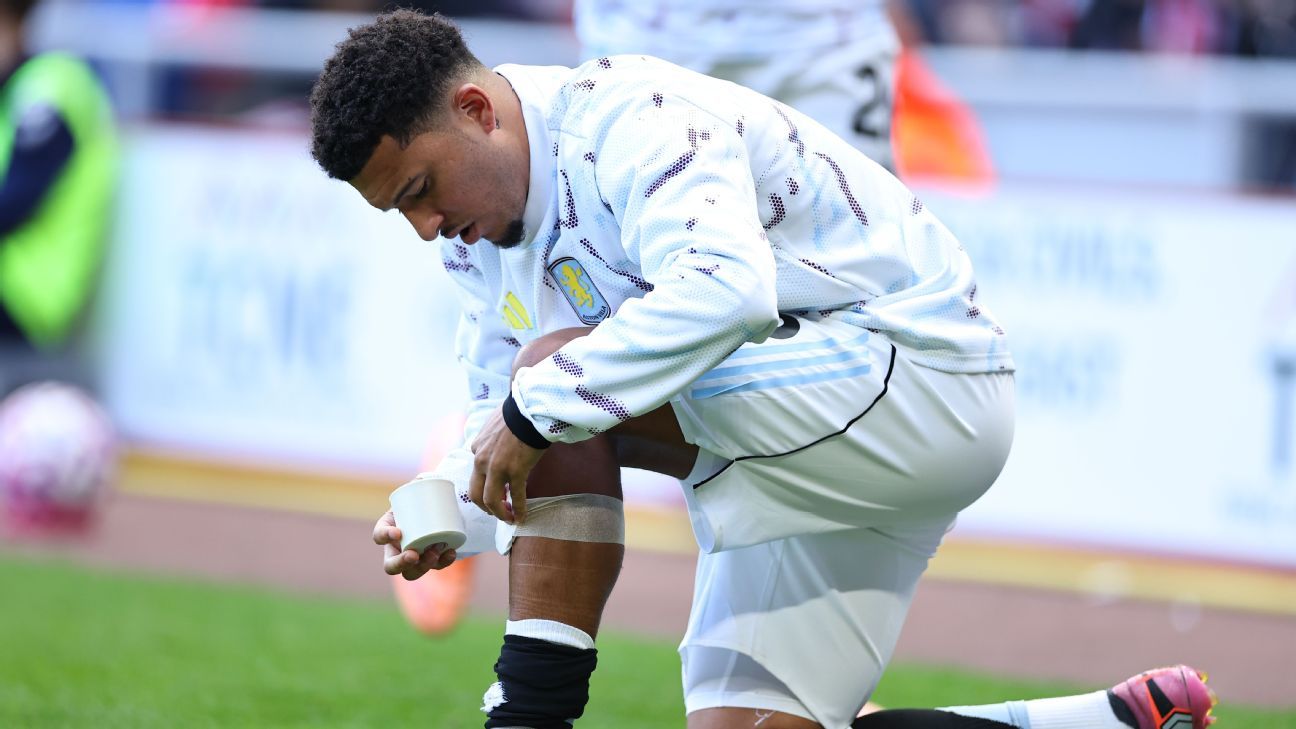
Until recently, shin guards covered the entire shin — sometimes up to 9 inches long — and they were made of foam or rubber with a hard plastic shell. But in recent years, some players have abandoned the protective element completely, wearing only tiny pieces of foam under their socks, and it seems only a matter of time before a serious injury leads to a rethink in what players are wearing.
Lewis Holtby‘s injury, sustained while playing for Dutch team NAC Breda against Fortuna Sittard in the Eredivisie on April 12, looks to have ended the 35-year-old’s season due to the depth of the wound on his left shin following a challenge with an opposition defender. It also led to a blame game centered on Holtby’s shin guards.
“I think it’s ridiculous that the referee [Jeroen Manschot] says something about it,” Breda coach Carl Hoefkens said after the game. “In the tunnel, it was said [by Manschot] that Holtby should just wear shin guards, or better shin guards. The officials also check the shin guards before the match, so it’s their responsibility as well.”
La aparatosa lesión de Lewis Holtby este fin de semana. 😬
Vía ESPNnl/X pic.twitter.com/WgHl4PL5xo
— ESPN Deportes (@ESPNDeportes) April 14, 2026
Breda defender Denis Odoi spoke about Holtby’s “small shin guards” and said “You’re never too old to learn,” when asked about players wearing “normal” shin guards again, while ESPN NL analyst, former Ajax and PSV Eindhoven winger Kenneth Perez, was more critical.
“They [players] are now wearing those tiny things, or basically toilet paper, just to have something there,” Perez said. “I have absolutely no sympathy for injuries that result from that.
“As a club, you can simply say: We require our players to wear proper shin guards.”
Watch any top-level fixture this season and you’re likely to see players with socks rolled down almost to their ankles — Everton‘s Jack Grealish and Tyler Dibling wear them low, covering tiny shin guards. Others have their socks just below the knee, but still sport shin guards half the size of a cellphone, as shown by Burnley midfielder Marcus Edwards during a game against West Ham in February. Arsenal forward Bukayo Saka has spoken this season about his preference for tiny shin guards — “I’m a fan of them; I don’t like big shin pads” — though Liverpool defender Virgil van Dijk harbors a more cautious approach to protecting his lower leg.
“If you get kicked on your shin and your shin pad is that size of an AirPod, then obviously that’s a big problem,” Van Dijk said.
Brighton forward Danny Welbeck has said that his younger teammates ridicule his old-school shin guards — “They say to me ‘Your shinnies are massive,’ but you need a bit more safety, you know?” — but just like Saka, Fulham winger Alex Iwobi prefers the small, lightweight guards because “I just don’t like having something heavy on my shin.”
Former England and Liverpool forward Peter Crouch regularly raises the shin guard issue on his podcast, That “Peter Crouch Podcast,” under the light-hearted “Make Shin Pads Great Again” banner, with Fulham midfielder Harry Wilson saying this season that some of his teammates “cut up the sponge you get from the physio and use that.”
If a high-profile player sustains this type of injury thanks to tiny shin guards, the kind of injury that forces them to miss the World Cup or that happens on the biggest stage this summer — the debate about the shrinking move towards smaller pads will likely increase in volume.
The trend toward smaller shin guards — and away from larger models that would also include ankle protectors — is rooted in many things, including the game becoming less physical with fewer tackles and players wanting to feel as light as possible to boost their sprinting speed. But it is also a result of a change in the Laws of the Game in July 2024 when IFAB (the International Football Association Board) amended the rule covering shin guards (Law 4) to place the responsibility on the player rather than the match officials to ensure sufficient shin protection was worn.
Prior to the change, the responsibility was on referees to police the rule, but many were being ignored by players and clubs and then criticized — or even sometimes challenged in court — for failing to impose the rules if a player was subsequently injured. But the Law remains vague and open to interpretation. There is no minimum size required, only that the shin guards are “covered entirely by the socks, are made of suitable material (rubber, plastic or similar substances) and provide a reasonable degree of protection.”
“The reason we changed the Law was because it is impossible to legislate and say a shin pad must be a certain size,” David Elleray, IFAB technical director and former Premier League referee told ESPN. “So two years ago, we put the responsibility on the players that they should wear something which they believe protects them.
“The challenge we had was partly legal. If we left the responsibility with the referees and the referees said, “Okay, that shin guard is okay,” then the player got injured, the player might decide to take action. So we put that very firmly in the court of the players and the coaches, and for young players, the parents.”
The change of the Law has led to players placing speed and aesthetics — many dislike the bulk of larger shin pads — above safety, however, and Elleray admits it has not led to a sensible approach by players and clubs.
“We [IFAB] had hoped, or expected, that they would take a responsible attitude to it, but there was one recently [Marcus Edwards] that was almost like a sticking plaster,” Elleray said. “The pressure needs to go on the individual players, the coaches and the clubs to make sure their players are protected because it’s impossible to legislate for.”
Former leading referee Pierluigi Collina, now the Chair of the FIFA referees’ committee, has urged players to be more mindful of their well-being when choosing their shin guards. “At the end of the day, the shin pad rule is for their own safety,” Collina told ESPN. “So they should care of what is really safe for them.”
But as shocking as Holtby’s injury was, it perhaps generated such attention because of the rarity of such incidents. Broken legs and deep cuts and gashes seem less prevalent despite the reduction in shin pad sizes, with muscle tears and ligament injuries to ankle and knee more likely to sideline a player.
The argument put forward by those who favor small shin guards is that players no longer suffer serious impact injuries, and that might be a valid point. In a recent example of a bad impact injury, Liverpool’s Alexander Isak was wearing small — but not tiny — shin guards when he suffered a fractured leg in a challenge with Tottenham’s Micky van de Ven last December, but it would be difficult to argue that larger shin pads would have diminished the severity of Isak’s injury.
Sources at the Professional Footballers’ Association (PFA) have told ESPN that “primary decisions around safety are taken by players in consultation with their club and medical teams” and that players ultimately “feel comfortable with different shapes and sizes of shin pads.” There is certainly no drive within the game to force players to re-think the protection being offered by their shin pads.
Football trends have changed since larger and heavier shin pads were the go-to model for top players. The Umbro Armadillo, which was manufactured during the early-2000s, was a large plastic guard with ankle protectors and was worn by Michael Owen and Alan Shearer, while Brazil forward Ronaldo wore Nike’s T90 model. Both designs were significantly larger, heavier and stronger than the pads now being preferred.
Today’s younger players prefer small, lightweight pads and the shifting trend led two brothers — Kaizer Chiefs midfielder Ethan Chislett and Zack, who plays for UAE-based Palm City — to develop their brand of Joga shinpads, which are tiny, much lighter and softer than traditional shin guards. The Joga Shinpad Sleeve, worn by Chelsea‘s João Pedro, is a cellphone-sized soft pad within a fabric sleeve that’s worn to cover the shin. Everton midfielder Grealish wears Joga’s Breathe pads that measure just 6 centimeters x 10 centimeters (2 inches x 4 inches).
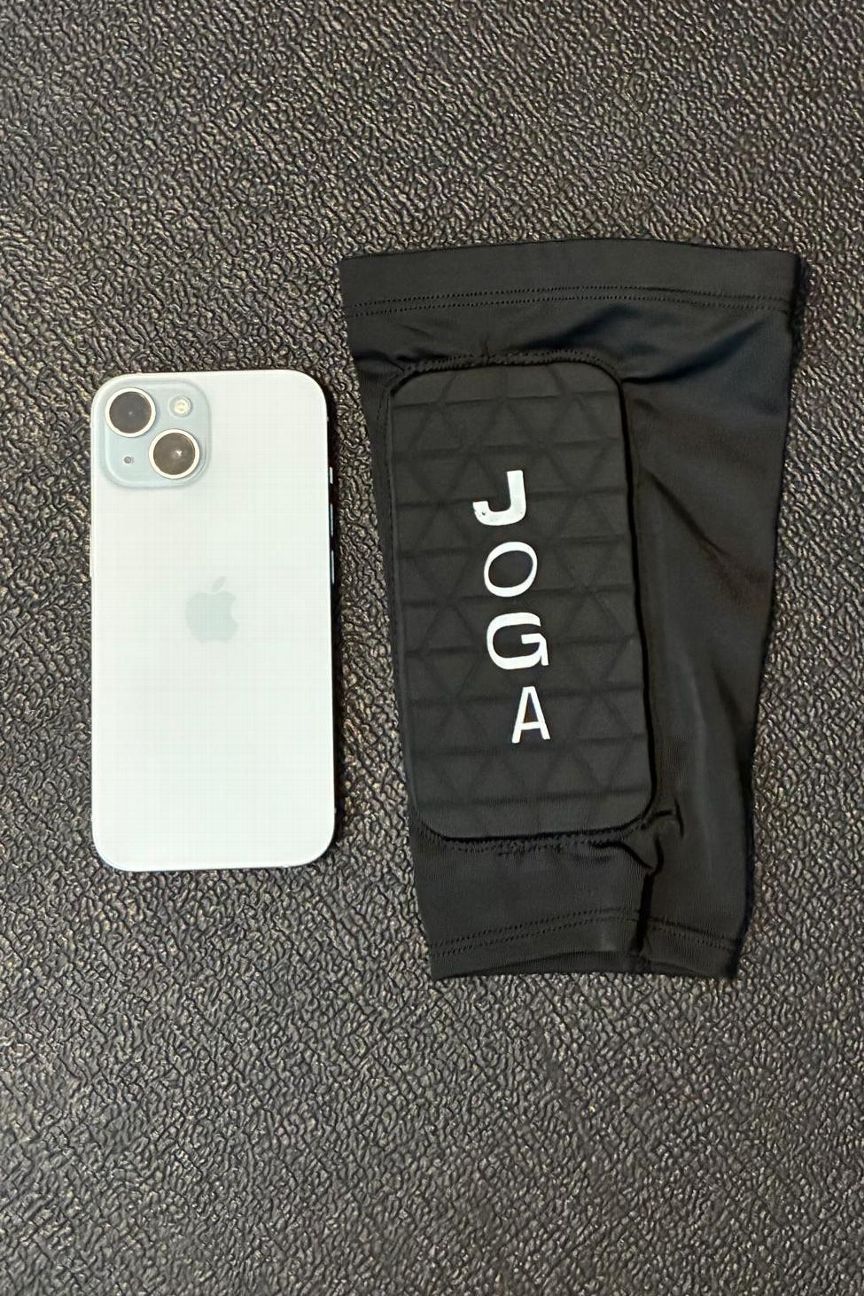
“We were the first ones to make a mini shin pad that you could buy,” Zack Chislett told ESPN. “I was playing nonleague at the time, my brother Ethan was playing for AFC Wimbledon, and we noticed that pads were getting smaller and smaller, but there was no-one giving players an option to buy them. They were just using anything they could find in the physio’s bag, so the demand was obviously there.”
But why do young players want their shin guards to be so small and lacking in protection?
“When you’re training the whole week without shin pads and you then put the big pad on, sometimes with ankle pads, on a Saturday, it doesn’t feel natural like when you’re training,” Zack said. “Some players will feel better with the big shin pad, but a lot of the younger, more attacking players don’t feel that way and they don’t want to feel as restricted when they go on the pitch.
“And the game has changed, 100%. The tackles aren’t coming in like they used to, it isn’t as aggressive or as physical. I’m 23, and players of my generation just don’t want to wear big shin pads — it would be like wearing old, heavy leather boots. It just isn’t going to happen.”
The likes of Welbeck and Van Dijk are being usurped by players such as Saka, Iwobi, Grealish and Joao Pedro when it comes to the size and protective elements of their shin pads.
Perhaps Holtby’s injury will prompt some players to think about the risks of playing without suitable protection and a high-profile injury at this summer’s World Cup could also lead to FIFA imposing stricter guidelines on what can, and can’t, be worn by players. But right now, footballers are putting risk to one side in favour of speed and freedom of movement, so shin pads could get smaller and smaller.
NEWYou can now listen to Fox News articles!
Danhausen made his debut at Elimination Chamber in February when he appeared out of a mysterious box that was set up on the stage.
The pro wrestling star’s entrance came with a puzzled fan base and questions about who this guy was and how he was going to fit on a crowded roster filled with talented wrestlers all vying for championships and time on the major premium live events, “Monday Night Raw” and “Friday Night SmackDown.”
CLICK HERE FOR MORE SPORTS COVERAGE ON FOXNEWS.COM
Danhausen made his WWE debut during the Elimination Chamber event at the United Center in Chicago, Illinois, on Feb. 28, 2026. (Craig Melvin/WWE)
Danhausen came out with his faced painted and several women, known at the time as the Danhausenettes. It was his first appearance since he left All Elite Wrestling, where he had the same gimmick – putting a “curse” and emerging as more of a comedy act than anything.
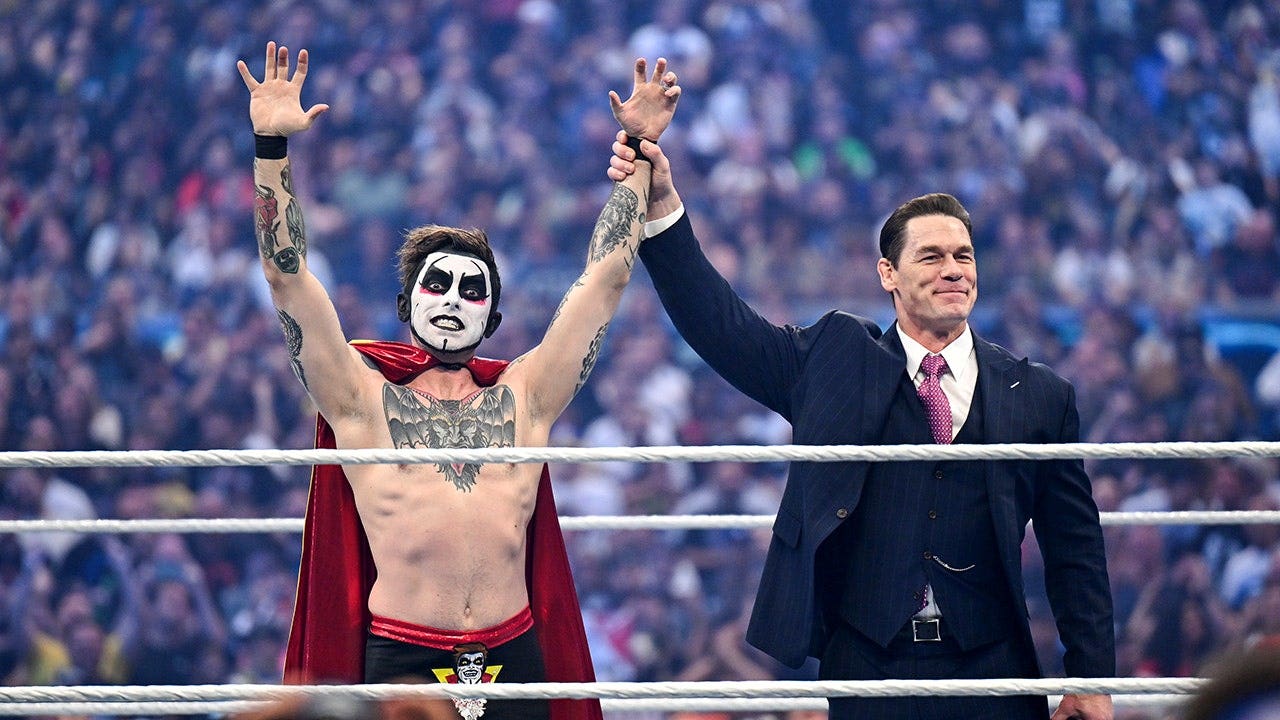
In the weeks leading up to WrestleMania, Danhausen caught on with the fans. He “cursed” The Miz, Kit Wilson, Dominik Mysterio, the New York Mets and Stephen A. Smith in between his debut and WrestleMania 42. In Las Vegas, his T-shirts were everywhere and dozens of fans painted their faces to match the “very nice, very evil” superstar.
“I’ve only been here for about two months, and look at the impact Danhausen’s made,” he told Fox News Digital before WrestleMania Night 1. “He’s got a merchandise stand at WrestleMania. He’s going to be at WrestleMania. And his face is on everything. Gotta get it on the side of the truck still. But what was your question? I was talking about how great I am.”
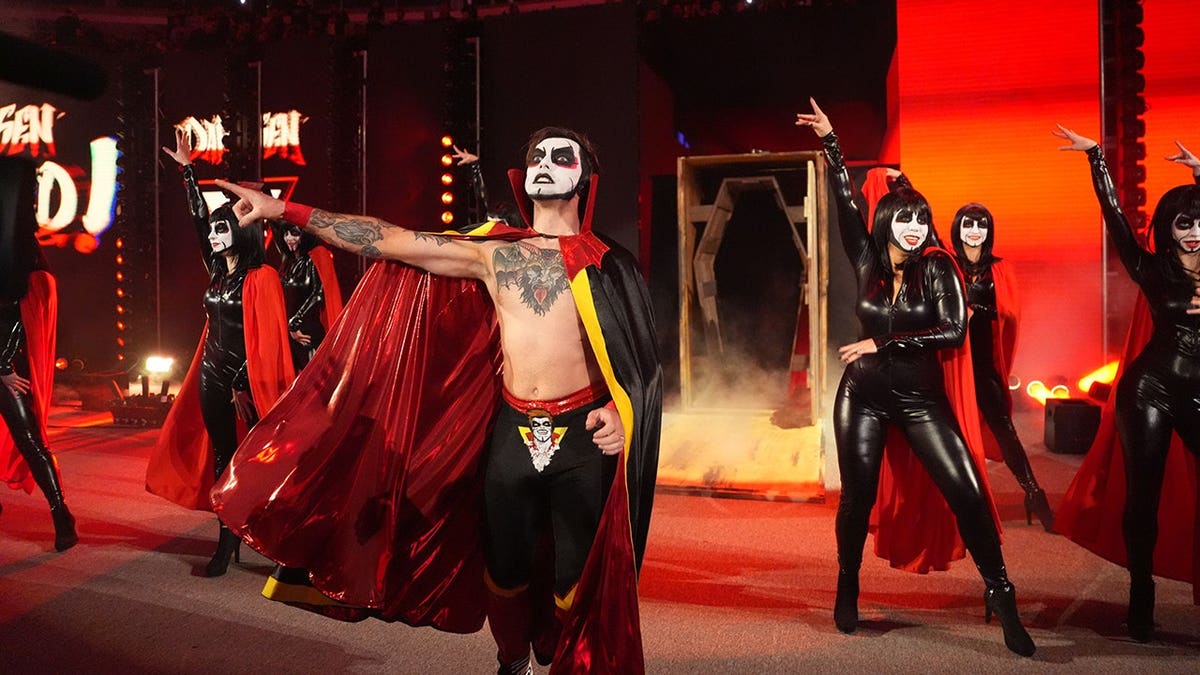
Danhausen came out with his faced painted and several women, known at the time as the Danhausenettes. (Craig Melvin/WWE)
ROMAN REIGNS, CM PUNK PUT ON PROFESSIONAL WRESTLING MASTERCLASS AT WRESTLEMANIA 42
Danhausen also provided an update on the Danhausenettes, who haven’t been seen since they were dancing and performing on the stage at Elimination Chamber.
“Well, we gave them a vacation,” he said. “A great reception. We gave them their human monies to go off and do whatever they want for the time being. Perhaps we’ll see them again. Perhaps we won’t. I don’t know. It’ll be a surprise.”
Danhausen appeared at WrestleMania Night 2 – his first WrestleMania.
He came out to a huge reaction in a segment that involved John Cena, The Miz and Wilson. He was accompanied by pro wrestlers from Micro Wrestling. They also got involved as Danhausen struck The Miz in the groin. The Micro Wrestling performers carried The Miz out of the ring.
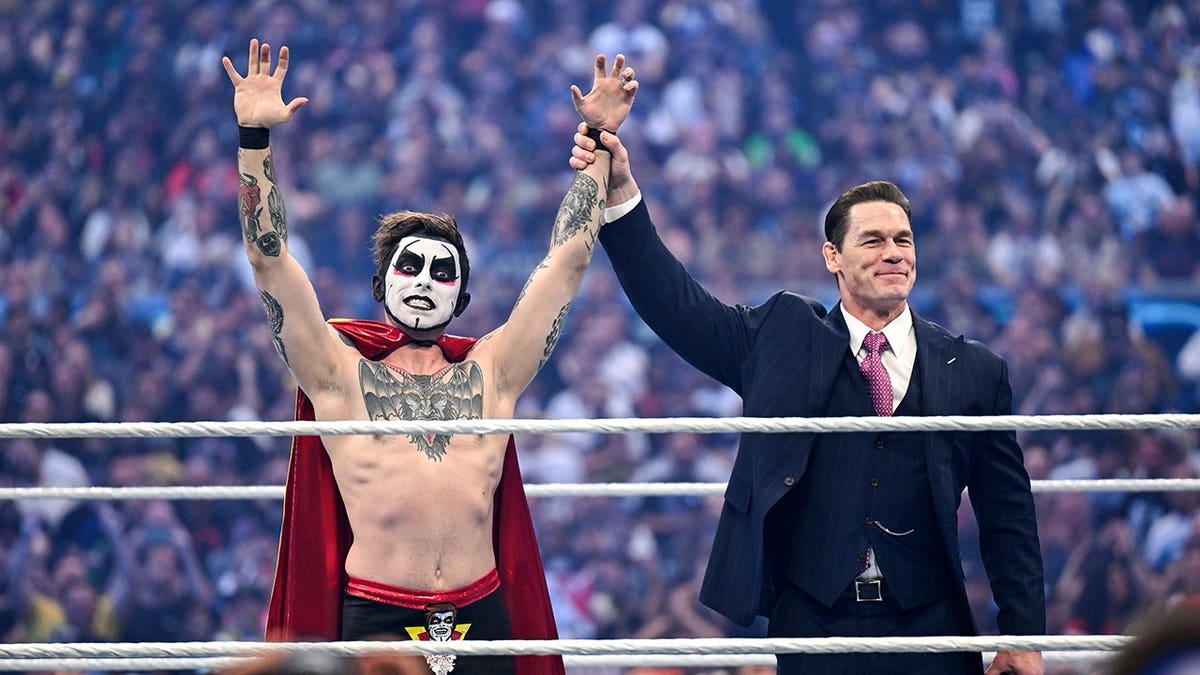
Danhausen and John Cena celebrate during WrestleMania 42: Night 2 at Allegiant Stadium in Las Vegas, Nev., on April 19, 2026. (Andrew Timms/WWE)
CLICK HERE TO DOWNLOAD THE FOX NEWS APP
It was one of the funniest moments of the weekend. One thing is for sure, Danhausen is in WWE to stay.

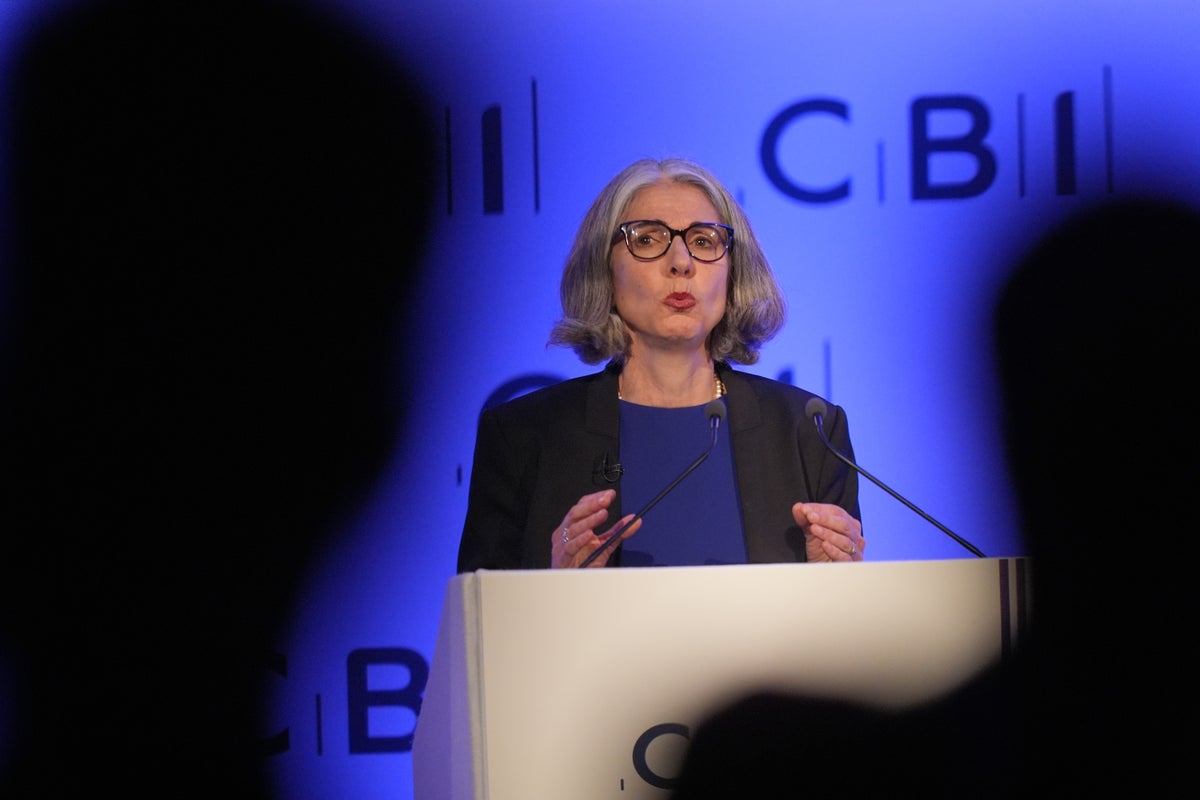
Britain ‘mustn’t cut ourselves off from China trade opportunities’, CBI chief warns

Oil prices climb 5% after Trump says he does not want to extend Iran ceasefire

Iran has new surprises ready for potential resumption of war: Report

-

 Fashion5 days ago
France’s LVMH Q1 revenue falls 6%, shows resilience amid Iran war
-

 Sports1 week ago
The case for Man United’s Fernandes as Premier League’s best
-

 Entertainment1 week ago
Palace left in shock as Prince William cancels grand ceremony
-
 Business1 week ago
UK could adopt EU single market rules under new legislation
-

 Entertainment6 days ago
Is Claude down? Here’s why users are seeing errors
-

 Fashion1 week ago
Energy emerges as biggest cost driver in textile margins
-
 Business1 week ago
Delta Air Lines unveils first new Delta One suite in premium cabin arms race
-

 Fashion1 week ago
Asia claims largest share of markets on Kearney FDI Confidence Index