

Sports
‘I’m a Tiger ’til I die’: Why Flau’jae Johnson returned for one last run at LSU

FLAU’JAE JOHNSON KNOWS it doesn’t make sense. In theory, yes, it should be easier to find things when her room is clean. But logic doesn’t apply here. Not today. Not after the cleaners came through and rearranged the delicate ecosystem she calls her organized chaos, where hoodies overflow from drawers and every cable strewn across her desk has purpose.
This is how she ends up rummaging around for her computer mouse. Desk? Nope. Nightstand? Nothing. Finally, she spots it on the top shelf of the bookcase near her bed.
“Like, why would they put it all the way up here?” she asks, shaking her head.
But Johnson doesn’t linger. She has work to do.
She drops into her chair — the one marked with the 2023 Final Four logo — and fires up her desktop, the screen crowded with audio files. She pulls out her mic and slips on her headset, back in her element — even if the room around her isn’t.
This is Johnson’s home studio. It’s where she makes the music that has helped place her in a national spotlight and set her apart from her peers. It’s where she recorded her latest EP, and what got her on the ESPY Awards stage with Lil Wayne in July and at the BET Awards in October.
It’s a haven for her, a corner where she can focus on one of the many hyphenates of her preferred career path: rapper-basketball star-businesswoman. She spends nearly every free moment here, though this year, those moments are few and fleeting.
This season, Johnson is tucking away that superstar persona and focusing on being one of the best college basketball players in the nation. Johnson and LSU (8-0) are off to a perfect start as the Tigers have scored at least 100 points in an NCAA-record eight consecutive games, albeit against a weak nonconference schedule. A month into her senior year at LSU, it’s her last chance to give this team all she has left.
It’s an easy transition to make, Johnson says. While it’s all about her on stage, it’s about her entire team on the court. She remains dedicated to the work behind the scenes, and she will do whatever it takes to be the best at whatever she sets out to do.
“You’ve got to keep the main thing the main thing,” she says. “I make my life revolve around basketball.”
It’s part of the deal she made with LSU coach Kim Mulkey. “She said in the offseason, you can go rap, go to Germany, I don’t care what you do. But in season, you’ve got to focus on basketball.”
Johnson wants to spend her final months in Baton Rouge working toward her second NCAA title. She helped LSU win its first national championship in women’s basketball as a freshman in 2023. Now, she wants to test her leadership skills. She wants to do everything she can to prove she deserves to be a lottery pick in the WNBA draft.
She wants to prove basketball is — and always will be — the No. 1 priority.
“I get to live like Hannah Montana,” Johnson says. “Best of both worlds.”
IT’S MARCH 2025, and Johnson has a decision to make. The season has barely ended, only a few days removed from LSU’s Elite Eight loss to UCLA, and the emotions are still raw. The 5-foot-10 guard and her mother, Kia Brooks, begin talking through what’s next, turning over every scenario they can think of.
The WNBA draft is two weeks away. Johnson can declare and step into the best women’s basketball league in the world. Or she can return to LSU for her senior year and take another run at something she isn’t sure she is ready to leave behind.
“Don’t make [this] decision when you’re emotional,” Brooks remembers telling her 22-year-old. She wasn’t saying it as Johnson’s mom, but as her manager, the person who has watched Johnson make hundreds of business decisions. But this one was different. This one could change the trajectory of the rest of Johnson’s life.
The benefits of the WNBA were plenty. The professional platform. The endorsements. The chance to grow her game against the top talent in the world. But there was another feeling Johnson couldn’t ignore — something that kept pressing at her as she weighed her options.
Mulkey gave Johnson and Brooks space to work through it. Even from afar, the coach had a sense of where the conversation might land.
“I never worried about it,” Mulkey told ESPN. “I knew the quality of person and family that I signed, and she wanted that college degree. And she’s not going to leave somewhere where she’s got unfinished business.”
“I didn’t want to go out on a loss when I didn’t have to,” Johnson says. “If I have another year, why not try to go out as a champion? I owe it to LSU. I owe it to Baton Rouge. A lot of players don’t stay four years anymore. I’m loyal to the soil.”
She had every reason to feel ready for the next level. She started all 36 regular-season games, averaging 11.0 points, 5.9 rebounds and 1.9 assists and winning SEC Freshman of the Year during the 2022-23 NCAA title run. After two more Elite Eight appearances, she could have walked away content after her junior season.
“Her mindset is, ‘I’m going to get better,'” Mulkey says. “Anything scouts question, she wants to show she can do. … Her work ethic is unbelievable.”
Over the past three seasons, Johnson has become the steadying presence on a roster that has turned over constantly. Teammates graduated, left for the WNBA or transferred, while new stars arrived. Through all of it, Johnson has remained the program’s anchor and the last tie to the championship team.
“No matter who transferred, no matter who came in, no matter who left, I was always [me],” Johnson says. “I think that’s what just made me so good. I’m always able to adapt.”
Leaving LSU never felt like a real option.
“That don’t even sound right. I’m a Tiger ’til I die,” she says.
“She doesn’t think the grass is greener somewhere else, even on her bad days, even when she’s aggravated at Coach,” Mulkey says. “She understands you just don’t bail out.”
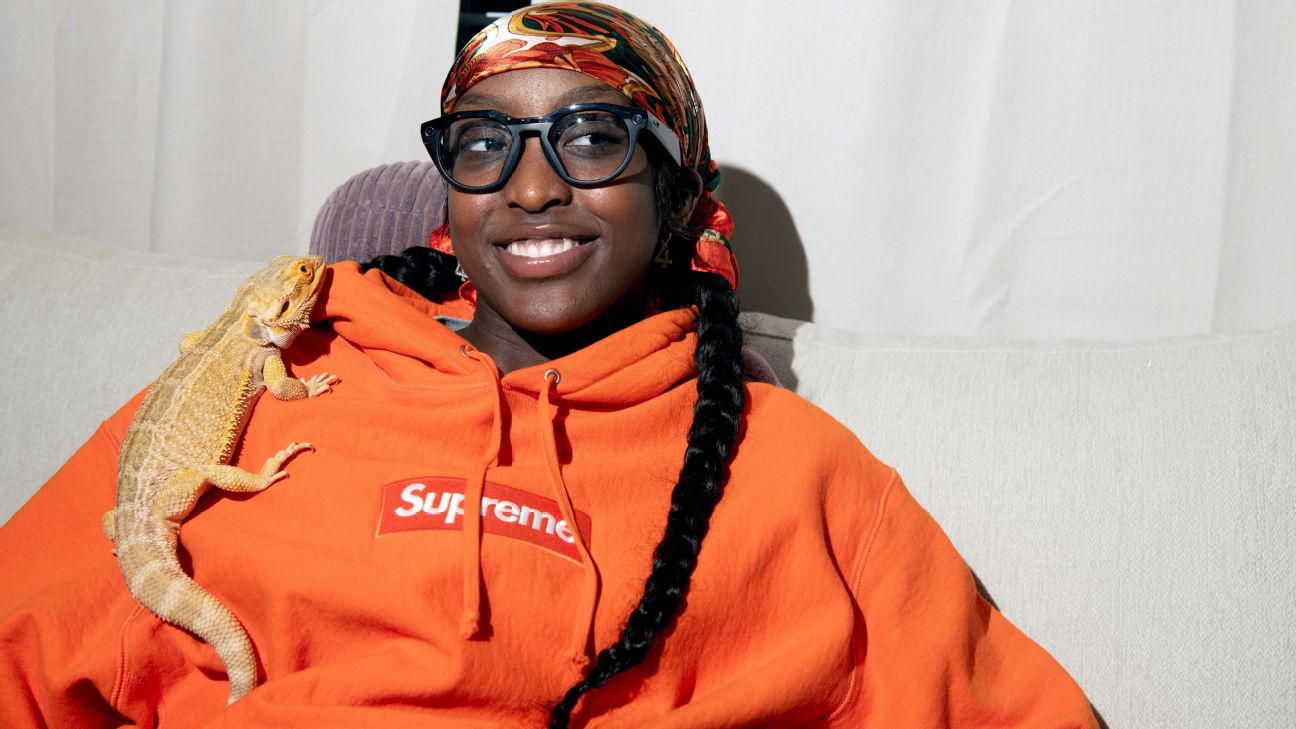
JOHNSON SITS ON her couch in gray sweats, a bright orange Supreme hoodie and a colorful headscarf, flipping through a notebook. She breezes by sketches she has drawn for a clothing line, mock-ups for what her record label logo could look like and rap lyrics she has scratched down.
“I’m always jotting things down that I want to do,” she says, scanning the pages. “Music, clothing, basketball, housing, beauty, film, TV. Different lists all at once, but it just makes it seem a little more attainable, you know?”
Johnson stops flipping and points to words on the page.
“Act like who you want to become,” she reads. She sets new goals for herself each month and outlines them in her journal, whether it’s a new task she wants to try or something she wants to improve on in basketball.
At this stage of her career, Johnson understands how to use her time wisely. But it took a while to find the right balance.
Early in her freshman season, Johnson would arrive at practice three minutes before it started with her shoes still in her hands. She still got her work in and found success, but Mulkey swiftly pointed out the nonchalant approach couldn’t continue.
But Johnson overcorrected. She’d wake up at 5 a.m. every day to get in a workout, but instead of that helping her performance, it ran her ragged. She missed the SEC tournament last season because she had shin splints — what she now says was the result of her not taking care of her body.
“I had to tell her many times, put the ball down … you’re doing too much,” Mulkey says.
Johnson finally has struck the right chord between studying the game, training and rest. She is intentional with her time, and the steps she takes to get better. This basketball season, “preparedness” is the word she has plastered above her locker, and it’s what’s guiding her.
It’s evident in the pages she fills in her countless journals, writing down everything she wants to accomplish in her life, as well as just what she needs to get done that day. She details the exact tasks she needs to complete to achieve it all.
Wake up and meditate. Breakfast. Ten pushups, 50 situps. Do laundry. Load the dishwasher. Feed Champ (Johnson’s pet bearded dragon).
“I still go through the small stuff, too. I’m proud that I put my clothes in a washer and dryer. Even though you do great big things, you still have to be regular,” Johnson says.
“You could look at it and be like, this is too much, or you could look at it and be like, bro, this is everything I ever asked for. That’s how I look at it. Like Flau, you’re literally the only person in the world that’s doing what you’re doing. And so I take pride in that. And when I feel like I can’t go on anymore, I kind of just think about that: Nobody else is doing this. Of course it’s hard.”
“BOBBY!” JOHNSON EXCLAIMS as she turns into LSU assistant coach Bob Starkey’s office at 7:50 a.m. for a 30-minute film session. They meet every weekday at 8 a.m. sharp.
Starkey is a legend in his own right. The Tigers’ associate head coach joined Mulkey in Baton Rouge ahead of their national championship season. He was also a part of the staff that took LSU to five straight Final Fours during the Seimone Augustus and Sylvia Fowles years.
It was Johnson’s idea to have these sessions with Starkey — she knows how his tutelage can shape her development. Sometimes she sends him plays from a game she wants to go over ahead of time. On this day, they go through game tape from the night before, their Nov. 17 matchup against Tulane.
“Oh, I was perfect in this first half,” Johnson says as the tape begins.
“Don’t get ahead of yourself,” Starkey replies. There’s a long pause of silence. “You did have a good first half, though.”
Starkey spends the next half hour picking apart Johnson’s game. He highlights her patience. He points out that she had too many right-hand drives. He compliments the improvements she has made this year, being in stance when she’s looking for help, instead of relaxing too much. He teases Johnson for turning over the ball because she said she was too speedy. He lays into her for missing too many free throws. He celebrates her presence on the board.
“That’s an NBA move,” he says. “You can be the best relocator in the league.”
As Starkey bounces back and forth from the good and the bad, Johnson’s posture switches from sitting up straight and smiling to slumping down in disgust. But she clings to every word.
“[This year is] going to go faster than she thinks,” Starkey tells ESPN. “She’s going to blink and it’s going to be senior day. She’s going to blink and she’s going to be taking off the uniform for the very last time. … One of the things that we preach around here is that today matters. Every day matters.”
6:54
The fire that drives LSU’s Flau’jae Johnson
LSU guard Flau’jae Johnson is on a mission to finish the journey her father started before he was fatally shot in May 2003.
This year, Johnson wants to improve her playmaking and shooting efficiency. Starkey sends her film of Golden State Warriors guard Steph Curry to study how he moves without the ball to find open shots — in particular, how he relocates himself after handing the ball to a teammate.
“We’re trying to get our perimeter players when they feed the post to relocate so they get a touch back,” Starkey explains.
After her film session with Starkey, Johnson walked to the basketball facilities to get treatment. She tweaked her ankle in New Orleans the night before and needed to get it checked before team film. Next was practice.
It’s grueling on this day. Mulkey has her players run two sprints in 12 seconds, representing the 12 free throws they missed the night before. If someone fails to make it by the buzzer, that sprint doesn’t count. By the end of the exercise, they’ve done 15, and players are physically pulling teammates across the finish line to ensure they all make it. Next, they split into pairs to shoot free throws. Three minutes are set on the clock, and no group can miss two in a row. If they do, the clock restarts. About 20 minutes after the drill starts, they finally finish.
Johnson makes her way out of the gym and toward the weight room. She’s tired and annoyed. Her teammates are too. But as soon as they turn the corner into the weight room, the air — and their attitude — instantly becomes lighter.
In between chest presses and cable rows, they dance to GloRilla’s “Hollon.” They break into laughter before locking back in. The back and forth between letting loose and staying completely focused is a balance Johnson is always trying to strike.
“My energy controls how practice goes,” Johnson says. “My energy controls how games go. So it’s like, can you be a leader while trying to make your dreams come true of going to the WNBA?”
MULKEY CALLED JOHNSON into her office during the first week of practice to make sure she knew what kind of leader she had to be this season. This year, it was going to be her team.
“It felt damn near impossible at first,” Johnson says.
Mulkey first looked to Johnson to lead during the Tigers’ tournament run last NCAA season. She wasn’t ready.
“I don’t think Flau’jae knew how to lead,” Mulkey says.
Up until that point, Johnson had always had a veteran player above her; this time, everyone looked to her. Mulkey called Johnson into her office and told her to find her voice.
Johnson tried, but her form of feedback or criticism was harsh — asking her teammates why they would make a dumb pass, or snipping at them to get locked in.
The switch flipped for Johnson this past summer when she was with Team USA in Chile at the FIBA Women’s AmeriCup. On a roster with Olivia Miles, Madison Booker and Hannah Hidalgo, Johnson’s playing time was slashed. She averaged 11 minutes in the seven games she played and logged just three minutes in each of the semifinal and championship games.
“I got to see a different perspective,” Johnson says. “I got to see how the person on the end [of the bench], how they felt. How can I still lift them up?”
During AmeriCup, Johnson watched the Netflix documentary series “Golden,” following the U.S. men’s national team through the 2024 Olympics. She paid especially close attention to Tyrese Haliburton and Jayson Tatum’s storylines — stars for their respective NBA teams who didn’t crack Team USA’s rotation.
“It gave me some time here to understand why somebody might be feeling a certain type of way and how to help them through that,” Johnson says.
Johnson’s acceptance of a bench role with the U.S. women was a crucial moment in her maturity. In the past, she took offense to any criticism, seeing anything but good feedback as an insult.
“She definitely has responded to constructive criticism better,” Mulkey says. “She doesn’t take it personally anymore. She just takes it as a challenge.”
LSU BREEDS SUPERSTARS. Angel Reese. Fowles. Augustus. As Johnson prepares to graduate — she’s majoring in interdisciplinary studies with minors in business, communication studies and entrepreneurship — she wants to leave her mark on this program too.
She listed her best accomplishments: being a successful rapper, winning a national championship, being an All-American, being an All-SEC-caliber player, and staying at LSU for all four years.
But that is just the start of the legacy she wants to leave in Baton Rouge, as a baller, rapper, someone at the forefront of the NIL era.
“I feel like I’ve done something nobody else has done,” she says. “I really left my mark. … It’s going to be able to be something that players or, you know, just young girls and boys try to replicate for a while.”
Now, she’s looking to add to what people think of when they say the name Flau’jae Johnson. Two-time national championship. WNBA lottery pick. Scratch that — No. 1 draft pick (she’s projected at No. 5 in ESPN’s latest mock draft). She also wants a No. 1 hit. She wants her albums to go platinum.
She envisions a building with her name on it in New York City, where she can employ hundreds of people, giving them a stable job and income. Clothing lines. Shoe deals. Beauty products. She wants to do it all.
But more than any of the tangible accomplishments she wants to achieve, her biggest dream is to have an impact that she doesn’t even directly know about.
“I always tell people, success for me is like changing people’s lives that I’ll never meet,” Johnson says. “I hope that my reach is that big. I hope my impact is that big, that I really change lives and inspire people that I probably never get to see. That’s going to be my pinnacle of success.”
The aspirations are bold, just like her personality and the way she plays. For some, such success over multiple industries might sound unrealistic, but it’s the same level of organized chaos that Johnson has not only lived in, but thrived in.
“I don’t want it to go to her head,” Starkey says, a sly grin spreading across his face. “But they’re going to make a movie about her one day. I am sure about that.”
The Hoosiers were among the least successful programs in major college football for generations. Now they are an undefeated national champion.
Source link
NEWYou can now listen to Fox News articles!
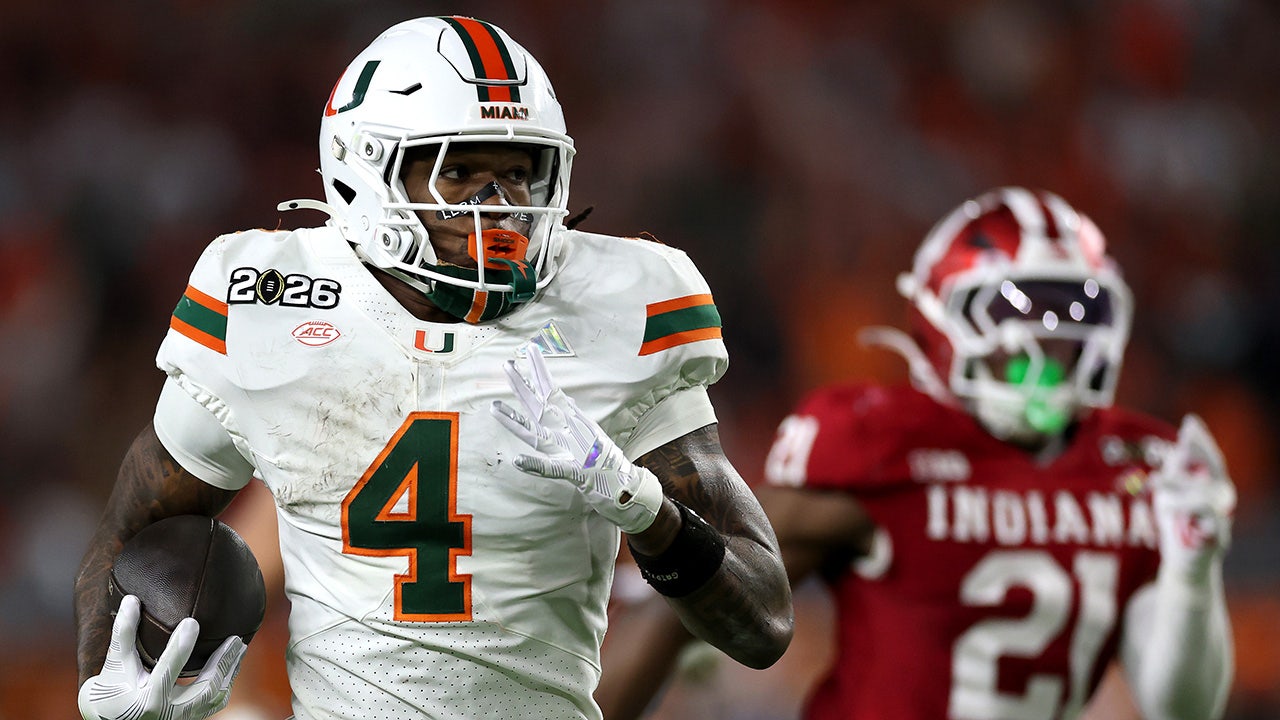
Miami Hurricanes star running back Mark Fletcher Jr. was spotted throwing a punch at an Indiana Hoosiers player following the close national championship game on Monday night.
The ESPN broadcast caught Fletcher walking off the field when he and Hoosiers defensive lineman Tyrique Tucker exchanged words. Fletcher stepped forward, took a swing at Tucker and had to be held back from escalating the situation further.
CLICK HERE FOR MORE SPORTS COVERAGE ON FOXNEWS.COM
Mark Fletcher Jr. of the Miami Hurricanes looks on after losing to the Indiana Hoosiers 27-21 in the 2026 College Football Playoff National Championship at Hard Rock Stadium on Jan. 19, 2026 in Miami Gardens, Florida. (Alex Slitz/Getty Images)
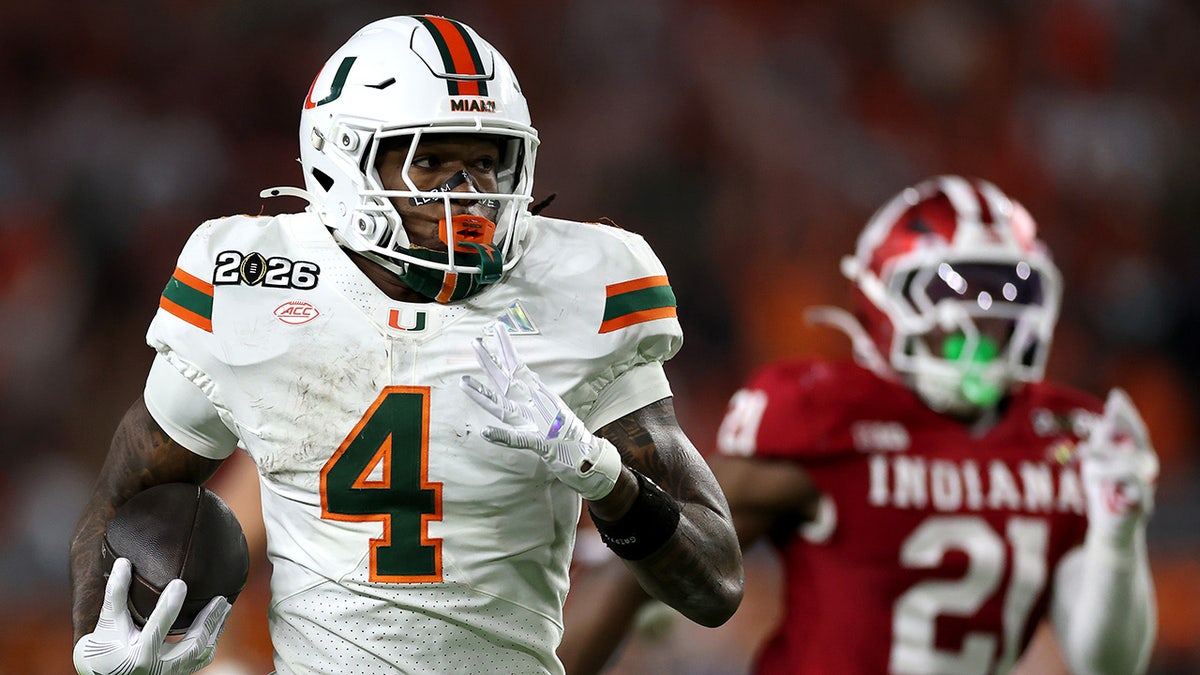
Mark Fletcher Jr. #4 of the Miami Hurricanes runs for touchdown against the Indiana Hoosiers during the third quarter in the 2026 College Football Playoff National Championship at Hard Rock Stadium on Jan. 19, 2026 in Miami Gardens, Florida. (Patrick Smith/Getty Images)
It’s unclear what was said between the two players, but it was a sour end for the Hurricanes star who had a phenomenal game.
Fletcher had two touchdowns in the 27-21 loss. He scored when Miami needed it badly to start the second half. The Hurricanes only needed two plays as Fletcher scampered for a 57-yard touchdown run to get his team on the board. He had a 3-yard run early in the fourth quarter that cut their deficit to just three points.
INDIANA’S FERNANDO MENDOZA REFLECTS ON INCREDIBLE DIVING TD: ‘I’D DIE FOR MY TEAM’
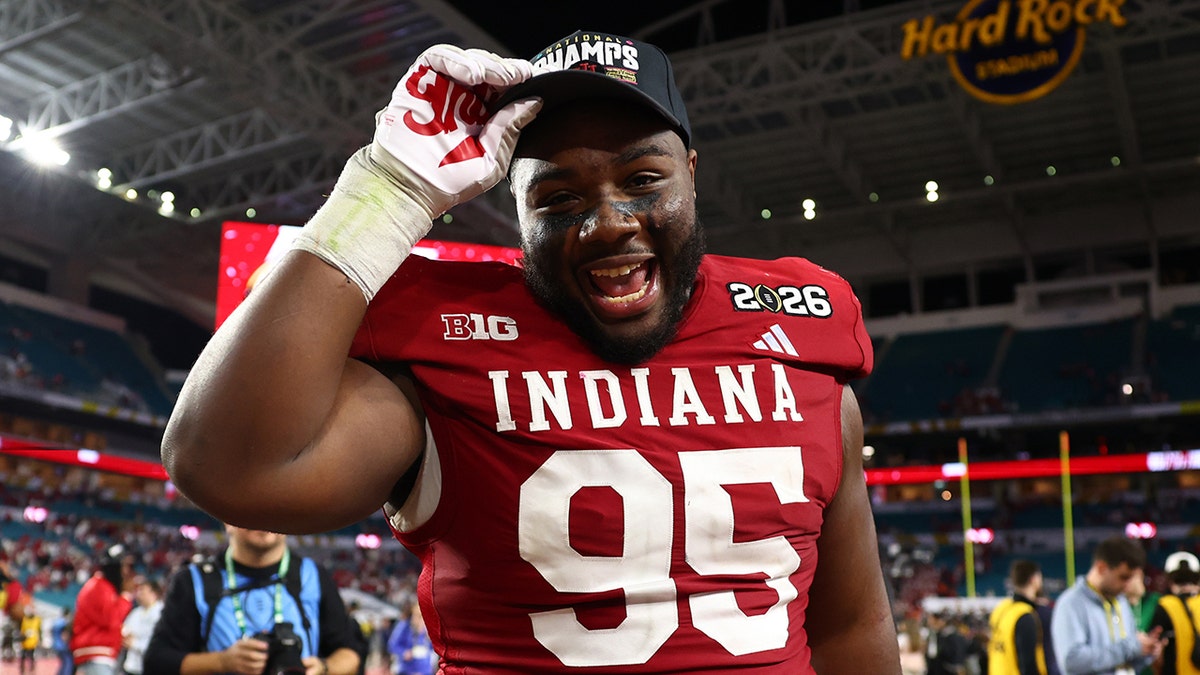
Tyrique Tucker #95 of the Indiana Hoosiers celebrates after defeating the Miami Hurricanes 27-21 in the 2026 College Football Playoff National Championship at Hard Rock Stadium on Jan. 19, 2026 in Miami Gardens, Florida. (Megan Briggs/Getty Images)
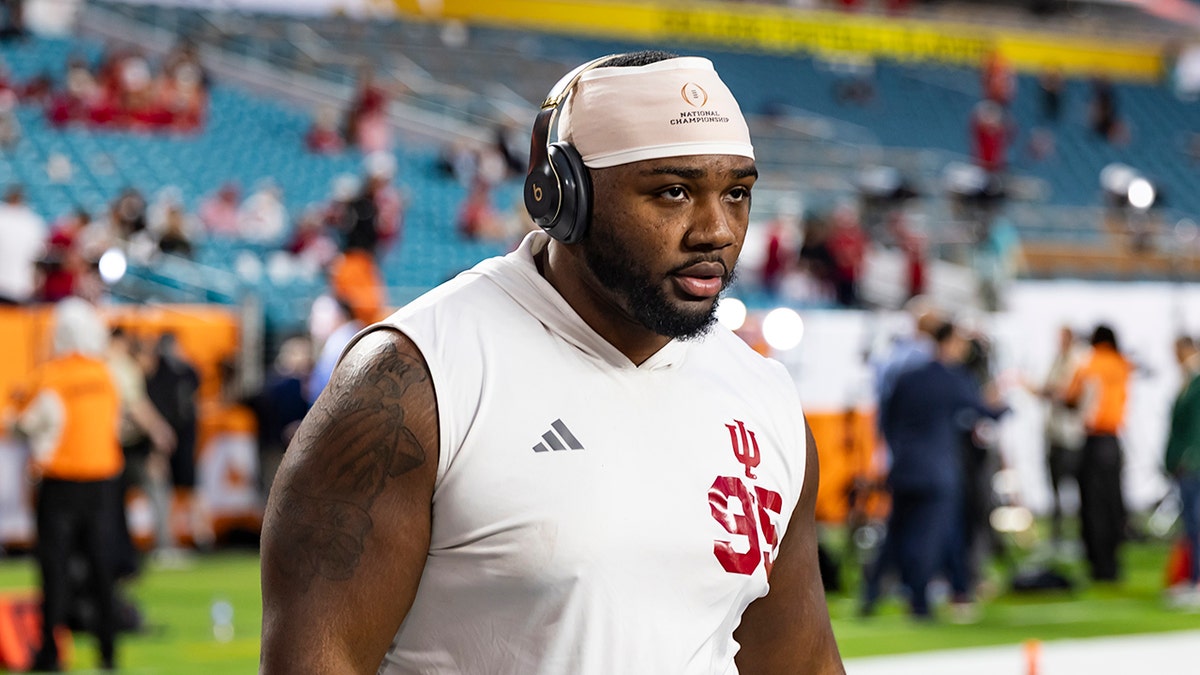
Tyrique Tucker of the Indiana Hoosiers warms up before the College Football Playoff National Championship between the Miami (FL) Hurricanes and the Indiana Hoosiers at Hard Rock Stadium on Jan. 19, 2026 in Miami Gardens, Florida. (Steve Limentani/ISI Photos/ISI Photos)
The Hurricanes couldn’t get past the Hoosiers in the latter moments of the game. Fernando Mendoza’s diving touchdown gave Indiana a 10-point lead with about 9:18 left in the game.
Miami quarterback Carson Beck had a chance to lead the team on a game-winning drive, but he threw a game-sealing interception.
CLICK HERE TO DOWNLOAD THE FOX NEWS APP
Fletcher ran for 112 yards on 17 carries along with his two scores, but the fight at the end of the game may mar the incredible performance he delivered.
Follow Fox News Digital’s sports coverage on X and subscribe to the Fox News Sports Huddle newsletter.
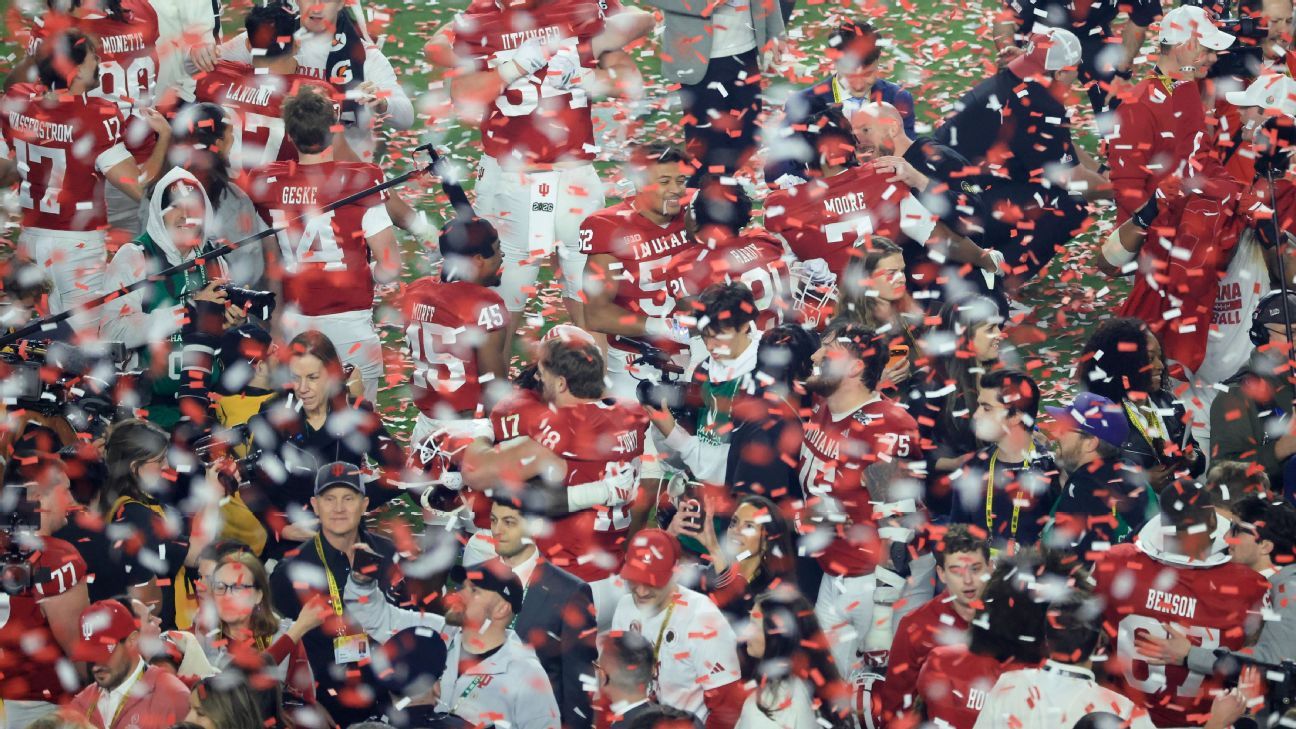
MIAMI GARDENS, Fla. — Indiana announced its college football arrival a year ago, but even then, it felt hard to believe the losingest program in FBS history would have much staying power. Critics ripped their schedule, called them a fluke, debated whether they even deserved to make the College Football Playoff and dismissed them following an opening-round loss to Notre Dame.
Cute story, those Hoosiers. But see! They should leave the real football to the real blue bloods.
Cue the Curt Cignetti staredown.
Google him again, just for reference. The man simply does not lose.
Indiana may have been pooh-poohed as a one-year wonder, opening 2025 ranked No. 20 and picked to finish sixth in the Big Ten preseason media poll.
Fueled by the perceived disrespect, desperate to prove it would not become a bottom dweller again, Indiana produced the football version of “Hoosiers,” completing one of the most improbable turnarounds in sports history — winning its first national championship while becoming the first major college team since Yale in 1894 to go 16-0.
Indiana may not have won by 30, the way they did in previous playoff victories. But they played with the same confident flair, punctuated by the call of the game: On fourth-and-4 from the Miami 12 and the Hoosiers up 3, coach Curt Cignetti called a quarterback run for quarterback Fernando Mendoza. He pushed up the middle, and bullied his way through the Miami defense, busting multiple tackles to stretch over the goal line.
That play summed up the season in a nutshell: Cignetti banking on himself and his players and Mendoza delivering in the clutch.
Asked before the game whether Indiana qualifies as a “Cinderella story,” given its success last year, Cignetti answered in the most Cignetti way, wryly saying in return, “Define ‘Cinderella story’ in the context of Indiana. I’m not quite sure what you mean by that.”
Since Cignetti is a Google fan, go ahead and Google “Cinderella story.” This is what comes up:
Noun. Used in reference to a situation in which a person, team, etc., of low status or importance unexpectedly achieves great success or public recognition.
In 2022, Indiana became the first Division I college football team to lose 700 games. Indiana is now a national champion after defeating Miami in its home stadium, 27-21.
Provided the definition, Cignetti finally answers.
“I think that’s a fact. If you look at the record since Indiana started playing football and relative to the success we’ve had the last two years, we’ve broken a lot of records here in terms of wins, championships, postseason games, top-10 wins,” Cignetti said.
“It’s been kind of surreal.”
While there may still be a “pinch me, I’m dreaming” vibe to this title run, Cignetti told the world when he was hired to coach the Hoosiers in 2023, they would win, then trash-talked the best teams in the Big Ten when he took the mic at a basketball game the day after he was hired.
Hey, look, I’m super fired up about this opportunity. I’ve never taken a back seat to anybody and don’t plan on starting now. Purdue sucks! But so does Michigan and Ohio State! Go IU!
While others may have rolled their eyes, the people inside the football program, athletic department and Bloomington, Indiana, charged ahead.
Cignetti made sure of that.
WHEN INDIANA FIRED coach Tom Allen in 2023, university leadership was prepared to take the next step with football. School president Pamela Whitten had laid the groundwork.
When she was hired two years earlier, Whitten was tasked with a long to-do list, including elevating Indiana athletics. This was during a revolutionary time for collegiate sports, with the transfer portal and NIL evening the playing field in a way that would allow more than the same handful of programs to compete for championships.
“We had to raise a lot of money to have the resources, both financial as well as the physical infrastructure,” Whitten said. “So when we were ready to bring in a coach, he needed that ecosystem to be successful as well.”
She and athletic director Scott Dolson — an Indiana lifer who worked as a student manager for Bobby Knight — talked about what they wanted in their next coach, and when they met with Cignetti, Whitten said, “It wasn’t so much like an interview as it was a melding of the approach and values and goals that we had. It’s almost like merging successfully on a highway.”
While Cignetti did not guarantee a national title in two years, he refused to put any limitations on what he thought Indiana could do.
Dolson thought back to a conversation he once had with his brother-in-law, who played football at Indiana in the 1980s under Bill Mallory, who led the Hoosiers to six bowl appearances during his tenure.
“He said to me, ‘Why don’t we ever think big enough? We should think about championships. We shouldn’t just think about bowl games,'” Dolson recalled. “He instilled that in me. It is important to have a plan to build a winning program across the board. Don’t put any limitations there. It’s what Coach Cig said from the minute I talked to him.”
Cignetti famously left his job as an Alabama assistant after the 2010 season to take his first head coaching job at Indiana University Pennsylvania, where his dad once coached, taking a massive pay cut in the process. But he bet on himself. Now, he was betting on Indiana.
Cignetti got to work building the program in his image, the same way he built programs and won at Division II IUP, Elon and then James Madison — where he made the FCS playoffs in his first season as head coach. In fact, he made the respective playoffs at all three programs within the first two years.
Forget about four- and five-star players and highly touted prospects. Cignetti valued character and production above all else. He was looking for not only hard workers but players who would put team above self. He approves every personnel decision. His first team had 23 people who either coached or played for him at James Madison.
In 13 seasons as a head coach, Cignetti had never had a losing record. Now, at the losingest program in FBS, something had to give. It wasn’t going to be the stubborn coach.
GOING 11-2 AND losing to Notre Dame in the first round of the 2024 College Football Playoff served as the launching point to this season. Cignetti knew Indiana could go further, so he went back into the transfer portal to make his team even better.
One of his first phone calls went to Mendoza, then the quarterback at California. He had the intangibles Cignetti was looking for. An overlooked recruit out of high school who was set to go to Yale before Cal offered at the last minute, Mendoza had worked through multiple quarterback competitions and setbacks to have a career year in 2024. After leading a 98-yard game-winning drive to beat rival Stanford, he went viral after getting emotional and proclaiming, “I’ll remember going 98 yards with my boys.”
Team above self.
Mendoza had fielded plenty of other calls from interested schools. But he remembers that first conversation with Cignetti, who told him, “If you’re going to come here, you’re going to develop into a hell of a quarterback.”
Mendoza was one of 22 players Indiana added in the portal, including running back Roman Hemby, receiver E.J. Williams Jr., center Pat Coogan, right tackle Kahlil Benson, defensive tackle Hosea Wheeler and defensive backs Louis Moore and Devan Boykin. Those players arrived to find a team that did not take too kindly to the narratives that dismissed them following the playoff loss.
“There was a lot of skepticism after last year, that we were a fluke,” Cignetti said. “That team did a lot of great things and got it all started. I think a lot of that negative stuff in the media fueled the guys returning from this team.”
As the quarterback, Mendoza knew how important it was to become a part of the team from the jump. His first order of business was to learn the name of each of his teammates. To help, he kept roster photographs with him.
“If I didn’t get them the first try, I got them the second try,” Mendoza said. “No matter if you’re the star linebacker or you’re a walk-on, I’m going to care about you because I want to help this team and be a leader of this team.”
Leaders emerged in different ways, particularly during offseason workouts. Tight end Riley Nowakowski recalled receiver Elijah Sarratt urging teammates to do one more rep after their work was done for the day. Soon, others followed. “One more rep,” became a calling card. The Friday before the national championship game, Sarratt screamed to his teammates during a lifting session in the weight room, “One more rep!”
“Finishing how last season finished, losing to Notre Dame, when we came back, we were like, ‘What’s the next step?'” Sarratt said. “For me, I decided to put in that extra work. If you’re doing a little bit more than everyone else, it has to help. I was doing it by myself at first. Then I told one receiver, and now the whole offense is doing it.”
“That’s reflective of guys wanting to pay the price to be the best they can be and pushing themselves, understanding it takes a little bit more to be the best,” Cignetti said. “There’s good and there’s great, and what does it take to be great? It takes a special discipline, work ethic and focus. Those are guys trying to find the edge and improve every single day.”
They were eager to show all that work off when the season opened Aug. 30 against Old Dominion.
“Although social media before the year was like, oh, ‘Cinderella story,’ we all had the internal belief in the facility, behind closed doors,” Mendoza said.
RANKED NO. 20 TO start the year and beating Old Dominion, Kennesaw State and Indiana State to open the season was one thing. The first test would come in Week 4, with No. 9 Illinois coming to town.
Scratch that — Illinois wasn’t much of a test, either.
Indiana overwhelmed the Illini 63-10, as Mendoza threw five touchdown passes and just two incompletions, for its first top-10 win in five years. Afterward Cignetti said, “We’ll get people’s attention with this one.”
“The thing that we said in the locker room beforehand is, ‘This game does not have to be close,'” said defensive lineman Mikail Kamara. “Like, even though everyone’s saying it’s gonna be a close game, we understood we could win this game by like 30, 40 points. We started the game off fast and even though that was not our biggest opponent, we slayed a dragon.”
Indiana got even more attention after going on the road to beat No. 3 Oregon 30-20 on Oct. 11. With the game tied early in the fourth quarter, Indiana scored the contest’s final 10 points — taking the lead for good on an 8-yard touchdown pass from Mendoza to Sarratt with 6:23 to go. Indiana had been winless (0-46) in road games against top-5 opponents in its history. Not anymore.
This team was not a fluke.
This team was better than last year.
An unofficial motto soon took hold: “Make a team quit.”
Then James Franklin got fired. The Nittany Lions were the preseason choice to win the Big Ten, but they fired their coach in mid-October after a disappointing 3-3 start. Once that happened, speculation swirled that Penn State officials had locked in on Cignetti as their top choice.
Dolson opted to be proactive and immediately went to see Cignetti in his office.
“I wanted him to know our commitment to him,” Dolson said. “It wasn’t just, ‘OK, we hit one there last year. I told him, ‘We know what the market is. We know your value. We know how coveted you are, and we’re willing to do what we need to do to make certain you feel that.”
Four days after Franklin was fired, Indiana announced a new eight-year contract with Cignetti worth $11.6 million a year, making him one of the highest paid coaches in the country.
When Indiana went to State College, the Hoosiers were ranked No. 2 and Penn State was reeling, having lost six straight.
Playing its most inspired football of the season, Penn State took a 24-20 lead with 6:27 remaining. Then came more Mendoza Magic. Indiana got the ball with less than 2 minutes to go, and Mendoza started rolling, firing one completion after the next to get Indiana down to the Penn State 7-yard line with 36 seconds left.
On third-and-goal and time running out on its undefeated season, Mendoza threw for Omar Cooper Jr. in the back of the end zone. Cooper leapt off the ground and leaned back to make the catch, seemingly defying gravity and the laws of physics to tap his left foot inside the end zone before falling out of bounds. Touchdown, Indiana.
Eighty yards, with his boys, to get Indiana’s first-ever win at Penn State.
“Fernando put it in the perfect spot,” Cooper said. “So I just went up and tried to make a play. I caught it, and the next thing I had to do was try to keep my feet in bounds. I knew how far I was from out of bounds, and I knew the defender was also pushing me. It happened so fast that I was just hoping that my foot was in bounds. When I looked and saw the ref’s reaction, it was just a rush of excitement and joy. I don’t know how to explain it.”
That play kept its undefeated season alive, but also provided a powerful reminder about resilience and trust.
“We got used to teams quitting, and Penn State had a lot of fight,” Kamara said. “There was no fear on the sideline, no arguing, no anxiety. It was, ‘Let’s go get it done.”
While Indiana appeared to be an unstoppable force, so did No. 1 Ohio State. The two met in the Big Ten championship game, their CFP spots secured, but Indiana had not won a conference title since 1967.
With two of the best defenses in the country squaring off, points were at a premium. Once again, it was Mendoza who delivered in the clutch, with a 17-yard touchdown pass to Sarratt in the third quarter that ended up being the game-winning score in the 13-10 victory to take down the Buckeyes and reinforce Indiana’s inevitability as champions.
A week later, Mendoza became the first Heisman Trophy winner in school history. Now, he looks back on that initial phone call with Cignetti as a pivotal moment.
“I’ve been able to develop into that quarterback and made that exponential jump this year that I was aspiring to,” Mendoza said. “I really am thankful that he sold me on developing Fernando as the quarterback. That’s one of the things that made me decide on this school.”
CIGNETTI HAD A message he needed to deliver at the news conference the day before Indiana played Alabama in the College Football Playoff quarterfinals at the Rose Bowl. Citing disruptive travel, Cignetti said their first practice in California “didn’t meet the standard” and there were a lot of “loose ends” his team had to tie up before facing the Crimson Tide.
Since the CFP expanded to 12 teams, not one team that had a first-round bye won in the quarterfinals.
Indiana became the first, embarrassing Alabama 38-3. Then in the semifinals, Indiana crushed Oregon, 56-22. The blowouts were so thorough that they made Indiana the first team to ever win multiple CFP games by 30 or more points.
“I wouldn’t say it’s completely out of the ordinary for us, to be honest,” receiver Charlie Becker said. “Coach Cignetti told us we’re going to win, and we all bought in. It’s a standard at this point.”
The Hoosiers may have emerged as the favorite to win the national title by the end of the season, but they did it with a coach who waited four decades for an FBS head coaching opportunity, with players mostly undervalued and overlooked. Only eight four- or five-star players are currently on the roster.
The Cinderella story is now complete, whether Cignetti objects to the characterization or not. But the same forces that led the Hoosiers to this point will carry them beyond this exceptional two-year moment.
“One of the things that will probably never go away is the chip on our shoulder, that we have to continually prove ourselves and continue to be paranoid about falling backwards,” Dolson said. “There is a, ‘We still have a lot of work to do,’ mentality around here.”
“I want to make it so we’re like Alabama where this is normal,” Kamara said. “Once we win this, everything will change.”
Heather Dinich and Adam Rittenberg contributed to this report.


Budget 2026: Why standard deduction should be hiked under the new income tax regime – explained – The Times of India

Germany’s Hugo Boss reshapes structure with menswear, womenswear units

Ministers, bureaucrats at odds over specialised reforms scheme

-

 Tech1 week ago
New Proposed Legislation Would Let Self-Driving Cars Operate in New York State
-

 Entertainment7 days ago
X (formerly Twitter) recovers after brief global outage affects thousands
-

 Sports5 days ago
Pak-Australia T20 series tickets sale to begin tomorrow – SUCH TV
-
 Business4 days ago
Trump’s proposed ban on buying single-family homes introduces uncertainty for family offices
-

 Fashion3 days ago
Bangladesh, Nepal agree to fast-track proposed PTA
-

 Tech4 days ago
Meta’s Layoffs Leave Supernatural Fitness Users in Mourning
-

 Politics3 days ago
Saudi King Salman leaves hospital after medical tests
-

 Tech5 days ago
Two Thinking Machines Lab Cofounders Are Leaving to Rejoin OpenAI