

Sports
How Indiana won college football’s national championship

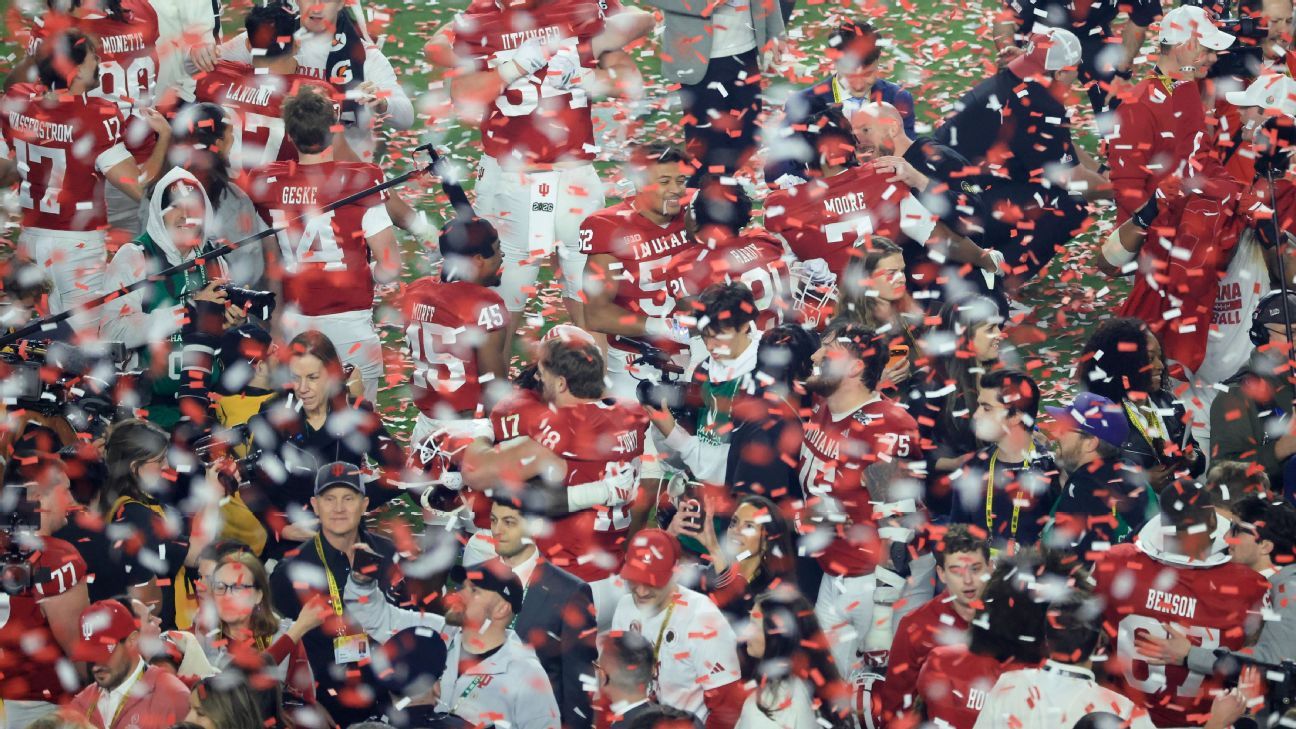
MIAMI GARDENS, Fla. — Indiana announced its college football arrival a year ago, but even then, it felt hard to believe the losingest program in FBS history would have much staying power. Critics ripped their schedule, called them a fluke, debated whether they even deserved to make the College Football Playoff and dismissed them following an opening-round loss to Notre Dame.
Cute story, those Hoosiers. But see! They should leave the real football to the real blue bloods.
Cue the Curt Cignetti staredown.
Google him again, just for reference. The man simply does not lose.
Indiana may have been pooh-poohed as a one-year wonder, opening 2025 ranked No. 20 and picked to finish sixth in the Big Ten preseason media poll.
Fueled by the perceived disrespect, desperate to prove it would not become a bottom dweller again, Indiana produced the football version of “Hoosiers,” completing one of the most improbable turnarounds in sports history — winning its first national championship while becoming the first major college team since Yale in 1894 to go 16-0.
Indiana may not have won by 30, the way they did in previous playoff victories. But they played with the same confident flair, punctuated by the call of the game: On fourth-and-4 from the Miami 12 and the Hoosiers up 3, coach Curt Cignetti called a quarterback run for quarterback Fernando Mendoza. He pushed up the middle, and bullied his way through the Miami defense, busting multiple tackles to stretch over the goal line.
That play summed up the season in a nutshell: Cignetti banking on himself and his players and Mendoza delivering in the clutch.
Asked before the game whether Indiana qualifies as a “Cinderella story,” given its success last year, Cignetti answered in the most Cignetti way, wryly saying in return, “Define ‘Cinderella story’ in the context of Indiana. I’m not quite sure what you mean by that.”
Since Cignetti is a Google fan, go ahead and Google “Cinderella story.” This is what comes up:
Noun. Used in reference to a situation in which a person, team, etc., of low status or importance unexpectedly achieves great success or public recognition.
In 2022, Indiana became the first Division I college football team to lose 700 games. Indiana is now a national champion after defeating Miami in its home stadium, 27-21.
Provided the definition, Cignetti finally answers.
“I think that’s a fact. If you look at the record since Indiana started playing football and relative to the success we’ve had the last two years, we’ve broken a lot of records here in terms of wins, championships, postseason games, top-10 wins,” Cignetti said.
“It’s been kind of surreal.”
While there may still be a “pinch me, I’m dreaming” vibe to this title run, Cignetti told the world when he was hired to coach the Hoosiers in 2023, they would win, then trash-talked the best teams in the Big Ten when he took the mic at a basketball game the day after he was hired.
Hey, look, I’m super fired up about this opportunity. I’ve never taken a back seat to anybody and don’t plan on starting now. Purdue sucks! But so does Michigan and Ohio State! Go IU!
While others may have rolled their eyes, the people inside the football program, athletic department and Bloomington, Indiana, charged ahead.
Cignetti made sure of that.
WHEN INDIANA FIRED coach Tom Allen in 2023, university leadership was prepared to take the next step with football. School president Pamela Whitten had laid the groundwork.
When she was hired two years earlier, Whitten was tasked with a long to-do list, including elevating Indiana athletics. This was during a revolutionary time for collegiate sports, with the transfer portal and NIL evening the playing field in a way that would allow more than the same handful of programs to compete for championships.
“We had to raise a lot of money to have the resources, both financial as well as the physical infrastructure,” Whitten said. “So when we were ready to bring in a coach, he needed that ecosystem to be successful as well.”
She and athletic director Scott Dolson — an Indiana lifer who worked as a student manager for Bobby Knight — talked about what they wanted in their next coach, and when they met with Cignetti, Whitten said, “It wasn’t so much like an interview as it was a melding of the approach and values and goals that we had. It’s almost like merging successfully on a highway.”
While Cignetti did not guarantee a national title in two years, he refused to put any limitations on what he thought Indiana could do.
Dolson thought back to a conversation he once had with his brother-in-law, who played football at Indiana in the 1980s under Bill Mallory, who led the Hoosiers to six bowl appearances during his tenure.
“He said to me, ‘Why don’t we ever think big enough? We should think about championships. We shouldn’t just think about bowl games,'” Dolson recalled. “He instilled that in me. It is important to have a plan to build a winning program across the board. Don’t put any limitations there. It’s what Coach Cig said from the minute I talked to him.”
Cignetti famously left his job as an Alabama assistant after the 2010 season to take his first head coaching job at Indiana University Pennsylvania, where his dad once coached, taking a massive pay cut in the process. But he bet on himself. Now, he was betting on Indiana.
Cignetti got to work building the program in his image, the same way he built programs and won at Division II IUP, Elon and then James Madison — where he made the FCS playoffs in his first season as head coach. In fact, he made the respective playoffs at all three programs within the first two years.
Forget about four- and five-star players and highly touted prospects. Cignetti valued character and production above all else. He was looking for not only hard workers but players who would put team above self. He approves every personnel decision. His first team had 23 people who either coached or played for him at James Madison.
In 13 seasons as a head coach, Cignetti had never had a losing record. Now, at the losingest program in FBS, something had to give. It wasn’t going to be the stubborn coach.
GOING 11-2 AND losing to Notre Dame in the first round of the 2024 College Football Playoff served as the launching point to this season. Cignetti knew Indiana could go further, so he went back into the transfer portal to make his team even better.
One of his first phone calls went to Mendoza, then the quarterback at California. He had the intangibles Cignetti was looking for. An overlooked recruit out of high school who was set to go to Yale before Cal offered at the last minute, Mendoza had worked through multiple quarterback competitions and setbacks to have a career year in 2024. After leading a 98-yard game-winning drive to beat rival Stanford, he went viral after getting emotional and proclaiming, “I’ll remember going 98 yards with my boys.”
Team above self.
Mendoza had fielded plenty of other calls from interested schools. But he remembers that first conversation with Cignetti, who told him, “If you’re going to come here, you’re going to develop into a hell of a quarterback.”
Mendoza was one of 22 players Indiana added in the portal, including running back Roman Hemby, receiver E.J. Williams Jr., center Pat Coogan, right tackle Kahlil Benson, defensive tackle Hosea Wheeler and defensive backs Louis Moore and Devan Boykin. Those players arrived to find a team that did not take too kindly to the narratives that dismissed them following the playoff loss.
“There was a lot of skepticism after last year, that we were a fluke,” Cignetti said. “That team did a lot of great things and got it all started. I think a lot of that negative stuff in the media fueled the guys returning from this team.”
As the quarterback, Mendoza knew how important it was to become a part of the team from the jump. His first order of business was to learn the name of each of his teammates. To help, he kept roster photographs with him.
“If I didn’t get them the first try, I got them the second try,” Mendoza said. “No matter if you’re the star linebacker or you’re a walk-on, I’m going to care about you because I want to help this team and be a leader of this team.”
Leaders emerged in different ways, particularly during offseason workouts. Tight end Riley Nowakowski recalled receiver Elijah Sarratt urging teammates to do one more rep after their work was done for the day. Soon, others followed. “One more rep,” became a calling card. The Friday before the national championship game, Sarratt screamed to his teammates during a lifting session in the weight room, “One more rep!”
“Finishing how last season finished, losing to Notre Dame, when we came back, we were like, ‘What’s the next step?'” Sarratt said. “For me, I decided to put in that extra work. If you’re doing a little bit more than everyone else, it has to help. I was doing it by myself at first. Then I told one receiver, and now the whole offense is doing it.”
“That’s reflective of guys wanting to pay the price to be the best they can be and pushing themselves, understanding it takes a little bit more to be the best,” Cignetti said. “There’s good and there’s great, and what does it take to be great? It takes a special discipline, work ethic and focus. Those are guys trying to find the edge and improve every single day.”
They were eager to show all that work off when the season opened Aug. 30 against Old Dominion.
“Although social media before the year was like, oh, ‘Cinderella story,’ we all had the internal belief in the facility, behind closed doors,” Mendoza said.
RANKED NO. 20 TO start the year and beating Old Dominion, Kennesaw State and Indiana State to open the season was one thing. The first test would come in Week 4, with No. 9 Illinois coming to town.
Scratch that — Illinois wasn’t much of a test, either.
Indiana overwhelmed the Illini 63-10, as Mendoza threw five touchdown passes and just two incompletions, for its first top-10 win in five years. Afterward Cignetti said, “We’ll get people’s attention with this one.”
“The thing that we said in the locker room beforehand is, ‘This game does not have to be close,'” said defensive lineman Mikail Kamara. “Like, even though everyone’s saying it’s gonna be a close game, we understood we could win this game by like 30, 40 points. We started the game off fast and even though that was not our biggest opponent, we slayed a dragon.”
Indiana got even more attention after going on the road to beat No. 3 Oregon 30-20 on Oct. 11. With the game tied early in the fourth quarter, Indiana scored the contest’s final 10 points — taking the lead for good on an 8-yard touchdown pass from Mendoza to Sarratt with 6:23 to go. Indiana had been winless (0-46) in road games against top-5 opponents in its history. Not anymore.
This team was not a fluke.
This team was better than last year.
An unofficial motto soon took hold: “Make a team quit.”
Then James Franklin got fired. The Nittany Lions were the preseason choice to win the Big Ten, but they fired their coach in mid-October after a disappointing 3-3 start. Once that happened, speculation swirled that Penn State officials had locked in on Cignetti as their top choice.
Dolson opted to be proactive and immediately went to see Cignetti in his office.
“I wanted him to know our commitment to him,” Dolson said. “It wasn’t just, ‘OK, we hit one there last year. I told him, ‘We know what the market is. We know your value. We know how coveted you are, and we’re willing to do what we need to do to make certain you feel that.”
Four days after Franklin was fired, Indiana announced a new eight-year contract with Cignetti worth $11.6 million a year, making him one of the highest paid coaches in the country.
When Indiana went to State College, the Hoosiers were ranked No. 2 and Penn State was reeling, having lost six straight.
Playing its most inspired football of the season, Penn State took a 24-20 lead with 6:27 remaining. Then came more Mendoza Magic. Indiana got the ball with less than 2 minutes to go, and Mendoza started rolling, firing one completion after the next to get Indiana down to the Penn State 7-yard line with 36 seconds left.
On third-and-goal and time running out on its undefeated season, Mendoza threw for Omar Cooper Jr. in the back of the end zone. Cooper leapt off the ground and leaned back to make the catch, seemingly defying gravity and the laws of physics to tap his left foot inside the end zone before falling out of bounds. Touchdown, Indiana.
Eighty yards, with his boys, to get Indiana’s first-ever win at Penn State.
“Fernando put it in the perfect spot,” Cooper said. “So I just went up and tried to make a play. I caught it, and the next thing I had to do was try to keep my feet in bounds. I knew how far I was from out of bounds, and I knew the defender was also pushing me. It happened so fast that I was just hoping that my foot was in bounds. When I looked and saw the ref’s reaction, it was just a rush of excitement and joy. I don’t know how to explain it.”
That play kept its undefeated season alive, but also provided a powerful reminder about resilience and trust.
“We got used to teams quitting, and Penn State had a lot of fight,” Kamara said. “There was no fear on the sideline, no arguing, no anxiety. It was, ‘Let’s go get it done.”
While Indiana appeared to be an unstoppable force, so did No. 1 Ohio State. The two met in the Big Ten championship game, their CFP spots secured, but Indiana had not won a conference title since 1967.
With two of the best defenses in the country squaring off, points were at a premium. Once again, it was Mendoza who delivered in the clutch, with a 17-yard touchdown pass to Sarratt in the third quarter that ended up being the game-winning score in the 13-10 victory to take down the Buckeyes and reinforce Indiana’s inevitability as champions.
A week later, Mendoza became the first Heisman Trophy winner in school history. Now, he looks back on that initial phone call with Cignetti as a pivotal moment.
“I’ve been able to develop into that quarterback and made that exponential jump this year that I was aspiring to,” Mendoza said. “I really am thankful that he sold me on developing Fernando as the quarterback. That’s one of the things that made me decide on this school.”
CIGNETTI HAD A message he needed to deliver at the news conference the day before Indiana played Alabama in the College Football Playoff quarterfinals at the Rose Bowl. Citing disruptive travel, Cignetti said their first practice in California “didn’t meet the standard” and there were a lot of “loose ends” his team had to tie up before facing the Crimson Tide.
Since the CFP expanded to 12 teams, not one team that had a first-round bye won in the quarterfinals.
Indiana became the first, embarrassing Alabama 38-3. Then in the semifinals, Indiana crushed Oregon, 56-22. The blowouts were so thorough that they made Indiana the first team to ever win multiple CFP games by 30 or more points.
“I wouldn’t say it’s completely out of the ordinary for us, to be honest,” receiver Charlie Becker said. “Coach Cignetti told us we’re going to win, and we all bought in. It’s a standard at this point.”
The Hoosiers may have emerged as the favorite to win the national title by the end of the season, but they did it with a coach who waited four decades for an FBS head coaching opportunity, with players mostly undervalued and overlooked. Only eight four- or five-star players are currently on the roster.
The Cinderella story is now complete, whether Cignetti objects to the characterization or not. But the same forces that led the Hoosiers to this point will carry them beyond this exceptional two-year moment.
“One of the things that will probably never go away is the chip on our shoulder, that we have to continually prove ourselves and continue to be paranoid about falling backwards,” Dolson said. “There is a, ‘We still have a lot of work to do,’ mentality around here.”
“I want to make it so we’re like Alabama where this is normal,” Kamara said. “Once we win this, everything will change.”
Heather Dinich and Adam Rittenberg contributed to this report.
NEWYou can now listen to Fox News articles!
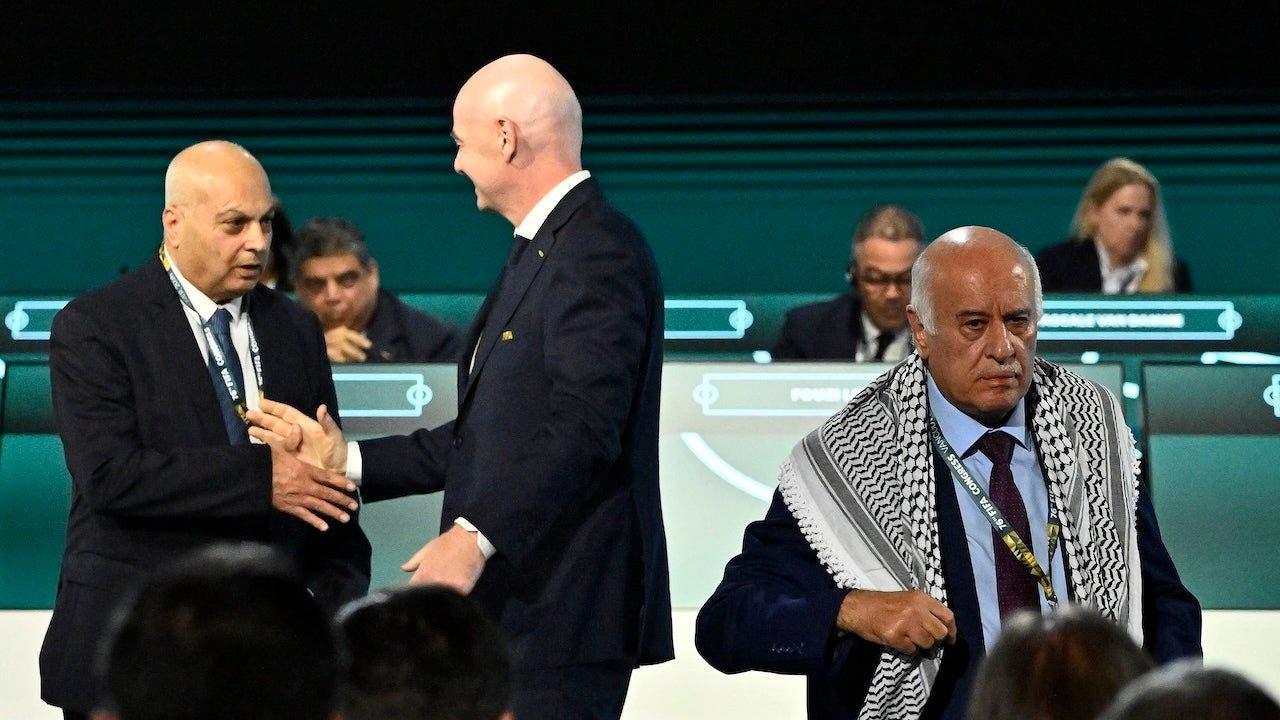
Palestinian Football Association President Jibril Rajoub refused to shake hands or even stand beside Israel Football Association Vice President Basim Sheikh Suliman during a tense exchange at the FIFA Congress Thursday.
Both officials were invited to the stage by FIFA President Gianni Infantino, but the Palestinian representative resisted efforts to bring him closer to his Israeli counterpart.
FIFA President Gianni Infantino shakes hands with Basim Sheikh Suliman (left), vice president of the Israeli Football Association, as Jibril Rajoub (right), president of the Palestine Football Association, leaves the stage at the 76th FIFA Congress in Vancouver, Canada, April 30, 2026. (Reuters/Jennifer Gauthier)
Infantino briefly placed a hand on Rajoub’s arm and gestured for him to step forward, but Rajoub did not comply.
CLICK HERE FOR MORE SPORTS COVERAGE ON FOXNEWS.COM
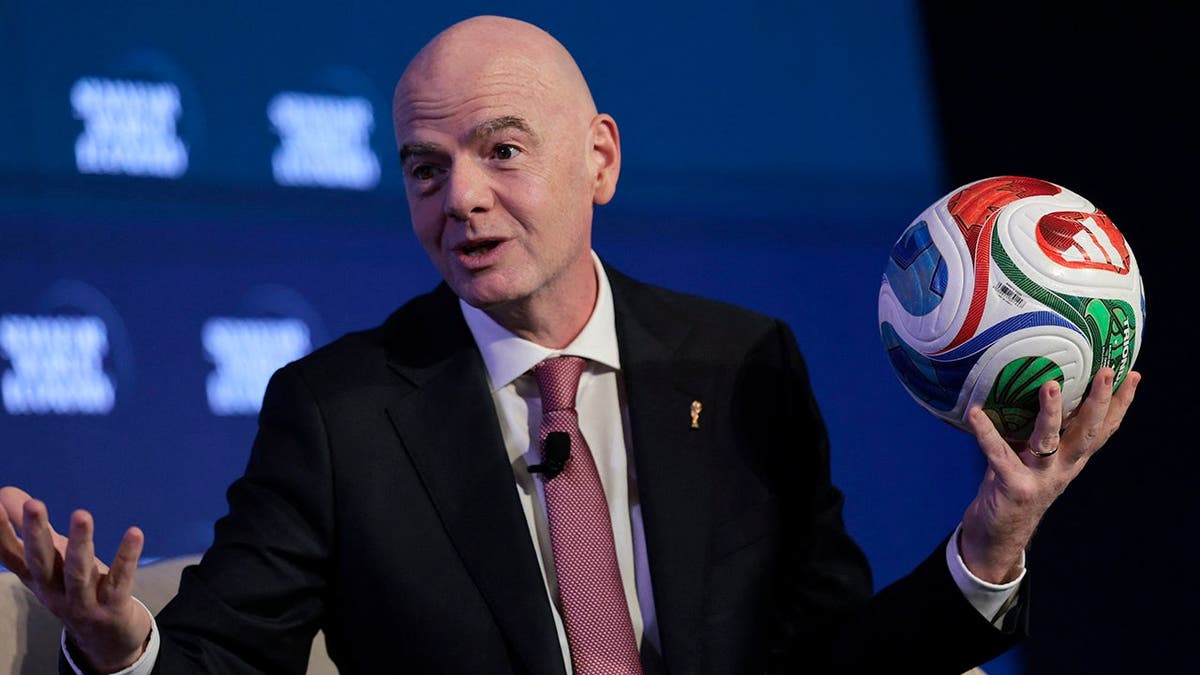
FIFA President Gianni Infantino speaks during the 2026 Semafor World Economy conference in Washington, D.C., on April 15, 2026. (Kent Nishimura/AFP)
The Palestinian FA, led by Rajoub, has long pushed for Israel to be suspended from international soccer competition.
Rajoub defended his decision, saying he remains committed to formal processes but believes stronger action is needed.
“I still respect and follow the legal procedure, but I think it’s time to understand that Israel should be sanctioned. The double-standard policy should stop,” Rajoub said, according to The Times of Israel.
“I refused to shake hands. Sport is sport. … For me, that should be respected, but if the other side is representing a criminal like Bibi [Prime Minister Benjamin Netanyahu] and speaking on behalf of Bibi as if Bibi is Mother Teresa, how can I shake hands or have a photo with such a man?
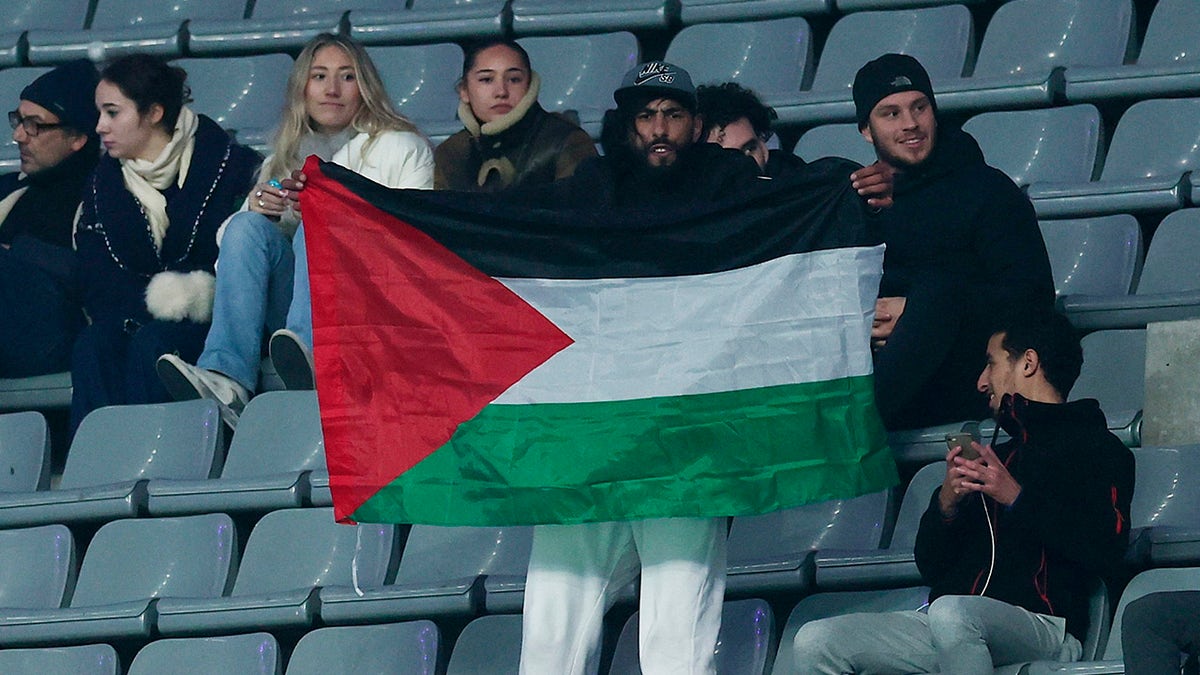
A fan displays a Palestinian flag during a Nations League group stage match between France and Israel Nov. 14, 2024. (Gonzalo Fuentes/Reuters)
“I think Gianni has the right to try to bridge gaps and bring people together, but I think maybe he does not understand or does not know the deep suffering of the Palestinian people.”
After the exchange, Infantino addressed the room, urging cooperation.
“We will work together, President Rajoub, Vice President Suliman. Let’s work together to give hope to the children. These are complex matters,” Infantino said.
Speaking just before the incident, Suliman emphasized the unifying role of the sport.
“In football, there is no place for politics,” Suliman said. “Everyone has the right to play and compete. We are teaching children values like respect, equality and love for others, and we hope that by the next time we meet, the situation will be better. We extend a hand to the Palestinian FA in the spirit of those shared values.”
CLICK HERE TO DOWNLOAD THE FOX NEWS APP
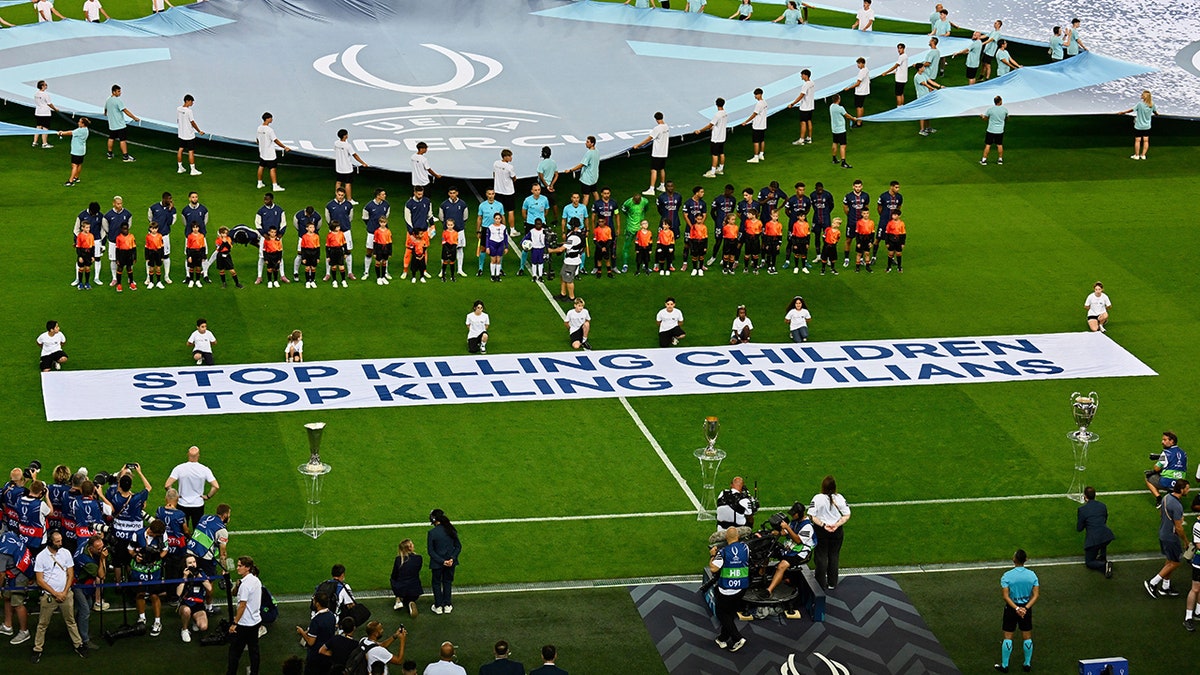
Players from Paris Saint-Germain and Tottenham Hotspur line up before the UEFA Super Cup soccer match in Udine, Italy, on Aug. 13, 2025. (Denes Erdos/AP)
UEFA was reportedly moving toward a vote to suspend Israel over the war in Gaza in September, but the motion was put on pause.
Infantino announced no action would be taken against the team on Oct. 3 after a historic peace proposal by President Donald Trump and Netanyahu.
However, even after the peace proposal, Israeli sports teams have faced opposition and exclusion.
Follow Fox News Digital’s sports coverage on X, and subscribe to the Fox News Sports Huddle newsletter.
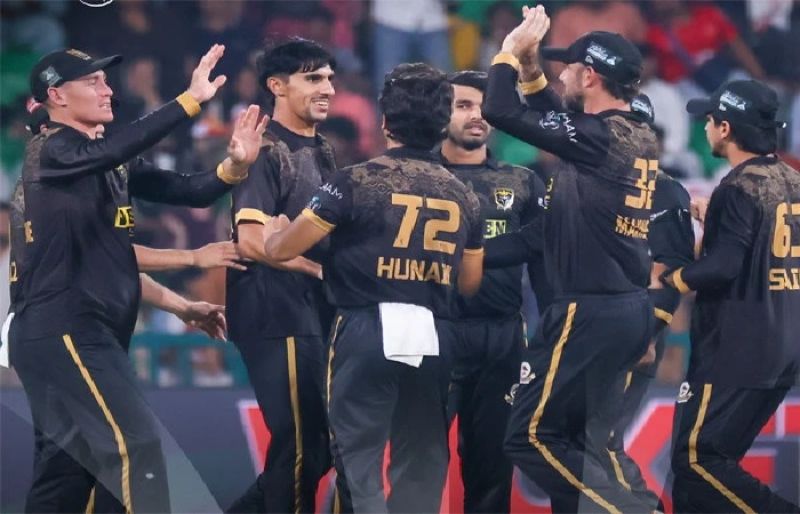
Hyderabad Kingsmen advanced to the Pakistan Super League (PSL) 11 final after defeating Islamabad United by two runs in the thrilling second eliminator at Lahore’s Gaddafi Stadium on Friday.
The victory propelled the debutants into the final, where they will lock horns with table-toppers Peshawar Zalmi at the same venue on Sunday, while it drew curtains on the United’s campaign at the eight-team tournament.
The United got off to an unwanted start to the pursuit as they lost Sameer Minhas (six) and Mohsin Riaz (five) inside three overs with just 15 runs on the board.
Skipper Shadab Khan then joined Devon Conway in the middle, and the duo batted cautiously to put together 42 runs for the second wicket until Saim Ayub dismissed the left-handed opener in the eighth over, who made a 25-ball 30 with the help of three fours and a six.
Shadab was then involved in a brief 11-run partnership for the fourth wicket until eventually falling victim to Hassan Khan on the first delivery of the 11th over and walked back after a cautious 22 off 24 deliveries.
Following his dismissal, Chapman took the reins of United’s pursuit and raised a crucial 64-run partnership for the fourth wicket with Haider Ali, who contributed with a 16-ball 31 until falling victim to Mohammad Ali in the 16th over.
Chapman, on the other hand, followed suit 10 deliveries later, falling victim to Hunain Shah in the 18th over. He remained the top-scorer for the United with a quickfire 43 off 26 deliveries, studded with five fours and two sixes.
But his dismissal did not bother the three-time champions as the all-rounder duo of Faheem Ashraf and Chris Green put them into the commanding position by smashing Ali for 22 runs in the penultimate over, and brought the required equation down to six runs off the last over.
Bowling the final over, with just six runs to defend, Hunain delivered impeccable death bowling as he gave just three runs to secure a thrilling two-run victory for the Kingsmen.
For the Kingsmen, Ali and Hunain bagged two wickets each, while Akif Javed, Hassan Khan and Saim Ayub chipped in with one scalp apiece.
Hunain claimed the Player of the Match award for a brilliant six-run defence in the tense final over.
Put into bat first, the Kingsmen piled up 186/5 in their 20 overs, courtesy of a sensational fifth-wicket partnership between Usman and Kusal Perera.
The Kingsmen got off to a dismal start to their innings as Richard Gleeson dismissed left-handed opener Maaz Sadaqat for a four-ball duck in the first over, with just one run on the board.
Following the early stutter, Saim Ayub joined captain Marnus Labuschagne in the middle, and the duo batted cautiously to put together 70 runs for the second wicket.
Chris Green eventually broke the budding partnership in the 10th over by getting rid of Saim, who walked back after scoring 38 off 27 deliveries with the help of seven fours.
Labuschagne was then involved in a brief 13-run partnership for the third wicket with Glenn Maxwell (three) until both Australians fell victim to Imad Wasim in the pulsating 12th over, resulting in Kingsmen slipping to 85/4.
The Kingsmen captain remained a notable run-getter for the tournament debutants, scoring 40 off 32 deliveries, featuring four fours and a six.
Following the back-to-back blows, in-form wicketkeeper batter Usman and Perera forced an astounding turnaround as they bolstered the Kingsmen’s total past the 180-run mark with a 101-run partnership for the fifth wicket.
Usman, who dominated the crucial stand, remained their top-scorer with an unbeaten 61 off 30 deliveries, studded with 10 boundaries, while Perera chipped in with a 21-ball 37, comprising four fours and two sixes.
Imad was the standout bowler for the United, taking two wickets for just 16 runs in his two overs, while Faheem Ashraf, Gleeson and Green made one scalp apiece.
- Kingsmen’s Usman smashes unbeaten 61 in eliminator showdown.
- Mark Chapman scores rapid 43 but United fall short narrowly.
- Hyderabad Kingsmen set up PSL 11 final against Peshawar Zalmi.
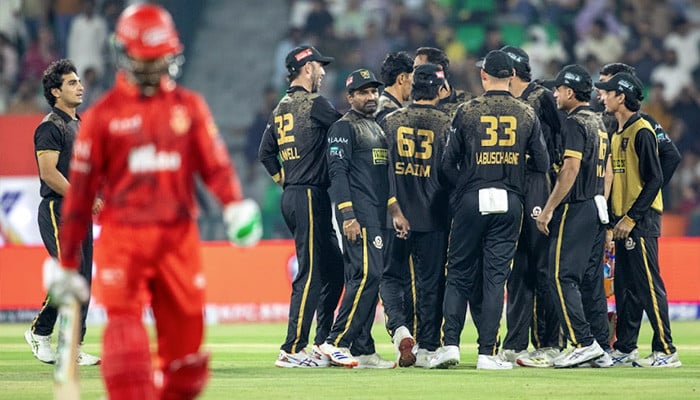
Hyderabad Kingsmen advanced to the Pakistan Super League (PSL) 11 final after defeating Islamabad United by two runs in the thrilling second eliminator at Lahore’s Gaddafi Stadium on Friday.
The victory propelled the debutants into the final, where they will lock horns with table-toppers Peshawar Zalmi at the same venue on Sunday, while it drew curtains on the United’s campaign at the eight-team tournament.
The United got off to an unwanted start to the pursuit as they lost Sameer Minhas (six) and Mohsin Riaz (five) inside three overs with just 15 runs on the board.
Skipper Shadab Khan then joined Devon Conway in the middle, and the duo batted cautiously to put together 42 runs for the second wicket until Saim Ayub dismissed the left-handed opener in the eighth over, who made a 25-ball 30 with the help of three fours and a six.
Shadab was then involved in a brief 11-run partnership for the fourth wicket until eventually falling victim to Hassan Khan on the first delivery of the 11th over and walked back after a cautious 22 off 24 deliveries.
Following his dismissal, Chapman took the reins of United’s pursuit and raised a crucial 64-run partnership for the fourth wicket with Haider Ali, who contributed with a 16-ball 31 until falling victim to Mohammad Ali in the 16th over.
Chapman, on the other hand, followed suit 10 deliveries later, falling victim to Hunain Shah in the 18th over. He remained the top-scorer for the United with a quickfire 43 off 26 deliveries, studded with five fours and two sixes.
But his dismissal did not bother the three-time champions as the all-rounder duo of Faheem Ashraf and Chris Green put them into the commanding position by smashing Ali for 22 runs in the penultimate over, and brought the required equation down to six runs off the last over.
Bowling the final over, with just six runs to defend, Hunain delivered impeccable death bowling as he gave just three runs to secure a thrilling two-run victory for the Kingsmen.
For the Kingsmen, Ali and Hunain bagged two wickets each, while Akif Javed, Hassan Khan and Saim Ayub chipped in with one scalp apiece.
Hunain claimed the Player of the Match award for a brilliant six-run defence in the tense final over.
Put into bat first, the Kingsmen piled up 186/5 in their 20 overs, courtesy of a sensational fifth-wicket partnership between Usman and Kusal Perera.
The Kingsmen got off to a dismal start to their innings as Richard Gleeson dismissed left-handed opener Maaz Sadaqat for a four-ball duck in the first over, with just one run on the board.
Following the early stutter, Saim Ayub joined captain Marnus Labuschagne in the middle, and the duo batted cautiously to put together 70 runs for the second wicket.
Chris Green eventually broke the budding partnership in the 10th over by getting rid of Saim, who walked back after scoring 38 off 27 deliveries with the help of seven fours.
Labuschagne was then involved in a brief 13-run partnership for the third wicket with Glenn Maxwell (three) until both Australians fell victim to Imad Wasim in the pulsating 12th over, resulting in Kingsmen slipping to 85/4.
The Kingsmen captain remained a notable run-getter for the tournament debutants, scoring 40 off 32 deliveries, featuring four fours and a six.
Following the back-to-back blows, in-form wicketkeeper batter Usman and Perera forced an astounding turnaround as they bolstered the Kingsmen’s total past the 180-run mark with a 101-run partnership for the fifth wicket.
Usman, who dominated the crucial stand, remained their top-scorer with an unbeaten 61 off 30 deliveries, studded with 10 boundaries, while Perera chipped in with a 21-ball 37, comprising four fours and two sixes.
Imad was the standout bowler for the United, taking two wickets for just 16 runs in his two overs, while Faheem Ashraf, Gleeson and Green made one scalp apiece.


Sydney Sweeney hard launches her romance with beau Scooter Braun

AAFA pushes for swift US House passage of key anti-counterfeiting law

Greta Gerwig finally reveals her wild new ‘Narnia’ movie title

-
 Business1 week ago
France Ends Airport Transit Visa Requirement for Indian Travellers | Business – The Times of India
-

 Fashion1 week ago
Canada forms new advisory committee to strengthen US trade relations
-

 Tech1 week ago
They Wanted to Join Raya. They’ve Been on the Waiting List for Years
-

 Tech5 days ago
A Brain Implant for Depression Is About to Be Tested in Humans
-
 Entertainment1 week ago
Anne Hathaway makes shocking confession about Taylor Swift’s music
-

 Tech5 days ago
Almost 90% of women leave tech industry within 10 years | Computer Weekly
-

 Tech1 week ago
Why Do I Like Dyson’s PencilVac So Much?
-
 Sports1 week ago
Yankees owner Hal Steinbrenner considering factors before debuting new alternate uniforms: report