

Tech
In 2026, collaboration, honesty and humility in cyber are key | Computer Weekly


If 2024 was the year AI crashed into cyber security, 2025 was the year interdependence became impossible to ignore.
Looking back over the past 12 months, the most important lesson I’ve learned is an uncomfortable one for security people: you are not really “in control” of your risk, you are sharing it. You are sharing it with suppliers, with operators, with cloud and AI platforms, and with the people on your own teams whose resilience is being stretched.
In our research at Forescout we’ve watched attacks continue to climb sharply. Across multiple reports, we’ve seen total attack volumes more than double compared with last year, and incidents in critical infrastructure grow several-fold. In the first half of 2025 alone, we tracked thousands of ransomware events worldwide, with services, manufacturing, technology, retail and healthcare consistently among the most-targeted sectors. This is no longer an IT hygiene problem; it has become a continuity problem for the real economy.
Operational technology has moved from the footnotes to the main story. Our threat intelligence work on critical infrastructure and state-aligned hacktivism has documented repeated attempts to disrupt water utilities, healthcare providers, energy companies and manufacturers by going after the industrial systems that run them. In parallel, our Riskiest Connected Devices research shows routers and other network equipment overtaking traditional endpoints as the riskiest assets in many environments, and risk concentrated in sectors that blend IT, operational tech (OT), the Internet of Things (IoT) and sometimes medical devices. The systems that keep things moving, and the devices that quietly connect them, are now prime targets.
The same interdependence is obvious when you look at the devices and components everyone depends on. In that same Riskiest Connected Devices report, we saw average device risk rise by 15% year-on-year, with routers alone accounting for more than half of the devices carrying the most dangerous vulnerabilities, and risk clustered in retail, financial services, government, healthcare and manufacturing. At the same time, our router and OT/IoT vulnerability research has shown how a single family of widely deployed network or industrial devices with remotely exploitable flaws can simultaneously expose hospitals, factories, power generators and government offices. That is not a theoretical ecosystem risk; it is a design feature of how we now build technology and deliver services. When one link is weak, the consequences propagate.
Working with organisations through real incidents this year, one pattern keeps emerging: resilience has become an ecosystem property. You can have well-managed endpoints, a competent SOC and a decent incident-response playbook and still be taken down because a third-party supplier gets hit, a “non-critical” OT asset becomes a bridge into IT (or vice-versa), or the humans running your programme are simply exhausted. Burnout is increasingly recognised as a security risk, not just an HR issue.
So, what does that mean for 2026?
One trend I expect to crystallise is what I have called “reverse ransom”. Traditionally, extortion follows the organisation that has been breached. We think attackers will increasingly flip that logic: compromise a smaller upstream manufacturer, logistics firm or service provider where defences are weaker, then apply pressure to the larger downstream brands and operators who depend on them to keep the whole chain moving. The party that can pay will no longer always be the party that was breached. For defenders, that means treating supplier visibility, shared detection and joint exercising as a core competency, rather than paperwork for procurement.
The second shift is around AI and social engineering. The novelty of AI-written phishing and voice cloning will wear off; it will just be how social engineering is done. In our 2026 predictions, we talk about “social engineering-as-a-service”: turnkey infrastructure, scripts, cloned voices, convincing pretexts and even real human operators available to anyone with a bitcoin wallet. At the same time, I expect to see more serious, less hype-driven adoption of AI on the defensive side: correlating weak signals across IT, OT, cloud and identity, mapping and prioritising assets and exposures continuously, and reducing the cognitive load on analysts by automating triage. Done properly, that is not about replacing people; it is about giving them back the headspace to think and to delve into the more rewarding stuff.
The third trend is regulatory. Between NIS2 in Europe, evolving resilience requirements in the UK and similar moves elsewhere, boards are going to discover that ecosystem security is becoming a legal duty as much as an operational one. Regulators are increasingly interested in how you manage third-party risk, how you protect critical processes, and how you evidence that your controls actually work under stress.
If 2025 taught me that complete control is largely an illusion, my hope for 2026 is that we respond with humility and collaboration rather than fear. That means investing in continuous visibility across IT, OT, IoT and cloud, building genuine partnerships with suppliers and peers rather than throwing questionnaires over the fence, and better considering the wellbeing of the people we rely on to make good decisions under pressure.
We’re never going back to a simpler threat landscape. But we can build a more honest one that acknowledges interdependence, designs for it and shares the load more intelligently.
Rik Ferguson is vice president of security intelligence at Forescout, as well as a special advisor to Europol and co-founder of the Respect in Security initiative. A seasoned cyber pro and well-known industry commentator, this is Ferguson’s first contribution to the CW Security Think Tank.
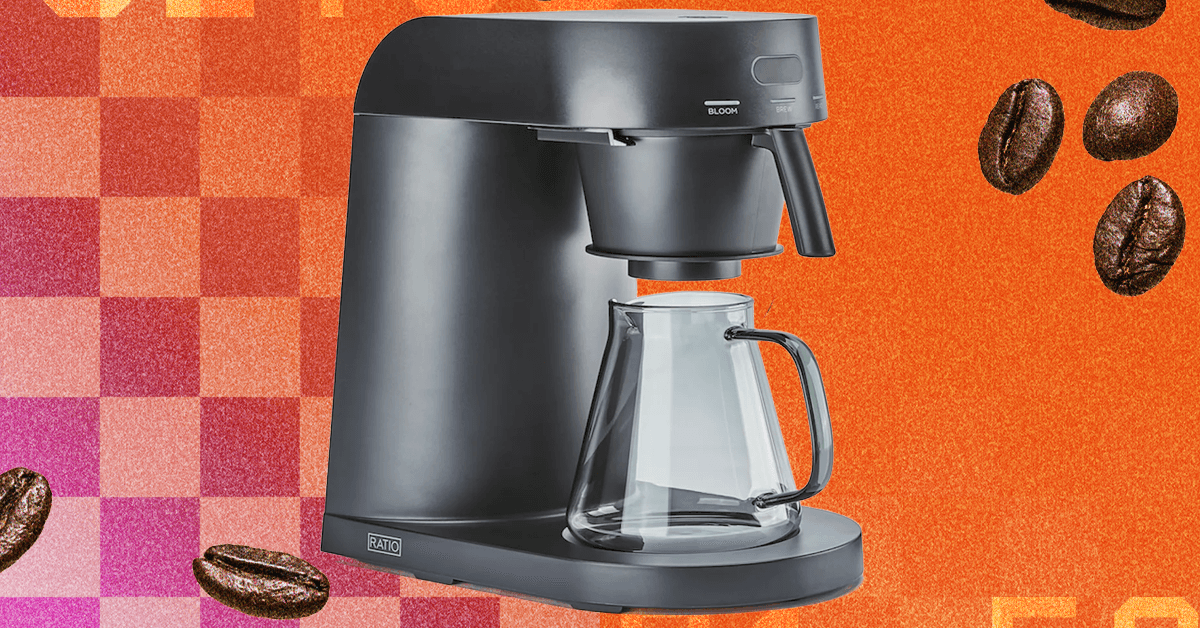
Coffee is the original office biohack and the nation’s most popular productivity tool. As we lose sleep to the changeover to daylight saving time, the caffeine-addicted WIRED Reviews team is writing about our favorite coffee brewing routines and devices that’ll keep us alert and maybe even happy in the morning. Today, reviewer Matthew Korfhage expounds on his lasting love for drip coffee—and why the Ratio Four never leaves his counter. In the days after, we’ll add other Java.Base stories about other WIRED writers’ favorite brewing methods.
As with any vice worth having, a morning coffee routine can take on the character of religion. And like a lot of religion, it’s often born as much accident as moral conviction. My denomination is good, old-fashioned drip coffee. That’s what I drink first thing, before I even think about crafting a shot of espresso.
I’m WIRED’s lead coffee writer and I’ve developed a deep fondness for coffee’s many variations, from espresso to Aeropress to cold brew. But “coffee” to me, in my deepest soul, still means a steaming mug of unadulterated drip. Luckily, that’s also the coffee arena that has been transformed the most by technology in recent years. The drip coffee from the Ratio Four coffee maker (now quietly on its second generation) feels to me like coffee’s purest form, the liquid distillation of what my coffee beans smell like fresh off the grinder.
-
Photograph: Matthew Korfhage
-
Photograph: Matthew Korfhage
-
Photograph: Matthew Korfhage


Ratio
Four Small-Batch Brewer (Series 2)
My love of filter coffee began as a teenager traveling and studying in India—perhaps my first glimpse of adult freedom. This is where I drank the first full cup of coffee I remember finishing. In Jaipur, filter coffee was an intense, jet-black gravity brew typically mixed with milk and sugar. I decided that if I was going to drink coffee, I would take it straight and learn to like it on its own terms. A newfound friend, tipping jaggery into his own brew, laughed at my insistence I didn’t want sweetened milk. I then downed a cup so thick and strong and caffeinated it made my hairs stand at perpendicular. If I’d made a mistake, I refused to admit it.
I carried this preference back to Oregon, drinking unadulteratedly black, terrible drip coffee at all-night diners and foul office breakrooms. Black coffee had become a morality clause, though it was hardly a matter of taste.
It wasn’t until years later that I discovered that drip coffee could actually be an indulgence every bit as refined as pinkies-up espresso.
Upping the Drip
In part, this was a problem of technology. Aside from a classic Moccamaster, it’s only very recently that home drip coffee makers have been able to produce a truly excellent cup. For years, I didn’t keep one at my home.
What woke me up to drip’s possibilities was a new wave of cafes in Portland, first third-wave coffee pioneer Stumptown Coffee and then especially Heart Coffee Roasters in Portland. Heart’s Norwegian owner-roaster, Wille Yli-Luoma, expounded to me at length about the aromatic purity of light-roast immersion coffee—the fruity aromatics of a first-crack Ethiopian that could smack of peach or nectarine or blueberry. Scandinavians had long prized this, he told me, and had evolved light-roast coffee into pure craft. America was finally catching up.
Still, I could never quite get that same flavor or clarity on a home brewer. Not until recently. To get the best version, I still had to walk up the street to Heart and get my coffee from the guy who roasted it. Or I had to spend way too long drizzling water over coffee in a conical filter. I rarely wanted to do this while still bleary from sleep, already late for work.
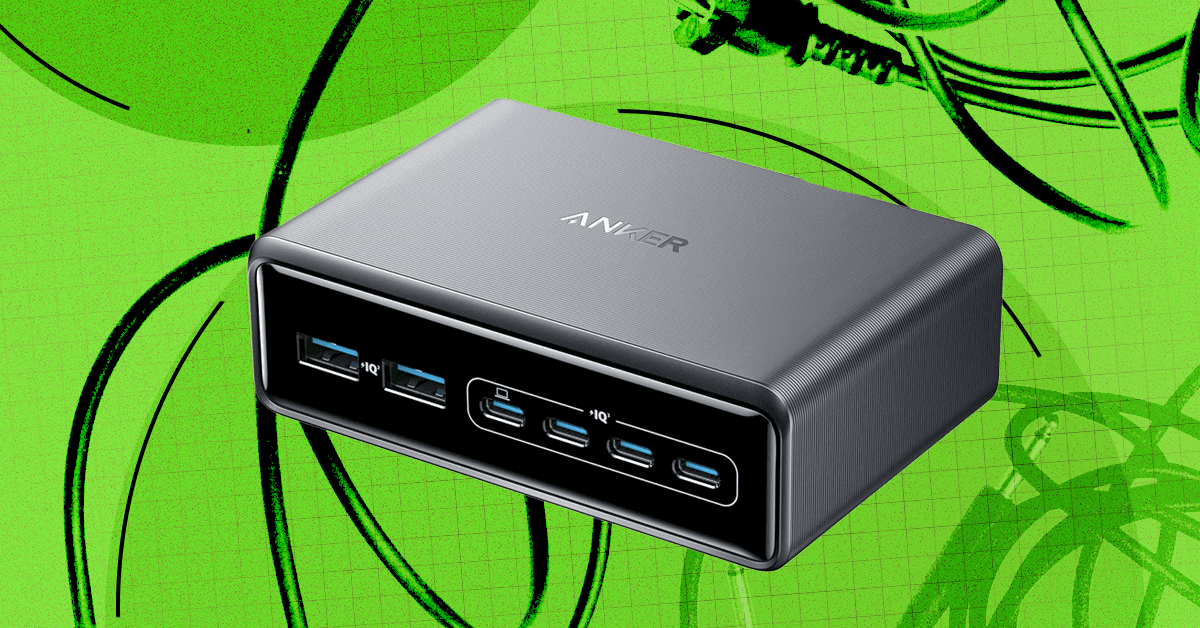
There’s a reason we’re called WIRED. If there’s one thing most of today’s gadgets have in common, it’s that they typically need to be plugged in from time to time. But all those cables, cords, and wires can be tough to manage. They don’t have to end up in a tangled nest under your desk; you can bring order to the cable chaos.
As a gadget reviewer, I have more cords than most people, which is why I also have a regimented cable management strategy to keep everything orderly. Here are my tips and product recommendations for hiding those cords and power strips, and keeping your desktop tidy.
Jump To:
Planning and Prep
Start by surveying the scene, unplugging and untangling everything, and removing anything that doesn’t need to be there. You might be surprised to find a stray USB-B or Micro-USB you haven’t used in years in the mix. Before you get started on cable management, take a slightly damp microfiber cloth and wipe down all the surfaces and cables. Now, you can start planning routes and figuring out which cables it would make sense to bundle together.
Ideally, cables will be the exact required length, so if you have spares or you don’t mind snagging some new cables, it’s worth switching and getting as close as possible to exact lengths to reduce the excess cable you have to hide. If you have a standing desk, remember to take into account the cable length required for a standing position (trust me, dear reader, it’s no fun when you hit stand on the desk and it pulls your PC tower into the air by a DisplayPort cable that is now forever stuck in that port).
Cable Management
Tidying your tech often comes back to cable management, but there are several ways to keep those cords neatly out of sight. Many desks have channels, grommets, and power strip trays built-in, so have a quick look to make sure you’re using what’s available. Some monitor arms also have built-in cable management. You also likely have a bunch of cable ties in your junk drawer or toolbox, so gather them together.

Ikea
Trixig 150-Piece Cable Management Set
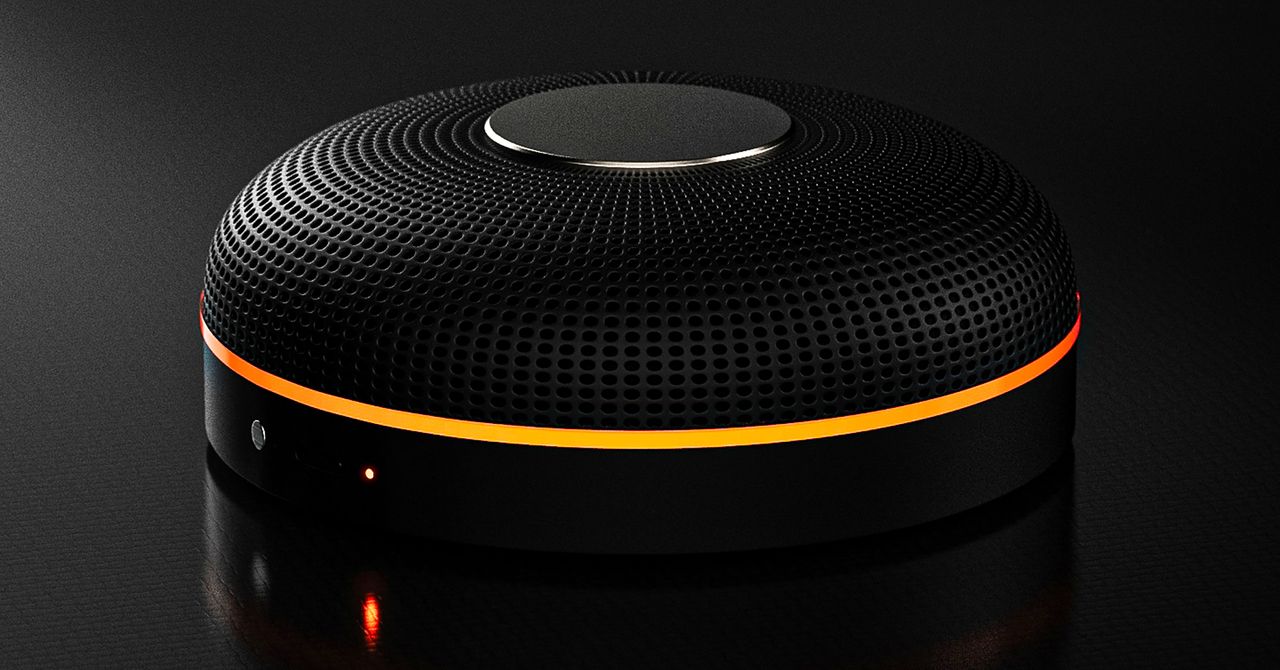
Deveillance also claims the Spectre can find nearby microphones by detecting radio frequencies (RF), but critics say finding a microphone via RF emissions is not effective unless the sensor is immediately beside it.
“If you could detect and recognize components via RF the way Spectre claims to, it would literally be transformative to technology,” Jordan wrote in a text to WIRED after he built a device to test detecting RF signatures in microphones. “You’d be able to do radio astronomy in Manhattan.”
Deveillance is also looking at ways to integrate nonlinear junction detection (NLJD), a very high-frequency radio signal used by security professionals to find hidden mics and bugs. NLJD detectors are expensive and used primarily in professional contexts like military operations.
Even if a device could detect a microphone’s exact location, objects around a room can change how the frequencies spread and interact. The emitted frequencies could also be a problem. There haven’t been adequate studies to show what effects ultrasonic frequencies have on the human ear, but some people and many pets can hear them and find them obnoxious or even painful. Baradari acknowledges that her team needs to do more testing to see how pets are affected.
“They simply cannot do this,” engineer and YouTuber Dave Jones (who runs the channel EEVblog) wrote in an email to WIRED. “They are using the classic trick of using wording to imply that it will detect every type of microphone, when all they are probably doing is scanning for Bluetooth audio devices. It’s totally lame.” Baradari reiterates that the Spectre uses a combination of RF and Bluetooth low energy to detect microphones.
WIRED asked Baradari to share any evidence of the Spectre’s effectiveness at identifying and blocking microphones in a person’s vicinity. Baradari shared a few short videoclips of people putting their phones to their ears listening to audioclips—which were presumably jammed by the Spectre—but these videos do little to prove that the device works.
Future Imperfect
Baradari has taken the critiques in stride, acknowledging that the tech is still in development. “I actually appreciate those comments, because they’re making me think and see more things as well,” Baradari says. “I do believe that with the ideas that we’re having and integrating into one device, these concerns can be addressed.”
People were quick to poke fun at the Spectre I online, calling the technology the cone of silence from Dune. Now, the Deveillance website reads, “Our goal is to make the cone of silence become reality.”
John Scott-Railton, a cybersecurity researcher at Citizen Lab, who is critical of the Spectre I, lauded the device’s virality as an indication of the real hunger for these kinds of gadgets to win back our privacy.
“The silver lining of this blowing up is that it is a Ring-like moment that highlights how quickly and intensely consumer attitudes have shifted around pervasive recording devices,” says Scott-Railton. “We need to be building products that do all the cool things that people want but that don’t have the massive privacy- and consent-violation undertow. You need device-level controls, and you need regulations of the companies that are doing this.”
Cooper Quintin, a senior staff technologist at the Electronic Frontier Foundation, echoed those sentiments, even if critics believe Deveillance’s efforts to be flawed.
“If this technology works, it could be a boon for many,” Quintin wrote in an email to WIRED. “It is nice to see a company creating something to protect privacy instead of working on new and creative ways to extract data from us.”


Special loan facility for Feb wages in Bangladesh’s export units

Let girls fly

Why have 1,000 ships at times lost their GPS in the Mideast?

LPGA legend shares her feelings about US women’s Olympic wins: ‘Gets me really emotional’

India Us Trade Deal: Fresh look at India-US trade deal? May be ‘rebalanced’ if circumstances change, says Piyush Goyal – The Times of India

South Korea’s Misto Holdings completes planned leadership transition

-
 Sports1 week ago
LPGA legend shares her feelings about US women’s Olympic wins: ‘Gets me really emotional’
-
Business1 week ago
India Us Trade Deal: Fresh look at India-US trade deal? May be ‘rebalanced’ if circumstances change, says Piyush Goyal – The Times of India
-
 Fashion1 week ago
South Korea’s Misto Holdings completes planned leadership transition
-

 Entertainment1 week ago
Pakistan’s semi-final qualification scenario after England defeat New Zealand
-

 Entertainment1 week ago
Bobby J. Brown, “The Wire” and “Law & Order: SUV” actor, dies of smoke inhalation after reported fire
-
 Business1 week ago
CNBC To Merge TV And Digital News Operations, Nearly A Dozen Jobs To Be Cut: Report
-
 Business1 week ago
Greggs to reveal trading amid pressure from cost of living and weight loss drugs
-
 Entertainment1 week ago
What’s new in Pokémon? Every game, update, surprise from 30th anniversary event