

Politics
India and Russia set for major trade discussions today

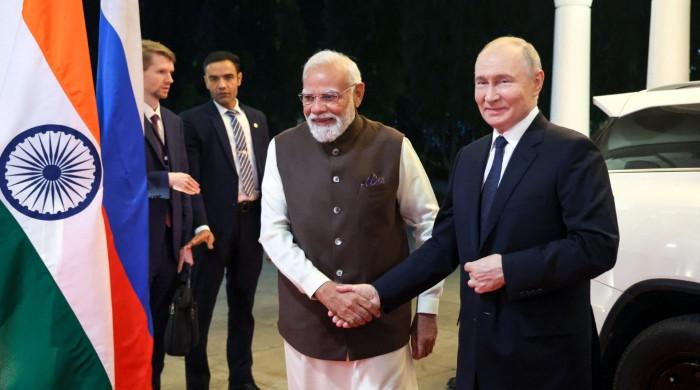
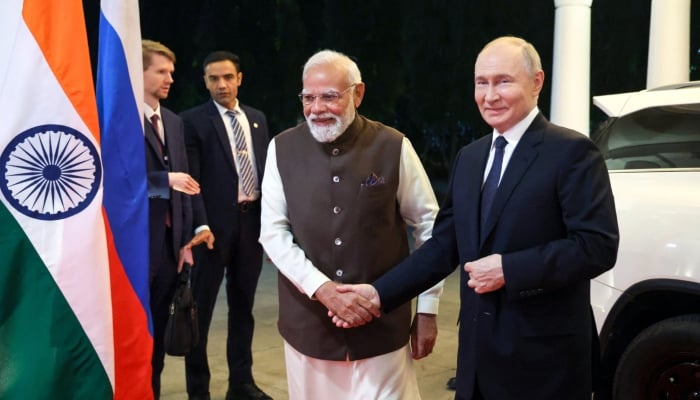
- Putin’s visit aims to boost trade amid Western sanctions.
- India balances ties with Russia and US amid trade talks.
- Modi, Putin to discuss defence, oil, nuclear energy today.
NEW DELHI: Russian President Vladimir Putin will hold summit talks with Prime Minister Narendra Modi in New Delhi on Friday, aiming to boost trade with the top buyer of Russia’s arms and seaborne oil as Western sanctions squeeze their decades-old ties.
Putin is on his first visit to India in four years at a time when New Delhi is engaged in talks with the US for a trade deal to cut punitive tariffs imposed by President Donald Trump on its goods over India’s Russian oil purchases.
Moscow has been India’s top arms supplier for decades and has said that it wants to import more Indian goods in an effort to grow trade to $100 billion by 2030 that so far has been skewed in its favour due to New Delhi’s energy imports.
Since European countries cut back their reliance on Russian energy after Russia invaded Ukraine nearly four years ago, India has ramped up its purchases of discounted Russian crude.
“India faces a conundrum; by taking steps to strengthen ties with Moscow or Washington, New Delhi risks setting back ties with the other,” Michael Kugelman, senior fellow at Washington’s Atlantic Council think tank, wrote in Foreign Policy magazine this week.
Modi and Putin are also expected to discuss other topics including labour and civil nuclear energy, with the sides expected to announce new agreements to showcase the resilience of their relations.
Hugs and handshakes
The Indian leader received Putin with a hug and handshake as he walked down the red carpet after arriving at an airport near New Delhi on Thursday for the two-day visit. Modi later hosted the Russian president for a private dinner at his residence.
A business and government delegation has accompanied Putin for the visit, including his defence minister, Andrei Belousov, who held talks with his Indian counterpart Rajnath Singh on Thursday.
Belousov “stated that the Russian defence industry is ready to support India towards becoming self-reliant in the field of defence production,” India’s defence ministry said after the talks.
Putin arrived in India a day after holding talks with Trump’s top envoys on a possible peace deal to end the war in Ukraine, but they did not reach a compromise.
India has resisted condemning Russia over the war and called for peace through dialogue and diplomacy, while saying that its ties with Moscow were being unfairly targeted by Western nations that continue to do business with Moscow when it is in their interest.
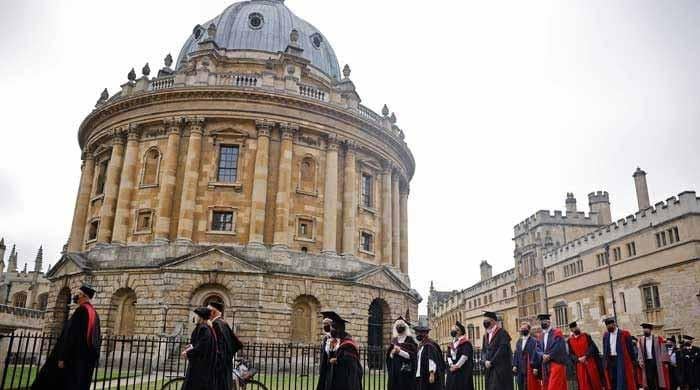
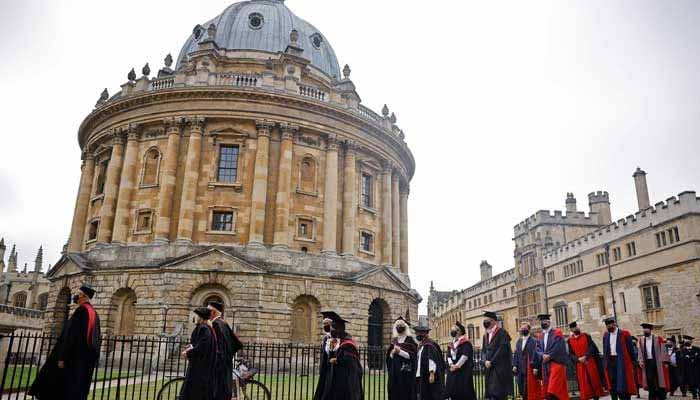
LONDON: UK universities are shutting out applicants from Pakistan and Bangladesh because of concerns over visa abuse and tougher Home Office rules, according to reports.
At least nine higher education institutions have restricted recruitment from “high risk” countries as they face increased pressure to ensure they are enrolling genuine students and not those who abuse the system.
It follows a surge of asylum claims from international students, prompting the border security minister Dame Angela Eagle to warn that the visa system “must not be used as a backdoor” to settling in Britain.
It was reported last month that Pakistan has topped the list of asylum-seeking countries, for the last year.
Among those that have made changes is the University of Chester, which suspended recruitment from Pakistan until autumn 2026, citing a “recent and unexpected rise in visa refusals.”
The University of Wolverhampton is not accepting undergraduate applicants from Pakistan and Bangladesh, while the University of East London is suspending recruitment from Pakistan, the Financial Times reported.
Other universities that have made changes include Sunderland and Coventry, which have both suspended recruitment from Pakistan and Bangladesh.
The University of Sunderland said it made “no apologies” for taking a firm approach “to protect the integrity” of the student visa system.
Earlier this year, the Home Office made changes to the three Basic Compliance Assessment (BCA) thresholds that UK institutions must meet to keep their student sponsor licence.
The overhaul is part of a wider reform of UK immigration rules intended to tackle abuse of the system and reduce net migration, which is at the lowest level in four years.
Under the changes, which came into effect in September, UK universities must ensure that no more than 5 per cent of their visa applications are rejected, reduced from 10 per cent.
The average refusal rate for Pakistan and Bangladesh student visa applications, excluding dependents, in the year to September 2025 was 18 and 22 per cent respectively — well above the new limit.
The two countries account for half of the 23,036 cases that were turned down by the Home Office in the same period.
Asylum claims from Pakistani and Bangladeshi nationals have also risen, most of whom entered Britain on a work or study visa.
Vincenzo Raimo, an international higher education consultant said the crackdown posed a “real dilemma” for lower-fee universities that rely heavily on international recruitment.
“Even small numbers of problematic cases can threaten universities’ compliance with Home Office thresholds,” he added.
Several other universities have made changes to their recruitment practices.
The University of Hertfordshire, which the Home Office has placed under an action plan that enforces stronger compliance checks, has suspended recruitment from Pakistan and Bangladesh until September 2026, blaming “long visa processing times”.
In a memo seen by the Financial Times, Glasgow Caledonian University, also subject to an action plan, told staff in July that it needed to make “temporary changes to international student intake”, warning that the “stringent” new metrics meant “doing nothing is not an option”.
It paused recruitment to a number of programmes for the September intake, but it has been reinstated for courses starting in January, a Glasgow Caledonian spokesperson said.
Oxford Brookes has paused recruitment from Pakistan and Bangladesh for undergraduate courses beginning in January 2026, citing “visa processing times”. It said it would resume application processing for September that year.
BPP University, a private institution, has temporarily paused student recruitment from Pakistan as part of a “risk mitigation” strategy, it said.
Over the summer, London Metropolitan University confirmed it had stopped recruiting from Bangladesh, adding that the country accounted for 60 per cent of its visa refusals.
Maryem Abbas, founder of Edvance Advisors, a Lahore-based education agency that helps Pakistanis study abroad, said these decisions were “heartbreaking” for genuine students left stranded when their applications were withdrawn at the final stage.
She accused UK universities of helping to create the very incentives that produce spurious applications and urged them to better scrutinise the overseas agencies they use to source enrolments.
“Hundreds of agencies in Pakistan honestly don’t really care about where the student goes,” she added, saying that her sector has become a “moneymaking business”.
According to official estimates published in May, 22 higher education institutions would fail at least one of the tightened BCA criteria.
While 17 of the institutions at risk could improve their compliance enough to keep sponsoring students, five would lose sponsorship rights for at least a year — cutting an estimated 12,000 international students.
Jamie Arrowsmith, director at Universities UK International, said some institutions would need to diversify their intakes and enhance their application processes and deposit policies to comply with the new rules.
While stricter rules “may be challenging” for many universities, they are necessary to maintain public confidence in the system, he added.
The Home Office said it “strongly values” international students.
“That’s why we’re tightening the rules to ensure those coming here are genuine students and education providers take their responsibilities seriously,” it added.
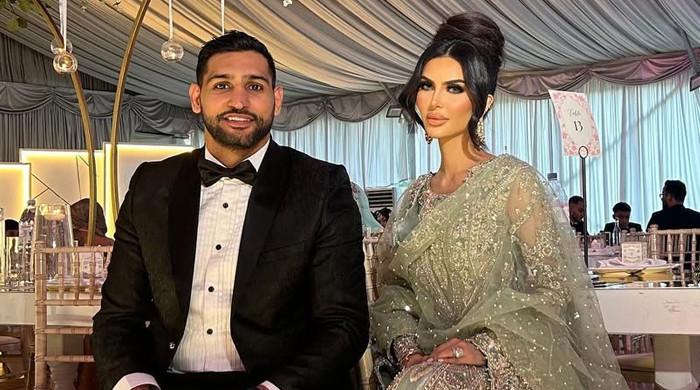
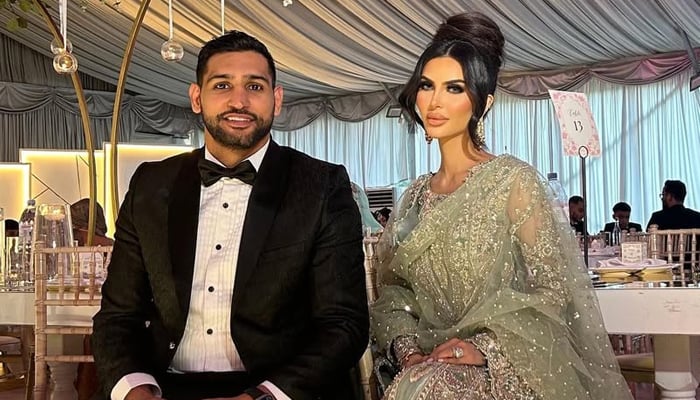
LONDON: The London High Court has sharply rebuked British-Pakistani boxer Amir Khan and his wife Faryal Makhdoom for their “misconceived and opportunistic” attempt to strike out the defence filed by Faryaal Hussain, a female rights advocate, in the ongoing defamation claim brought by the celebrity couple.
In an order handed down by Master Davison, the court refused the Khans’ second strike-out application, marking the second time the couple has failed to remove Hussain’s defence before trial. The Khans are suing Hussain for £100,000 — alleging reputational and financial damage over statements she made on the Blue Tick Podcast and in an online petition in relation to the couple.
Master Davison criticised the Claimants’ approach in direct terms, finding that the renewed strike-out bid had “delayed the progress of the case by some 6 months” and had “run up unnecessary costs.”
He made clear that any shortcomings in the pleading could easily have been handled through correspondence or a Part 18 Request, noting that this would have been the appropriate course particularly because Mrs Hussain was acting as a litigant in person.
In the most striking passage of the ruling, the Master wrote: “I suspect that part of the Claimants’ motivation in making their strike-out application was to avoid scrutiny/further scrutiny of the truth or falsity of these matters. Self-evidently, that is not a sound basis for such an order.”
Although the Master struck out the honest opinion defence of Hussain, he held that Hussain’s remaining defences, truth and public interest, were “reasonably arguable” and must now proceed to a full trial.
The court noted that Hussain had already provided extensive material across her defence and amended defence, and that striking out her position entirely would have been a disproportionate response.
Given that the claim relates to the underlying matter of sexual misconduct, the judge has directed that the female witnesses must not be identified or their names published.
The case will now move forward publicly and is expected to draw significant media attention as the entire foundation of the defamation claim rests on two publications setting out allegations of intimidation, blackmail, and sexual misconduct — the very matters the Master indicated will inevitably require judicial scrutiny.
The proceedings are set to throw light on the private conduct, marital dynamics, and dealings with multiple women attributed to the couple squarely under the spotlight matters that the Court has now confirmed cannot be swept aside without full scrutiny.
These broadcasts by Hussain were published in July 2023 and September 2023.
The Khans are represented by lawyer Ahmed Jawad’s Central Chambers Law. Hussain is representing herself. Both Amir Khan and Faryal Hussain didn’t respond to questions. Jawad said he had no comment to make.
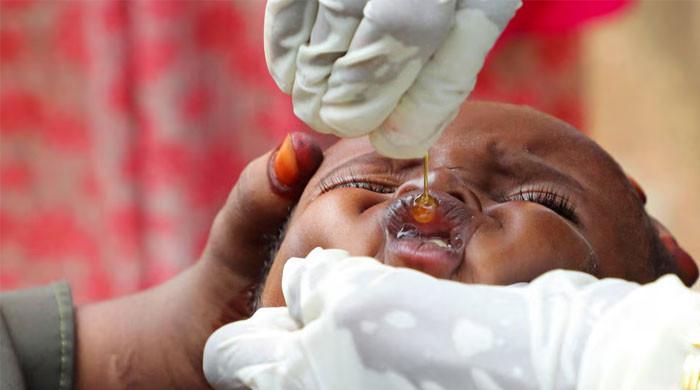
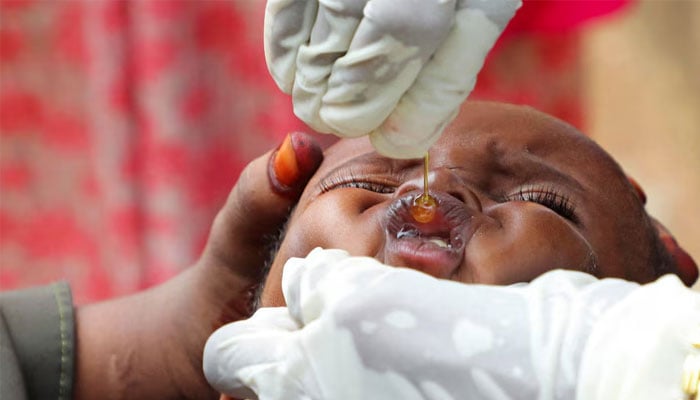
LONDON: Around 200,000 more children will likely die before their fifth birthday this year than in 2024 as international aid cuts undermine decades of progress, the Gates Foundation said on Thursday.
The projected increase would mark the first rise in preventable child deaths this century, Gates said, from an estimated 4.6 million in 2024 to 4.8 million this year. Child deaths have roughly halved since 2000.
“For decades, the world has made steady progress in saving children’s lives. But now, as challenges mount, that progress is reversing,” said Bill Gates, chair of the eponymous foundation, in a foreword to its annual Goalkeepers report.
Aid cuts have spread beyond the US
The report tracks progress towards the United Nations Sustainable Development Goals on reducing poverty and improving health. It usually comes out in September but was delayed this year due to the uncertainty over global health funding.
International aid cuts began with the US at the beginning of the year, but have since spread to other major donors like Britain and Germany. Overall, global development assistance for health fell by just under 27% this year compared to 2024, the report says.
The cuts are a key reason for the reversal in progress on child mortality, Gates said, although other issues, like countries facing mounting debt and fragile health systems, are also factors. Earlier this year, Gates warned that the cuts would lead to more children dying.
If the cuts are permanent, that could mean between 12 and 16 million more child deaths by 2045, the report adds, depending on funding levels. This year, the increase in deaths could see them match 2023’s number, the latest year for which the World Health Organisation has data.
The figures in the report are based on modelling from the Institute for Health Metrics and Evaluation at Washington University.
Gates urged governments and individuals to step up and focus on innovative new tools as well as proven solutions, like vaccination and investment in primary healthcare, to boost child health.


Cotton prices in Brazil hit 16-year low amid weak demand, ample supply

Top stocks to buy today: Stock recommendations for December 5, 2025 – check list – The Times of India

Hollywood stars slam Quentin Tarantino’s criticism for Paul Dano

-

 Tech5 days ago
Get Your Steps In From Your Home Office With This Walking Pad—On Sale This Week
-

 Fashion4 days ago
Results are in: US Black Friday store visits down, e-visits up, apparel shines
-

 Sports4 days ago
India Triumphs Over South Africa in First ODI Thanks to Kohli’s Heroics – SUCH TV
-

 Entertainment4 days ago
Sadie Sink talks about the future of Max in ‘Stranger Things’
-

 Politics4 days ago
Elon Musk reveals partner’s half-Indian roots, son’s middle name ‘Sekhar’
-

 Tech4 days ago
Prague’s City Center Sparkles, Buzzes, and Burns at the Signal Festival
-

 Sports4 days ago
Broncos secure thrilling OT victory over Commanders behind clutch performances
-
 Business4 days ago
Key Financial Deadlines That Have Been Extended For December 2025; Know The Last Date