

Business
India Eyes Seafood Export Revival As EU, Russia, Australia Open Doors Amid US Tariff Shock

Last Updated:
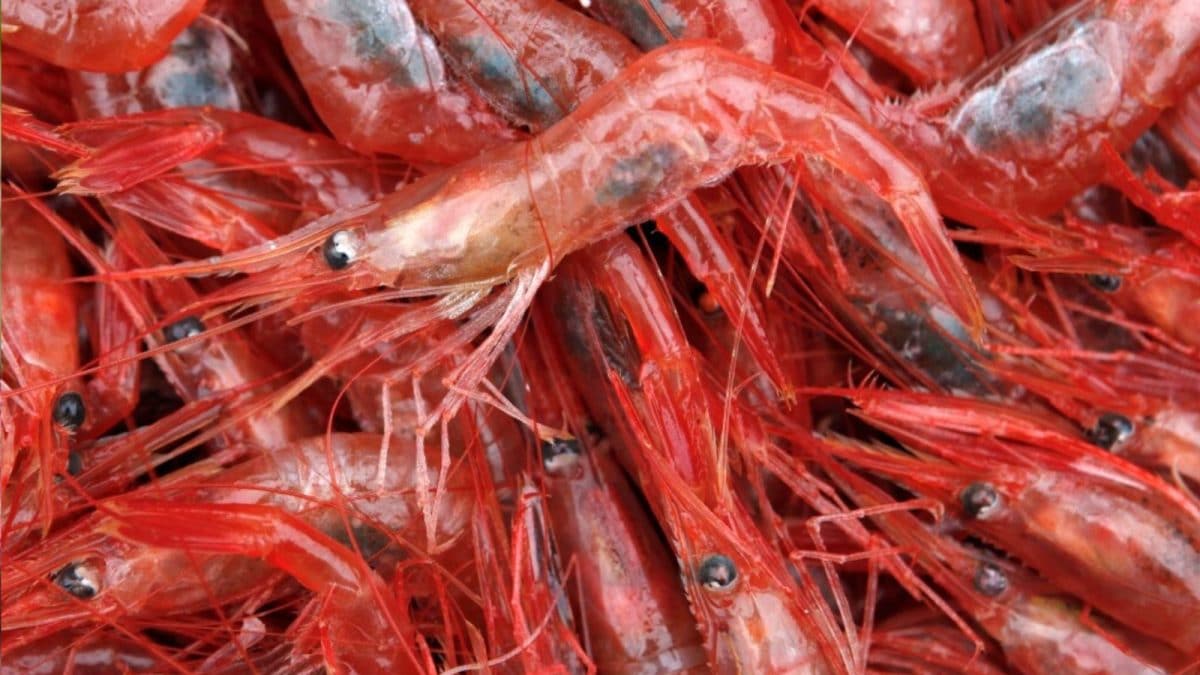
Australia, which had restricted imports due to white spot virus concerns, has now permitted unpeeled shrimp from Andhra Pradesh for the first time in 8 years
The EU remains a premium market for shrimp and fish, and renewed access is expected to raise earnings for farmers and exporters. (AP Photo)
Indian seafood exporters, particularly those in Andhra Pradesh, are set for a significant boost as the government resolves longstanding trade issues with major international markets, offering relief after a sharp US tariff hit earlier this year.
In August 2025, the United States imposed nearly a 50% tariff on Indian seafood, including shrimp, effectively curbing exports from states like Andhra Pradesh, which account for nearly 80% of India’s total shrimp shipments. The tariffs, which touched as high as 59.72%, were partially in response to India’s continued imports of Russian crude oil, and posed a serious threat to the livelihoods of farmers and exporters alike.
Union Commerce and Industry Minister Piyush Goyal said that the government has proactively addressed these challenges by reopening access to alternative markets. Speaking to the Economic Times on the sidelines of the CII Partnership Summit in Visakhapatnam, Goyal noted that India had “ironed out problems with the European Union”, which had imposed a 9-year ban on Indian seafood over quality control concerns.
“Now, 102 fisheries have received approval to export to the EU,” he said, highlighting growing confidence in India’s food safety and quality assurance systems. The EU remains a premium market for shrimp and fish, and renewed access is expected to raise earnings for farmers and exporters.
Russia: Strategic Expansion
Russia has emerged as a key alternative market. Goyal stated that final approvals are underway for 25 Indian fisheries, with further approvals expected. Expanding trade with Russia not only offsets losses from the US market but also strengthens geopolitical and energy ties, reinforcing India’s diversified trade strategy.
Australia Reopens After 8 Years
Australia, which had restricted imports due to white spot virus concerns, has now permitted unpeeled shrimp from Andhra Pradesh for the first time in eight years. This move is expected to enhance India’s brand image in premium seafood markets and open avenues for processed seafood exports.
Economic Implications
With these new openings, India’s $7.4 billion seafood sector could see a 20-30% increase in exports. The government aims to raise overall exports to $12-14 billion by FY26, boosting foreign exchange earnings and reinforcing the sector’s contribution to GDP. For Andhra Pradesh, where the bulk of shrimp production is concentrated, the diversification of export markets is expected to stabilise prices and protect millions of jobs.
Geopolitical Resilience
The recent developments underline India’s ability to navigate international pressure. Faced with punitive US tariffs, the country has successfully leveraged alternate markets, strengthening trade ties with Russia, re-establishing access to Australia, and resolving longstanding EU barriers. These steps not only safeguard the domestic seafood sector but also highlight India’s strategic approach to global trade amid shifting geopolitical dynamics.
November 17, 2025, 17:25 IST
Read More
Business
US-Iran war: How Indian industry is being impacted by LPG issues, rising oil prices, Strait of Hormuz closure – explained in 10 points – The Times of India
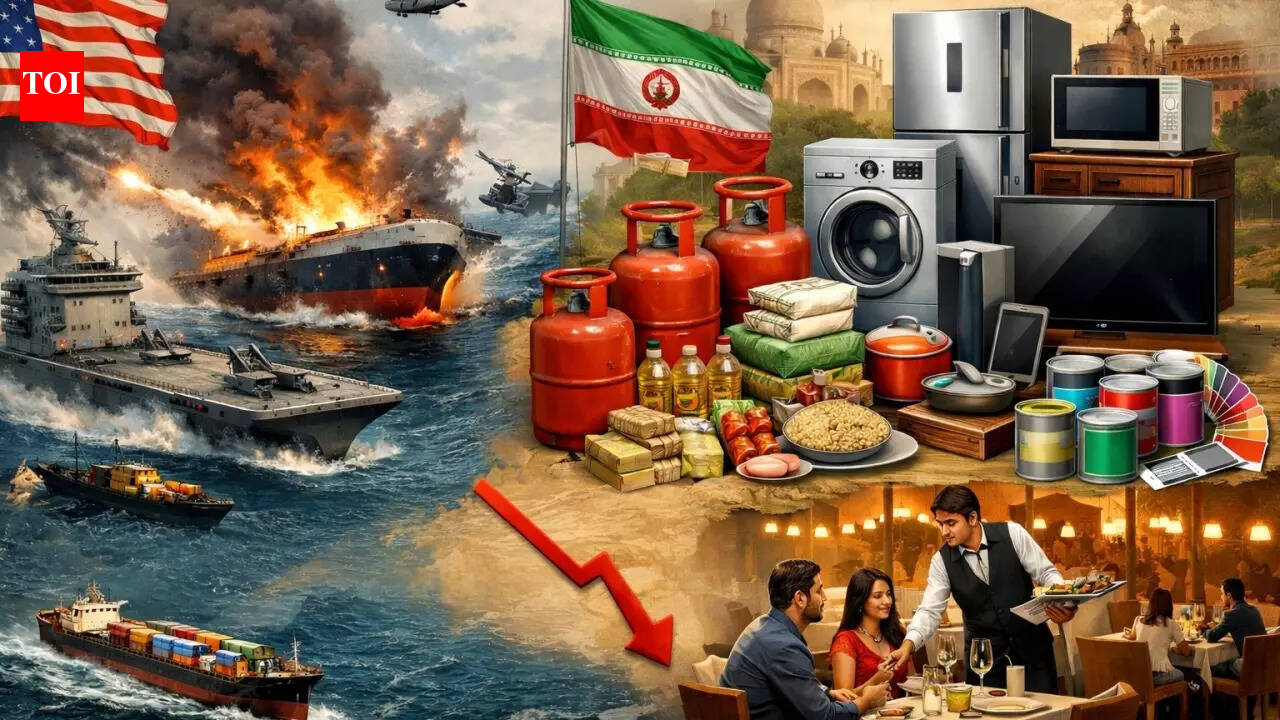
US-Iran war impact: The ripple effects of the ongoing Middle East tensions, LPG supply issues, rising oil prices and closure of Strait of Hormuz are being felt across industries in India. India’s manufacturing sector is on high alert as the war involving Iran threatens to disrupt key maritime routes used for global trade. For factories whose operations depend heavily on raw material supply chains, energy flows and shipping routes that pass through volatile regions, the situation has turned into a cautious wait-and-watch phase.The scarcity of commercial LPG has emerged after shipments from the Gulf region were disrupted amid the ongoing conflict in West Asia. India relies heavily on imports from this region for its LPG requirements.
How is the ongoing US-Israel-Iran war impacting India Inc? We take a look:1. Auto industryThe escalating crisis has prompted automobile manufacturers and component suppliers to urgently evaluate their dependence on supply chains connected to the Gulf region.Leading car and two-wheeler manufacturers have circulated advisories to their vendor networks, urging them to review exposure to critical inputs that pass through Gulf ports. These include aluminium alloys, copper, petrochemical derivatives, PVC resins, lubricants, adhesives and electronic components.The energy shortage is creating difficulties for automakers and their supplier networks, including foundries, forging units and paint shops. Switching from gas to oil as a fuel source requires additional capital investment, regulatory approvals and time, which many smaller units do not have.2. Consumer goods & electronicsExporters in consumer goods and electronics have already begun facing direct disruptions, with shipments suspended and production lines halted as rising war-risk surcharges erode profit margins. Industry associations have started approaching the government for urgent assistance to ensure adequate supplies of industrial fuel.Electronics contract manufacturers have paused production lines meant for overseas markets. Godrej Appliances and Haier Appliances India have also revised their production plans. Consumer goods producers have started reducing output tied to exports after suspending shipments to the Gulf and certain European markets. 3. Gas distributorsCity gas distributor Adani Total Gas has directed commercial and industrial customers to restrict natural gas consumption to 40% of their contracted volumes. The company warned that any usage beyond that threshold would be billed at significantly higher spot market rates, said an ET report. Contracted prices stand at about ₹40 per standard cubic metre, compared with spot LNG prices of nearly ₹120.Last week, Gujarat Gas declared force majeure on certain gas supply agreements after supplies of regasified LNG tightened sharply. 4. MedicinesAccording to an ET report, medicine prices could rise following a sharp increase in the cost of essential raw materials, or active pharmaceutical ingredients (APIs), which have surged about 30% over the past two weeks. The spike has largely been attributed to a shortage of container vessels after the Iran war disrupted global shipping.Senior industry executives said the scarcity of ships has slowed the movement of raw materials from China, the largest supplier to Indian pharmaceutical manufacturers. This disruption could affect domestic production and may also lead to higher medicine prices if companies pass the increased input costs on to consumers.Prices of several important inputs have risen sharply, with some increasing by more than 60%. For example, glycerine prices have climbed 64% since December, while the cost of paracetamol has increased by 26%.5. Ceramics industryIndian Oil Corp has also stopped supplying propane, a decision that could severely affect the ceramics industry, where 70–80% of manufacturers rely on propane.6. FMCGFast-moving consumer goods companies such as Parle Products, Emami and Marico, which have operations in the Gulf region, are also experiencing the impact.Packaged food manufacturers across India have either suspended or scaled back production at facilities that depend on LPG due to a severe shortage of the fuel. Some companies have also reported disruptions in the availability of alternatives such as piped natural gas.“Manufacturing in plants that use LPG has been stopped because there is no supply,” said Mayank Shah, vice president at biscuits and confectionery major Parle Products. He added that concerns are now extending to other fuels as well, with rationing being imposed even on PNG and other options that are also becoming difficult to obtain.Deepak Agarwal, managing director of Bikaji Foods, said the snacks and sweets manufacturer is trying to shift production wherever possible away from gas-based burners toward equipment such as induction systems, kettles and fryers.“For sweets and cookies which rely on cooking gas, we are reducing stocks,” he said.7. FertilizersSeveral fertiliser producers in India are bringing forward their annual plant maintenance shutdowns as supplies of LNG have been disrupted due to the ongoing conflict in West Asia, according to industry executives.“As supplies of LNG have been cut down, we are moving our annual shutdown for repair and maintenance work from April to mid-March,” a leading urea manufacturer told ET. The executive added that the company had originally planned to use March to build up inventories and prepare stock for the upcoming kharif season.LNG serves as the primary input for producing ammonia, which is a key component in the manufacture of urea.8. Paint makersProducts derived from crude oil are widely used in the manufacture of paints and make up roughly one-third of the industry’s overall input costs. Domestic paint manufacturers, which had been anticipating a stabilisation in earnings after a phase of intense competition, are now encountering new challenges as rising input costs threaten to put pressure on margins.“Retaining profitability guidance becomes more challenging if crude oil remains elevated,” said Poonam Upadhyay, director at Crisil Ratings. “While the impact will be with a lag, higher raw-material costs would gradually start feeding into the cost structure,” she said.Several key materials used in paint production, including solvents, binders, resins and titanium dioxide, are derived from crude oil.9. Restaurants and caterersWith LPG supplies directed more for domestic use, commercial LPG cylinders are facing a supply issue. Restaurants around the country have said that they are being forced to curtail operations.The shortage of LPG is also beginning to disrupt a wide range of social and hospitality events, including large weddings, iftar gatherings and high-end hotel banquets. Hotels, catering services and banquet venues are rushing to arrange additional cylinders, often paying higher prices or switching to alternative fuels in order to continue operations. Some businesses have also started reducing the scale of their menus in response to the supply constraints.10. Positive impact: Induction cooktops gainQuick commerce platforms have witnessed a sharp rise in demand for induction cooktops. “We have seen a 10x spike in induction sales today compared to business-as-usual,” an Instamart executive said. The company has also been pushing targeted notifications to users to highlight the offers.Tata-owned BigBasket reported a similar surge in demand, noting that sales of induction cooktops had increased fivefold.Ecommerce platforms have also recorded a rise in purchases as LPG supply constraints and higher prices prompt consumers to seek alternatives.

Fragrance entrepreneur Jo Malone is facing legal action from Estee Lauder’s parent company over the use of her own name.
Ms Malone, who sold her eponymous fragrance brand to Estee Lauder in 1999, later established her new venture, Jo Loves, in 2011.
The businesswoman recently developed perfumes for high street giant Zara.
High Court records show an intellectual property claim was filed on Wednesday by Estee Lauder Europe and Jo Malone Limited against Ms Malone personally, Jo Loves and ITX Limited, which trades as Zara.
No documents are currently available in the case brought over alleged trademark infringement, passing off and breach of contract.
A spokesperson for the Estee Lauder Companies, the group behind beauty brands including Estee Lauder, MAC and Clinique, said the group has “invested significantly” in the Jo Malone London brand.
They said that after Ms Malone sold her brand in 1999, she agreed to “clear contractual terms”, which included not using her name “in certain commercial contexts, including the marketing of fragrances”.
The spokesperson continued: “She was compensated as part of this agreement, and for many years, she abided by its terms.
“Ms Malone’s use of the name ‘Jo Malone’ in connection with recent commercial ventures goes beyond that legal agreement and undermines Jo Malone London’s unique brand equity.
“We respect Ms Malone’s right to pursue new opportunities.
“But legally binding contractual obligations cannot be disregarded, and when those terms are breached, we will protect the brand that we have invested in and built over decades.”
Last year, Estee Lauder revealed it would make up to 7,000 job cuts worldwide as part of a cost-saving overhaul as it braced for tariff increases amid fears of a global trade war sparked by US president Donald Trump.
It said the figure was on a net basis, after taking account of some staff who are looking to retrain and redeploy in other roles.
Business
Gold price prediction amid US-Iran war: What’s the gold rate outlook for March 13, 2026? Resistance seen near Rs 1,60,300 – The Times of India

Gold price prediction today: Gold prices are seeing intraday weakness and a sell on rise strategy makes sense, says Jateen Trivedi, VP Research Analyst – Commodity and Currency, LKP Securities.Gold April futures on MCX are trading near ₹1,59,860 after witnessing persistent selling pressure through the session. The price structure reflects a clear downward bias with successive lower highs and lower lows forming on the intraday chart. Momentum indicators remain weak, suggesting that any short-term recovery toward resistance levels could attract fresh selling interest.Technical SetupPrice is trading below the short-term EMA cluster, with the 8 EMA trending beneath the 21 EMA. Both averages are sloping downward, confirming the continuation of the bearish intraday trend. The ₹1,60,300 level aligns with the immediate moving average resistance zone.Gold is trading near the lower Bollinger band after an extended decline, indicating strong downside momentum. A pullback toward the mid-band could provide a selling opportunity before the trend resumes.The chart shows a consistent lower-high pattern, confirming supply dominance. Until prices reclaim ₹1,61,000, the broader intraday sentiment remains negative.RSI Indicator:RSI is hovering near 23, entering oversold territory. While this may trigger a minor bounce, it does not invalidate the prevailing bearish trend.MACD remains in negative territory with expanding red histogram bars, reflecting continued bearish momentum.Gold Intraday Trading View
- Strategy: Sell on Rise
- Sell Level: ₹1,60,300
- Stop-Loss: Above ₹1,61,000
- Target: ₹1,59,000
Bias: Bearish below ₹1,60,300; trend reversal only above ₹1,61,000.Gold’s intraday structure remains weak with strong downward momentum reflected through falling moving averages and a sub-30 RSI reading. Any pullback toward ₹1,60,300 is likely to face selling pressure. Traders may consider selling on rise near ₹1,60,300 with a stop-loss above ₹1,61,000, targeting ₹1,59,000 during the session.(Disclaimer: Recommendations and views on the stock market, other asset classes or personal finance management tips given by experts are their own. These opinions do not represent the views of The Times of India)


Gotham signs Norway’s Guro Reiten on initial loan from Chelsea

No shortage of petrol-diesel, kerosene, ATF, fuel oil: Indian minister

US unemployment rate 4.4% in Feb 2026, LFPR 62%: BLS

-

 Politics6 days ago
India let Iran warship dock the day US sank another off Sri Lanka, say officials
-

 Sports6 days ago
Pakistan set for FIH Pro League debut | The Express Tribune
-
 Business6 days ago
Restaurant group changes name after bid to buys pubs across the UK
-

 Entertainment6 days ago
Harry Styles kicks off new era with ‘One Night Only’ comeback show
-

 Sports6 days ago
Winners and losers of the 2026 NHL trade deadline
-
 Business6 days ago
Home heating oil: ‘Most of my pension has gone on home heating oil’
-

 Tech1 week ago
Google’s Pixel 10a May Not Be Exciting, but It’s Still an Unbeatable Value
-

 Entertainment6 days ago
Kanye ‘Ye’ West trips during trial: ‘Is he asleep?’