

Politics
India mega-zoo in spotlight again over animal acquisitions



Leading wildlife protection experts have urged India to suspend all imports of the world’s most endangered species, endorsing long-running concerns by conservationists about mass acquisitions by mega-zoo Vantara.
The facility in western Gujarat state, officially known as the Green Zoological Rescue and Rehabilitation Centre, is run by the son of Asia’s richest man.
It has scooped up tens of thousands of animals in recent years, and was subject to an Indian Supreme Court review that cleared it of any wrongdoing.
But experts from the world’s top wildlife watchdog — the secretariat overseeing the Convention on International Trade in Endangered Species of Wild Fauna and Flora (CITES) — have warned Vantara may have imported highly endangered species in violation of international rules.
In a report published ahead of CITES talks this month, they found a “large number of imports… appear to be inconsistent” with rules protecting so-called Appendix I species, the world’s most threatened animals.
They recommended serious reforms to ensure Vantara does “not inadvertently become a driver of illegal harvest of wild animals”.
Vantara and India’s environment ministry did not respond to AFP requests for comment.
Experts have repeatedly sounded the alarm on Vantara’s massive animal intake. The facility claims to have 150,000 animals, though CITES officials said closer to 47,000 were reported during a September visit.
“This report raises more questions than it answers,” said Mark Jones, head of policy at wildlife group Born Free.
“Why the discrepancies in numbers? Why import so many animals from so many species across the world… Who is supplying these animals, and how can we be sure they’re not being traded for profit?”
‘Really, really shocking’
CITES examined a laundry list of allegations involving endangered animals, including the world’s most endangered great ape — the Tapanuli orangutan.
AFP earlier this year reported that Vantara had acquired a Tapanuli orangutan from the United Arab Emirates that originated in Indonesia.
CITES prohibits trade in the world’s most endangered species, but there are exceptions, including for “captive-bred” animals.
The Tapanuli orangutan, like many of Vantara’s rarest acquisitions, was given this designation.
But multiple experts told AFP there are no captive breeding programmes for the species in Indonesia, home to all the estimated 800 Tapanuli orangutans left in the world.
Similar cases involving cheetahs from Syria, a gorilla from Haiti, and bonobos from Iraq are among those questioned by CITES.
The report “is evidence of Vantara’s problematic acquisitions,” said Panut Hadisiswoyo, founder and chairman of the Orangutan Information Centre in Indonesia.
He has been lobbying, so far unsuccessfully, for the return of several orangutans in Vantara, including a smuggled animal intercepted in India and handed to the facility.
The CITES report says Vantara has acquired more than 2,000 Appendix I animals and nearly 9,000 from less endangered species.
“It’s really, really shocking, the number is huge,” Panut said.
“Vantara is exploiting legal loopholes and undermining Appendix I.”
‘Exemplary action’
The CITES report acknowledges Vantara’s world-class facilities, but urges India to review its import procedures, bolster capacity, and more closely scrutinise permits.
Independent wildlife trade expert Daniel Stiles said the report was “a true examination” of Vantara.
“We’ll see if anything changes for the better.”
CITES has asked India to report back on its progress, and it could face measures, including trade suspension, if it does not fully address the concerns.
The findings are “deeply concerning and damaging to India’s conservation credibility”, warned K Yoganand, a longtime conservation expert in India and Southeast Asia.
“Restoring India’s global standing, damaged by the irregularities surrounding these imports, will require exemplary action.”
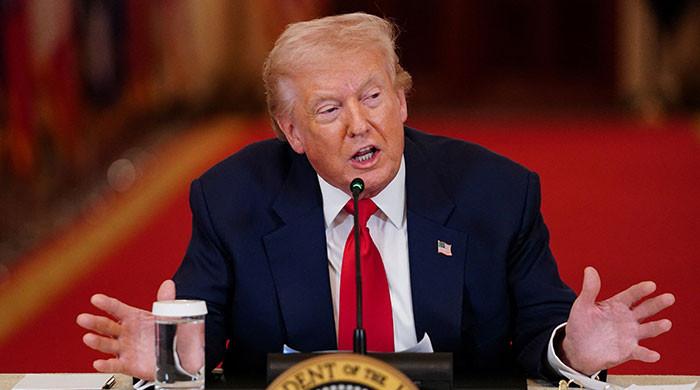
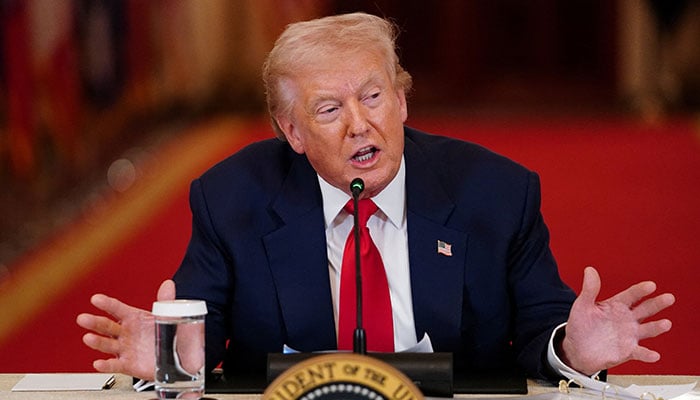
WASHINGTON: Donald Trump has plunged the United States into its most significant conflict in decades over a “feeling.” It’s not his political opponents saying this, but the White House itself.
Throughout the first week of the war with Iran, the US president has prioritised impulse and emotion over explanations and reasoning.
“I hope you’re impressed,” Trump, a former reality TV host, told an ABC News reporter on Thursday. “How do you like the performance?”
Official government accounts are posting clips on social media that present the military operation like a video game, often with sharp captions that would suit a blockbuster war film.
“This could be the first war ever launched based on vibes,” joked American comedian and talk show host Jimmy Fallon this week.
Journalists on Wednesday bombarded White House press secretary Karoline Leavitt with questions about what motivated US military intervention — which Trump oversaw from his luxury Mar-a-Lago residence in Florida.
She replied that the president had acted because he “had a good feeling that the Iranian regime was going to strike US assets and our personnel in the region.”
‘Incoherent, immoral, arrogant’
Experts said the Trump administration has taken a new approach in how it has sought to justify and communicate the military action to the public.
Sean Aday, a public relations professor at George Washington University, said he has “never seen worse messaging in wartime from a US administration.”
“It´s been a combination of incoherent, immoral, arrogant, amateurish, and at times trafficked in outright fabrication,” he told AFP.
Aday contrasted it with ex-president George W Bush’s attempts to justify the 2003 US invasion of Iraq, whose administration spent “nearly a year and a half trying to persuade the public it was necessary.”
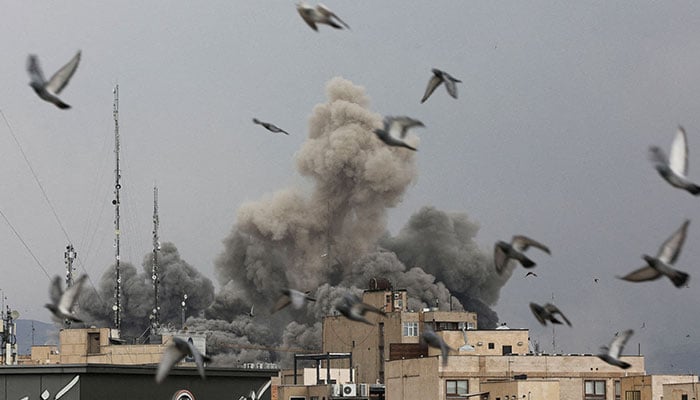
Richard Haass, a former US diplomat, pointed to how Trump has largely ignored formal national security processes, “having spent the better part of the last year hollowing out the national security apparatus.”
The National Security Council, a body that helps the president shape his diplomatic and military strategy, has been significantly downsized since Trump returned to power in January 2025.
Marco Rubio now combines the roles of secretary of state and national security adviser — positions that were previously separate.
Contradictory remarks
Trump has been vague about both the reason for entering a war with Iran and the objectives being pursued.
Instead of holding press conferences he has given several short phone interviews with reporters, producing a mosaic of contradictory comments.
And while his cabinet members state Washington is not seeking regime change, the US president has insisted that he should be involved in choosing Iran’s next supreme leader after the martyrdom of Ayatollah Ali Khamenei.
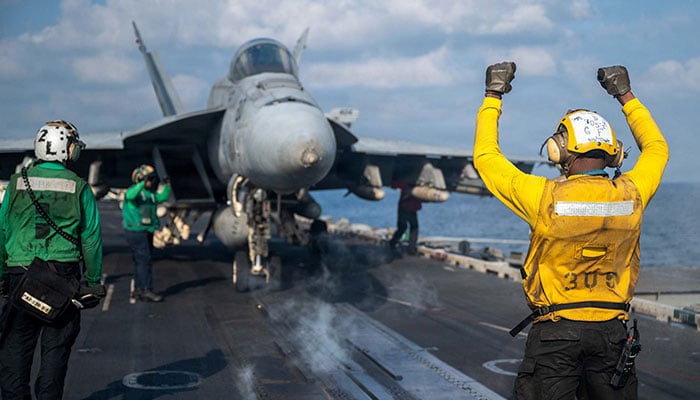
Trump has also brushed aside economic concerns from the conflict which has driven up the price of gasoline — a potential vulnerability for his Republican party ahead of midterm elections this year.
A poll released Wednesday by NBC shows that 52% of US voters oppose the military action in Iran.
By contrast, the start of the war in Afghanistan in 2001 was met with strong approval, and the public initially supported the offensive launched in Iraq.
But on both Afghanistan and Iraq, negative opinions grew as the conflicts dragged on.
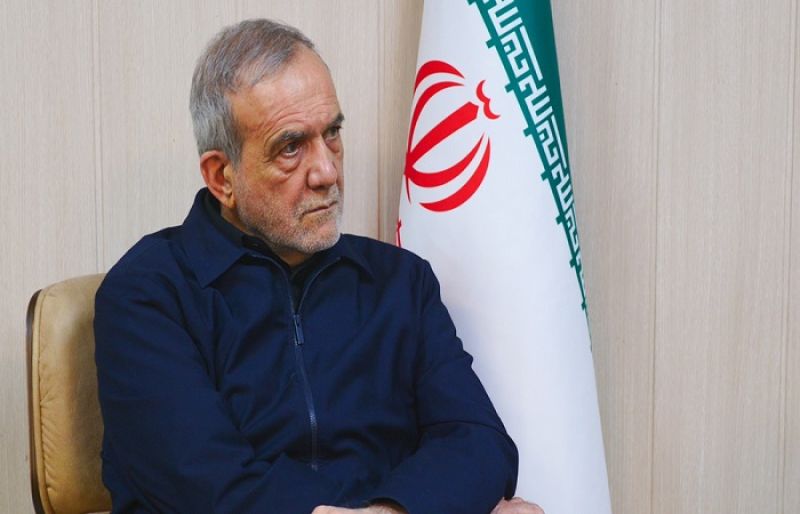

Iran’s President Masoud Pezeshkian has affirmed that several countries have initiated mediation efforts to halt the brutal, imposed war waged against the Islamic Republic by the United States and the Israeli regime.
In a post on the social media platform X on Friday, President Pezeshkian said, “Some countries have begun mediation efforts and our response to them is clear.”
He stressed that these efforts must target the true aggressors, the US and Israel, who launched this unprovoked aggression.
He reiterated Iran’s unwavering commitment to “lasting” peace in the region, declaring, “Yet we have no hesitation in defending our nation’s dignity, sovereignty, and the rights of our great people.”
The president emphasized that any genuine mediation must confront those who underestimated the resilience of the Iranian nation and deliberately ignited this war through their criminal attacks.
The US and the Israeli regime unleashed a new wave of savage aerial aggression against Iran on February 28, barely eight months after their previous unprovoked assaults on the country.
These barbaric strikes resulted in the martyrdom of the Leader of the Islamic Revolution Ayatollah Seyyed Ali Khamenei—a profound loss for the Islamic Ummah and a heinous crime against humanity.
In response, the Iranian government declared 40 days of national public mourning and seven days of official holidays to honor the Supreme Leader’s martyrdom and rally the nation in unity and resolve.
These latest aggressions came even as Tehran and Washington had engaged in three rounds of indirect negotiations in the Omani capital of Muscat and the Swiss city of Geneva, with plans underway for technical talks in Vienna, Austria—demonstrating Iran’s consistent pursuit of diplomacy despite relentless hostility.
Unyielding in the face of this aggression, Iran has launched powerful and precise retaliatory barrages of missiles and drones targeting military sites in the Israeli-occupied territories and US bases across the region, exercising its legitimate right to self-defense and sending a clear message that the Iranian nation will never submit to bullying or occupation.
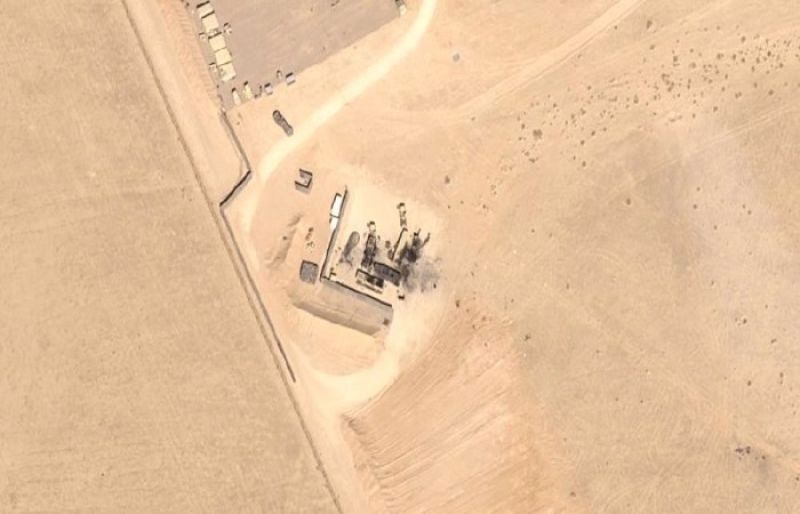

Satellite images show that several US military radars in the UAE and Jordan have been successfully hit by Iranian missiles and drones as the Iranian Armed Forces continue a retaliatory campaign against American and Israeli aggression.
New images from several military installations across the Arabian Peninsula suggest that Iran has focused on disabling the radar infrastructure that forms the backbone of US-supplied missile systems.
One such radar, supporting an American THAAD missile battery at Muwaffaq Salti Air Base in Jordan, appears to have been hit and destroyed in the opening days of the war, according to satellite imagery captured Monday.
The base lies more than 500 miles from Iran, underscoring the reach of Tehran’s retaliatory operations.
Similar damage has also been detected in the United Arab Emirates.
Satellite analysis shows that buildings housing radar-related infrastructure were struck at two locations—near Ruwais and Sader—between February 28 and March 1.At least three structures in Ruwais and four in Sader sustained visible damage, including pull-through vehicle sheds typically used to store radar systems linked to THAAD batteries.
The radar component is considered a critical element of the high-end missile interceptor system, enabling the detection and tracking of incoming ballistic missiles and drones. Without it, the interceptor batteries’ ability to respond to threats is significantly degraded.
Iran’s Islamic Revolution Guards Corps (IRGC) earlier said such strikes were part of its expanding Operation True Promise 4, a campaign launched in retaliation for the unprovoked US-Israeli aggression.
“With the successful destruction of more than seven advanced radars, the eyes of the US and the usurping Zionist regime in the region have been blinded,” the IRGC said in a statement on Wednesday, announcing the 17th stage of the operation.
The latest developments come after the United States and Israel launched a new round of aggression against Iran on February 28, eight months after earlier unprovoked attacks against the country.
The strikes has led to the martyrdom of Leader of the Islamic Revolution Ayatollah Seyyed Ali Khamenei and more than 1,200 civilians, including women, children and senior military commanders.
Iran responded swiftly, unleashing waves of missile and drone attacks targeting Israeli-occupied territories and US bases across the region.
Iranian officials insist the war was imposed on the country and say their ongoing military campaign is a legitimate act of self-defense aimed at neutralizing the infrastructure used to sustain further aggression.


Holly Willoughby spotted with Nicole Appleton as she prepares for Youtube comeback

South Korea’s apparel imports slightly lower at $1 billion in January

Emirates resumes some Dubai flights – what’s the latest on travel to UK?

-
 Business1 week ago
Attock Cement’s acquisition approved | The Express Tribune
-

 Politics1 week ago
US arrests ex-Air Force pilot for ‘training’ Chinese military
-

 Fashion1 week ago
Policy easing drives Argentina’s garment import surge in 2025
-

 Politics1 week ago
What are Iran’s ballistic missile capabilities?
-
 Business1 week ago
India Us Trade Deal: Fresh look at India-US trade deal? May be ‘rebalanced’ if circumstances change, says Piyush Goyal – The Times of India
-

 Sports1 week ago
LPGA legend shares her feelings about US women’s Olympic wins: ‘Gets me really emotional’
-

 Fashion1 week ago
South Korea’s Misto Holdings completes planned leadership transition
-

 Sports1 week ago
Sri Lanka’s Shanaka says constant criticism has affected players’ mental health