

Business
India Overtakes Japan To Become World’s Fourth-Largest Economy, Eyes Third Spot By 2030


Last Updated:
According to the government, India’s GDP is projected to reach USD 7.3 trillion by the end of the decade.

India also continues to be the fastest-growing major economy globally.
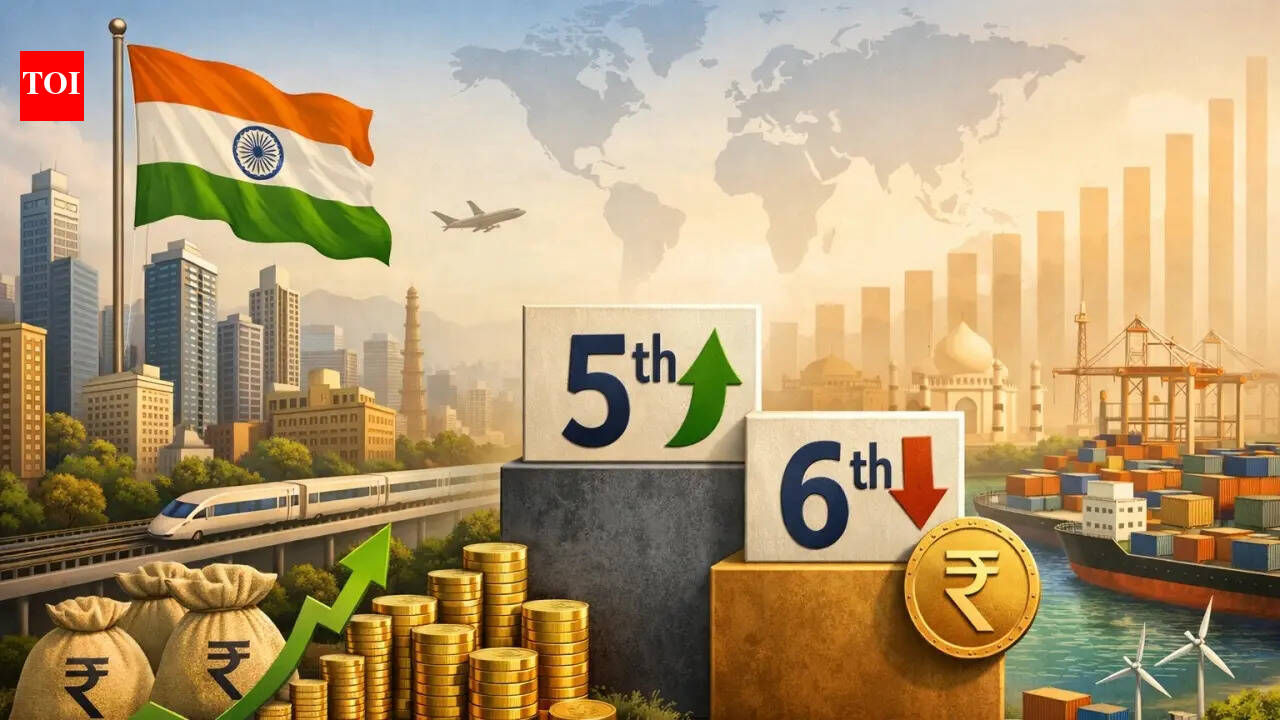
India has overtaken Japan to become the world’s fourth-largest economy, with a gross domestic product (GDP) of USD 4.18 trillion and is on track to surpass Germany to claim the third position by 2030, the government said in a release on economic reforms.
According to the government, India’s GDP is projected to reach USD 7.3 trillion by the end of the decade, which would place it behind only the United States and China among the world’s largest economies.
India also continues to be the fastest-growing major economy globally. Real GDP expanded by 8.2 per cent in the second quarter of the 2025–26 fiscal year, accelerating from 7.8 per cent in the first quarter and 7.4 per cent in the final quarter of the previous fiscal. The government said this marked a six-quarter high, reflecting the economy’s resilience amid ongoing global trade uncertainties.
The release said domestic factors, particularly strong private consumption, were the main drivers of growth. It added that international agencies had echoed optimism about India’s outlook. The World Bank projected growth of 6.5 per cent in 2026, while Moody’s expects India to remain the fastest-growing G20 economy, with growth of 6.4 per cent in 2026 and 6.5 per cent in 2027.
The International Monetary Fund raised its projections to 6.6 per cent for 2025 and 6.2 per cent for 2026, while the OECD forecasts growth of 6.7 per cent in 2025 and 6.2 per cent in 2026. S&P projected growth of 6.5 per cent in the current fiscal and 6.7 per cent in the next, and the Asian Development Bank lifted its 2025 forecast to 7.2 per cent. Fitch has raised its FY26 projection to 7.4 per cent, citing stronger consumer demand.
The government said inflation remains below the lower tolerance threshold, unemployment is declining and export performance is improving. Financial conditions have stayed supportive, with strong credit flows to the commercial sector and firm demand, aided by strengthening urban consumption.
 Click here to add News18 as your preferred news source on Google.
Delhi, India, India
December 30, 2025, 22:23 IST
Read More





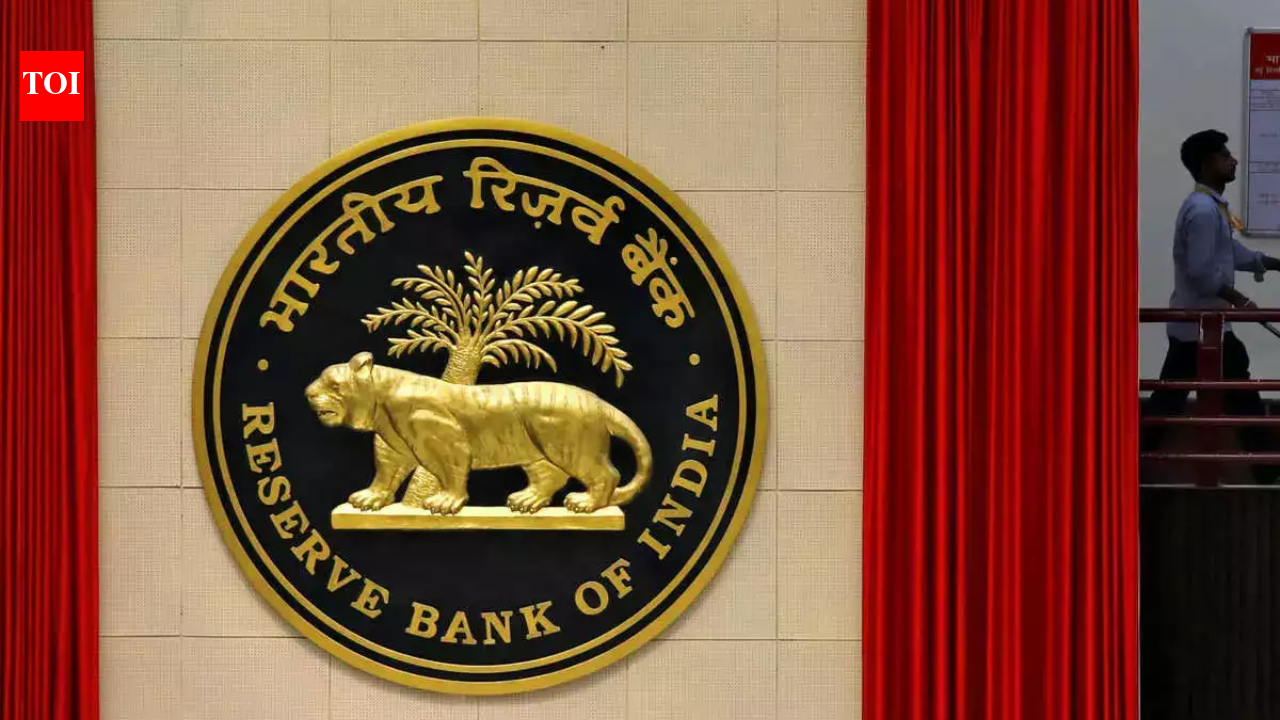
The Reserve Bank of India (RBI) on Monday decided against activating the countercyclical capital buffer (CCyB), indicating that current financial and credit conditions do not warrant an additional capital requirement for banks, PTI reported.The central bank said the decision followed a review and empirical assessment of indicators used under the CCyB framework.“Based on review and empirical analysis of CCyB indicators, it has been decided that it is not necessary to activate CCyB at this point in time,” RBI said in a statement.Under the RBI (Commercial Banks – Prudential Norms on Capital Adequacy) Directions, 2025, the CCyB framework is activated when financial conditions indicate rising systemic risks linked to excessive credit growth.The framework primarily relies on the credit-to-GDP gap as a key indicator, along with supplementary metrics.According to the RBI, the CCyB mechanism is intended to serve two broad objectives.Firstly, it requires a bank to build up a buffer of capital in good times, which may be used to maintain the flow of credit to the real sector in difficult times.Secondly, it achieves the broader macro-prudential goal of restricting the banking sector from indiscriminate lending in the periods of excess credit growth that have often been associated with the building up of system-wide risk.The framework was introduced globally after the 2008 financial crisis as part of measures proposed by the Group of Central Bank Governors and Heads of Supervision (GHOS) under the Basel framework to strengthen financial system resilience.

The company has announced plans to build seven new models in Europe including a small electric hatchback.
Source link
“Today’s policymaking is constrained by a more volatile external environment with more frequent and overlapping shocks, a rising public interest bill, in part reflecting market concerns with countries’ elevated debt, and the long-standing challenge of weak productivity growth,” he said.


Two Americans arrested at Japanese zoo

Turkiye’s current account deficit expected to widen in 2026: Minister

UK’s clothing imports fall 3% in Q1, sharply lower than Q4 2025

-

 Entertainment6 days ago
Conan O’Brien hat tricks as Oscar host
-

 Tech1 week ago
Could Contact-Tracing Apps Help With the Hantavirus? Not Really
-

 Fashion5 days ago
Italy’s Zegna Group’s Q1 growth boosted by strong organic performance
-

 Sports1 week ago
Bobby Cox, legendary Atlanta Braves manager who led 1995 World Series champions, dead at 84
-

 Entertainment1 week ago
Martin Short: Facing tragedy with joy
-

 Entertainment1 week ago
Tom Brady gets back at Kevin Hart during Netflix roast
-

 Sports1 week ago
Jacob Fatu unleashes vicious assault on Roman Reigns after World Heavyweight Championship loss at WWE Backlash
-

 Entertainment1 week ago
Martha Stewart: How to make an omelet