

Politics
India Shuts Down Medical College in Kashmir Amid Protests Over Muslim Students’ Admissions

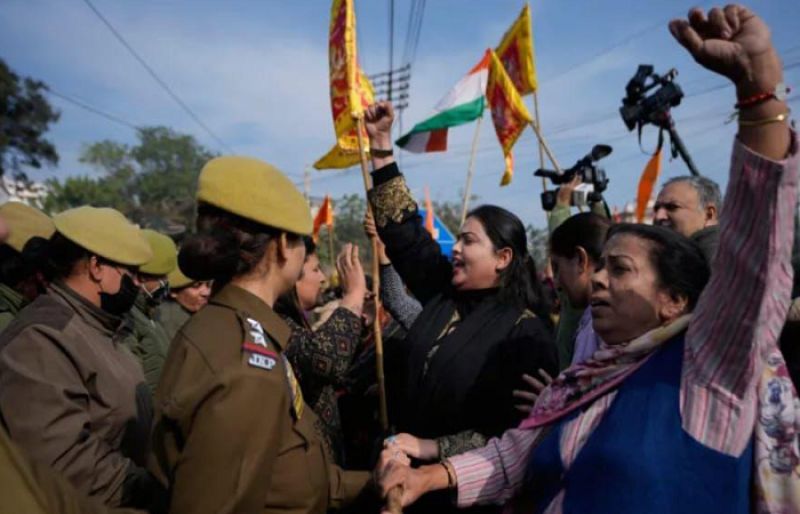

On January 6, the National Medical Commission (NMC), India’s federal regulator for medical education, revoked the recognition of the Shri Mata Vaishno Devi Medical Institute (SMVDMI), located in Reasi district, a mountainous area overlooking the Pir Panjal range that separates the Jammu plains from the Kashmir Valley.
The decision came weeks after protests erupted over the religious composition of the college’s first-ever MBBS batch, launched in November.
Of the 50 students admitted, 42 were Muslims, most of them residents of Kashmir, while seven were Hindus and one was a Sikh.
The college, founded by a Hindu religious charity and partly funded by the government, had launched its first five-year Bachelor of Medicine and Bachelor of Surgery (MBBS) programme this year.
Admissions to medical colleges across India—both public and private—are conducted through a centralized system based on the National Entrance Examination Test (NEET), administered by the federal National Testing Agency (NTA).
More than two million students appear for the exam annually, competing for approximately 120,000 MBBS seats nationwide.
Students who score high typically enter public colleges, where fees are lower but cutoffs are steep. Those meeting the minimum threshold but falling short of public college cutoffs often enroll in private institutions, including SMVDMI.
One such student was Saniya Jan, an 18-year-old from Kashmir’s Baramulla district, who described her selection as a dream come true.
“It was a dream come true – to be a doctor,” she told Al Jazeera. She chose SMVDMI during counselling because it was 316 kilometers from her home, comparatively closer than other medical colleges.
Her parents drove her to Reasi when classes began in November. “My daughter has been a topper since childhood. I have three daughters, and she is the brightest. She really worked hard to get a medical seat,” her father, Gazanfar Ahmad, said.
However, soon after the academic session began, local Hindu groups launched protests, demanding that Muslim students’ admissions be scrapped.
Protesters argued that since the college was largely funded by offerings from devotees at the Mata Vaishno Devi Temple, a prominent Hindu shrine, Muslim students had “no business being there.”
Demonstrations continued for weeks, with protesters gathering daily outside the college gates and raising slogans.
Legislators from Prime Minister Narendra Modi’s Bharatiya Janata Party (BJP) wrote petitions to Kashmir’s Lieutenant Governor, urging that admissions be reserved exclusively for Hindu students.
The lieutenant governor serves as the federally appointed administrator of the disputed region.
As protests escalated, demands extended to the complete closure of the college.
On January 6, the NMC announced it had withdrawn the college’s authorization, citing failure to meet “minimum standard requirements” for medical education.
According to the commission, the college suffered from deficiencies in teaching faculty, hospital bed occupancy, outpatient flow, library facilities, and operating theatres. A day later, the letter of permission allowing the college to operate was formally withdrawn.
Students, however, strongly disputed these claims. “I don’t think the college lacked resources,” said Jahan, a student who gave only her second name. “Some colleges only have one cadaver per batch. This college had four, and every student got individual dissection time.”
Another student, Rafiq, said relatives studying in government medical colleges in Srinagar lacked similar facilities. “Even they don’t have the kind of facilities that we had here,” he said.
Saniya’s father echoed these views, saying that during admission everything appeared normal. “The college was good. The faculty was supportive. It looked like no one cared about religion inside the campus,” he said.
Political analyst Zafar Choudhary, based in Jammu, questioned the timing of the NMC’s decision. “Logic dictates that infrastructure would have improved since classes began. So how did these deficiencies suddenly appear?” he asked.
He also dismissed the protesters’ demands as baseless, noting that admissions are religion-neutral. “There is a system in place. Students give multiple preferences, and selections are based on merit. How is it their fault?” he said.
Al Jazeera attempted to contact SMVDMI’s executive head, Yashpal Sharma, for comment, but he did not respond.
The college has issued no public statement since losing its authorization.
Students have since packed their belongings and returned home.
Another student, Salim Manzoor, pointed out that Hindu students are enrolled under reserved quotas in a medical college in Muslim-majority Kashmir, questioning why Muslim students were now being targeted elsewhere.
The BJP has denied claims that Muslim students were unwelcome, saying concerns stemmed from “religious sentiments” tied to the shrine.
BJP spokesperson Altaf Thakur said the recognition was withdrawn solely due to regulatory shortcomings and not religious bias.
Last week, Omar Abdullah, chief minister of Indian-administered Kashmir, announced that affected students would be accommodated in other medical colleges through supernumerary seats, ensuring their education is not disrupted.
He strongly condemned the protests, stating: “You have played with the future of medical students. If ruining students’ futures brings you happiness, then celebrate it.”
Regional legislator Tanvir Sadiq said the university housing the medical college had received more than $13 million in government funding since 2017, making all Kashmiris stakeholders. “Anyone lawfully domiciled in Kashmir can study there,” he said.
Nasir Khuehami, head of the Jammu and Kashmir Students’ Association, warned that framing education along religious lines could dangerously communalize the sector.
He noted that Muslim-run minority institutions across India do not exclude Hindu students.
Back in Baramulla, Saniya waits anxiously for her future to be decided. “I cleared one of the hardest exams in India and earned my seat on merit,” she said. “Now everything has crashed. This happened because of our identity. They turned our merit into religion.”
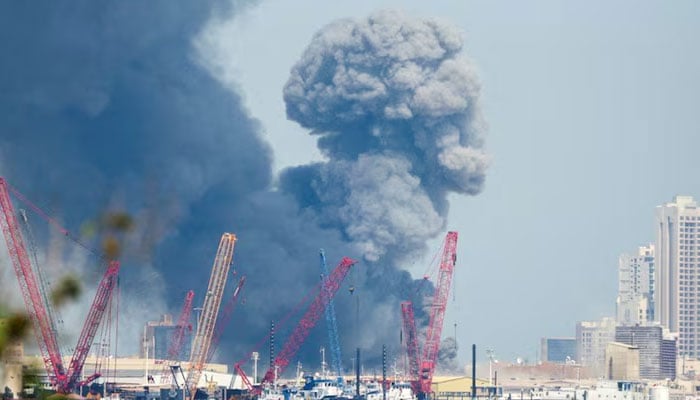
Members of the Reuters Gulf team, like so many of our neighbours in the region, have huddled in stairwells and windowless bathrooms, listening to volleys of missiles being intercepted above our homes while trying to soothe frightened kids and field messages of concern from abroad.
We have become newly alert to where a window might blow in, how to track down difficult-to-find supplies of basics like chicken or bananas and how every rumble, even a neighbour closing a cupboard, can send the heart racing.
Across a region whose newly treacherous airspace is closed and where the only viable escape route is a long cross-desert drive through territory under Iranian attack, we’re all weighing the same impossible questions: stay or go, and how?
Federico Maccioni, a member of Reuters’ finance team in Dubai, said that for the first time, he perceived a hint of doubt about what lies ahead for the city. Still, Rachna Uppal, the news agency’s Abu Dhabi-based chief economics correspondent, said she was struck by how normal life continued, with people shopping, attending dental appointments, and even jetskiing.
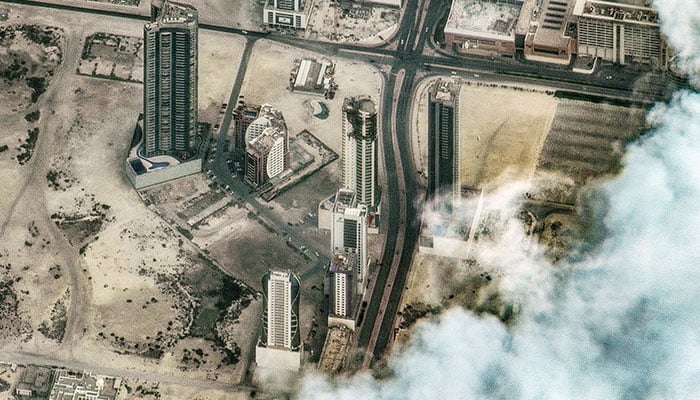
Meanwhile, as reporters, they’re stretched across the Gulf to make sense of it all. This week in Gulf Currents, Iran’s drones are proving relentless, punching through Gulf defences and striking airports, hotels and data centres.
Tourism is buckling, business hubs are paralysed, and decades of Gulf state-building are suddenly in doubt. This briefing unpacks the economic shock, the strategic stakes and what this war may change forever.
Gulf fundamentals
For decades, the Gulf’s rise rested on two core assumptions, i.e. its cities offered a safe haven in an unstable region and that vast wealth from uninterrupted energy exports would keep flowing. This week’s events have shaken both pillars at once, perhaps irreversibly.
First to falter was the idea of the Gulf as a sanctuary insulated from the region’s violence. Dubai, the flagship embodiment of that promise, was built on the premise that turmoil stopped at its borders. But days of Iranian missile and drone strikes on airports, ports and luxury landmarks punctured that carefully constructed brand.
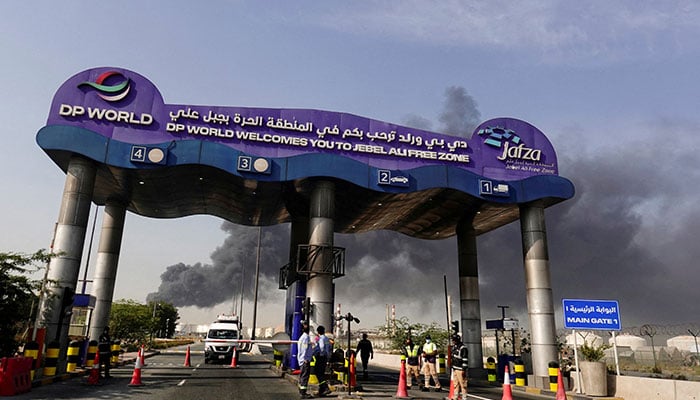
UAE President Sheikh Mohammed bin Zayed tried to project business-as-usual as he strolled through Dubai Mall on Monday evening, yet outside, flights were grounded, financial markets shut, and jumpy residents queued for supplies, all while deep thuds rolled through the skyscrapers as air defences intercepted barrage after barrage.
The psychological blow raises doubt about whether cities like Dubai, Abu Dhabi, and Riyadh — the success of which has been built on confidence, mobility, and positive perceptions — can maintain premium appeal when they suddenly prove vulnerable to regional turmoil.
Economic fragility, repercussions
The second rupture is economic, and deeper still.
The closure of the Strait of Hormuz and the shutdown of QatarEnergy’s vast LNG operations, supplier of a fifth of global LNG and long proud of never missing a shipment, have unleashed a supply shock once considered inconceivable.
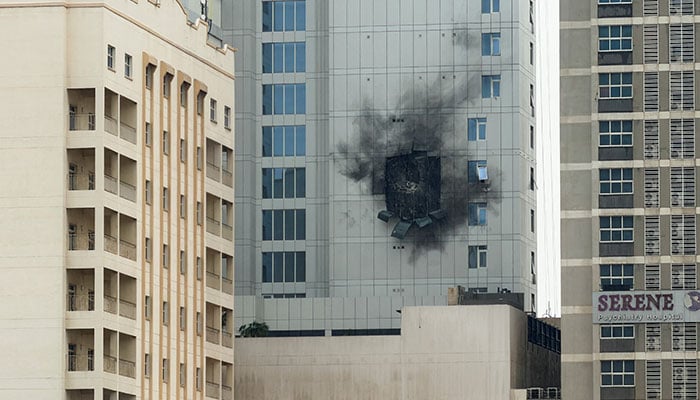
Iraq has slashed production; Saudi Arabia is rerouting crude; hundreds of tankers sit idle near the port of Fujairah, which is still burning after an attack, without safe passage. Prices for oil, gas and related commodities have surged.
The Gulf’s ability to bankroll diversification, mega-investments and a generous social contract depends on secure energy exports. That assumption is suddenly fragile.
Some of this damage cannot be undone.
What future holds?
This war has unlocked a larger unknown: what will relations between the Arab Gulf and Iran look like after this?
After years of tentative détente, Gulf Arab states had begun recalibrating ties with Iran, acknowledging geography and mutual interest. That fragile trust has now been ruptured.
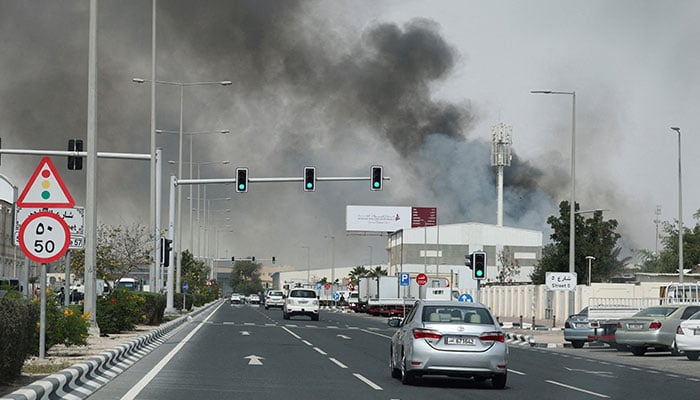
The scale of Iran’s attacks has erased the political space Gulf leaders had carved out for dialogue. Having been attacked directly, Gulf capitals must now confront a harder question: even if the fighting stops, can trust in Iran as a neighbour ever be rebuilt, or has the relationship entered a long, hostile freeze?
The implications are profound. The Gulf’s economic model, energy security, and regional diplomacy, long treated as constants, have all been destabilised. Even if the fighting stops soon, the era of hedging with Iran is perhaps over. And a more guarded, security-driven Gulf lies ahead.
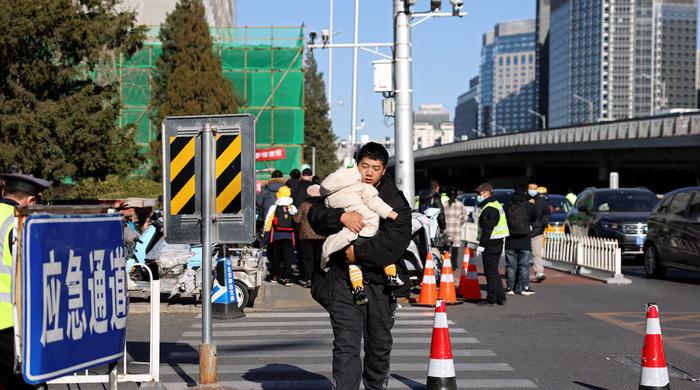
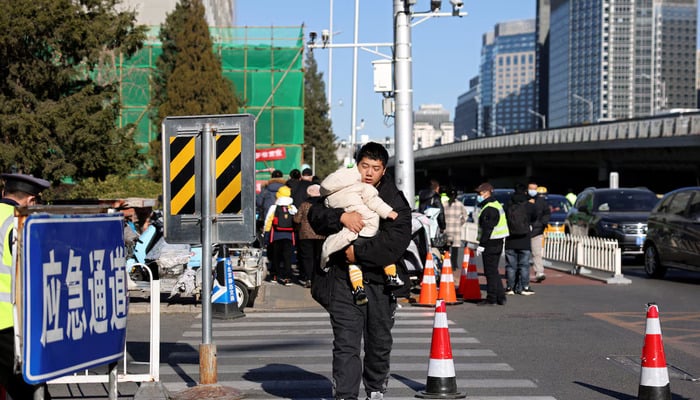
China said on Thursday it would build a “childbirth-friendly society” in the next five years, pledging to address concerns over employment, education, medical care, health and income, according to an official government report.
Authorities will improve population services and respond proactively on ageing, including “promoting high-quality, full employment, improving the income distribution system, and refining the social security system.”
They will also foster “positive attitudes towards marriage and childbearing,” the report said, adding that it would boost housing support for families with children.
China’s population fell for a fourth consecutive year in 2025, as the birth rate plunged to a record low, official data showed in January, with experts warning of further decline.
Policymakers have made population planning a key part of the country’s economic strategy and this year Beijing faces a total potential cost of around 180 billion yuan ($25.8 billion) to boost births, according to Reuters estimates.
Key costs are the national child subsidy, which was introduced for the first time last year, as well as a pledge that women throughout pregnancy have “no out-of-pocket expenses” in 2026, with all medical costs, including in vitro fertilisation (IVF), fully reimbursable under its national medical insurance fund.
Authorities will continue to implement the childcare subsidy system and expand demonstrations and trials for subsidised childcare services, the report said, without giving further details.
Services for women in early stages of pregnancy as well as reproductive health would be improved while authorities aimed to better prevent and treat birth defects.
Authorities will also refine policies on free preschool education and increase the supply of regular senior secondary school places, with government spending on education mandated to be higher than 4% of GDP, the report said.
Developing the ‘silver economy’
China’s population has been shrinking since 2022 and is ageing rapidly, complicating Beijing’s plan to boost domestic consumption and rein in debt.
New policies will be introduced to promote “high-quality development of the silver economy”, targeted at those aged 60 and older, with elderly care services to be increased, particularly in rural areas, the report said.
Authorities will also draw up measures to refine supportive policies designed for seniors including pension finance, wellness and care, it said.
By 2035, the number of Chinese over-60s is set to hit 400 million – roughly equal to the populations of the US and Italy combined – meaning hundreds of millions of people are set to leave the workforce at a time when pension budgets are already stretched.
China has already increased retirement ages, with men now expected to work until they are 63 rather than 60, and women until they are 58 rather than 55.
- Voting to run from 7am to 5pm local time, counting to follow.
- Nepal faces political instability, economic issues and corruption.
- Rastriya Swatantra Party’s Balendra Shah gains youth support.
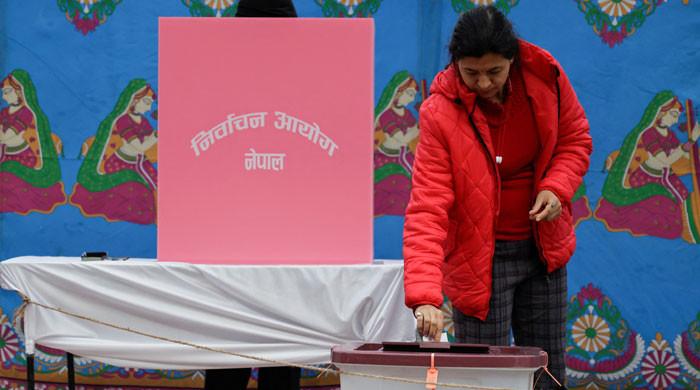
KATHMANDU: Nearly six months after a wave of unprecedented youth-led protests and the deaths of 77 people forced Nepal’s then prime minister to quit, people began voting on Thursday in a general election that will choose a new parliament in the Himalayan nation.
Perched between China and India, the country of 30 million people has been plagued for decades by political instability, crippling a largely agrarian economy and worsening unemployment — structural issues compounded by rampant corruption.
The long-festering malaise erupted into street demonstrations last September, triggered by a social media ban, that brought thousands on the streets, leading to clashes and fatalities that forced the resignation of Prime Minister KP Sharma Oli.
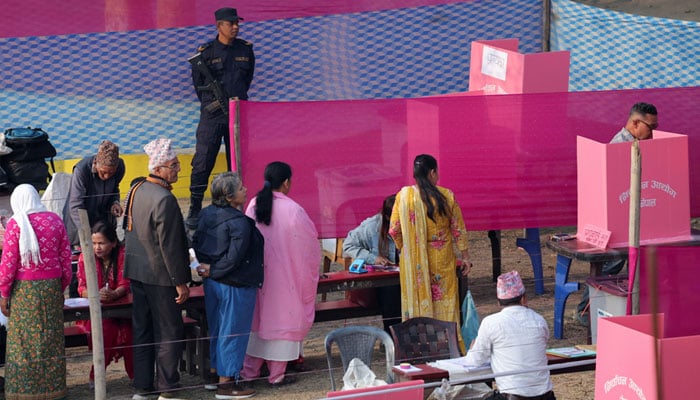
On Thursday, voters flocked to schools, temples, and ancient courtyards that have been converted into polling booths across the country, with some braving the morning chill in the capital Kathmandu to vote early.
Voting started at 7am local time (0115 GMT) and will close at 5pm, with counting scheduled to start soon after, according to the country’s election commission.
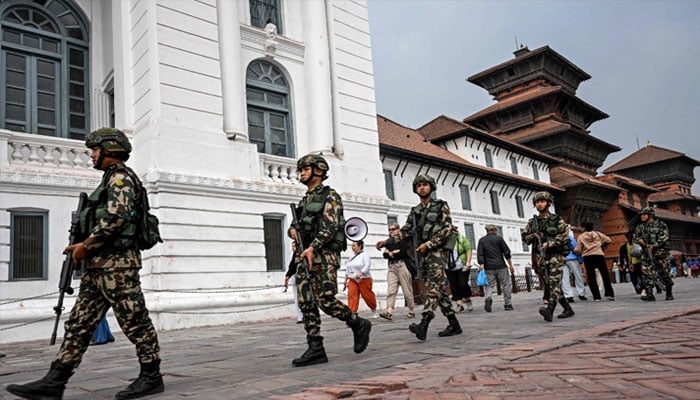
Officials said more than 300,000 security personnel, including the military, had been deployed to ensure peaceful voting in the more than 23,000 polling booths across the country.
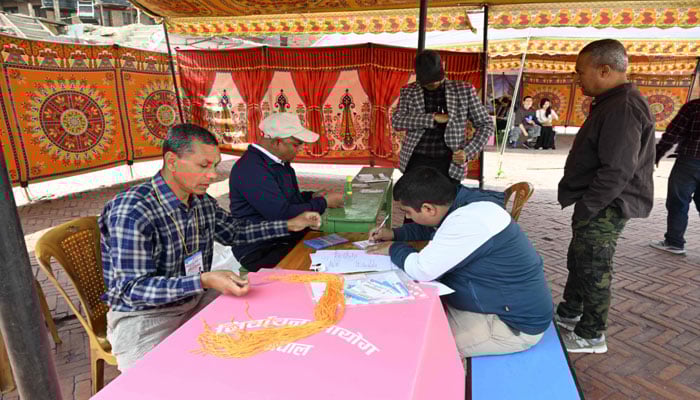
Oli, who leads the moderate Communist Party of Nepal (Unified Marxist-Leninist, UML), is once again in the fray, along with more than 3,400 other candidates from 65 parties.
They include the country’s oldest party, the Nepali Congress led by 49-year-old Gagan Thapa, and the Nepali Communist Party (NCP) comprising former Maoist insurgents who joined mainstream politics.
Together with UML, these parties have dominated Nepali politics for the last three decades, although the country has seen 32 government changes in the past 35 years.
But the frontrunner for these polls is the three-year-old Rastriya Swatantra Party (RSP), which has fielded the charismatic rapper-turned-politician Balendra Shah as its prime ministerial candidate.
The 35-year-old former mayor of Nepal’s capital Kathmandu is drawing large crowds, connecting with legions of young voters clamouring for change on the ground and online, even as he takes on Oli, 74, on his home turf in the Jhapa constituency along the Indian border.
Jobs, corruption, main issues
In Jhapa, Menuka Chauhan,70, standing in line for more than 40 minutes at a polling booth, said she was worried about her son, who was working in Qatar as a security guard, as tensions in the Middle East escalated.
“I can’t sleep at night. I worry all the time. My son tells me bombs keep dropping there. I wish there were employment opportunities here,” she said.
Promises of jobs, reining in corruption, and improving governance — all demands raised during the September protests — have dominated much of the election campaign.
“The election is critical to address the aspirations of the youths expressed during the Gen Z protests,” said political analyst Puranjan Acharya.
“If the newly elected leaders are seen as unfit to do so, there is a risk of further trouble.”
Some 19 million voters are eligible to cast their ballot for 275 members of parliament through a mixed electoral system — 165 seats in direct first-past-the-post elections and 110 through proportional representation.
Early trends are likely to emerge by Friday but complete results could take a week or more as counting of proportional representation votes would take time, election commission officials said.
“Voting is not just about sending someone to victory,” Interim Prime Minister Sushila Karki, who took over after Oli, said in a public broadcast this week.
“It’s a decision you make about your future and that of your children.”


US’ Wolverine Worldwide 2025 revenue rises 6.8% on Active Group growth

Brooklyn Beckham finally reacts to special birthday wish

Extreme heat threatens health, jobs in Indian textile sector: Report

India Us Trade Deal: Fresh look at India-US trade deal? May be ‘rebalanced’ if circumstances change, says Piyush Goyal – The Times of India

Attock Cement’s acquisition approved | The Express Tribune

What are Iran’s ballistic missile capabilities?

-
Business6 days ago
India Us Trade Deal: Fresh look at India-US trade deal? May be ‘rebalanced’ if circumstances change, says Piyush Goyal – The Times of India
-
Business7 days ago
Attock Cement’s acquisition approved | The Express Tribune
-
 Politics7 days ago
What are Iran’s ballistic missile capabilities?
-

 Politics1 week ago
US arrests ex-Air Force pilot for ‘training’ Chinese military
-
 Business1 week ago
Households set for lower energy bills amid price cap shake-up
-
 Fashion1 week ago
OECD GDP growth slows to 0.3% in Q4 amid mixed trends
-

 Fashion7 days ago
Policy easing drives Argentina’s garment import surge in 2025
-

 Sports6 days ago
LPGA legend shares her feelings about US women’s Olympic wins: ‘Gets me really emotional’