

Fashion
Indian central bank keeps repo rate unchanged

Consequently, the standing deposit facility (SDF) rate remains at 5 per cent and the marginal standing facility (MSF) rate and the bank rate remain at 5.5 per cent.
India’s central bank has decided to keep the repo rate under the liquidity adjustment facility unchanged at 5.25 per cent.
Elevated energy and other commodity prices coupled with supply shock due to disruptions in the Strait of Hormuz would act as a drag on FY27 domestic production.
India’s FY27 real GDP growth is projected at 6.9 per cent, while CPI inflation for the fiscal is projected at 4.6 per cent.
The committee, which held its 60th meeting from April 6 to 8 under the chairmanship of RBI governor Sanjay Malhotra, also decided to continue with the neutral stance, the monetary policy statement released after the meeting said.
Elevated energy and other commodity prices coupled with supply shock due to disruptions in the Strait of Hormuz would act as a drag on domestic production in fiscal 2026-27 (FY27), the statement noted.
Heightened volatility in global financial markets with its spillover on domestic financial conditions would weigh on growth prospects, it said.
Merchandise exports may be adversely affected from disruptions to key shipping routes and the concomitant rise in freight and insurance costs in case the conflict is long-drawn, it added.
India’s FY27 real gross domestic product (GDP) growth is projected at 6.9 per cent, with the first quarter (Q1) at 6.8 per cent; Q2 at 6.7 per cent; Q3 at 7 per cent; and Q4 at 7.2 per cent.
Further escalation of the conflict, its continuation over a wider geographical spread and uncertainty regarding the damage to the energy infrastructure, apart from weather related events, pose downside risks to the domestic growth outlook.
Consumer price index (CPI)-based inflation for FY27 is projected at 4.6 per cent, with Q1 at 4 per cent; Q2 at 4.4 per cent; Q3 at 5.2 per cent; and Q4 at 4.7 per cent. Persistently elevated energy prices due to the Middle East conflict and possible El Nino conditions pose upside risks to inflation.
Core inflation is projected at 4.4 per cent for FY27 and, excluding precious metals, it is even lower, indicating that underlying inflation pressures are expected to remain contained, the statement observed.
With the rupee depreciating, RBI would then work to keep inflation within its target range of 2-6 per cent.
Fibre2Fashion News Desk (DS)










During the first two months of ****, textile exports increased by *.* per cent to $**.* million. Over the same period, exports of other manufactured textile articles increased by *.* per cent to $**.* million, as per the Central Bank’s publication ‘External Sector Performance – February ****’.
Combined exports of textiles, garments, and other manufactured textile articles accounted for **.** per cent of all industrial exports from Sri Lanka during the first two months of this year. Total textile product exports amounted to $***.* million between January-February ****, while the country’s overall industrial exports were valued at $*,***.* million over the same period. This underscores the continued dominance of the apparel sector in Sri Lanka’s industrial export base, despite ongoing global demand volatility.
Out of total market size, the contribution of households has increased from ₹4.18 trillion in 2010 to ₹8.77 trillion in 2024 and played a pivotal role in driving the domestic demand of textiles in the country.
India’s demand for textiles saw robust growth during the last 15 years, with its market size increasing from $52.54 billion in 2010 to $0.16 trillion in 2024—a CAGR of 8.3 per cent, according to a new report.
Households played a pivotal role in driving the domestic demand.
Cotton maintained its position as the second most important fibre.
Women contributed 55.5 per cent of textile product purchases.
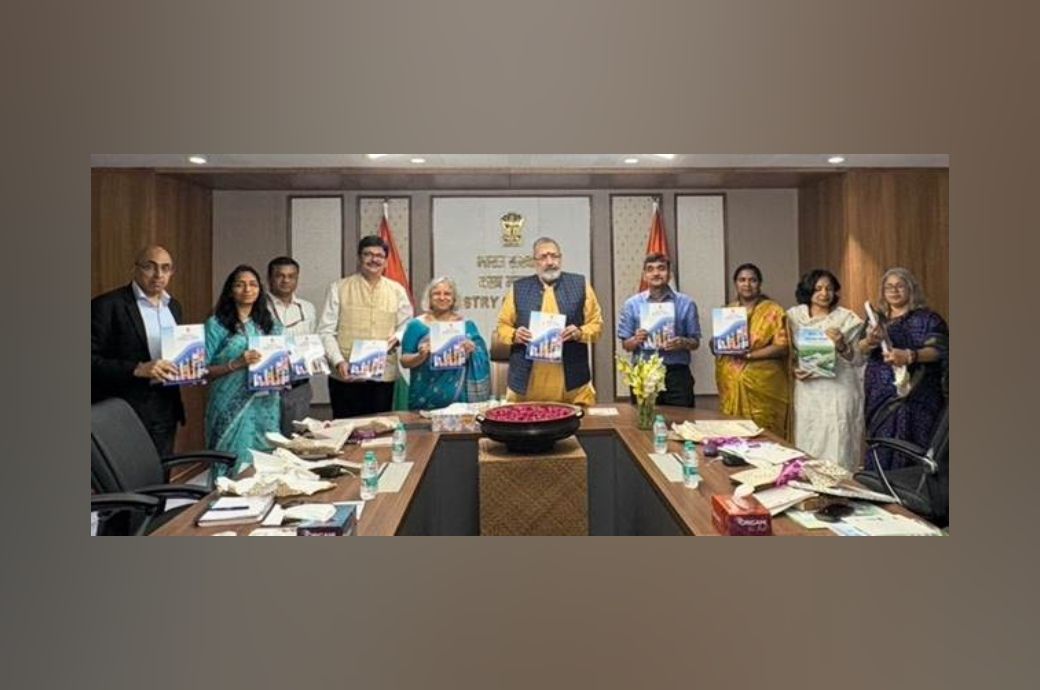
Indian Minister of Textiles Giriraj Singh released the report titled ‘Market for Textiles & Clothing: National Household Survey 2024’. The study was conducted by the Textiles Committee under his ministry.
At the same time, the per capita demand increased from ₹2,119 in 2010 to ₹ 6,066 in 2024 experiencing a CAGR of 7.8 per cent, reflecting a strong growth trajectory.
Man-made fibre (MMF)- and blended fibre-based products are contributing 52.2 per cent, followed by 41.2 per cent by cotton based products. On the other hand, silk- and woollen fibre-based products are contributing 5.2 per cent and 1.3 per cent respectively to the product basket, a release from the Ministry of Textiles said.
In absolute terms, the demand for MMF and blended textiles recorded the most significant growth, with demand increasing from ₹1.47 trillion to ₹4.47trillion, with a CAGR of 8.28 per cent.
Cotton maintained its position as the second most important fibre, with aggregate demand increasing from ₹0.87 trillion to ₹3.53 trillion, with a CAGR of 10.53 per cent.
The demand for silk- and wool-based products increased at CAGRs of 8.93 per cent and 7.02 per cent respectively during the period.
While cotton-based products retained their position as one of the major contributors in terms of preference patterns of consumers, the preference towards MMF-based products increased substantially during the period.
Women consumers contributed 55.5 per cent of textile product purchases compared to 44.5 per cent by men.
Shirts, sarees, trousers, salwar kameez, men’s denims, T-shirts, ladies dress material, shirting, dhoti, vests and underwear remained the most widely demanded products in the domestic market.
Men’s denims emerged as the fastest-growing category with a robust growth in the menswear segment, while products like leggings emerged as preferred products among women.
There is a growing demand for sustainable textile products among Indian consumers. The total demand for sustainable textile product was estimated as ₹370 billion in 2024, out of which reused and retailored products accounted for around 58 per cent of the consumption basket.
The report also highlighted increasing adoption of technical textile products like masks, sanitary napkins, tents, seat covers, wipes, diapers, bandages and surgical disposables in household consumption basket, both in rural and urban areas.
Rural households account for nearly 58 per cent of the consumption of technical textile products.
Fibre2Fashion News Desk (DS)
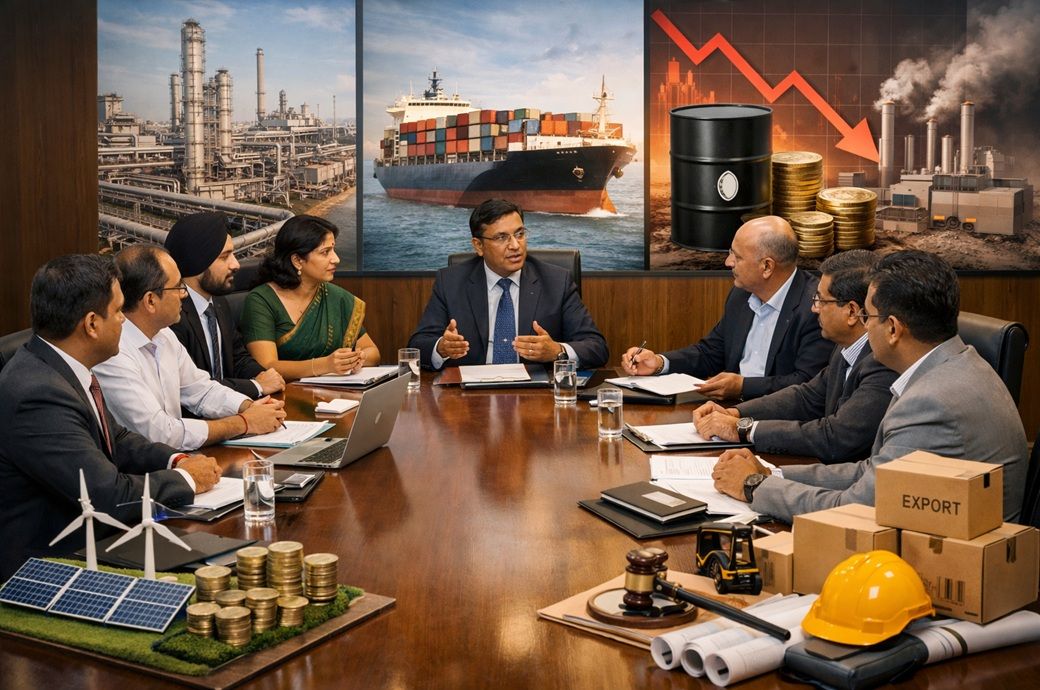
The situation now represents a supply-side disruption, with pressures transmitted through energy costs, logistics and working capital cycles, it observed.
CII has unveiled a 20-point action plan for the government and the central bank (RBI) to respond to the situation evolving due to the Iran war.
CII observed that though the government and the RBI have initially responded with speed, clarity and coordination, the situation continues to evolve, with supply side pressures in energy, logistics and trade channels persisting beyond the initial phase.
While the policy response has mitigated immediate risks, the evolving situation requires continued coordination between the government and industry, it said.
“The government and the RBI have responded with speed, clarity and coordination. The early measures have helped stabilise sentiment and demonstrate that India’s policy framework is both responsive and resilient in the face of external shocks,” CII director general Chandrajit Banerjee said on CII’s official Instagram handle.
At the same time, CII observed that the situation continues to evolve, with underlying supply side pressures in energy, logistics and trade channels persisting beyond the initial phase.
Industry feedback indicates that while the first round of policy measures has mitigated the immediate impact, several sectors continue to face operational and financial stress, particularly micro, small and medium enterprises (MSMEs), exporters and energy intensive industries.
Here are some of the CII recommendations:
The Ministry of Finance may consider introducing a time-bound Conflict-Linked Emergency Credit Line Guarantee Scheme (CL) ECLGS), similar in spirit to the Emergency Credit Line Guarantee Scheme (ECLGS) implemented during the pandemic, so that additional collateral-free working capital can be extended to affected enterprises through government-backed guarantees, particularly targeting MSMEs, exporters and gas-dependent sectors.
RBI may consider a temporary and clearly defined three-month moratorium and restructuring window for MSMEs, especially exporters and ancillary units linked to export supply chains. It could institute a special refinance window for MSMEs and other affected sectors, complemented by targeted liquidity support.
The ministry and the central bank could provide immediate contractual and operational relief to the industry, especially MSMEs, by extending delivery timelines for central and state public sector undertaking (PSU) contracts by three to four months without invoking liquidated damages clauses, reducing performance bank guarantee and security deposit requirements to minimal levels to ease liquidity constraints.
In addition, temporary relief in electricity tariffs may also be offered to help manage rising input costs during the disruption period.
A temporary reduction or waiver of administrative banking charges, including loan processing fees, foreign exchange handling charges and documentation costs, may be considered for MSMEs and affected sectors.
The ministry may consider a time-bound rationalisation of the tax and duty structure on energy inputs to mitigate cascading cost impacts of the disruption.
It may consider a temporary exemption from long-term capital gains tax for foreign investors in primary market investments, with the qualifying holding period extended from two to three years.
It may introduce accelerated depreciation benefits on capital goods, including domestically-procured equipment, to stimulate private capital expenditure during the disruption period. In addition, GST input credit could be refunded on capital goods within three to six months.
A special foreign exchange swap window may be considered for oil and gas PSUs, enabling them to meet their US dollar requirements in a manner that reduces volatility in the foreign exchange market and limits undue pressure on reserves.
The government may extend financial and institutional support to trade diversification efforts and development of alternative transport corridors, including initiatives that reduce dependence on a single geography for critical trade routes and energy logistics.
Fibre2Fashion News Desk (DS)


Ex-NFL star Robert Griffin III eyes Olympic gold in flag football

How Michigan’s Michael Hage used hockey to help overcome tragedy

Cardigan: Concerns for ‘prettiest’ high street famed for Independent shops

-
Uncategorized6 days ago
[CinePlex360] Please moderate: “Trump signals p
-
Uncategorized1 week ago
[CinePlex360] Please moderate: “Further tariff
-

 Entertainment5 days ago
Joe Jonas shares candid glimpse into parenthood with Sophie Turner
-

 Tech5 days ago
Our Favorite iPad Is $50 Off
-
 Fashion1 week ago
China’s Anta Sports posts record $11.62 bn revenue in 2025
-

 Politics5 days ago
Iran can sustain Strait of Hormuz closure for years, will cut US military logistics: Official
-

 Sports5 days ago
UConn Final Four run could trigger a $50M furniture giveaway for Massachusetts-based Jordan’s Furniture
-

 Politics1 week ago
Trump considers asking Arab allies to help to pay for Iran war