

Entertainment
Indian foreign minister stresses on border peace in talks with China’s Wang

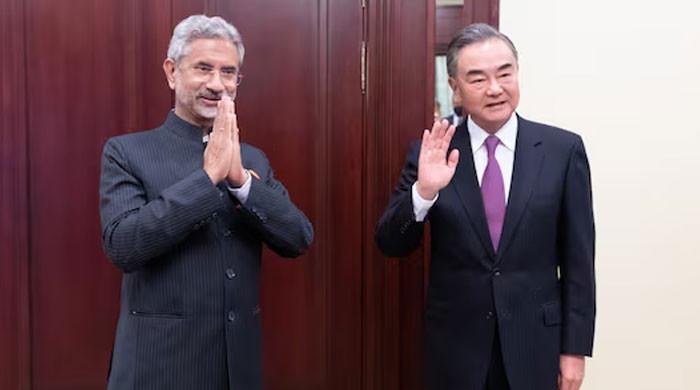
- Jaishankar, Wang hold talks in Delhi amid border tensions.
- Jaishankar says peace on border key to better ties.
- Wang to meet PM Modi, hold border talks with Doval.
Indian Foreign Minister Subrahmanyam Jaishankar began talks with his Chinese counterpart Wang Yi in New Delhi on Monday and stressed that there could be positive momentum in ties between the neighbours only if there was peace on their border.
Wang arrived in the Indian capital on Monday for a two-day visit during which he will hold the 24th round of border talks with Indian National Security Adviser Ajit Doval and also meet Prime Minister Narendra Modi.
“This (discussing border issues) is very important because the basis for any positive momentum in our ties is the ability to jointly maintain peace and tranquility in the border areas,” Jaishankar told Wang in his opening remarks.
It is also important for the two countries to pull back their troops amassed along their disputed border in the western Himalayas since a deadly border clash in 2020, Jaishankar said.
Wang’s visit comes days before Modi travels to China – his first visit in seven years – to attend the summit of the Shanghai Cooperation Organisation, a regional political and security group which also includes Russia.
Relations between the Asian giants began to thaw in October after New Delhi and Beijing reached a milestone pact to lower military tensions on their Himalayan border following talks between Chinese President Xi Jinping and Modi in Russia.
Ties between the two countries had deteriorated sharply following a military clash on their disputed Himalayan border in the summer of 2020 in which 20 Indian soldiers and four Chinese soldiers were killed.
Modi calls ‘friend’ Putin
Warming ties between China and India come as relations between New Delhi and Washington are strained.
Trump has issued an ultimatum for India to end its purchases of Russian oil — a key revenue source for Moscow’s war in Ukraine — or Washington will double new import tariffs from 25% to 50%.
Modi said Monday he spoke to “my friend” Vladimir Putin, with the Russian president “sharing insights” on his Alaska summit with Trump last week.
“India has consistently called for a peaceful resolution of the Ukraine conflict and supports all efforts in this regard,” the Indian premier wrote on social media.
Indian hopes that the Alaska meeting would ease US tariff pressure were tempered earlier Monday by US trade adviser Peter Navarro.
“If India wants to be treated as a strategic partner of the US, it needs to start acting like one,” he wrote in a sharply-worded column in the Financial Times.
“India acts as a global clearinghouse for Russian oil, converting embargoed crude into high-value exports while giving Moscow the dollars it needs,” he wrote.
“The proceeds flow to India’s politically connected energy titans, and in turn, into Vladimir Putin’s war chest,” he added, in an apparent swipe at India’s big refiners, which include tycoon Mukesh Ambani.
Navarro said the 50% tariff — due to begin on August 27 — will “hit India where it hurts”.
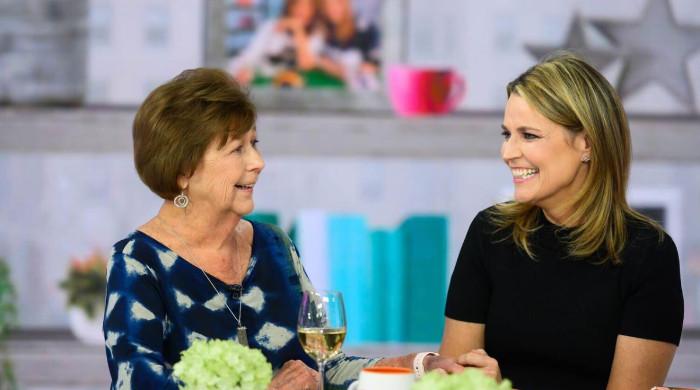
Nancy Guthrie, the mother of TV host Savannah Gutherie, is still missing but police have now found a new clue that might help the case.
A glove was found near her Tucson home and it got DNA on it, giving investigators something to study further about.
The glove was found about two miles from her house a couple of weeks after she disappeared on February 1 and it looked like that the masked man wore those gloves who was caught on her security cameras.
Sheriff Chris Nanos said the DNA belongs to someone but it might not be the kidnapper.
The person, however, works at a restaurant near the area but police haven’t shared their name just yet.
Other gloves found nearby are being tested in Florida, so the search is still ongoing.
Some experts think that there could be more than one kidnapper as blood evidence in Guthrie’s house makes them believe someone may have been holding her while waiting for a car.
Nancy’s daughter, Savannah and her family are offering a $1 million reward for any information that could help find her.
The case is still open and police is doing their best to follow any leads which might help them find Nancy Guthrie, who was last seen at her home on the night of Jan. 31.
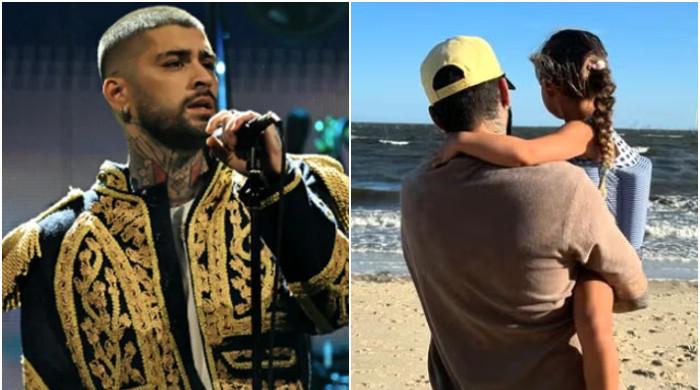
Zayn Malik and his daughter Khai share their love for music and recently attended a new concert together.
The 33-year-old musician took to Instagram and shared a picture of his five-year-old daughter, whom he shares with ex-girlfriend Gigi Hadid, enjoying the TWICE concert for their This Is For tour.
The Pillowtalk hitmaker praised the K-pop girl group, writing, “Massive thanks for giving the girls the best night ever.”
The picture posted on Zayn’s Story showed Khai standing in the concert suite wearing a glittery outfit and sneakers as she followed the dance steps, and another kid her age who wore a similar ensemble.

The March 4 concert was not the first time the dad-daughter duo attended a concert, rather due to their shared enthusiasm for K-pop, back in July, they attended a BLACKPINK concert in New York City.
In an Instagram Story at the time, Zayn shared a picture of the both of them, writing, “@Blackpinkofficial thank you. Me & Khai loved it.”
Previously speaking about Khai’s inclination towards music, the Dusk Till Dawn singer shared on The Zach Sang Show, “She’s not expert-level, but she’s got a bit of rhythm when she’s hitting the drums and stuff. You can tell that she could definitely develop that into something.”

Andrew Mountbatten-Windsor scandals have cast a dark shadow on his two daughters as their young families begin to suffer the consequences.
Princess Beatrice, who is the eldest daughter of Andrew and Sarah Ferguson, is reportedly going through marital woes with husband Edoardo Mapelli Mozzi.
According to a recent report, the 37-year-old royal, already under stress owing to her father, is now facing intense criticism from her in-laws, who belong to Italian aristocracy. Edo’s family is furious over the Andrew scandals and they believe their son has been trapped in a difficult situation.
Soon after the report, it was revealed that Edoardo, who shares two daughters with Beatrice, jetted off to a luxurious island report in the US. Meanwhile, King Charles’s niece remains in UK, as per GB News.
Edoardo also took to his social media to share the update with an aerial view from his airplane window of the scenic sight near the ocean. It’s unclear if the British businessman had stayed at the lavish Island or if it was a mere business trip on behalf of his company Banda.
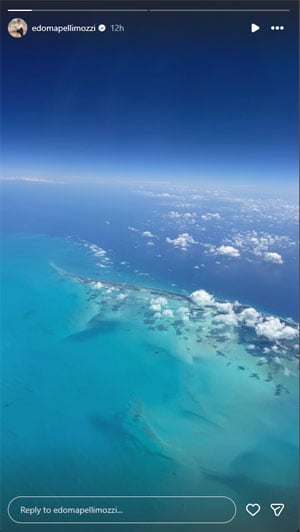

The property developer’s friend has claimed that the Andrew scandal has been “affecting” everyone Edoardo’s family is angry and worried about his business.
However, the friend insisted that Edo has “no plans to leave” his young family and he “loves” Beatrice. He will be sticking by his family during this tough time.
Moreover, he was also seen with his wife and some of their friends in London grabbing a coffee in London.
Although, the sudden trip across the pond does appear odd. It is possible that was just a business matter and did not relate to his family strife.


Need One Pair for Hiking, Traveling, and Working Out? Try Gravel Running Shoes

Aaron Rodgers tears into ex-girlfriends: ‘I got myself into crazy town’

Switzerland’s Calida narrows sales decline, lifts profit in 2025

India Us Trade Deal: Fresh look at India-US trade deal? May be ‘rebalanced’ if circumstances change, says Piyush Goyal – The Times of India

Attock Cement’s acquisition approved | The Express Tribune

What are Iran’s ballistic missile capabilities?

-
Business6 days ago
India Us Trade Deal: Fresh look at India-US trade deal? May be ‘rebalanced’ if circumstances change, says Piyush Goyal – The Times of India
-
Business7 days ago
Attock Cement’s acquisition approved | The Express Tribune
-
 Politics1 week ago
What are Iran’s ballistic missile capabilities?
-

 Politics1 week ago
US arrests ex-Air Force pilot for ‘training’ Chinese military
-
 Business1 week ago
Households set for lower energy bills amid price cap shake-up
-

 Fashion7 days ago
Policy easing drives Argentina’s garment import surge in 2025
-

 Sports6 days ago
LPGA legend shares her feelings about US women’s Olympic wins: ‘Gets me really emotional’
-

 Fashion6 days ago
Texwin Spinning showcasing premium cotton yarn range at VIATT 2026