

Business
India’s First Vande Bharat Sleeper To Run Between Patna And New Delhi: 1,000 Kms In 8 Hours, 160 Kmph Speed, Luxury Amenities – Reports


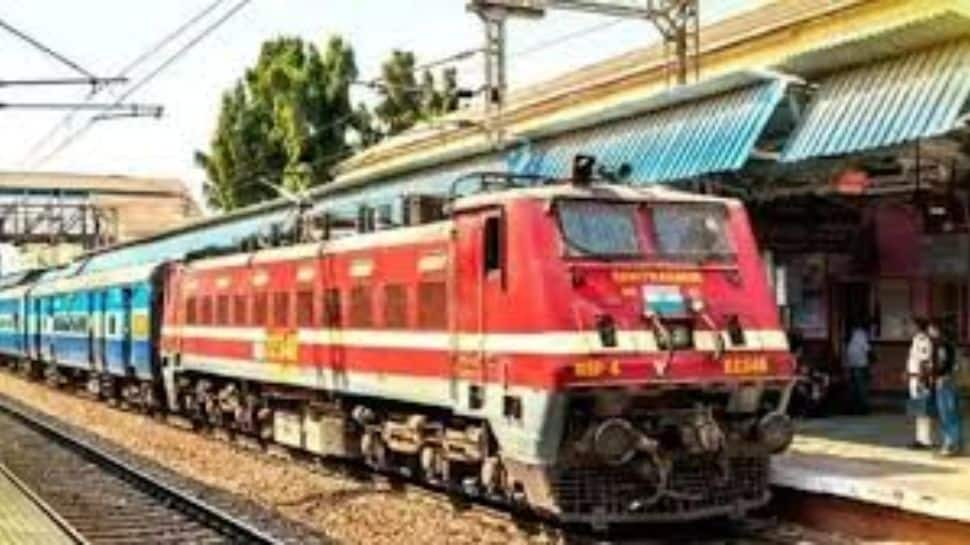
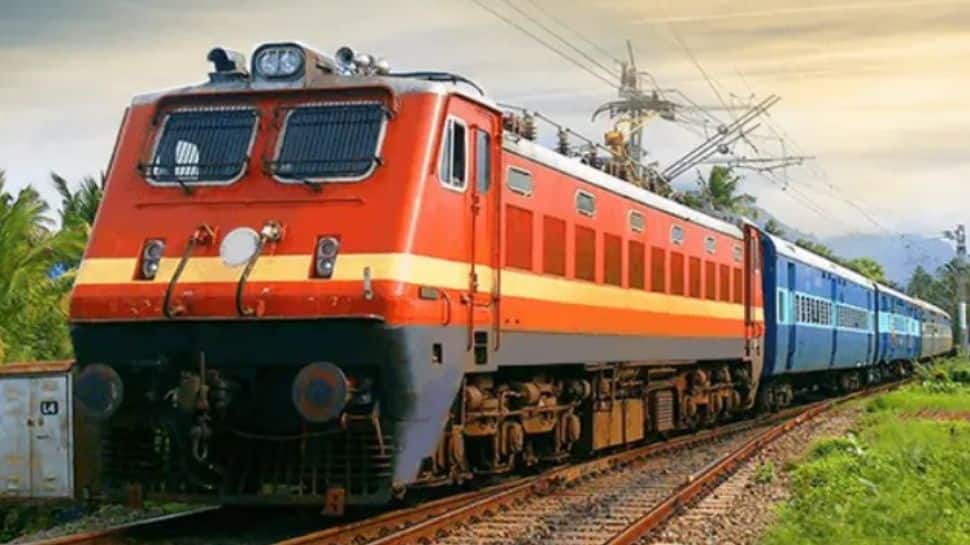
Delhi-Patna Vande Bharat Sleeper: Indian Railways passengers have been waiting eagerly for the new luxurious Vande Bharat Sleeper Express, which has been in the final stages of roll out and is being given final touches at the BEML factory. Passengers travelling between Patna and New Delhi are set to get a completely new travel experience as the much-awaited Vande Bharat Sleeper Train is expected to begin operations this month. The train promises the speed of Tejas, the comfort of Rajdhani, and the advanced technology of Vande Bharat — all in a sleeper configuration for the first time.
Designed for high-speed night travel, the train is being positioned as a premium option for long-distance passengers.
Trial Runs to Begin Soon
Two rakes of the Vande Bharat Sleeper Train are being manufactured at the BEML factory in Bengaluru. The first rake is expected to be ready and dispatched by December 12, after which trial runs will begin on the Patna–New Delhi route, reported Dainik Bhaskar. The train will cover around 1,000 kms in around eight hours.
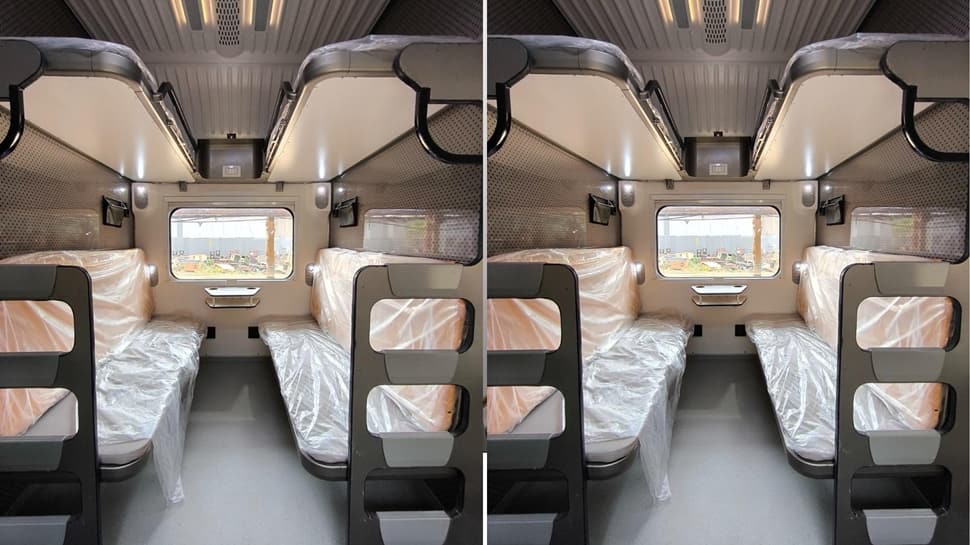
Railways plan to start regular services before the New Year. The train is expected to run six days a week, departing Patna in the evening and arriving in Delhi the next morning. The return service will follow the same overnight schedule, reported Prabhat Khabar.
Speed and Performance Highlights
The train is designed to run at an operational speed of 160 km/h, with a maximum speed capability of 180 km/h. According to railway officials, the ride will be so stable that even tea kept in a cup will not spill while the train is running at full speed.
One of its key strengths is rapid acceleration and braking, allowing it to cover distances faster and reduce time spent stopping and restarting at stations.
Coach Composition and Seating Capacity
The Vande Bharat Sleeper Train will have 16 coaches with a total capacity of 827 passengers:
* 11 coaches of AC 3-tier (611 berths)
* 4 coaches of AC 2-tier (188 berths)
* 1 coach of AC 1st Class AC (24 berths)
Railways may increase the number of coaches in the future based on passenger demand. Ticket prices are expected to be around the fare of the Rajdhani Express.
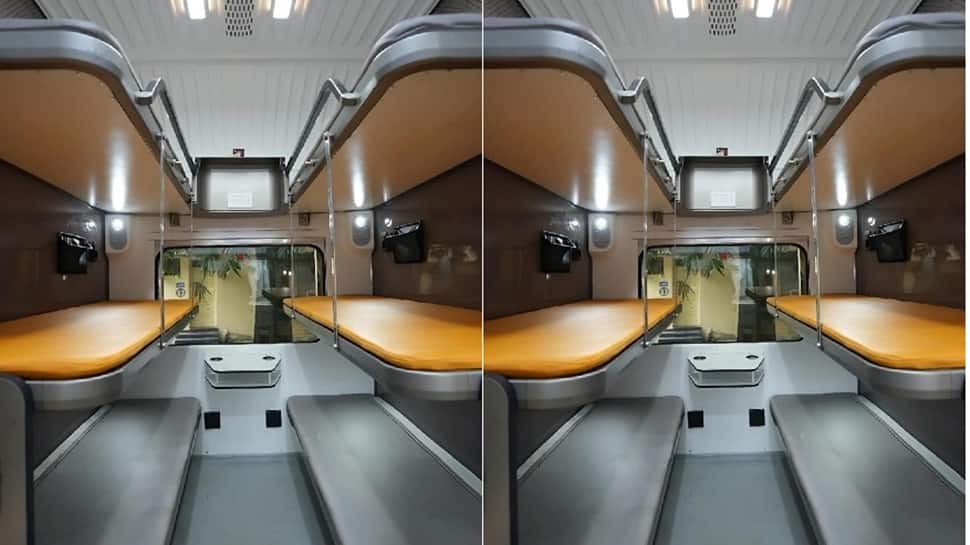
Current Status of Vande Bharat Trains in India
At present, 164 chair-car Vande Bharat Express trains are operating across India. These semi-high-speed trains are manufactured at the Integral Coach Factory (ICF) in Chennai and have received strong passenger response.
Due to growing demand for comfortable long-distance night travel, the sleeper variant has been developed, with the Patna–Delhi route likely to be among the first to get this service.
What the Railway Minister Said
Union Railway Minister Ashwini Vaishnaw recently told the Lok Sabha that the sleeper version of the Vande Bharat train has been indigenously designed for medium and long-distance overnight journeys.
He said that two rakes have been produced and are currently undergoing trials and commissioning.
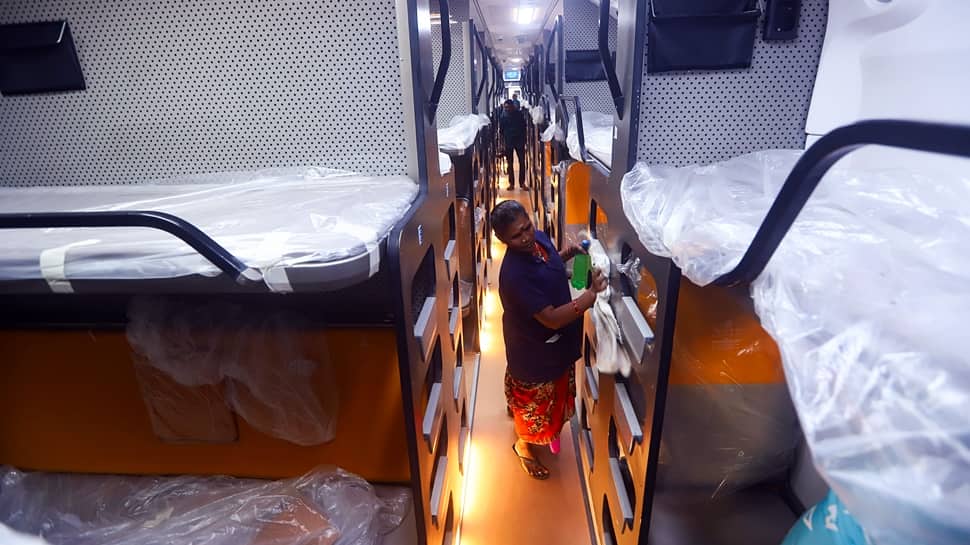
Key Features and Facilities in Vande Bharat Sleeper Train
The interior of the train is designed to provide a premium airline-like and hotel-style experience. Major facilities include:
Passenger Comfort Features
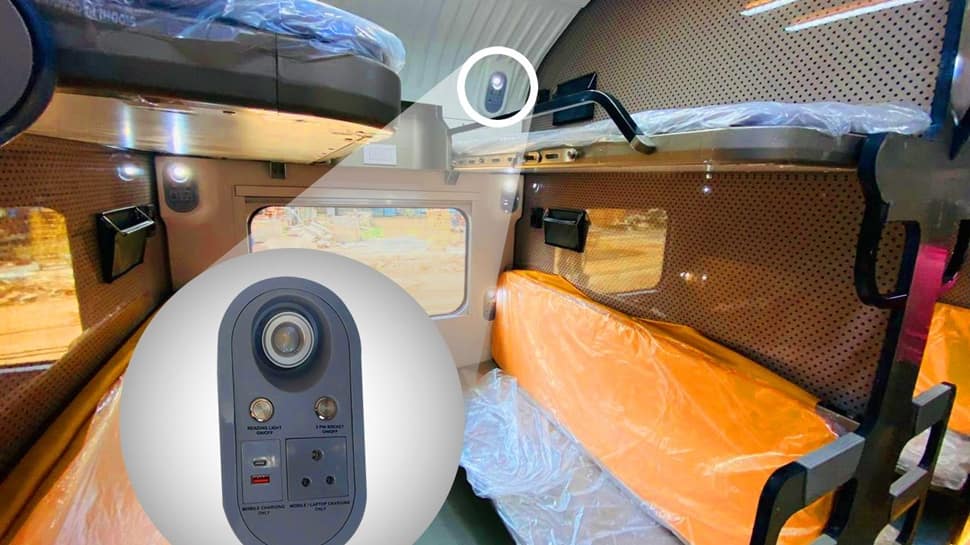
* USB-integrated reading lamps for night-time reading
* Real-time passenger information system with audio and video updates
* High-speed Wi-Fi and onboard infotainment system
* Modular pantry unit for freshly prepared onboard meals
* Touch-free bio-vacuum toilets
* Hot water shower facility in First AC coaches
* Ergonomic ladders for upper berths
* PRM-friendly berths and toilets for elderly and differently-abled passengers
Advanced Safety and Security Systems
* KAVACH anti-collision technology to prevent train accidents
* Integrated emergency talk-back units for direct communication with train crew
* Fully sealed gangways between coaches to prevent dust and enhance safety
* Automatic plug doors that close before departure
* CCTV surveillance in every coach to deter theft and ensure passenger safety
Timings of the Vande Bharat Sleeper Train
The train will run six days a week:
* Evening departure from Patna, Morning arrival in New Delhi
* Evening departure from New Delhi, Morning arrival in Patna
The Vande Bharat Sleeper has been specially designed to offer high speed, superior comfort, and a premium travel experience for overnight journeys.

The FDA blocked the publication of several studies supporting the safety of vaccines against Covid and shingles in recent months, a Health and Human Services Department spokesperson confirmed on Tuesday.
It’s the latest effort by the Trump administration to challenge safe and effective shots in the U.S. and make them harder to access for some patients. Under Health and Human Services Secretary Robert F. Kennedy Jr., a prominent vaccine skeptic, federal health agencies have softened Covid shot recommendations, cut back research on vaccine development and attempted to overhaul the childhood immunization schedule, among other efforts.
FDA scientists worked with data firms to analyze millions of patient records for the studies, which found side effects of the shots to be rare, the New York Times first reported on Tuesday.
In October, the scientists were directed to withdraw two Covid shot studies that had been accepted for publication in medical journals, the Times reported. In February, top FDA officials did not sign off on submitting study abstracts on Shingrix, a shingles vaccine, to a drug safety conference, the paper added.
The HHS spokesperson told CNBC the recent studies were “withdrawn because the authors drew broad conclusions that were not supported by the underlying data.”
“The FDA acted to protect the integrity of its scientific process and ensure that any work associated with the agency meets its high standards,” they added.
When asked about the shingles vaccine research, the HHS spokesperson said the design of that study “fell outside the agency’s purview.”
Business
Spirit starts monthslong process of dismantling airline after biggest collapse in a generation

Spirit Airlines‘ more than three-decade run ended over the weekend, but on Tuesday it was just starting the monthslong process of dismantling the company after the biggest U.S. airline collapse in a generation.
Spirit and its stakeholders were in bankruptcy court in White Plains, New York, to start that process, which will take months. The hearing included discussions about airport landing fees, aircraft and staffing.
The carrier filed a cumulative wind-down budget of around $217 million, though that number could change.
The budget went out to February 2028. It included more than $52 million in employee costs through July and another more than $52 million for aircraft-related expenses.
The airline had 59 Airbus A320s in service and 63 in storage, as well as 37 of the larger A321s in service, and 13 of them in storage, according to aviation data firm Cirium. More than three-quarters of its fleet was leased.
Spirit shut down operations after years of struggles, most recently from heavy debt loads and a surge in costs.
Spirit’s lawyer, Marshall Huebner of Davis Polk, told a bankruptcy court on Tuesday that the jump in jet fuel prices following the U.S.-Israel attacks on Iran in February left the carrier with no choice but to shut down. That added $100 million in incremental costs for Spirit in March and April, he said.
U.S. bankruptcy court in White Plains, N.Y.
Leslie Josephs/CNBC
Talks for a potential government bailout in the form of a $500 million loan that could have given the government an up to 90% stake in Spirit fell apart late last week, and the carrier officially shut down at 3 a.m. ET on Saturday.
Spirit passengers scrambled to rebook reservations. American Airlines, JetBlue Airways, Southwest Airlines, United Airlines and others said they have flown tens of thousands of Spirit customers who were stranded by the collapse.
Spirit had flown about 50,000 people in the day leading up to its closure. The airline said about 17,000 direct and indirect employees lost their jobs.
“The closing of Spirit Airlines is a sad and unfortunate event that adversely affects many parties, and that’s particularly true for the thousands of folks who are Spirit employees and families who depend on them,” the presiding judge, Sean Lane, said at Tuesday’s hearing.
“The stress level for these employees and affinities is very high, and they likely have many questions,” he continued. “Hopefully there’ll be some information discussed today to provide some answers to some of those questions, or provides information about where to get those answers. Bankruptcy can be a very difficult process, and today is a sad example of that.”
Under the changed system customers collect points rather than reward coupons, with £1 spent equalling one point.
Source link


Telehealth Abortion Is Still Possible Without Mifepristone
FDA withdrew studies finding Covid, shingles vaccines were safe

Longtime entertainment publicist was 82

-

 Tech1 week ago
A Brain Implant for Depression Is About to Be Tested in Humans
-

 Sports1 week ago
Pro wrestling star Steph De Lander reveals how colleague’s advice helped lead her to title triumph at ACW
-

 Tech1 week ago
Almost 90% of women leave tech industry within 10 years | Computer Weekly
-
 Business1 week ago
‘I had £20,000 stolen and had to fight a 13-month fraud reporting rule to get it back’
-

 Entertainment1 week ago
Norway joins Type 26 Frigate Programme to boost NATO naval power
-
 Business6 days ago
PSX plunges over 4,800 points | The Express Tribune
-

 Entertainment1 week ago
Melania Trump says ABC should ‘take a stand’ on late-night host Kimmel
-

 Tech1 week ago
This Ambitious Laptop Doesn’t Leave Much Room for Your Hands