

Business
India’s Growth Ambition Needs Long-Term Capital, Not Quick Exits


Last Updated:
Budget 2026 is a chance for India to shift incentives from short-term gains to rewarding long-term investor commitment, supporting manufacturing, etc.



From Fast Exits to Patient Capital: India’s Budget 2026 Test
As India approaches Budget 2026, conversations around growth, investment and competitiveness dominate the economic and policy landscape. Yet beneath these themes lies a deeper and often unexamined issue—what kind of investor behaviour does India’s financial and tax ecosystem actually reward?
Despite our ambitions around manufacturing, capital formation and supply-chain resilience, the system, often unintentionally, continues to tilt incentives towards short-term decision-making. As India enters a structurally different phase of growth, this misalignment between policy intent and incentive design has become increasingly consequential. Budget 2026 offers a timely opportunity to correct this imbalance.
India’s framework does not explicitly discourage long-term investing. However, through design and execution, it nudges investors towards shorter horizons. Tax design is a major contributor.
Capital gains structures define “long-term” using relatively short holding thresholds by global standards. Frequent changes in tax treatment, surcharges, exemptions and interpretative rules introduce uncertainty into long-term return assumptions. Incentives are often time-bound rather than outcome-bound, rewarding entry within a policy window rather than commitment across a full investment cycle. The behavioural message is clear: enter when incentives exist, exit when optimal, optimise tax later.
Policy volatility reinforces this mindset. Shifts in custom duties and input tariffs alter cost structures mid-cycle, while sector-specific incentives—particularly manufacturing and export-linked schemes—are periodically recalibrated or sunset without multi-year visibility. Even flagship programmes such as the Production Linked Incentive (PLI) scheme reflect this tension. PLI has accelerated capacity creation across electronics, semiconductors and specialty manufacturing, yet remains output- and period-specific rather than explicitly rewarding capital retention, reinvestment or operational continuity beyond the incentive window. Rational investors respond accordingly, prioritising speed of capital recovery over permanence.
The ease of short-term liquidity in India further compounds the tilt toward tactical behaviour. Deep public markets, an active PE/VC ecosystem and vibrant secondary transactions are structural strengths for the economy, but without counter-balancing incentives for duration they naturally encourage faster exits and tactical capital deployment.
This matters because India’s growth model is evolving. The next phase of expansion will depend less on consumption-led momentum, rapid capital recycling and asset-light growth alone, and more on manufacturing scale, supply-chain resilience, domestic value addition and stable long-term capital formation. These outcomes cannot be delivered by transient capital. They require patient capital—capital willing to absorb longer gestation periods, regulatory frictions and early-stage inefficiencies in pursuit of durable outcomes. Yet when signals favour agility over longevity, investors adapt by shortening holding horizons, structuring investments for exit optionality and prioritising flexibility over continuity. Over time, a disconnect emerges: policy seeks long-term outcomes, but incentives reward short-term behaviour.
Budget 2026 arrives at a particularly consequential juncture. India is positioning itself as a global manufacturing and supply-chain hub, and capex-led growth remains a stated priority. Global investors are increasingly evaluating India not merely as a tactical allocation but as a long-term destination. States are actively competing for investment through incentives. Tamil Nadu, Gujarat, Karnataka and Uttar Pradesh, for instance, offer combinations of capital subsidies, interest subvention, land rebates and payroll-linked incentives.
New frameworks for Global Capability Centres (GCCs) and advanced manufacturing hinge on employment thresholds and upfront investment commitments. However, many of these incentives are still front-loaded—rewarding establishment rather than long-term continuity. In this context, policy credibility is no longer just about incentive quantum; it is about predictability over time. The question is no longer, “How do we attract capital?” It is, “Do we meaningfully reward investors who stay the course?”
Budget 2026 presents a clear opportunity to rebalance India’s investment ecosystem—not by discouraging liquidity or exits, but by explicitly recognising and rewarding long-duration commitment. Tax frameworks could reward extended holding periods through progressively lower capital gains for assets held beyond longer thresholds. Stability clauses could ensure that core tax and incentive terms remain unchanged over defined periods.
Greater alignment between central and state incentives could enhance benefits tied to reinvestment, asset longevity, employment continuity or supply-chain deepening. States could shift from purely entry-based subsidies to outcome-linked incentives tied to duration—such as sustained employment or capacity utilisation over time. Such an approach would encourage capital with longer horizons, support manufacturing and supply-chain decisions that require permanence and reinforce India’s positioning as a predictable, long-term investment destination.
Crucially, none of this requires new subsidies. It simply requires better incentive design and policy signals that reward patience, predictability and persistence.
India’s next stage of growth depends not only on how quickly capital arrives, but on how confidently it stays. Budget 2026 has the opportunity to send a clear signal that duration matters. By rewarding investors who stay the course, India can better align investor behaviour with its long-term economic ambitions—unlocking sustainable wealth creation and supporting the country’s next phase of structural growth.
 Click here to add News18 as your preferred news source on Google.
January 25, 2026, 17:22 IST
Read More



Business
Sky‑high losses: Iran war drives airlines to biggest crash since Covid – $50bn gone – The Times of India
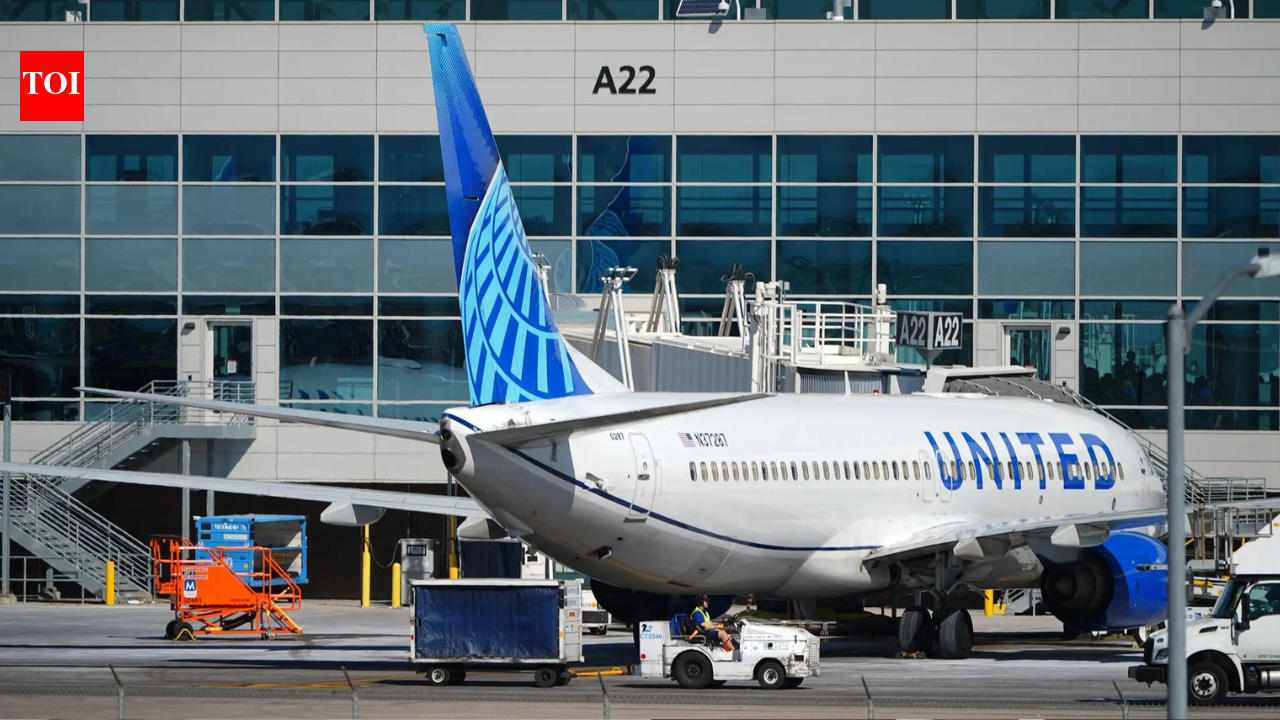
Global airlines have suffered their worst financial shock since the COVID‑19 pandemic as the ongoing war involving US Israel and Iran has disrupted industry operations, wiping more than $50 billion off the market value of the world’s largest carriers amid rising fears of fuel shortages.The conflict, now entering its fourth week, has grounded flights, disrupted key Gulf hub airports and driven jet fuel prices sharply higher, compounding pressure on an industry that was rebounding strongly following pandemic‑related losses.According to Financial Times calculations, the 20 largest publicly listed airlines have collectively lost about $53 billion in market capitalisation since the war began. In response, airline executives have warned of a potential rise in ticket prices as carriers seek to protect shrinking profit margins.Jet fuel, which accounts for roughly a third of operating costs for airlines, has doubled in price since the United States and Israel launched attacks on Iran at the end of February. Many carriers had hedged against fuel price swings, but the rapid rise is expected to force airlines to pass on costs to passengers.“Fuel spiked quite heavily after the Ukraine invasion in 2022 as well, but this has gone further north,” easyJet chief executive Kenton Jarvis told FT, describing the current crisis as the most significant upheaval since the pandemic closed global skies in 2020.Executives also point to broader structural challenges, including the risk that sustained high fares may dampen demand. Carsten Spohr, CEO of Lufthansa, said higher ticket prices were unavoidable but expressed concern that they could weaken long‑term demand. “Our average profit is about €10 per passenger, there’s no way you can absorb the additional cost,” he said.In addition to passenger traffic pressures, airlines are preparing contingency plans for possible jet fuel shortages. Air France‑KLM CEO Ben Smith said the carrier is drawing up measures to cope with potential supply squeezes, including scaling back services on some Asian routes.The crisis has hit Middle Eastern carriers particularly hard. Carriers such as Emirates, Etihad and Qatar Airways have had to sharply reduce schedules due to airspace closures and a collapse in regional tourism, industry officials say. Despite the severity of the current disruption, Willie Walsh, head of the International Air Transport Association (IATA), noted that it still falls short of the pandemic’s impact but is reminiscent of the downturn in transatlantic demand after the 9/11 attacks, according to FT.
Poll
What should airlines prioritize during the current crisis?
The conflict’s ripple effects are also visible in cargo operations, as freight traffic shifts from disrupted shipping routes to air cargo, straining airport facilities. At Geneva airport, for example, freight re‑routing has led to overflow onto services bound for Paris.Industry observers remain hopeful that airline valuations and demand will rebound once the conflict abates. “The share price has moved against all airlines since the start of the conflict,” Jarvis said, adding that short sellers would likely close positions quickly if a ceasefire is announced.
Business
Watch: Cargo ship Pyxis Pioneer, carrying LPG from US, arrives at Mangalore Port – The Times of India
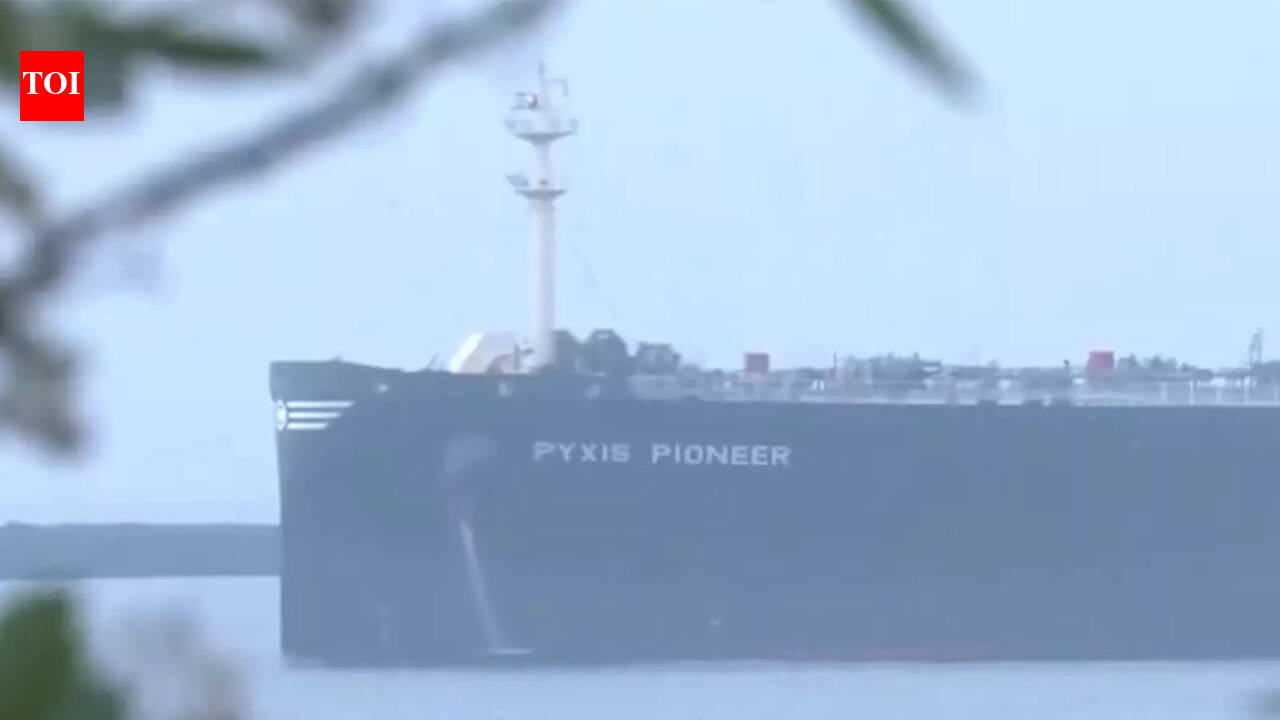
NEW DELHI: The Pyxis Pioneer, a Singapore-flagged cargo vessel carrying liquefied petroleum gas (LPG) from Texas in the United States, docked at New Mangalore Port in Karnataka’s Mangaluru on Sunday.Click here for live updates on Middle East crisis The tanker, built in 2019, arrived a day after the Aqua Titan, which is transporting 1.1 lakh tonnes of Urals crude, reached the port. The Aqua Titan had initially set sail from Primorsk in Russia for Rizhao Port in China before diverting to India.On Friday, the Shipping Ministry said that New Mangalore Port has waived cargo-related charges for crude oil and LPG between March 14 and 31 amid the ongoing Middle East conflict.Also Read | Watch: Missile strike rocks Israel’s ‘Little India’ as Iran attack injures over 40; videos show chaos Earlier this week, three Indian-flagged vessels — Shivalik, Nanda Devi, and Jag Laadki — docked at Gujarat’s Mundra Port carrying LPG. While Shivalik arrived on Monday, Nanda Devi and Jag Laadki reached on Tuesday and Wednesday, respectively.On February 28, the United States and Israel launched coordinated strikes on Iran, triggering the current conflict. In response, Iran has carried out retaliatory attacks on Israeli territory and on Gulf states hosting U.S. military bases. Tehran has also effectively disrupted traffic through the Strait of Hormuz — a critical global chokepoint through which around 20% of the world’s oil supply passes — raising concerns over energy security and global markets.Also Read | Under the sea: How Iran’s invisible fleet of ‘midget submarines’ is turning Strait of Hormuz into danger zone‘All Indian ships and sailors safe’ At Friday’s interministerial briefing on Friday, shipping ministry special secretary Rajesh Kumar Sinha said all 22 Indian ships and 611 sailors in the Persian Gulf are safe amid the ongoing conflict.“There has been no report of any maritime incident in the last 24 hours. All our 22 ships and 611 Indian sailors in the Persian Gulf region are safe, and we are continuously monitoring them… There is no congestion in any port… New Mangalore Port has issued a circular for waiver of all cargo-related charges for crude and LPG from March 14 to 31,” Sinha told reporters.Also Read | Iran invasion next? Pentagon plans for deployment of US troops on ground – reportMeanwhile, the petroleum ministry noted panic booking of LPG cylinders has eased significantly, with 55 lakh bookings reported on Thursday.“There is no panic booking now. Only 55 lakh LPG bookings were reported yesterday. There is adequate stock available, and no outlets are running dry,” joint secretary Sujata Sharma said at the briefing.However, she acknowledged that concerns persist.
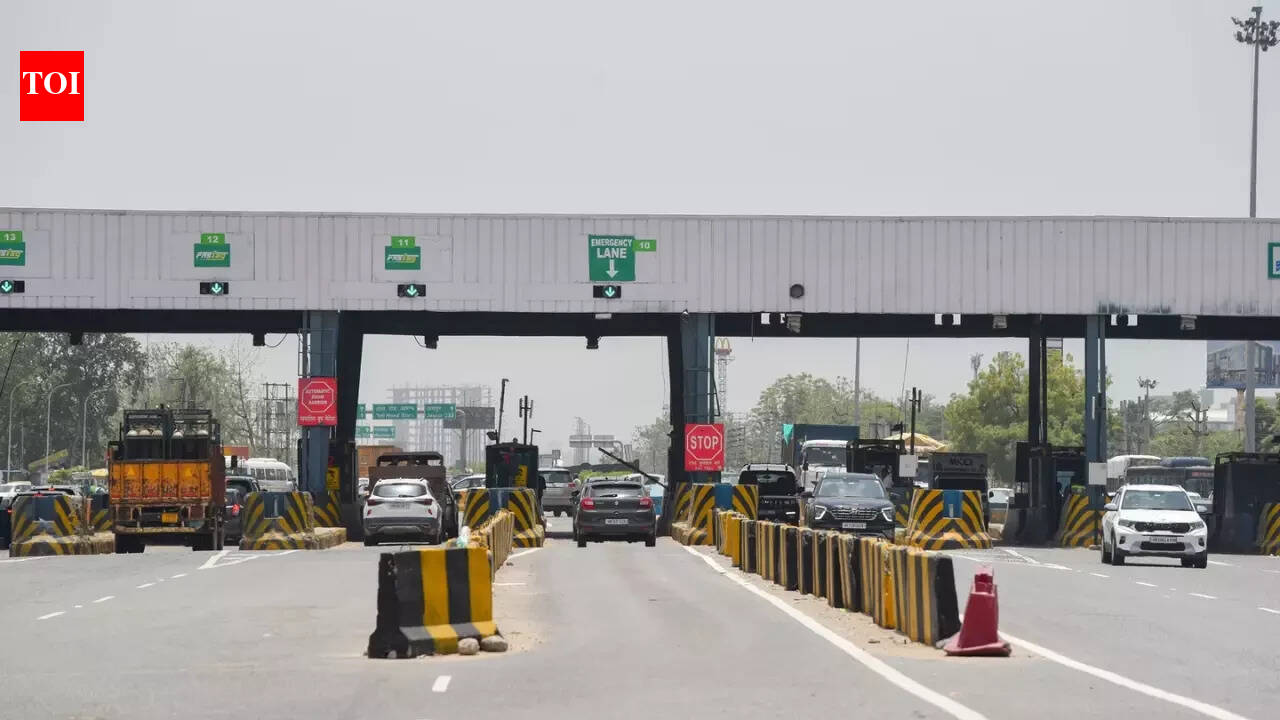
NEW DELHI: Senior executives of some of the highway construction companies told TOI that the increase has started impacting the road construction cost as bitumen and fuel expenses are around 30% of the project cost. “Since the commercial diesel price is revised from time to time, we are worried whether there will be another round of hike in the next fortnight since there is no sign of any end to the Iran-Israel-US war,” said one of the executives.He added that the discount offered prior to the war has been nullified on bitumen which was in the range of Rs 2,000 to Rs 5,000 per tonne.Recently, the National Highway Builders Federation (NHBF) had flagged the issues at a meeting with NHAI. “Sharp escalation in fuel costs is impacting operation of plants at sites…We have no option but to seek govt intervention as the overall cost escalation due to these factors is beyond the normal contractual provisions,” said a representative of NHBF.


Journalist points out major flaws in new scathing Prince Harry, Meghan book

Muslims celebrate Eid ul Fitr with joy, togetherness across the globe

Three weeks in, Iran war escalates beyond Trump’s control

-

 Fashion1 week ago
Chinese firm to invest $15.34 million in garment factory at BEPZA
-
 Fashion1 week ago
US unemployment rate 4.4% in Feb 2026, LFPR 62%: BLS
-

 Tech1 week ago
Tips and Advice for Buying Used or Refurbished Electronics
-
 Business1 week ago
UAE savings strategies 2026 explained: Best apps, tools, budget rules and smart money hacks to beat rising cost of living in emirates – The Times of India
-
 Politics1 week ago
Iran threatens US-linked oil facilities after Kharg Island bombed
-
 Entertainment7 days ago
Strategic oil stocks to be released ‘immediately’ in Asia and Oceania: IEA
-

 Sports1 week ago
College Basketball Invitational abruptly cancels 2026 tournament
-

 Sports7 days ago
Transfer rumors, news: Real Madrid open to Camavinga exit, as Premier League clubs circle